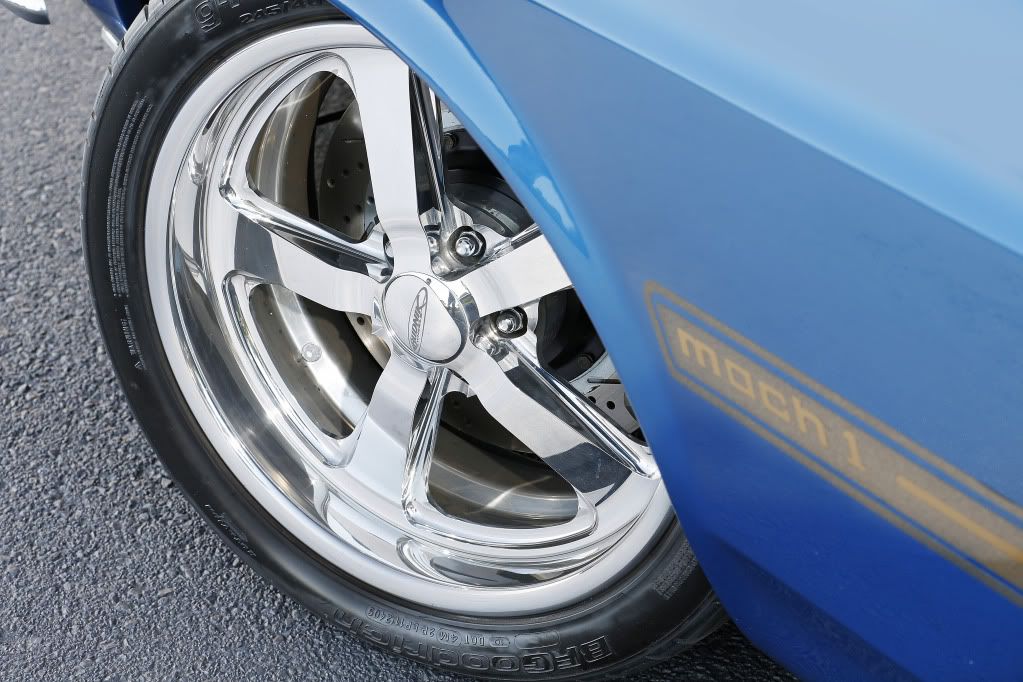
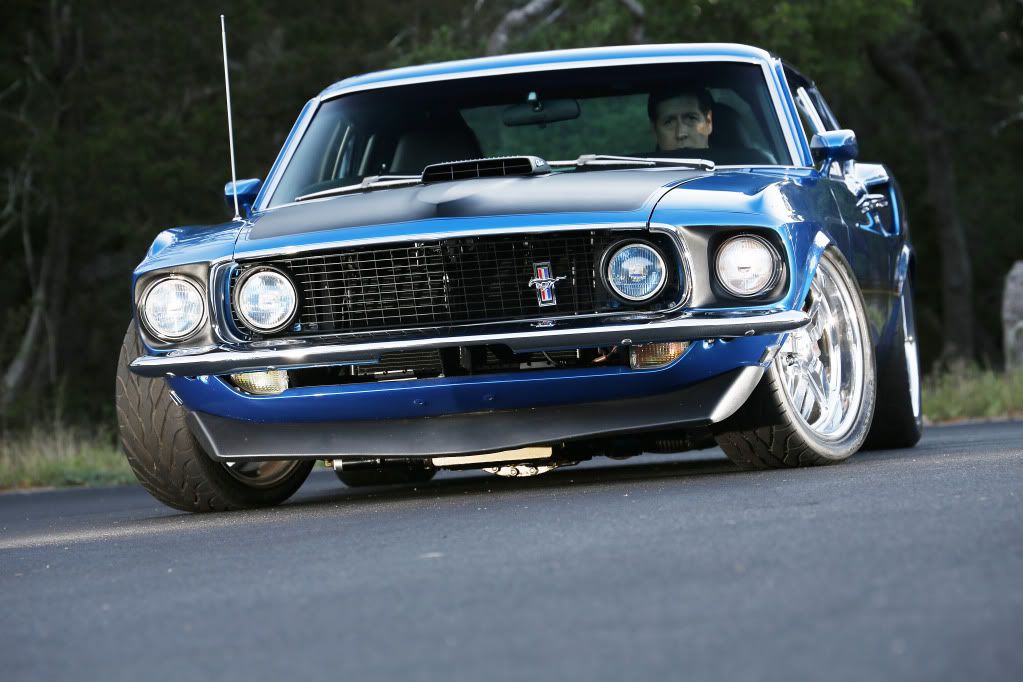
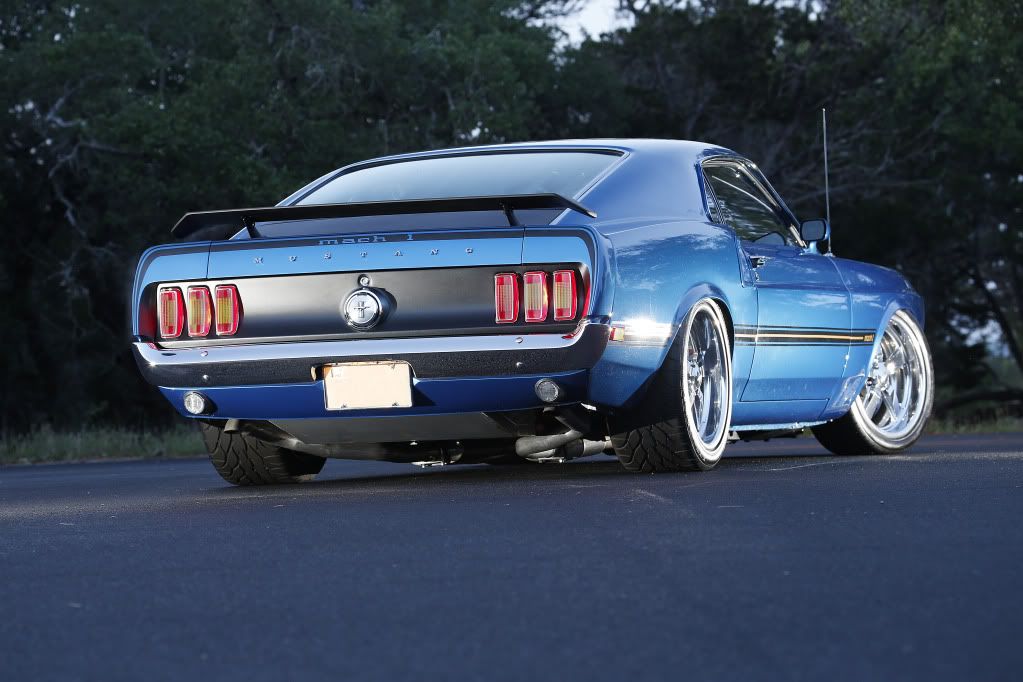
My first real shoot with the 5DIII

Status
Not open for further replies.
dunkers said:
I love the 1st and 4th photos.

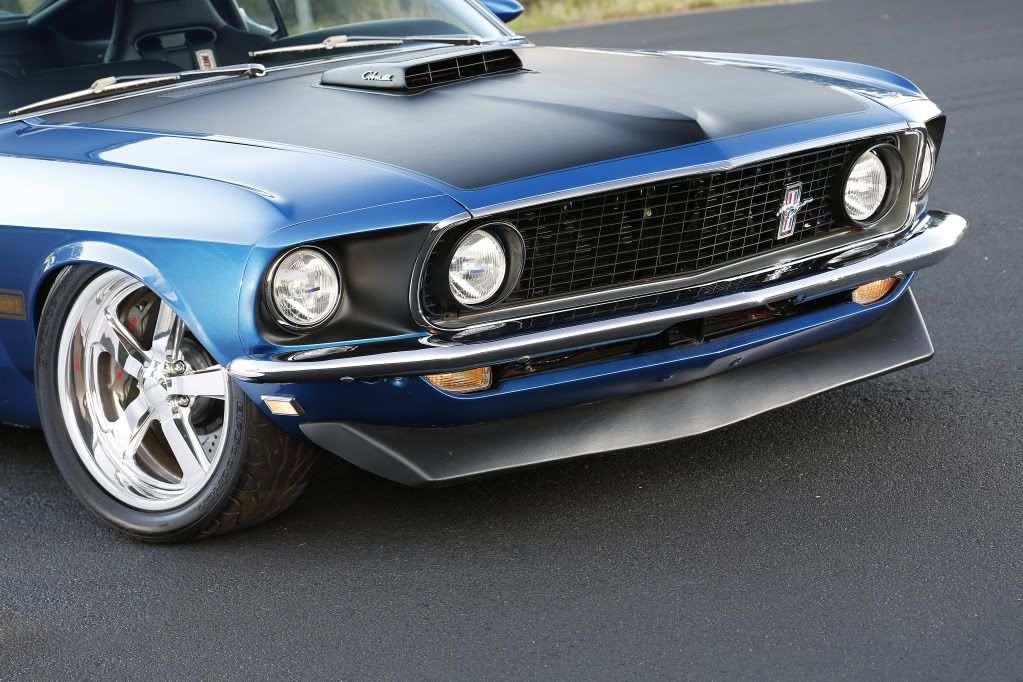
What was your setup/settings for the 4th one?

It's a mix of natural and accent lighting with a couple of off-camera 550EXs. It was taken with a 70-300L, and according to the exif data shot at 120mm, f/8, 1/3 shutter, ISO 100. One flash is to the left of the wheel, and the other is to the right of the grille. The image is more or less straight out of camera.

rambarra said:
holy f*ck the first is gorgeus. the camera seems to be sliding over the grass
how did you do that

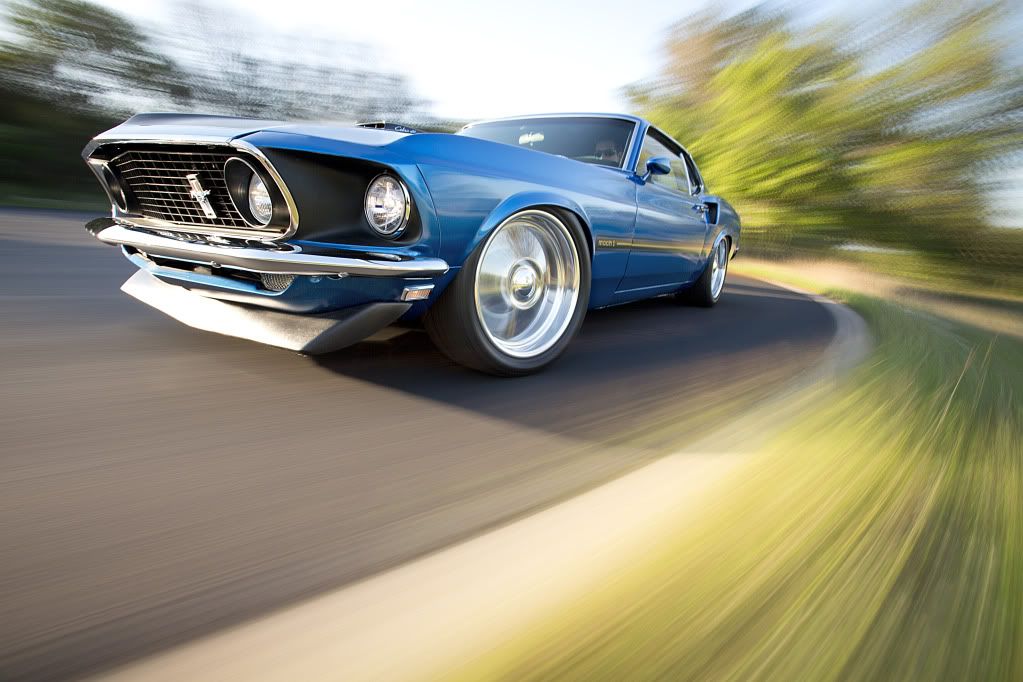
The camera is sliding over the grass :) There's a boom attached to the front of the car which was later removed in post. This allows using a very long shutter speed to enhance motion blur. While the results can be dramatic, the technique is very common and quite overdone in the walk of automotive photography. I don't like rigging cars all that much, as it's become kinda gimicky, but when you have a car that doesn't run very well and you need to get some action shots, it is very effective for that purpose :)
 
Upvote 0
Cool stuff V8, If the light is even I always use manual on clouds in and out i use AV since i like to decide my Dof. I havent seen the metering be bad for me yet. You should def try partial or center weighted. I use center weighted for sports since my subject is usually framed in the center. Else like i said if the light is stable i use manual because when a runner with a black outfit comes it doesn't blow out, the power of manual is just awesome, it takes post work out of the equation for the most part.
As far as the flashes go, they arent supported with the camera so i wouldn't expect results to be good. Step up to a 580exII or even 430 exII's would be good. Personally i prefer my 430exIIs over the 580's
 
Upvote 0
Now I REALLY miss my '65 Fastback!

Thanks for the trip down memory lane, V8Beast!

I usually leave my camera in evaluative because it seems to do pretty well...

That being said, I love to tinker, and your subject seems to have been challenging for that mode...

It would have been interesting to lock down the camera on a tripod, and measure the exposure in all four metering modes... Even toggle the highlight tone priority and auto lighting optimizer on and off... Finally, a spot meter reading off a gray card... Makes me wonder what the range of suggested exposures would look like?
 
Upvote 0
V8Beast said:
The monitor on my desktop is calibrated, and on it the exposures look fine. The images do look slightly over exposed on my laptop, however, which has one of those stupid glossy screens and hasn't been calibrated for quite some time. That said, I have gotten into the habit of slightly overexposing. Many of my clients use very poor quality paper and ink, and the images tend to print darker than what I submit to them

This is exactly what I mean. What is proper exposure any case? Is it the value a grey card gives you or is it something that your eye finds pleasing? :) I think in the end it comes down to knowing and trusting your equipment, even if it means pushing it a stop or 2 to get the results you like and are used to. From experience you know to slightly overexpose because of the way your clients print and that is priceless experience... I call this Perfect Exposure ;-)
 
Upvote 0
Tracy Pinto said:
V8 Are those done in camera or post processing to get the feeling of motion?

The motion blur is real, but how it's captured isn't. Bascially, you rig a pole to the car, hang your camera off of it, and drive or push the car very slowly to minimize vibration. That enables using a very slow shutter speed, usually several seconds long, to dramatically increase the motion blur. The pole is then removed in post.

Here's a video clip of a super high-end, super high-budget commercial photog rigging up a car. (Edit: The vid won't embed, so just click the URL at the bottom.)

Audi R8GT + Lee Howell, Kaptured Photography

At the commercial level, they have the budget to rent far more elaborate rigs that allow mounting the camera much farther back from the car. This enables using longer focal lengths, and minimizing distortion, and capturing the proportions of the car in a far more pleasing manner. With homemade setups that editorial hacks like myself use, you can't get the camera as far back from the car as you'd like, so you have to rely on wide-angle lenses which don't always yield pleasing proportions. Some people like the distortion, but I despise it.
 
Upvote 0
V8Beast said:
Tracy Pinto said:
V8 Are those done in camera or post processing to get the feeling of motion?

The motion blur is real, but how it's captured isn't. Bascially, you rig a pole to the car, hang your camera off of it, and drive or push the car very slowly to minimize vibration. That enables using a very slow shutter speed, usually several seconds long, to dramatically increase the motion blur. The pole is then removed in post.

Here's a video clip of a super high-end, super high-budget commercial photog rigging up a car. (Edit: The vid won't embed, so just click the URL at the bottom.)

Audi R8GT + Lee Howell, Kaptured Photography

At the commercial level, they have the budget to rent far more elaborate rigs that allow mounting the camera much farther back from the car. This enables using longer focal lengths, and minimizing distortion, and capturing the proportions of the car in a far more pleasing manner. With homemade setups that editorial hacks like myself use, you can't get the camera as far back from the car as you'd like, so you have to rely on wide-angle lenses which don't always yield pleasing proportions. Some people like the distortion, but I despise it.
V8, your work kicks ***. Love it. I have seen the comercial shoot but they didnt explain the glass boom thing. Pretty tough glass i guess!
 
Upvote 0
I've never trusted evaluative metering. Supposedly it works better on the 7D, but I still use spot, as I've never got around to trying it, old habits die hard. Out of interest though, my 7D also tends to underexpose compared to my 5D MkII by 2/3rds stop, so maybe it is the new metering system reading things differently with the two coloured layers, although I always put it down to how it asesses ISO sensitivity.
 
Upvote 0
V8Beast said:
First the results:

01.jpg


03.jpg


04.jpg


18.jpg


22.jpg


25.jpg


10.jpg

Now some commentary. This car wasn't running right, so I didn't get to put the AF system through the ringer, but overall I like the camera. That said, I do have some concerns with, of all things, the light meter. I don't have a 5DII, so I can only compare it to my 5DC. I almost always keep the metering in evaluative mode. For some reason, I had to bump the exposure compensation up 1 to 1.5 stops all day long. Even in scenes that aren't contrasty by any means, the light meter seems to freak out whenever it seems any whites, grays, or silvers.

I don't expect miracles from a light meter, and as an old film fart, I still bracket. Even so, for my shooting needs, I find the metering on my 5DC is more accurate. The 5DIII seems overly sensitive to highlights as far as metering is concerned, which could be a good thing depending on what you shoot, but I'm not crazy about it thus far.

The same thing plays out when use a couple of 550EXs off camera for fill or accent lighting. In this arrangement, both the ambient and flash output is underexposed. I was cranking up on the flash exposure compensation 1 to 1.5 stops all day. Metering was inaccurate in both AF and manual focus modes. Me no likey :(

I'll have to play with the different metering modes more until I pass final judgement, but I'm less than thrilled with it so far. Hopefully it's just user error.

Has anyone experience similar issues?

Those are some pretty fantastic shots, V8! Great examples of the 5D III's performance.

Regarding exposure, I am not sure that anything is wrong. If you count dynamic range being from the darkest pixel to the brightest, there is a LOT of dynamic range in those photos. There are some very bright highlights, particularly off the chrome. I am not surprised that you couldn't capture it all in a single shot without pushing down the shadows. If I had to guess, I'd say...counting the very bright highlights...that there was more than 14 stops of DR in those shots.

Regarding 5D III metering, something you might need to learn to work with is the fact that it is no longer monochrome. Until iFCL and the new 100k RGB metering of the 1D X, Canon metering was monochromatic, it did not take color into account at all. The 5D III uses the iFCL metering sensor, which has blue/green and red/green layers. Canon's own official description of iFCL is here:

[quote author=Canon]
Exposure settings: iFCL metering

The EOS 7D SLR features an iFCL 63-zone Dual-layer Metering Sensor. The ‘FCL’ stands for ‘Focus, Colour and Luminance’ and hints at the fact that the metering system not only measures colour and luminance data, but also analyses the data provided by each point of the AF system.

The metering sensor has 63 measurement zones and is a Dual-layer design with each layer sensitive to different wavelengths of light. Electronic sensors in general are more sensitive to red light. This means when photographing subjects with lots of red in them – skin tones for example – the sensor receives a stronger signal as it only detects brightness levels. This can lead to the wrong assumption that there is more light than there really is.

The Dual-layer system overcomes this by having one layer sensitive to red/green light and one layer sensitive to blue/green light. Both these layers measure the light in their respective spectra and the metering algorithm then combines the two to provide an accurate light reading. In this way, accurate exposures can be attained in a wide range of shooting situations and irrespective of the colour of the subject being metered.

Metering algorithm

To work with the iFCL metering sensor, the EOS 7D also features a specific metering algorithm. The EOS 7D always measures focus with all AF points regardless of the selected AF mode. During the exposure reading the EOS 7D looks to see which points, in addition to the selected point, have achieved or almost achieved focus. This information lets the camera know which part of the image is the subject. It then takes metering readings from the zones corresponding to the AF points that have achieved (or almost achieved) focus and combines them with readings from all the other zones. This allows for consistent shot-to-shot exposure, even in complex situations – for example, where there are reflections from a model’s glasses.
[/quote]

I've italicized parts that might be relevant to you. Most importantly is that the previous metering sensors may have assumed incorrectly about how much light was actually available in the scene, as they saw primarily in the red spectrum (monochromatically). The new iFCL metering should be MORE accurate, not less, given that it "sees" full color. It is not surprising that you might have to add more light, for two reasons. One because it meters blue and green now as well as red...silicon is less sensitive to both of those additional colors, and less space is given to red metering. Also for the fact that with a layered system, blue is less sensitive and in the top layer, so the red layer is going to have a certain amount of light filtered out by the layer above, making it less sensitive as well. The lower sensitivity seems like it is by design, though, to produce more accurate, highlight-friendly metering.

Second, the iFCL meter DOES take into account focus, and it will attempt to weight metering around AF points that seem to have focus above those that do not. The backgrounds in some of your wider full-car shots are out of focus, so the meter will probably give them less weight than the car (and all its sparkly highlights) in the foreground. Again, it is not surprising that you need to add more light, since the background is darker than it might have been with a 5DII. I am not entirely certain flash is the ideal solution, though...as that is going to change the lighting characteristics of the car as much (if not more) than anything else, and the way iFCL weights metering....you might just make the discrepancy between dark backgrounds and bright foregrounds worse.

 
Upvote 0
jrista said:
If you count dynamic range being from the darkest pixel to the brightest, there is a LOT of dynamic range in those photos. There are some very bright highlights, particularly off the chrome. I am not surprised that you couldn't capture it all in a single shot without pushing down the shadows. If I had to guess, I'd say...counting the very bright highlights...that there was more than 14 stops of DR in those shots.

You don't say. How can a $hitty Canon sensor manage that kind of DR ;D? I know preliminary reports show that the DR of the 5DII and III are similar, but the MKIII is a nice step up from the 5DC. The first shot was captured in a single exposure, while I usually need to merge at least two exposures together in similar shots with the 5DC. I actually had couple of separate exposures in which I hit the dark side of the car with flash, and planned on layering it in, but I was able to pull out enough shadow detail to eliminate the need to do so. 5DIII = less post processing for me, so I can't complain ;)

I've italicized parts that might be relevant to you. Most importantly is that the previous metering sensors may have assumed incorrectly about how much light was actually available in the scene, as they saw primarily in the red spectrum (monochromatically). The new iFCL metering should be MORE accurate, not less, given that it "sees" full color. It is not surprising that you might have to add more light, for two reasons. One because it meters blue and green now as well as red...silicon is less sensitive to both of those additional colors, and less space is given to red metering. Also for the fact that with a layered system, blue is less sensitive and in the top layer, so the red layer is going to have a certain amount of light filtered out by the layer above, making it less sensitive as well. The lower sensitivity seems like it is by design, though, to produce more accurate, highlight-friendly metering.

Very interesting info as always. At this point I've concluded that there's nothing wrong with the metering, just my expectations. I'm sure the new metering works very well for many shooting situations, and the stuff I threw at it was just outside the realm of it's optimal performance.

Second, the iFCL meter DOES take into account focus, and it will attempt to weight metering around AF points that seem to have focus above those that do not. The backgrounds in some of your wider full-car shots are out of focus, so the meter will probably give them less weight than the car (and all its sparkly highlights) in the foreground. Again, it is not surprising that you need to add more light, since the background is darker than it might have been with a 5DII.

Didn't know that, either! What happens when you manually focus? Does the camera still try to figure out which areas are in focus, and which aren't, for metering purposes?
 
Upvote 0
wickidwombat said:
awesome vid!,
that rig sure looks epic and expensive! what do they cost?
and what sort of rig do you use? something a little more in the realms of affordability for mortals?

Those rigs are sweet. Cream of the crop, for sure. I could have my figures mixed up, as I've never used one before, but I believe they cost $3,000 a day to rent. For that fee, they send out a henchmen that attaches it to the car for you, and moves it around should you want to shoot at different angles. The rig in the video has an optional plexiglass arm to make it easier to remove from the image in photoshop. Crazy stuff. Here's a link:

http://www.move-n-shoot.com/us_rig_inventory_motorig1.html

There are places that make turnkey rigs for less than $1,000, but even those are way overpriced. Outside of high-rollin' commerical photogs, almost everyone else builds their. There really isn't much to it. Mine is just a piece of steel pipe that attaches to the car with suction cups and some Manfrotto super clamps. I'm looking into getting a aluminum pole to cut down on the weight and try to get some more distance between the car and camera.
 
Upvote 0
cool but how do you fix it without damaging the paint etc looking at my own car i can see too many places to fix it to, the rear is easy as i have a tow hitch, i guess i could take the number plate off the front and make a steel bracket that fits that, it would be pretty universal for all cars then but i'm not sure how i feel about hanging several thousand dollars worth of camera off those 2 little screw holes which arent real solid

i'm keen to have a play with this i have some really cool shoot ideas once i get a rig worked out and build it
any other info you are willing to offer up would be really appreciated ;)
 
Upvote 0
V8Beast said:
jrista said:
If you count dynamic range being from the darkest pixel to the brightest, there is a LOT of dynamic range in those photos. There are some very bright highlights, particularly off the chrome. I am not surprised that you couldn't capture it all in a single shot without pushing down the shadows. If I had to guess, I'd say...counting the very bright highlights...that there was more than 14 stops of DR in those shots.

You don't say. How can a $hitty Canon sensor manage that kind of DR ;D? I know preliminary reports show that the DR of the 5DII and III are similar, but the MKIII is a nice step up from the 5DC. The first shot was captured in a single exposure, while I usually need to merge at least two exposures together in similar shots with the 5DC. I actually had couple of separate exposures in which I hit the dark side of the car with flash, and planned on layering it in, but I was able to pull out enough shadow detail to eliminate the need to do so. 5DIII = less post processing for me, so I can't complain ;)

Well, keep in mind, the shots themselves have some blocked shadows and some small areas of blown highlights. I don't think you captured the full dynamic range of the scene in those shots, which is why I think you might have had some issues metering and needed some extra light. (Note: The highlights themselves, although mostly very tiny and point-like, could very well represent one to two stops of additional DR that you are not able to capture.)

V8Beast said:
Second, the iFCL meter DOES take into account focus, and it will attempt to weight metering around AF points that seem to have focus above those that do not. The backgrounds in some of your wider full-car shots are out of focus, so the meter will probably give them less weight than the car (and all its sparkly highlights) in the foreground. Again, it is not surprising that you need to add more light, since the background is darker than it might have been with a 5DII.

Didn't know that, either! What happens when you manually focus? Does the camera still try to figure out which areas are in focus, and which aren't, for metering purposes?

At least with my 7D, yes, the camera is actually always running its focus check algorithm. If you manually focus and half-penis the shutter button, you should still get a focus confirmation beep. The camera is not actually trying to focus, but it knows what areas of the scene are in and out of focus.
 
Upvote 0
wickidwombat said:
cool but how do you fix it without damaging the paint etc looking at my own car i can see too many places to fix it to, the rear is easy as i have a tow hitch, i guess i could take the number plate off the front and make a steel bracket that fits that, it would be pretty universal for all cars then but i'm not sure how i feel about hanging several thousand dollars worth of camera off those 2 little screw holes which arent real solid

i'm keen to have a play with this i have some really cool shoot ideas once i get a rig worked out and build it
any other info you are willing to offer up would be really appreciated ;)

There are two options: rig the boom to the body, or rig it to the bottom of the car. If you rig the bottom side of the car, it's much easier to remove in post, since you're only cloning it out from the road surface. The downside is that an under-mount rig takes longer to setup, you have to monkey around with jacks and jack stands in the field, and there might not be enough ground clearance with cars that sit low to the ground.

Rigging it to the body is much easier to set up. This is a huge factor when you want to get fire off multiple shots from different angles in a limited amount of time. The biggest drawback is that it's much harder to remove it in post. It often requires recreating body panels and parts of the background. Typical attachment points are the hood/bonnet, trunk/book, the roof, the windshields, or a combination of all of them. The suction cups are surprisingly sturdy, and I've never had one come loose. They can leave swirl marks on darker paints, but they'll buff right out.

I case you're still awake, I sent you a PM with some helpful links on the subject matter :)
 
Upvote 0
smithy said:
I enjoyed these photos... so after your first shoot, what would you rather own, the 5D Mark III or a 1Ds Mark III? :)

That's a tough one. I think I'm committed to the 5DIII at this point, but the 1DsIII is awfully tempting for roughly the same money. I believe the highest I pushed the ISO was 3,200 on this last shoot, and most of the time ISO was 400 or less, with the occasional tick up to 800-1,600. That's another way of saying that if the biggest advantage of the 5DIII over the 1DsIII is ISO performance, I didn't push it hard enough on this last shoot to benefit from it. That said, I do have some ideas on how to really push the ISO for creative effect in the future, so perhaps that will change my opinion once I fully utilize the 5DIII's potential.

IQ aside, the 5DIII does handle very well. It's still not a 1-series, but its ergonomics and responsiveness are very good.

jrista said:
Well, keep in mind, the shots themselves have some blocked shadows and some small areas of blown highlights. I don't think you captured the full dynamic range of the scene in those shots, which is why I think you might have had some issues metering and needed some extra light. (Note: The highlights themselves, although mostly very tiny and point-like, could very well represent one to two stops of additional DR that you are not able to capture.)

You're probably right. IMHO, it's better to have more DR than you need and not always use it, then it is to have less DR than you need and come up short when you really need to push a file. That said, this is purely a subjective assessment, but sometimes I think all the DR in the world can't possibly capture the scene as it's framed in the viewfinder. That's OK, though, because I don't always want the sensor to capture all that DR. Some blown highlights here and there can enhance the depth and dimension of an image. Take the first shot, for instance. Parts of the front spoiler are blown out, but I didn't bother trying to knock down the highlights on the spoiler or the grille, because to my eye, doing so would make the image look flat and two dimensional. Another common technique I see are people that dodge and burn an image in post that actually reduces the DR of the final product. This is in part why I find people's fixation on DR a little silly. Yes it's important, but it's just one of countless factors that affects your ability to create art with a camera.

At least with my 7D, yes, the camera is actually always running its focus check algorithm. If you manually focus and half-penis the shutter button, you should still get a focus confirmation beep. The camera is not actually trying to focus, but it knows what areas of the scene are in and out of focus.

Good to know!
 
Upvote 0
I really like that first shot. Very nice.

I chimed in on another MKIII exposure thread earlier. On my MKII, outside, I almost always shoot 1/3 under EC, sometimes 2/3 under, but it basically lives on -1/3. My MKIII seems to be very accurate on Manual(which is good since there is no EC available) and when I have shot Shutter Priority, I've been at -1/3, as well. Maybe it's all subjective and I prefer the look at those exposure levels, maybe it's my monitor(I just re-calibrated today and your pics look fine), or maybe it's because I'm a tv photographer(I don't shoot video with my still cams ;) ) and if I'm going to err, it's going to be towards under exposure than over, if I can help it.
 
Upvote 0
Status
Not open for further replies.