

You are using an out of date browser. It may not display this or other websites correctly.
You should upgrade or use an alternative browser.
You should upgrade or use an alternative browser.
Review - Canon EF 17-40mm f/4L
- Thread starter Canon Rumors
- Start date
- Status
- Not open for further replies.

Is the 17-40 really a metal body? Mine appears to be engineering plastic as the main body with a metal zoom ring.
Upvote
0

tomscott
Photographer & Graphic Designer
The tokina still seems like the best WA out there, half the price of the 16-35 similar price to the 17-40 with a constant 2.8 aperture much sharper than both and nearly as sharp as the Nikon 14-24.
Shame like the Nikon it cannot take any filters which is where the 16-35mm wins. Also the Tokina Nikon and 16-35mm weight a fair amount more than the 17-40. Touch choice but the 16-35mm is a ridiculous price for its performance compared to the rest of the market.
Shame like the Nikon it cannot take any filters which is where the 16-35mm wins. Also the Tokina Nikon and 16-35mm weight a fair amount more than the 17-40. Touch choice but the 16-35mm is a ridiculous price for its performance compared to the rest of the market.
Upvote
0

Thanks for a nice review. I always enjoy reading these.
In the review: "The lens focuses internally, but there is some movement at the front element which means true-weather proofing can only be achieved with an additional filter."
I understand the filter comment -- virtually all lenses require filters for true front-element weather sealing.
But I thought the 17-40 was both internal focusing and internal zooming (like all the 70-200s are)... so why is the front element moving at all? The sentence quoted above would imply that zooming moves the front element.
Please clarify, thanks.
- A
In the review: "The lens focuses internally, but there is some movement at the front element which means true-weather proofing can only be achieved with an additional filter."
I understand the filter comment -- virtually all lenses require filters for true front-element weather sealing.
But I thought the 17-40 was both internal focusing and internal zooming (like all the 70-200s are)... so why is the front element moving at all? The sentence quoted above would imply that zooming moves the front element.
Please clarify, thanks.
- A
Upvote
0

ahsanford said:Thanks for a nice review. I always enjoy reading these.
In the review: "The lens focuses internally, but there is some movement at the front element which means true-weather proofing can only be achieved with an additional filter."
I understand the filter comment -- virtually all lenses require filters for true front-element weather sealing.
But I thought the 17-40 was both internal focusing and internal zooming (like all the 70-200s are)... so why is the front element moving at all? The sentence quoted above would imply that zooming moves the front element.
Please clarify, thanks.
- A
Hey yes, the front element moves in and out when zooming by about 5mm , but the filter ring is on the edge and is constant. And yes, pretty much every lens isn't truly weather sealed without that front filter (which I don't use), but I don't want people to be even *more* confused.
Upvote
0
insanitybeard said:Is the 17-40 really a metal body? Mine appears to be engineering plastic as the main body with a metal zoom ring.
I didn't look anything up to make sure, it *feels* metal, like my 24-70, 70-200, 24 tilt shift and not plastic like the 100mm L... I could be wrong and I'd correct it in the review if we find otherwise.
Upvote
0
neech7 said:"Canon’s current and undisputed king of wide-angle zooms is the 16-35 f/2.8 L II"
Canon branded? Yes. For use on Canon DSLR? No, sadly. The Nikon 14-24 f/2.8 on adaptor, maybe.
If I counted every lens and lens adapter out there my head would explode

Upvote
0
tomscott said:The tokina still seems like the best WA out there, half the price of the 16-35 similar price to the 17-40 with a constant 2.8 aperture much sharper than both and nearly as sharp as the Nikon 14-24.
Shame like the Nikon it cannot take any filters which is where the 16-35mm wins. Also the Tokina Nikon and 16-35mm weight a fair amount more than the 17-40. Touch choice but the 16-35mm is a ridiculous price for its performance compared to the rest of the market.
Which tokina are you talking about? I was trying to specifically say "Canon" as in the brand. I've definitely been interested by the third party options but haven't had much chance to use them.
Upvote
0
The Nikon 14-24 takes filters... but you have to use a Lee rig or something similar:tomscott said:The tokina still seems like the best WA out there, half the price of the 16-35 similar price to the 17-40 with a constant 2.8 aperture much sharper than both and nearly as sharp as the Nikon 14-24.
Shame like the Nikon it cannot take any filters which is where the 16-35mm wins. Also the Tokina Nikon and 16-35mm weight a fair amount more than the 17-40. Touch choice but the 16-35mm is a ridiculous price for its performance compared to the rest of the market.
http://www.leefilters.com/index.php/camera/system#sw-150
Now, you can't use a CPL on that rig, but at those focal lengths a CPL is an unqualified disaster. Your FOV is so wide that you are all but guaranteed to get that funky 'faux-vignetting' from the CPL effect (the sky will inconsistently be light and dark), and that's not really back-out-able in post. But that rig will allow ND filters, ND grads, etc.
- A
Upvote
0

I've owned the 16-35, 16-35 II & the 17-40 and 17-40 is a poor substitue for either 16-36 lens especially for landscape. I know of few zoom lenses in the Canon line-up with better color and contrast than a 16-35. The 17-40 may be a tad sharper into the corners in a few FLs than the 16-35 II, but that is the extent of its claim to fame.
Having said this, I've sold all of them in favor of the 14-24G. Yes, I am forced to use a D800E in order to use the 14-24G but sacrifices have to be made. Actually, I think I am running the best tandem in 35mm format landscape zoom photography, the 5D3/24-70 II and the D800E/14-24G.
Having said this, I've sold all of them in favor of the 14-24G. Yes, I am forced to use a D800E in order to use the 14-24G but sacrifices have to be made.
Actually, I think I am running the best tandem in 35mm format landscape zoom photography, the 5D3/24-70 II and the D800E/14-24G.
Upvote
0

Thanks for another nice review, Justin. The single biggest factor for regarding these two options is purpose. If someone wants to do creative wide angle work at maximum aperture, the 17-40L is not your choice. If you primarily want to do landscapes, though, the 16-35LII and the 17-40L are very similar when stopped down.
I own a 17-40L, and I don't love it, but I also haven't yet found a replacement that makes a lot of sense. It does produce really nice images, focuses well, and has good color, but it just isn't amazing. I like doing LE work sometimes, and the 77mm front element means that I have plenty of filter options, which just isn't true of something like the Tokina 16-28 or even the mighty Nikon.
I own a 17-40L, and I don't love it, but I also haven't yet found a replacement that makes a lot of sense. It does produce really nice images, focuses well, and has good color, but it just isn't amazing. I like doing LE work sometimes, and the 77mm front element means that I have plenty of filter options, which just isn't true of something like the Tokina 16-28 or even the mighty Nikon.
Upvote
0
TWI by Dustin Abbott said:Thanks for another nice review, Justin. The single biggest factor for regarding these two options is purpose. If someone wants to do creative wide angle work at maximum aperture, the 17-40L is not your choice. If you primarily want to do landscapes, though, the 16-35LII and the 17-40L are very similar when stopped down.
I own a 17-40L, and I don't love it, but I also haven't yet found a replacement that makes a lot of sense. It does produce really nice images, focuses well, and has good color, but it just isn't amazing. I like doing LE work sometimes, and the 77mm front element means that I have plenty of filter options, which just isn't true of something like the Tokina 16-28 or even the mighty Nikon.
"I own a 17-40L, and I don't love it." Perfect statement. After working with the 16-35 for quite a while I also concluded that it wasn't "worth it" as a replacement either, at least not for my work.
Upvote
0
tomscott
Photographer & Graphic Designer
The Tokina 16-28mm
heres two reviews one vs the 16-35 by Dave Dugdale
Canon 16-35mm II vs Tokina 16-28mm Lens Review
one from matt granger vs the nikon 16-24mm
Tokina 16-28mm VS Nikon 14-24mm - LENS SHOOT OUT!
The Tokina is very sharp for its price! Shame its not weather sealed neither does it take filters but vs the 16-35mm its a no brainer its half the price, especially for a specialist lens for most people.
heres two reviews one vs the 16-35 by Dave Dugdale
Canon 16-35mm II vs Tokina 16-28mm Lens Review
one from matt granger vs the nikon 16-24mm
Tokina 16-28mm VS Nikon 14-24mm - LENS SHOOT OUT!
The Tokina is very sharp for its price! Shame its not weather sealed neither does it take filters but vs the 16-35mm its a no brainer its half the price, especially for a specialist lens for most people.
Upvote
0
JVLphoto said:TWI by Dustin Abbott said:Thanks for another nice review, Justin. The single biggest factor for regarding these two options is purpose. If someone wants to do creative wide angle work at maximum aperture, the 17-40L is not your choice. If you primarily want to do landscapes, though, the 16-35LII and the 17-40L are very similar when stopped down.
I own a 17-40L, and I don't love it, but I also haven't yet found a replacement that makes a lot of sense. It does produce really nice images, focuses well, and has good color, but it just isn't amazing. I like doing LE work sometimes, and the 77mm front element means that I have plenty of filter options, which just isn't true of something like the Tokina 16-28 or even the mighty Nikon.
"I own a 17-40L, and I don't love it." Perfect statement. After working with the 16-35 for quite a while I also concluded that it wasn't "worth it" as a replacement either, at least not for my work.
I'm slated to do a review on the Samyang/Rokinon 14mm f/2.8 shortly. Since I do like my Tamron 24-70mm (and it is a wide 24mm), I'm thinking that if I really like the Samyang it might be a replacement. But then the whole filter thing becomes an issue. I have 6 stop ND filter in 82mm, but I might have to get a 10 stopper and just do LE work with the Tamron if I go that route. I have a square filter system, too (Cokin), but it's effective limit is a 77mm before it starts really vignetting.
Upvote
0

JonAustin
Telecom / IT consultant and semi-pro photographer
TWI by Dustin Abbott said:I own a 17-40L, and I don't love it.
+1
This was the first lens I purchased, back in 2003, to replace the 24-85 kit lens on my once-mighty 10D. I went full frame 4 years later, and my 17-40 doesn't see near as much use since then, but every once in a while it does, I need to go wider than 24mm.
I'm certain it has a metal body; at least, my 10-year-old copy does.
As seldom as I pull it out, I don't ever plan to sell it. I haven't thought of upgrading to a 16-35 for a long time ... it just isn't worth the extra $$ to me.
Upvote
0
I pretty much agree with everything in the review, and I will add my opinion to the fray, as it seems that everyone is coming out of the woodwork to measurebate.
The 17-40 is the undisputed king of Return on Investment. Almost every working photographer that is interested in getting maximum ROI shoots with a 17-40 as their wide. There was a time when you could look at the AP wire, and almost all of the editorial shots (Read: people shot within the context of their environment, aka Local People With Their Arms Crossed) had 17-40 in their exif. This is slowly being replaced by the near term love affair that editorial photographers are starting to have with the X100, but again, we are talking about a specific use-case scenario... one that Jvl happens to specialize in... (As it stands, Canon has the opportunity to corner the editoral environmental photography market if they use the 70D focus system/sensor on a low priced eos-m/11-22M kit, but I digress.)
The reason this lens showed up so much is because it is inexpensive, and when you are shooting people in context, the typical f/stop is 8. It didn't help matters that until recently, the 17-40 was better at f/8 than the 17-35 and the 16-35. Same build quality, lighter weight, less ghosting, better af, better contrast when shooting against anything with blowblack (white seamless, 'when in doubt-blow-it-out' skies) and half the cost meant that it was a no-brainer to pick up the 17-40 vs the 2.8. In fact, the 17-40 has always been the better choice up until the 16-35II came out.
But even then, the only thing that the 16-35II wins at is f/stop and beyond the call of duty sharpness. To this day, most photographers in the trenches would still just as soon get the 17-40 and spend the money they saved on cheap booze.
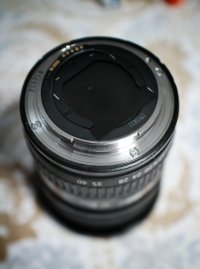
I didn't even get to the best part. For the people that are interested in getting maximum image for minimum money, the 17-40 has an internal filter holder. While all those 14-24 fan boys are spending $400 dollars on the SW100 and 100mm filters to fit their lens, 17-40 owners are cutting down cinegel swatchbooks that they got for free and getting the same end result.
The 17-40 is the undisputed king of Return on Investment. Almost every working photographer that is interested in getting maximum ROI shoots with a 17-40 as their wide. There was a time when you could look at the AP wire, and almost all of the editorial shots (Read: people shot within the context of their environment, aka Local People With Their Arms Crossed) had 17-40 in their exif. This is slowly being replaced by the near term love affair that editorial photographers are starting to have with the X100, but again, we are talking about a specific use-case scenario... one that Jvl happens to specialize in... (As it stands, Canon has the opportunity to corner the editoral environmental photography market if they use the 70D focus system/sensor on a low priced eos-m/11-22M kit, but I digress.)
The reason this lens showed up so much is because it is inexpensive, and when you are shooting people in context, the typical f/stop is 8. It didn't help matters that until recently, the 17-40 was better at f/8 than the 17-35 and the 16-35. Same build quality, lighter weight, less ghosting, better af, better contrast when shooting against anything with blowblack (white seamless, 'when in doubt-blow-it-out' skies) and half the cost meant that it was a no-brainer to pick up the 17-40 vs the 2.8. In fact, the 17-40 has always been the better choice up until the 16-35II came out.
But even then, the only thing that the 16-35II wins at is f/stop and beyond the call of duty sharpness. To this day, most photographers in the trenches would still just as soon get the 17-40 and spend the money they saved on cheap booze.
I didn't even get to the best part. For the people that are interested in getting maximum image for minimum money, the 17-40 has an internal filter holder. While all those 14-24 fan boys are spending $400 dollars on the SW100 and 100mm filters to fit their lens, 17-40 owners are cutting down cinegel swatchbooks that they got for free and getting the same end result.
Attachments
Upvote
0
At the risk of incurring the wrath of 17-40 fans on here, I notice Justin's review does not feature an MTF50 test. So I find it lacking.
Have a look here:
http://www.photozone.de/canon_eos_ff/427-canon_1740_4_5d?start=1
Keep in mind these are my own opinions, most of you will probably differ. However, you won't be convincing me that I'm wrong from my point of view, because I have done some research, and I'm not wrong. Hopefully at least some of you can relate to some of what I offer, though.
My own photographic interest is not limited to only the focal lengths wider than 20mm, or even 24mm...and if they were...see my last paragraph. I'm also not interested in only being able to do daytime "landscape photography", although that would still be one of the primary uses for me.
It looks to me like the Canon 17-40L is less sharp and has higher CA, higher vignetting, and more barrel distortion, than say the Tokina 16-28 f/2.8...besides being a far slower aperture lens to begin with. Of course photozone's test of the Tokina didn't seem all that promising either, because they tried several copies and all were decentered. The Tokina also seems to have other problems, such as flare and the huge bulbous front element.
I'm currently in the market for a wide angle lens. Having looked at several tests and sample pics, from most of these lenses, it seems to me that the 14mm Samyang/Rokinon/Bower lens is almost on par with the Zeiss 15mm f/2.8 and Nikon 14-24. And it only costs $300. Google search tests of this lens, under Samyang...
However, I don't think I can make good enough use out of a 14mm prime lens, and would prefer a zoom. Also if there is any architecture then you throw away a good bit of that 14mm, along with sensor resolution, to correct the mustache distortion...then of course there is the temptation to shift in post, in which case you wind up with less resolution than an iPhone...and then if you also want to correct some of the HUGE rectilinear projection distortion, then there goes the rest of the resolution.
Again the Tokina 16-28 has some flare problems, besides apparently being hit or miss with getting a sample that is properly centered. I am however still heavily considering it.
So the Canon 17-40 does not look all that impressive to me. It's decently priced, but is very similar in price to the faster aperture Tokina. Ideally I would like to do wide field Milky Way shots, so the 17-40 is just too compromised for that. Very high vignetting, very soft in the borders until it goes past about 24 to 28mm focal length. It's probably usable for tripod-only photography from f/9 to f/11, but that does not endear a lens to me very much. Most lenses are able to do this at a bare minimum, even decentered ones.
The Sigma 35mm f/1.4 is clearly the best wide-angle lens available of them all by a wide margin, but just isn't all that wide...and isn't a zoom. If I wind up doing low light stitched panoramas, my Voigtlander 58mm f/1.4 seems even better suited, and is not much softer than this mighty Sigma.
The Tamron 24-70 f/2.8 VC is clearly the winner overall in my opinion, but may not hold its value very well on the used market, because most everyone already sees it as the "bargain lens" (because the Canon 24-70 ii costs nearly double)...so they just buy a new one, rather than a used one for $200 to $300 less. So the hit for reselling will be more like $350, at least based on amazon marketplace (the ones listed higher tend to stay on there forever. I prefer to buy a lens like this and use it a while, then sell it...so in this case it would be cheaper to rent...but then the time is too limited. This is probably just me, though.) Also the Tamron's background bokeh is supposedly not all that smooth, but then it's not really much worse than the Canon 24-70 ii there.
The Sigma 24mm f/1.8 is clearly a bit better than the much maligned Sigma 20mm f/1.8...it costs less than the 20mm as well, besides costing less than the fully manual Rokinon 24mm f/1.4. However the Rokinon 24mm probably has a slight optical edge. Certainly the corners on the Sigma 24mm don't get usable until f/9 to f/11. From the product pics, it appears this Sigma on Canon, has a new focus ring, where the Nikon versions do not. All variations of this lens are now out of production. Probably a big negative.
The Canon 16-35 ii can work but is too costly for its optical performance, in my opinion.
So if cost is no object, just buy the Nikon 14-24 (w/adapter) or the Zeiss 15mm or 21mm. If cost is a concern, then I still don't know just yet. The Canon 17-40 just seems too compromised for me, though.
Have a look here:
http://www.photozone.de/canon_eos_ff/427-canon_1740_4_5d?start=1
Keep in mind these are my own opinions, most of you will probably differ. However, you won't be convincing me that I'm wrong from my point of view, because I have done some research, and I'm not wrong. Hopefully at least some of you can relate to some of what I offer, though.
My own photographic interest is not limited to only the focal lengths wider than 20mm, or even 24mm...and if they were...see my last paragraph. I'm also not interested in only being able to do daytime "landscape photography", although that would still be one of the primary uses for me.
It looks to me like the Canon 17-40L is less sharp and has higher CA, higher vignetting, and more barrel distortion, than say the Tokina 16-28 f/2.8...besides being a far slower aperture lens to begin with. Of course photozone's test of the Tokina didn't seem all that promising either, because they tried several copies and all were decentered. The Tokina also seems to have other problems, such as flare and the huge bulbous front element.
I'm currently in the market for a wide angle lens. Having looked at several tests and sample pics, from most of these lenses, it seems to me that the 14mm Samyang/Rokinon/Bower lens is almost on par with the Zeiss 15mm f/2.8 and Nikon 14-24. And it only costs $300. Google search tests of this lens, under Samyang...
However, I don't think I can make good enough use out of a 14mm prime lens, and would prefer a zoom. Also if there is any architecture then you throw away a good bit of that 14mm, along with sensor resolution, to correct the mustache distortion...then of course there is the temptation to shift in post, in which case you wind up with less resolution than an iPhone...and then if you also want to correct some of the HUGE rectilinear projection distortion, then there goes the rest of the resolution.
Again the Tokina 16-28 has some flare problems, besides apparently being hit or miss with getting a sample that is properly centered. I am however still heavily considering it.
So the Canon 17-40 does not look all that impressive to me. It's decently priced, but is very similar in price to the faster aperture Tokina. Ideally I would like to do wide field Milky Way shots, so the 17-40 is just too compromised for that. Very high vignetting, very soft in the borders until it goes past about 24 to 28mm focal length. It's probably usable for tripod-only photography from f/9 to f/11, but that does not endear a lens to me very much. Most lenses are able to do this at a bare minimum, even decentered ones.
The Sigma 35mm f/1.4 is clearly the best wide-angle lens available of them all by a wide margin, but just isn't all that wide...and isn't a zoom. If I wind up doing low light stitched panoramas, my Voigtlander 58mm f/1.4 seems even better suited, and is not much softer than this mighty Sigma.
The Tamron 24-70 f/2.8 VC is clearly the winner overall in my opinion, but may not hold its value very well on the used market, because most everyone already sees it as the "bargain lens" (because the Canon 24-70 ii costs nearly double)...so they just buy a new one, rather than a used one for $200 to $300 less. So the hit for reselling will be more like $350, at least based on amazon marketplace (the ones listed higher tend to stay on there forever. I prefer to buy a lens like this and use it a while, then sell it...so in this case it would be cheaper to rent...but then the time is too limited. This is probably just me, though.) Also the Tamron's background bokeh is supposedly not all that smooth, but then it's not really much worse than the Canon 24-70 ii there.
The Sigma 24mm f/1.8 is clearly a bit better than the much maligned Sigma 20mm f/1.8...it costs less than the 20mm as well, besides costing less than the fully manual Rokinon 24mm f/1.4. However the Rokinon 24mm probably has a slight optical edge. Certainly the corners on the Sigma 24mm don't get usable until f/9 to f/11. From the product pics, it appears this Sigma on Canon, has a new focus ring, where the Nikon versions do not. All variations of this lens are now out of production. Probably a big negative.
The Canon 16-35 ii can work but is too costly for its optical performance, in my opinion.
So if cost is no object, just buy the Nikon 14-24 (w/adapter) or the Zeiss 15mm or 21mm. If cost is a concern, then I still don't know just yet. The Canon 17-40 just seems too compromised for me, though.
Upvote
0
Good review.. keep on telling myself I should get one just to try at £500 it seems like a steal.
The example shots are great - one question for the Author.. How were you getting flash sync on 5D III over 1/200s . Appears to be softboxed battery packs, profoto or elinchrom rangers?
The example shots are great - one question for the Author.. How were you getting flash sync on 5D III over 1/200s . Appears to be softboxed battery packs, profoto or elinchrom rangers?
Upvote
0
17-40 is one of the worst lenses Canon has regarding over all sharpness from the middle out to corners
The lens is not good even at F-8 in the corner resolution
This no news, the lens have been tested many times, like here http://www.photozone.de/canon_eos_ff/427-canon_1740_4_5d?start=1
The lens is not good even at F-8 in the corner resolution
This no news, the lens have been tested many times, like here http://www.photozone.de/canon_eos_ff/427-canon_1740_4_5d?start=1
Upvote
0
- Status
- Not open for further replies.
Similar threads


- Replies
- 213
- Views
- 16K

- Replies
- 23
- Views
- 3K

- Replies
- 61
- Views
- 5K

- Replies
- 92
- Views
- 7K
