It will be interesting to see real world testing results when available. While I love these lenses what I would really like to see are offerings in wider focal lengths (15,21,28,35). One can hope.
Upvote
0


I am!Well, these Zeiss Otus ML (as well as EF) lenses are fine examples of highly optically corrected glass.
Let’s see if those opposed to lens aberration software correction are willing to pay up for this.
 ).
).What’s your hurry? Clearly, you don’t care about creative perfection.Manual focus?! I gave up on manual focus when I sold my FD-mount cameras and lenses in 1997. I'm not going back!

I don't quite get it.... what would be the use cases for these lenses wide open? I assume for portraiture so nailing focus is a priority yet at f1.4 the DoF would be pretty thin.What’s your hurry? Clearly, you don’t care about creative perfection.
From the advert: “The new ML lenses will appeal to mirrorless shooters for whom time is no object in the pursuit of creative perfection.”
You will buyI will not buy the 50mm Otus
I will not buy the 50mm Otus
I will not buy the 50mm Otus
I will not buy the 50mm Otus
I will not buy the 50mm Otus
(Naively hoping it helps)
Hey! Take a close look at my User Name…Manual focus?! I gave up on manual focus when I sold my FD-mount cameras and lenses in 1997. I'm not going back!
Agreed. A manual focus 21 mm f1.4 lens would be great for astro work.It will be interesting to see real world testing results when available. While I love these lenses what I would really like to see are offerings in wider focal lengths (15,21,28,35). One can hope.
I could see a manual focus UWA (21 mm or less) f1.4 for astro work, but that is the only scenario that I would buy a MF lens for the RF mount.Manual focus?! I gave up on manual focus when I sold my FD-mount cameras and lenses in 1997. I'm not going back!

Given the fact that Zeiss thought it was viable to produce these manual focus lenses for dslrs I can only assume that the target audience for serious photography would not use them for portraiture wide open, or anything like if they are shooting close. In all the weddings I shot I never once came across anyone who thought that a picture with just one eyelash in sharp focus and the rest blurred was anything but bad.I don't quite get it.... what would be the use cases for these lenses wide open? I assume for portraiture so nailing focus is a priority yet at f1.4 the DoF would be pretty thin.
Is zeiss relying on bursts where the shooter moves in and out to hope to get one shot in focus?
Or are the shooters so much better than me to achieve critical focus without Canon's excellent eye AF?
Or they don't have the AF motor technology or don't want the weight of the lenses to be even heavier?
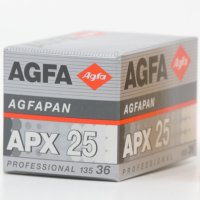
Us old timers are dinosaurs, but we do deserve some respect.I hear Zeiss is working on versions which require you to load the R-series cameras with 25 ISO B&W slide film in order to revive the true art of photography...
...Photography is BACK, I tell you!

Hyperfocal setting with apperture at f8Hey! Take a close look at my User Name…
BONUS: Anybody see what’s in common to all three focus settings?
I really don't need the large aperture of these two lenses as I shoot landscape. Likely to be used at f8 plus. I used live view for focusing with the 5D series, and the same with the r5. Worked great for me, not fast, but great.I could see a manual focus UWA (21 mm or less) f1.4 for astro work, but that is the only scenario that I would buy a MF lens for the RF mount.
You got it!!Hyperfocal setting with apperture at f8

Zeiss would have run the numbers and expected to make profits for these lenses but....Given the fact that Zeiss thought it was viable to produce these manual focus lenses for dslrs I can only assume that the target audience for serious photography would not use them for portraiture wide open, or anything like if they are shooting close. In all the weddings I shot I never once came across anyone who thought that a picture with just one eyelash in sharp focus and the rest blurred was anything but bad.
Even with mirrorless the only way to nail razor thin dof with manual focus is with magnification and although you can get used to doing it reasonably quickly, it’s still clunky. You could work this way in liveview with a dslr of course; maybe that’s what people did.
It’s also worth noting that the focus aid in mirrorless, where you join the two arrows together and it goes green, (Canon) is not accurate enough for f/1.4 or even 1.8, just as the ‘in focus’ dot on a dslr wasn’t either.
However I think that for the pleasure of using a good manual focus lens (if that’s your thing) it does make a lot more sense on mirrorless than it did on dslrs. But if you habitually shoot wide open with very fast lenses I’m not sure it’s worth the hassle.
Manual focusing is more than a method — it’s a way for photographers to connect deeply with their creative power and craftsman-ship, enabling both unparalleled control and artistic freedom. It allows for precise focusing on the center of the image, the story, and emphasizes the exact details that bring the visual idea to life.