Safari lens advice: 200-400 or 500 f4 and 70-200 or 200 f2

I'm South African and know many guides who do tours in and around Kgalagadi, Kruger, Addo etc etc etc

Here's what a friend of mine is taking to Kruger next month (PS, his fourth tour this year)

1DX with 70-200 f/2.8
5D3 with 24-70 mkii (he shot elephants and a leopard with this setup)
7Dii with the 200-400

He would swap out the 70-200 with his 600 when needed.

But as others have said, do have an intimate understanding of where you're shooting. Some of our reserves are open veld, whereas other have lots of scrub and bushes 1.5-2m tall.
Sometimes the animals are humanised and have no fear getting within meters of your vehicle whereas other places the animals still have their natural fear of us.

All in all, I hope my fair country treats you well and that you take many beautiful shots. Hope you create a dedicated post with all your favourite images!
 
Upvote 0
kyle86 said:
hahaha I keep changing my mind, now Im back to thinking the 500 and have a 1.4 and 2x extender lol.

Love to know if you have any tips for Pilansberg? Ill be there in late January so im thinking it might be quite dry and waterholes might be popular?

Thanks :)

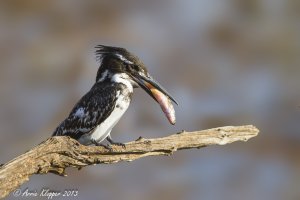
End of January will be wet, green and lush (currently a lot of rain), thus most likely only get shot of animals close to the road. There is a few open grassland areas but the grass will probably be long and you will not be able to get shots of distant animals. Unless you plan on getting up close with the birds at the hides leave the 500 f4. That said, got some great shot with my 7D + 100-400 from the hides. Mornings tends to be clear with good light, afternoons cloudy with possibility of a thunderstorm. But do stay out late for a change to get Brown Hyaena as Pilanesberg is a good spot for them. Game drive vehicles might be crowded, depending on where you stay, but do at least one night drive!

Enjoy.
 

Attachments

  • Bontvisvanger Pilanesberg NR AWK-2.jpg
    Bontvisvanger Pilanesberg NR AWK-2.jpg
    169.1 KB · Views: 228
Upvote 0
I've been on quite a few safari's, most were in Kruger (about 10 times).
Being just an amateur that loves safari's I now have a 550d, 5Diii,70-200 f4, 24-100 & 400 f5.6.

My advice:
- I think a 7dii with a 100-400ii & 1.4 extender would be the best combo not to miss any shots.
I've often experienced rare sightings that only last a couple of seconds since the animals move and so you need a very versitile combination ready to shoot asap. For example I was very lucky a few years ago to withness 2 black mamba's (snakes) dancing/mating in the grass. It was over very quickly and they disapeared in the grass but I got a nice shot with a 550d 70-200f4. Any thing can happen on safari so you need to be ready for anything, otherwise you might be very disappointed of missing a great shot ;-)
- If it's not too late, do a self drive in Kruger it's more practical, safe & probably cheaper.
- A prime is good but you will miss shots as things happen quickly & animals don't wait. So I'm selling my good 400 f5.6 & 70-200 to get a 100-400ii. Just for finding the animal without much delay in the viewfinder a zoom is usefull. Animals that go behind bushes often do not always re-appear where and when you expect.
- You rarely have enough reach on safari, so I'm considering selling my gear & getting a 7dii & 1.4 extender. More fps can help with quick action & BIF. I would say 95% of my shots on safari are at maximum reach and need cropping. I also prefer the fact that the viewfinder is "zoomed in" on a crop to better see what's going on.
- Have your camera ready at all times! Set at center point focus (servo mode), max fps & at 1/1000 during daylight. Animals are often between trees/bush & move ;-)
- Take a small pillow or blanket to rest & stabilize your lens on the side of the car.
- Do a night drive (organised with a Kruger ranger at the camps).
- Drive out of camp as one of the first cars asap & follow a tarmac road. Don't stop for anything exept rare predators. Lions often sit on the roads in the morning but will go away if too many cars arrive. Then during the day they often sleep in the bush and most of the time you get less good sightings during the heat of the day. (same for all predators except for cheetah).


In general the Kruger roads are good (normal car is no problem but suv height is good for viewing) & everything is well organised. It will be cheaper and personally I hate organised tours because it's to rushed and not flexible. Staking out a waterhole or staying longer near a good sighting with a rental car is what I advice. My favourite camps (for the area, not the camps as such) are Lower Sabi (south) & Satara (central) and if you have time Staying in Punda Maria and visiting the Pafuri area in the far north is very nice too. The advantage is that area is much less crowded & also very nice. (avoid staying too longin the mopani area between the olifants river & shingwedsi rivers)

Enjoy your trip !
 
Upvote 0
I have been on safari twice, one in Tazania/Kenya and 1 in Botswana. I had with me

1DX on 500f4 plus 1.4x and 2X
5D3 with 70-300 on first trip, swapped out with 70-200f2.8 second trip
24-70

For birds, 500 is OK, often used with TCs.
70-200f2.8 is great for night drive and close shots
Didn't use the 24-70 very much, got a few keepers. You really need a very experienced guide to get close enough for it.

Next trip I will add the 100-400 mark II. Just got it and used it on my dog running at the beach. Great lens. Should be good on safari.

Loi
 
Upvote 0