Selling 200-400

Jan 22, 2012
4,791
1,573
40,538
Not very happy with this decision as the lens is quite good. But just for use once a year, am not sure if I should hold on to it.
Will buy the Sigma 150-600 sports. But will it be available before my next trip in Feb is the question. Do you think I should wait till the trip is over before selling? What if I sell and the Sigma does not deliver?

Btw the 200-400 is good but I got lots of over exposed shots when I engaged the 1.4x. Perhaps operator error but but not sure...
 
sanj said:
Not very happy with this decision as the lens is quite good. But just for use once a year, am not sure if I should hold on to it.
Will buy the Sigma 150-600 sports. But will it be available before my next trip in Feb is the question. Do you think I should wait till the trip is over before selling? What if I sell and the Sigma does not deliver?

Btw the 200-400 is good but I got lots of over exposed shots when I engaged the 1.4x. Perhaps operator error but but not sure...

Unless you need the cash now just wait. Once the sigma is available rent or buy one and compare for yourself. You have much more to lose if you sell now and regret it later.
 
Upvote 0
Also, with respect to overexposing with the tc engaged. What metering mode are you using? If you spot meter with center point you will not have the same fluctuation in camera metering with the tc engaging as compared to average metering for instance.
 
Upvote 0
Canon1 said:
sanj said:
Not very happy with this decision as the lens is quite good. But just for use once a year, am not sure if I should hold on to it.
Will buy the Sigma 150-600 sports. But will it be available before my next trip in Feb is the question. Do you think I should wait till the trip is over before selling? What if I sell and the Sigma does not deliver?

Btw the 200-400 is good but I got lots of over exposed shots when I engaged the 1.4x. Perhaps operator error but but not sure...

Unless you need the cash now just wait. Once the sigma is available rent or buy one and compare for yourself. You have much more to lose if you sell now and regret it later.

+1
 
Upvote 0
Canon1 said:
Also, with respect to overexposing with the tc engaged. What metering mode are you using? If you spot meter with center point you will not have the same fluctuation in camera metering with the tc engaging as compared to average metering for instance.

What is your reasoning behind that?
 
Upvote 0
Thanks for your thoughts friends. Appreciate.
My take on the overexposure: The photographer must wait for the lens to become disengaged from AF etc before the extender is engaged. In my excitement of the moment I must have forgotten to do that. And if this is indeed the case then it is a bottleneck. Action in the bush happens fast...
 
Upvote 0
privatebydesign said:
Canon1 said:
Also, with respect to overexposing with the tc engaged. What metering mode are you using? If you spot meter with center point you will not have the same fluctuation in camera metering with the tc engaging as compared to average metering for instance.

What is your reasoning behind that?

If you are shooting a subject that is darker or lighter than it's surroundings, and you engage the TC, you now fill your frame with more of the subject. Therefore, the metering points will adjust exposure based on what is filling the frame. If you are shooting center point and metering off of your subject, cutting out more of the surrounding habitat will have no impact on exposure, while if you are shooting evaluative mode (averaging the exposure for the entire scene), and you cut out more of the habitat the camera will adjust exposure based on what makes up more of the scene... in this case the subject, which will result in different exposure settings and either under or over-exposing your subject.

Think about a dark moose standing in bright green foliage. Spot metering is the way to go when changing focal lengths if your intention is to maintain correct exposure for the moose.

Naturally the best way to shoot is in Manual mode exposing for your subject, however this is not always possible if you are in changing lighting conditions or moving around, or shooting multiple different subjects in the same setting. (Canada geese and snow geese for example)
 
Upvote 0
Since you had the funds to buy a lens that expensive, one would think you can buy the other zoom and then compare them for a while. Otherwise you will never know which was the right choice. I have made the mistake of selling some ham radio equipment to buy a newer model twice, and totally regretted the decisions. I will never to that again with any kind of equipment, regardless of the hobby.

I use an external 1.4X TC III on several Canon lenses, zoom and prime, and I have never had an issue with exposure. Don't understand why that is happening. Until I added a 300mm f/4 and 400mm f/5.6, I used a 2X TC III on my 70-200mm f/2.8 IS II, and never had exposure issues either.
 
Upvote 0
I'm surprised no-one has mentioned the 400 DO IS II, you can be sure that's going to be the premium wildlife lens for many, many people.
I guess the Sigma isn't that much bigger, 30% heavier and a few inches longer, though that's probably a lot of inches at full zoom.

I would just consider carefully how important the zoom function really is.

(I should note, I will probably be getting the Sigma, if it's good enough at the long end, just on a price/mm basis.)
 
Upvote 0
9VIII said:
I'm surprised no-one has mentioned the 400 DO IS II, you can be sure that's going to be the premium wildlife lens for many, many people.

I'm guessing he makes use of the zoom and the built in tc. He's got a 200-560mm lens in one package. When that lens came out some guy was gushing about how great it is to be able to switch things up so quickly, claimed it was better than having a set of primes (and yeah, 200, 300, 400 + tc is a lot carry around).

That said, I agree with you on the 400mm DO, I have the mark I version and while it is a little less contrasty than some lenses, it's a great lens, I love it. So darn light for what it is - it's the size and weight of my 200mm f2. I can literally hand hold it with one hand (why I would want to I can't say but it's possible).

I'll be taking a hard look at the mark II, if it is significantly better I'll make the jump, that's a great lens. I'd love a 500mm f4 DO.
 
Upvote 0
Canon1 said:
privatebydesign said:
Canon1 said:
Also, with respect to overexposing with the tc engaged. What metering mode are you using? If you spot meter with center point you will not have the same fluctuation in camera metering with the tc engaging as compared to average metering for instance.

What is your reasoning behind that?

If you are shooting a subject that is darker or lighter than it's surroundings, and you engage the TC, you now fill your frame with more of the subject. Therefore, the metering points will adjust exposure based on what is filling the frame. If you are shooting center point and metering off of your subject, cutting out more of the surrounding habitat will have no impact on exposure, while if you are shooting evaluative mode (averaging the exposure for the entire scene), and you cut out more of the habitat the camera will adjust exposure based on what makes up more of the scene... in this case the subject, which will result in different exposure settings and either under or over-exposing your subject.

Think about a dark moose standing in bright green foliage. Spot metering is the way to go when changing focal lengths if your intention is to maintain correct exposure for the moose.

Naturally the best way to shoot is in Manual mode exposing for your subject, however this is not always possible if you are in changing lighting conditions or moving around, or shooting multiple different subjects in the same setting. (Canada geese and snow geese for example)

That is false logic and factually incorrect.

You make a very broad assumption of the comparative subject and background illumination, where there is only an over (or under) exposure problem then all scenes must be similar, and that is unrealistic.

Further "evaluative mode (averaging the exposure for the entire scene)" that isn't how Evaluative mode works, it measures the scene in many different sections (mostly 63 for Canon) and with focus distance and colour info works out what is most probably the subject, it then weights exposure to that subject.
 
Upvote 0
sanj said:
... Action in the bush happens fast...

That's what ... oh, nevermind...

luckydude said:
9VIII said:
I'm surprised no-one has mentioned the 400 DO IS II, you can be sure that's going to be the premium wildlife lens for many, many people.

I'm guessing he makes use of the zoom and the built in tc. He's got a 200-560mm lens in one package. When that lens came out some guy was gushing about how great it is to be able to switch things up so quickly, claimed it was better than having a set of primes (and yeah, 200, 300, 400 + tc is a lot carry around).

That said, I agree with you on the 400mm DO, I have the mark I version and while it is a little less contrasty than some lenses, it's a great lens, I love it. So darn light for what it is - it's the size and weight of my 200mm f2. I can literally hand hold it with one hand (why I would want to I can't say but it's possible).

I'll be taking a hard look at the mark II, if it is significantly better I'll make the jump, that's a great lens. I'd love a 500mm f4 DO.

Canon has released a few 600mm DO patents, including this one for a 600mm f/4 DO. That's what I'd like to get, though I may bite the bullet and get either the 400mm f/4 DO or the 500mm f/4L II next Spring.

http://www.canonrumors.com/2014/03/patent-canon-ef-600-f4l-is-ii-ef-600-f4-do-is/
 
Upvote 0
privatebydesign said:
Canon1 said:
privatebydesign said:
Canon1 said:
Also, with respect to overexposing with the tc engaged. What metering mode are you using? If you spot meter with center point you will not have the same fluctuation in camera metering with the tc engaging as compared to average metering for instance.

What is your reasoning behind that?

If you are shooting a subject that is darker or lighter than it's surroundings, and you engage the TC, you now fill your frame with more of the subject. Therefore, the metering points will adjust exposure based on what is filling the frame. If you are shooting center point and metering off of your subject, cutting out more of the surrounding habitat will have no impact on exposure, while if you are shooting evaluative mode (averaging the exposure for the entire scene), and you cut out more of the habitat the camera will adjust exposure based on what makes up more of the scene... in this case the subject, which will result in different exposure settings and either under or over-exposing your subject.

Think about a dark moose standing in bright green foliage. Spot metering is the way to go when changing focal lengths if your intention is to maintain correct exposure for the moose.

Naturally the best way to shoot is in Manual mode exposing for your subject, however this is not always possible if you are in changing lighting conditions or moving around, or shooting multiple different subjects in the same setting. (Canada geese and snow geese for example)

That is false logic and factually incorrect.

You make a very broad assumption of the comparative subject and background illumination, where there is only an over (or under) exposure problem then all scenes must be similar, and that is unrealistic.

Further "evaluative mode (averaging the exposure for the entire scene)" that isn't how Evaluative mode works, it measures the scene in many different sections (mostly 63 for Canon) and with focus distance and colour info works out what is most probably the subject, it then weights exposure to that subject.

My camera must be broken. If I use evaluative metering in the situation that I DESCRIBED, I experience the exposure problem that I discussed. When I use spot metering in the situation it there is no problem.

You're description of how evaluative metering works does not nullify what I see actually happening in the field. It's simply a more specific description of how the camera technically does it's metering. What I described is EXACTLY what happens when you use evaluative metering and then change focal length on the subject in a scene where the dynamic range between the subject and the surroundings are divergent.

I didn't make any broad assumptions about the OP's scenes. Sanj said that in some situations he experiences over-exposure problems. I simply discussed a possible reason. I think it is perfectly reasonable to assume that in many shooting situations that there is a relatively broad range of dynamic range between the setting and the subject.

Some people come to this forum and argue just to argue.... It's really sad...

Sanj: It sounds like you figured out your problem, but if you still notice issues, you are welcome to try my suggestions. Good luck with your decision making.
 
Upvote 0
Im really interested in what you decide to do as I am waiting for the Sigma 150-600 to see how it compares to the Canon 200-400. Obviously its not going to be the same but will the Canon be worth $10000 extra? I dont mind paying if it is but for a lens that wont be my primary Im kinda thinking about the Sigma.. .hoping there is some reviews coming out asap!
 
Upvote 0
DJL329 said:
sanj said:
... Action in the bush happens fast...

That's what ... oh, nevermind...

luckydude said:
Ahahahahahahaaha. Good one. And perhaps after seeing the pictures I was talking about you will realize the Freudian slip.

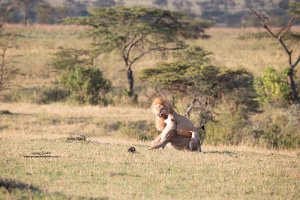
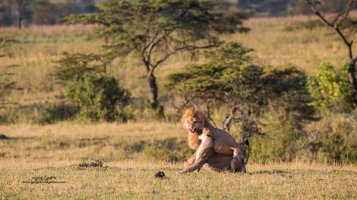
Attaching to photos of the incident. The lovers were far and I had to engage the 1.4x. The first photo is how the RAW appears. Second is a quick salvage. (I know many of you would salvage it much better.)
 

Attachments

  • _73O4489-as-Smart-Object-1.jpg
    _73O4489-as-Smart-Object-1.jpg
    819.8 KB · Views: 212
  • _73O4489-as-Smart-Object-fix.jpg
    _73O4489-as-Smart-Object-fix.jpg
    723.7 KB · Views: 223
Upvote 0
kyle86 said:
Im really interested in what you decide to do as I am waiting for the Sigma 150-600 to see how it compares to the Canon 200-400. Obviously its not going to be the same but will the Canon be worth $10000 extra? I dont mind paying if it is but for a lens that wont be my primary Im kinda thinking about the Sigma.. .hoping there is some reviews coming out asap!

As I am gaining experience with my photography and getting older I am realizing I do not need the most heavy or expensive equipment to get the photo. I am sure the focus of the Sigma will be as quick as the Canon in good light. The difference will be in low light only. So if I spend 40 days in 'bush' every year then I will have 80 mornings/evenings. Out of that I will witness something to photograph 20 times in tough light. Out of the 20 I will miss just few shots. I think I am ok with that. (Actually I do not think I will miss ANY.)

F4 is bit too wide for me. I find that many times the entire animal is not in focus. So 5.6 is fine and preferable. And the real world depth of field difference between f4 and 5.6 is negligible.

The main factor is resale value. Sigma may not hold up to its value after 5 years but Canon will.

I think I will sell the Canon and get the Sigma. Mainly because I prefer to work without the extra step of 1.4x switch. I will prefer the continues zoom option without having to wait for the lens to normalize.

Or perhaps I am building all this up as I want to save the 9k. haahaha
 
Upvote 0