Should I get a clear filter for my lens?

Status
Not open for further replies.
omar said:
$105.50 is really expensive
do i really really need?

what's wrong with a super cheap one?


- You should buy the expensive one to protect your expensive lens.

- You should also buy a less expensive clear filter to protect your expensive clear filter.

- You should also buy the cheap clear filter to protect your other clear filters.

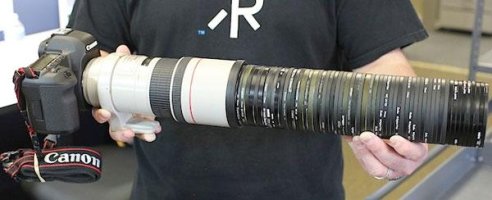
- Don't forget to remove ALL of the clear filters before taking a picture, because they WILL degrade the quality of your images.


Or, you can just use a lens hood to protect your lens properly, and it will actually improve your images, instead of making them softer like a filter does.

The noobs always buy the protective filters because the salesman in the camera store, who makes more profit from a filter than he does from a camera or lens, convinces them they need one... and then laughs his a$$ off when they leave the store.
 
Upvote 0
Any filter will have some non-zero effect on image quality. The cogent question is whether this effect will be noticible. No, a good quality clear or UV filter can both protect the front of the lens and have unnoticable effects on your image.

Marumi sells some nice clear filters which are more expensive then their nice UV filters. I am not sure that if you are buying a quality filter whether a clear is clearly worth the money than a less expensive UV filter.

When ever I buy a lens, I buy a UV filter for it. It stays on the lens unless there is a specific reason to remove it. It is cheap insurance against a scratch.

But like anything, you get what you pay for. Don't go cheap on filters, but also don't go crazy. ;D
 
Upvote 0
rumorzmonger said:
omar said:
$105.50 is really expensive
do i really really need?

what's wrong with a super cheap one?


- You should buy the expensive one to protect your expensive lens.

- You should also buy a less expensive clear filter to protect your expensive clear filter.

- You should also buy the cheap clear filter to protect your other clear filters.

- Don't forget to remove ALL of the clear filters before taking a picture, because they WILL degrade the quality of your images.


Or, you can just use a lens hood to protect your lens properly, and it will actually improve your images, instead of making them softer like a filter does.

The noobs always buy the protective filters because the salesman in the camera store, who makes more profit from a filter than he does from a camera or lens, convinces them they need one... and then laughs his a$$ off when they leave the store.

+1 Funny!
...but I always have a hood attached.
 
Upvote 0
One flaw in the lensrental essay about protective filters is the estimated cost of replacing a front element. I believe the author says about $150, which might in fact be his cost if he is ordering the part and doing the labor himself.

However, even for Canon Professional Services members, you'd have to add about $150 for labor, and then the price of shipping the lens (insured!) to Canon, which costs about $70.

And, of course, even with rush service, you don't have your lens for a week.

I'd rather clean the filter than the front element. A filter already saved my older 24-70mm in a tripod mishap some years ago.

As for image degradation, I've taken many test shots to compare side by side, as some experienced photographers have expressed concern about it. I see no loss of image quality with B+W and better Hoya filters--not even star effects in night shots. If I'm concerned about flare, I can pop off the filter briefly.

To me, the biggest peace of mind comes from being able to clean the filter. So easy in the field to get muck splashed on it, or a stem hitting it while walking through brush. In that tripod incident, the ef 24-70mm fell forward onto a small stone (no, I don't blame my wife, I should have explained the basics of the tripod!). The Hoya filter smashed, but I didn't get a scratch on my front element.

And as has been said: Canon advises using the filters on L lenses to complete weather sealing. If my car manufacturer recommends specific tires, fluids, etc, I take the suggestion seriously.

I remember when people would swear seatbelts cause more harm than good.
 
Upvote 0
Question: I bought both a B&W (skylight) filter ($45) AND a lens hood ($20) for my EOS M + 22mm f/2. They are both about the same depth. It seems I don''t really need both and they are adding significant depth to my handy little camera. should I return one? If so, which one?
 
Upvote 0
AudioGlenn said:
Question: I bought both a B&W (skylight) filter ($45) AND a lens hood ($20) for my EOS M + 22mm f/2. They are both about the same depth. It seems I don''t really need both and they are adding significant depth to my handy little camera. should I return one? If so, which one?

Honestly, I'd return both. The lens hood for the EF-M 22mm f/2 is essentially useless - it's not deep enough to provide any protection from flare, given the size of the front element and the AoV of the lens. I haven't done the estimate on the EF-M 22 hood, but the similarly-designed hood for the EF 40mm f/2.8 isn't deep enough to protect a 14mm lens from flare, much less the 40mm lens for which it's designed. Futhermore, since it's a thread-mounting hood, any force applied to the hood won't be transmitted to the barrel as with a bayonet-mount, but rather to the front-focusing element with the STM motor connected to it. Not very protective at all.

As for the filter, IMO the big advantage of a pancake lens is it's thin projection from the body. Making it thicker with a filter doesn't make a lot of sense to me (in fact, I would prefer the 'old' side-pinch cap design, since it's thinner than the center-pinch cap that comes with the lens.
 
Upvote 0
neuroanatomist said:
AudioGlenn said:
Question: I bought both a B&W (skylight) filter ($45) AND a lens hood ($20) for my EOS M + 22mm f/2. They are both about the same depth. It seems I don''t really need both and they are adding significant depth to my handy little camera. should I return one? If so, which one?

Honestly, I'd return both. The lens hood for the EF-M 22mm f/2 is essentially useless - it's not deep enough to provide any protection from flare, given the size of the front element and the AoV of the lens. I haven't done the estimate on the EF-M 22 hood, but the similarly-designed hood for the EF 40mm f/2.8 isn't deep enough to protect a 14mm lens from flare, much less the 40mm lens for which it's designed. Futhermore, since it's a thread-mounting hood, any force applied to the hood won't be transmitted to the barrel as with a bayonet-mount, but rather to the front-focusing element with the STM motor connected to it. Not very protective at all.

As for the filter, IMO the big advantage of a pancake lens is it's thin projection from the body. Making it thicker with a filter doesn't make a lot of sense to me (in fact, I would prefer the 'old' side-pinch cap design, since it's thinner than the center-pinch cap that comes with the lens.

Thanks for the reply, neuro.
 
Upvote 0
My own general rule:
1. Used rigid lenshood ALL the time for protection.
2. No filter 90% of the time
3. Use UV fiter in hazard condition: rain, on beach etc.

So far I am lucky enough not to have any damaged front element.
 
Upvote 0
Hesbehindyou said:
Dylan777 said:
[adding a filter means you don't have to worry about] your lens got [getting] hit with water, dust or rocks.

This kinda attitude is the reason why the topic is a can of worms.

Giving correct quote before comment would be nice.

My original "I have BW XS_Pro_NANO_Clear on all my lenses. It's so clear that you wouldn't even know it on there. For outdoor shooting, you can add other filters on top of clear filter: CPL, ND etc...without worry your lens got hit with water, dust or rocks."
 
Upvote 0
I originally bought a high quality B&W or Heliopan filter for each of my lenses. Over time, I started removing them when I found that very fine detail was better without them, and flare was much less.

Its not anything major, but I now have all my clear filters put away and only take them out when the lens needs protection from blowing dust or sand, or some other nasty element.

I've never had a scratched or damaged lens element, I'm pretty careful.

BTW, there is one exception. I kept a filter on my 17-55mm EF-s believing that it would help keep dust out. I don't know if it worked, but I never had a dust issue with the lens over three years of heavy use.
 
Upvote 0
Here is my two cents worth - It depends.

I have a 5D Mark III with 24-105mm f4 L lens, the manual states in order to complete the weather sealing a filter is required.

So I use a clear filter if there is a chance my camera and lens are going to get wet (eg: when using the camera at the beach or if it starts to rain or if it is snowing). In these circumstances weather sealing is more important to me than a very very slight degradation in image quality.

All other times I have the filter off.

I always use my lens hood.
 
Upvote 0
My advice to you is to better spend that money in the highest quality possible polarizers for each of your lenses.

-You get the extra protection AND the advantages of a polarizer
-You avoid vigneting in case you had an UV and wanted to add a polarizer on top
-Or avoid the hassle to remove the UV when adding the polarizer
-A helluva lot more useful than a UV
-Looks cooler 8)
-Remember to always use the lens hoods as well

Coupled to a 5dIII or the like, you won´t even need to remove them in low light situations if you do not want to.

I used to have a few UV´s (BW high quality) and those I could not sell are gathering dust. The polarizers get to go outside each and every single time. To me UVs are kinda useless. I have a B+W pol for each of my lenses, I´ll advice strongly on the XS-Pro series that have front threads, are as thin as the slims but contrary to those so you can put the lens cap of a filter holder.
 
Upvote 0
fegari said:
...polarizers for each of your lenses.

Coupled to a 5dIII or the like, you won´t even need to remove them in low light situations if you do not want to.

Sure...because who needs that extra ~1.75 stops of light when there's not enough to begin with... ::)
 
Upvote 0
neuroanatomist said:
fegari said:
...polarizers for each of your lenses.

Coupled to a 5dIII or the like, you won´t even need to remove them in low light situations if you do not want to.

Sure...because who needs that extra ~1.75 stops of light when there's not enough to begin with... ::)

Those with very good low light capability cameras, >1.75 stops better than the previous generation ;=)
 
Upvote 0
fegari said:
neuroanatomist said:
fegari said:
...polarizers for each of your lenses.

Coupled to a 5dIII or the like, you won´t even need to remove them in low light situations if you do not want to.

Sure...because who needs that extra ~1.75 stops of light when there's not enough to begin with... ::)

Those with very good low light capability cameras, >1.75 stops better than the previous generation ;=)

You could use Kenko Zeto Ex polarizer wihch loses a bit less light than the typical polarizer. But is easier to break too. I would not recommend to use polarizers. I have a clear filter on my 70-200, but all other lenses are naked. On my medium format system I go bare. The reason I have it on my 70-200 is that I tend to use that in "rough" conditions, rainy, splashing etc and I rather frequently wipe the clear filter than the front element. I prefer clear filter rather than UV as I don't want any change to the image whatsoever, it's only there as a splash-cover for the front element. I don't have it for general impact protection, my impact protection is called insurance :-).

I once used polarizers quite often for my landscape photography, but nowadays I use them very rarely. My photographic style generally don't gain from them.
 
Upvote 0
You definitely need a clear filter:
I once had to clean my clear filter of my 24-105L in order to remove specks on it. They couldn't be removed by wiping, dusting and not using propanol. So, I figured it must be dust under the filter. Removed the filter. Still no luck with de-dusting, the specks were on the front side. So I tried to clean in an ultrasound bath using alcohol.
No luck, the specks were a damage of the coating or the glass of the filter by something agressive, perhaps salty water?? Never used the lens close to the sea, however. I lightheartedly threw the filter away the same day! No damage done to the lens! :-)

Bottom line: I always tried to be careful with my lens, but still I somehow destroyed the front filter... Had I destroyed the front element of my lens, I would have, I don't know what, but surely not simply replaced a comparatively cheap filter.

So, yes, one needs a front filter. Absolutely.
 
Upvote 0
fegari said:
My advice to you is to better spend that money in the highest quality possible polarizers for each of your lenses. You get the extra protection AND the advantages of a polarizer

Are you serious? Really? If so - a (c)pl has no advantages per se but is an effect filter for haze/reflection removal and sky postcard colors, though the latter doesn't work on (u)wa lenses. It's a "should have" filter, but hardly an "always on" - why would I want to stick something that modifies the colors vs. wysiwyg in front of L glass?

Personally, I've got clear b+w xs pro nano mrc filters in front of my lenses for the reasons given above, esp. easy cleaning since I'm shooting outside a lot.
 
Upvote 0
Definitely a can of worms topic, maybe like the super thin condom vs the standard....Anyway, I use Hoya HD on all of my lenses; except for my Sigma 85 1.4, this is the only lens I keep for portraits indoors, all the others find there way outdoors, where I live, it's humid and dusty and polluted all year, wiping a filter numerous times a day is (to me) safer then wiping a front element..
 
Upvote 0
Status
Not open for further replies.