Show your Bird Portraits

IslanderMV said:
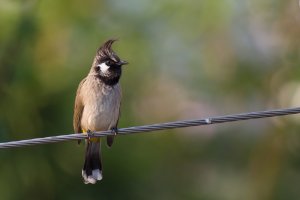
Common Waxbill - Honolulu Sept 8
60D and my old Tammron 70-300 - (small easy to pack).
A flock of these birds surrounded me as my wife spent 5 HOURS shopping at the swap meet around the Aloha stadium, thank god I brought my camera. I did some urban birding and saved my sanity.
Only 5 hours, sorry to hear that your wife is ill. ;D
 
Upvote 0
candc said:
DIABLO said:
I had been looking for an owl for a long time. I could hear them all the time in and around my house but could never see them. I took this photo handheld @1/40s at almost nightfall, raised the exposure in lightroom. Not one of my best but yet another bird I can cross off my list!
i have a lot of great horned owls around my house. i see them in the daytime midwinter sometimes but the rest of the year i only see them at, or after dark, i have been trying to get a decent shot of one myself for a few weeks but no luck? they are like cops, never around when you need them?

nice pics,

Thanks

I see them most of the time when I'm going to work in the early mornings. I have to drive very alert where I live because of the population of wildlife mainly deer where I live. I've seen some pretty big owls in my area but of course its always when I don't have a camera with me!
 
Upvote 0
IslanderMV said:
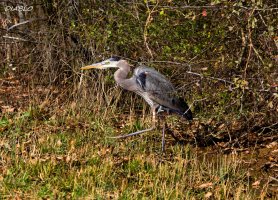
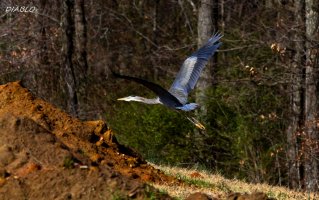
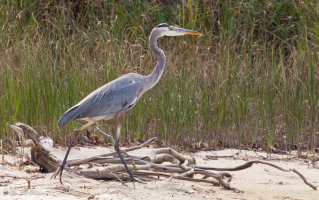
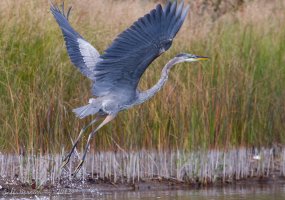
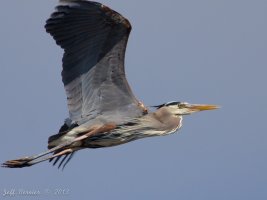
Great Blue Heron
Oct 20 - Martha's Vineyard (Chappaquiddick)
60D 100-400 mm
I have a life-time supply of Heron picts, was looking for something different.

" a life-time supply of Heron pics "

I call and raise you two... LOL...
 

Attachments

  • IMG_4827 (1452x1046).jpg
    IMG_4827 (1452x1046).jpg
    1.5 MB · Views: 599
  • IMG_4834 (1898x1193).jpg
    IMG_4834 (1898x1193).jpg
    1.1 MB · Views: 581
Upvote 0
DIABLO said:
IslanderMV said:
Great Blue Heron
Oct 20 - Martha's Vineyard (Chappaquiddick)
60D 100-400 mm
I have a life-time supply of Heron picts, was looking for something different.

" a life-time supply of Heron pics "

I call and raise you two... LOL...
Ha! Ha! Ha! Looks like Chauncey raised you four!

steven kessel said:
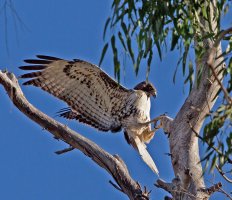
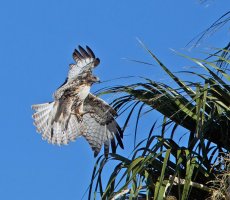
Landing!

Juvenile Red-tailed Hawk, 5Diii, 400DO
Lovely pictures!
 
Upvote 0
rpt said:
DIABLO said:
IslanderMV said:
Great Blue Heron
Oct 20 - Martha's Vineyard (Chappaquiddick)
60D 100-400 mm
I have a life-time supply of Heron picts, was looking for something different.

" a life-time supply of Heron pics "

I call and raise you two... LOL...
Ha! Ha! Ha! Looks like Chauncey raised you four!

Har..! I am counting Chauncey's spectacular photo as one. So I will match Diablo - except the photos have to be at least 2000 pixels on one edge, because manly men don't crop excessively. ;)
 

Attachments

  • IMG_0165.jpg
    IMG_0165.jpg
    1.5 MB · Views: 477
  • IMG_1867-2.jpg
    IMG_1867-2.jpg
    1.5 MB · Views: 474
  • IMG_3565.jpg
    IMG_3565.jpg
    953.7 KB · Views: 500
Upvote 0
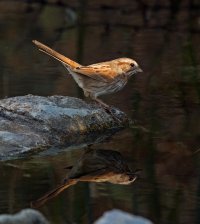
Every once in a while one needs to change perspective. I've been concentrating on raptors all fall. Today, one of my favorite raptor hunting grounds was a total bust. So, I wound up waiting by the bank of a stream for nearly an hour until the local songbird population decided to ignore me. I was rewarded with this shot of a Song Sparrow.

5Diii, 400 DO, ISO 800, f6.3 @ 1/320, hand held.
 

Attachments

  • 5N4B5061.jpg
    5N4B5061.jpg
    526.5 KB · Views: 803
Upvote 0
Nice reflection Steven! The hawks were pretty cool too.

Not a lot of 'new' happening this last weekend but after my 60 hour week I finally got around to going through Sunday's shots and the posing Western Scrub Jay.
C5901A-X3.jpg


Now if only I could have gotten this close to the fairly rare(for SoCal) Lewis's Woodpecker I found.
 
Upvote 0
steven kessel said:
Every once in a while one needs to change perspective. I've been concentrating on raptors all fall. Today, one of my favorite raptor hunting grounds was a total bust. So, I wound up waiting by the bank of a stream for nearly an hour until the local songbird population decided to ignore me. I was rewarded with this shot of a Song Sparrow.

5Diii, 400 DO, ISO 800, f6.3 @ 1/320, hand held.

I don't see many images done with the 400 DO, this one is quite nice! I considered renting one in the past. I think I know the main reason why Canon didn't want to introduce a new 400 DO. It would cut heavily into sales of their 200-400 zoom, because it would cost less and weigh half as much...and perhaps rival the image quality. I bet it feels great to sling yours over your shoulder and go forth into the nature! Only 4.3 pounds...
 
Upvote 0
Where I live (southern Arizona) if you want to do wildlife photography you need to be prepared to walk to your subjects. I find that weight is a big consideration. Lugging a heavy lens/camera/tripod combination is simply impractical most of the time. I was looking for something that gave me significant magnification, good image quality, and was reasonably light. A friend suggested the 400DO to me. I did some research and discovered that it seemed to be a forgotten item in Canon's inventory. My friend, who is a superb wildlife photographer, assured me that I couldn't go wrong with the lens. I swallowed hard and bought it. I must say that I never cease to be pleased with it. The image quality is superb, and it is light and portable, weighing not all that much more than my 100-400 f4-5.6L. It's become my go-to lens for wildlife photography.
 
Upvote 0
jamie i like your goose.


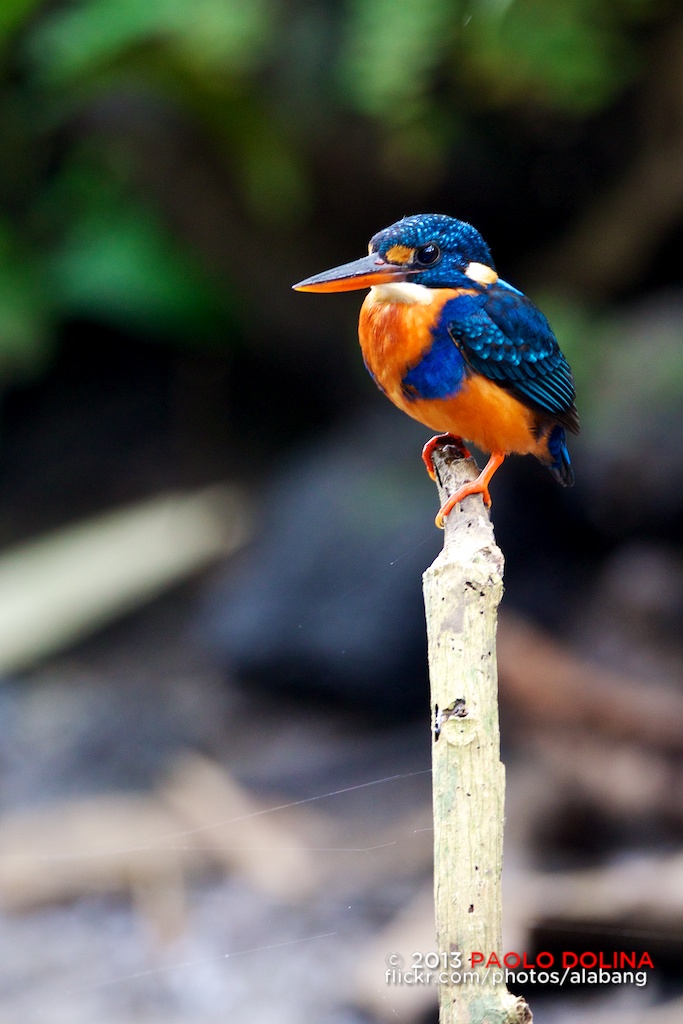
Indigo-banded Kingfisher (Alcedo cyanopectus) by alabang, on Flickr

The Indigo-banded Kingfisher (Alcedo cyanopectus) is a species of bird in the Alcedinidae family. It is endemic to the Philippines, where it is a generally uncommon but locally common resident of the northern and central islands. There are two subspecies, the nominate race, which occurs on Luzon, Polillo, Mindoro, Sibuyan and Ticao, and A. c. nigriostris, which is found in Panay, Negros and Cebu. It forms a superspecies with the Silvery Kingfisher of the southern Philippines.[1]
The Indigo-banded Kingfisher feeds on fish and aquatic insects. It perches on rocks and overhanging branches and foliage and dives steeply into the water to catch its prey. Once caught, it returns the prey to the perch where it is beaten and swallowed. Little is known about its breeding behaviour, although it is known to nest in tunnels dug into the banks of streams and rivers.[1]
Its natural habitats are subtropical or tropical dry forests and subtropical or tropical mangrove forests.

Source: http://en.wikipedia.org/wiki/Indigo-banded_Kingfisher

Location: http://en.wikipedia.org/wiki/La_Mesa_Ecopark
 
Upvote 0