Show your Bird Portraits

"It is no more cheating than hiring a model for a studio shoot..... and the best thing is that chickadees will work for peanuts"

Of course I agree, that's a great line. :) I'm not some kind of purist, and being new to this I haven't acquired much if any bias but I am aware from the last couple of years of observing that there does seem to be hints of bias out there.

After jrita's reference to set ups I started looking carefully at my New Stokes Field Guide of Birds, looking a the background and perches and I guess it's apparent that there are some set ups in the book that have yielded excellent photos.

I have lots of mountain ash trees around my acreage and that translates into excellent Bohemian waxwing opportunities. A look at the Stokes book and hey, same kind of shots. Not exactly surprising, obviously. Likewise, my mountain ash trees have yielded great sapsucker shots. These are essentially equivalent to "set ups", I guess.

However, being the analytical type I am, I then wonder about the implications of all the different perspectives. Here's an example. As a little guy of maybe 7 or 8 I received a wonderful, hot off the press, Birds of Alberta book (late 1950's vintage). I am well aware of the positive influence that book had on me. Some pictures were missing, many were decent paintings and many were, by todays standards, very poor photos. Later, in the early 70's I purchased the much improved 2nd edition and at some point became aware, I'm quite certain, that some of the shots were taxidermy. As a teen I was into taxidermy myself and mounted a fair number of birds - relatives would bring their window kill etc, and my mother's freezer was a source of conflict in the home, so I think my judgement was accurate. ;)

So, my question is, what is the concensus or accepted standard relative to nature photography. What's generally considered acceptable and in what context. Obviously, shooting specimens in zoos is fun and yields, in many cases, very wonderful photos and I personally wouldn't put it down.

Maybe this is something already beaten in some thread (link??). If not is it worthy of a thread? I'm not a fan of elitism and am not interested in generating negativity with this, just curious. Any comments?

Jack
 
Upvote 0
Jack Douglas said:
"It is no more cheating than hiring a model for a studio shoot..... and the best thing is that chickadees will work for peanuts"

Of course I agree, that's a great line. :) I'm not some kind of purist, and being new to this I haven't acquired much if any bias but I am aware from the last couple of years of observing that there does seem to be hints of bias out there.

After jrita's reference to set ups I started looking carefully at my New Stokes Field Guide of Birds, looking a the background and perches and I guess it's apparent that there are some set ups in the book that have yielded excellent photos.

I have lots of mountain ash trees around my acreage and that translates into excellent Bohemian waxwing opportunities. A look at the Stokes book and hey, same kind of shots. Not exactly surprising, obviously. Likewise, my mountain ash trees have yielded great sapsucker shots. These are essentially equivalent to "set ups", I guess.

However, being the analytical type I am, I then wonder about the implications of all the different perspectives. Here's an example. As a little guy of maybe 7 or 8 I received a wonderful, hot off the press, Birds of Alberta book (late 1950's vintage). I am well aware of the positive influence that book had on me. Some pictures were missing, many were decent paintings and many were, by todays standards, very poor photos. Later, in the early 70's I purchased the much improved 2nd edition and at some point became aware, I'm quite certain, that some of the shots were taxidermy. As a teen I was into taxidermy myself and mounted a fair number of birds - relatives would bring their window kill etc, and my mother's freezer was a source of conflict in the home, so I think my judgement was accurate. ;)

So, my question is, what is the concensus or accepted standard relative to nature photography. What's generally considered acceptable and in what context. Obviously, shooting specimens in zoos is fun and yields, in many cases, very wonderful photos and I personally wouldn't put it down.

Maybe this is something already beaten in some thread (link??). If not is it worthy of a thread? I'm not a fan of elitism and am not interested in generating negativity with this, just curious. Any comments?

Jack

There are certainly limits to what can generally be considered "acceptable and true or real". Personally, I would never consider a songbird setup, or baiting waterfowl, to be "fake." Sometimes, even with $25,000 worth of equipment, you just can't get close enough. As Don said, it isn't any different really than hiring a model...only instead of paying your "models" in cash, you pay them in...seed, peanuts, corn, shrimp. ;)

The line really has to be drawn where you begin to interfere with the birds (or wildlife) directly. There are some photographers who are not above capturing and tethering wild birds, manually placing them in closed habitats in order to get a shot. I consider that crossing over the line. If a bird is bred in captivity, or properly trained as in falconry, then I don't see any issue, but to take a wild bird and cage it is too much. There are plenty of bird hospitals where owls, raptors, etc. are kept for a time during their recovery where, if you simply cannot get good shots out in nature, you can go to get closer shots of birds in captivity. Just, don't lie...to yourself or others, when you photograph birds in captivity.

WORSE though, there have been far too many reports of photographers actually breaking the birds wings to keep them from flying off!! That is beyond the pale, and just plain evil. Similar things have sometimes been done with wild animals...breaking a leg to keep them in close proximity. These things are just wrong, and should NEVER be done.

So long as you are not abusing the creatures you photograph, there really isn't anything wrong with using your knowledge of your subjects to attract them closer. Feeding birds seed, fruit, berries, creating pretty perches for them, etc. is harmless. Especially if they are already in your yard eating seeds, fruits and berries. ;) When it comes to chickadees, they are so friendly they will happily eat right out of your hands, especially if you have peanuts. As far as ornithologists are concerned, setting out bird feeders and seed is of great assistance to migrating birds, which have been encountering increasingly difficult migratory journeys as habitat and food supplies are lost. A lot of scientific data is gathered by participants in Cornell's Lab of Ornithology "Feeder Watch" programs and eBird's birding lists, and this information is used to gauge population densities, behavior patterns, migratory patterns, etc. If you want to "legitimize" your use of setups (which will only attract birds already in the area), then you could consider creating bird watch lists and submit them to eBird, and during fall/winter join up for Feeder Watch and submit your sightings there as well.
 
Upvote 0
jrista said:
Jack Douglas said:
"It is no more cheating than hiring a model for a studio shoot..... and the best thing is that chickadees will work for peanuts"

Of course I agree, that's a great line. :) I'm not some kind of purist, and being new to this I haven't acquired much if any bias but I am aware from the last couple of years of observing that there does seem to be hints of bias out there.

After jrita's reference to set ups I started looking carefully at my New Stokes Field Guide of Birds, looking a the background and perches and I guess it's apparent that there are some set ups in the book that have yielded excellent photos.

I have lots of mountain ash trees around my acreage and that translates into excellent Bohemian waxwing opportunities. A look at the Stokes book and hey, same kind of shots. Not exactly surprising, obviously. Likewise, my mountain ash trees have yielded great sapsucker shots. These are essentially equivalent to "set ups", I guess.

However, being the analytical type I am, I then wonder about the implications of all the different perspectives. Here's an example. As a little guy of maybe 7 or 8 I received a wonderful, hot off the press, Birds of Alberta book (late 1950's vintage). I am well aware of the positive influence that book had on me. Some pictures were missing, many were decent paintings and many were, by todays standards, very poor photos. Later, in the early 70's I purchased the much improved 2nd edition and at some point became aware, I'm quite certain, that some of the shots were taxidermy. As a teen I was into taxidermy myself and mounted a fair number of birds - relatives would bring their window kill etc, and my mother's freezer was a source of conflict in the home, so I think my judgement was accurate. ;)

So, my question is, what is the concensus or accepted standard relative to nature photography. What's generally considered acceptable and in what context. Obviously, shooting specimens in zoos is fun and yields, in many cases, very wonderful photos and I personally wouldn't put it down.

Maybe this is something already beaten in some thread (link??). If not is it worthy of a thread? I'm not a fan of elitism and am not interested in generating negativity with this, just curious. Any comments?

Jack

There are certainly limits to what can generally be considered "acceptable and true or real". Personally, I would never consider a songbird setup, or baiting waterfowl, to be "fake." Sometimes, even with $25,000 worth of equipment, you just can't get close enough. As Don said, it isn't any different really than hiring a model...only instead of paying your "models" in cash, you pay them in...seed, peanuts, corn, shrimp. ;)

The line really has to be drawn where you begin to interfere with the birds (or wildlife) directly. There are some photographers who are not above capturing and tethering wild birds, manually placing them in closed habitats in order to get a shot. I consider that crossing over the line. If a bird is bred in captivity, or properly trained as in falconry, then I don't see any issue, but to take a wild bird and cage it is too much. There are plenty of bird hospitals where owls, raptors, etc. are kept for a time during their recovery where, if you simply cannot get good shots out in nature, you can go to get closer shots of birds in captivity. Just, don't lie...to yourself or others, when you photograph birds in captivity.

WORSE though, there have been far too many reports of photographers actually breaking the birds wings to keep them from flying off!! That is beyond the pale, and just plain evil. Similar things have sometimes been done with wild animals...breaking a leg to keep them in close proximity. These things are just wrong, and should NEVER be done.

So long as you are not abusing the creatures you photograph, there really isn't anything wrong with using your knowledge of your subjects to attract them closer. Feeding birds seed, fruit, berries, creating pretty perches for them, etc. is harmless. Especially if they are already in your yard eating seeds, fruits and berries. ;) When it comes to chickadees, they are so friendly they will happily eat right out of your hands, especially if you have peanuts. As far as ornithologists are concerned, setting out bird feeders and seed is of great assistance to migrating birds, which have been encountering increasingly difficult migratory journeys as habitat and food supplies are lost. A lot of scientific data is gathered by participants in Cornell's Lab of Ornithology "Feeder Watch" programs and eBird's birding lists, and this information is used to gauge population densities, behavior patterns, migratory patterns, etc. If you want to "legitimize" your use of setups (which will only attract birds already in the area), then you could consider creating bird watch lists and submit them to eBird, and during fall/winter join up for Feeder Watch and submit your sightings there as well.
I try my best not to disturb wild birds, I don't get too close or chase them...Sometimes it works, sometimes not.. but I try to learn from the failures. Different birds react differently.. As mentioned earlier, Chickadees will eat out of your hand. Geese in city parks are used to people feeding them and you can approach within a few feet and they still ignore you, but where I live you are lucky to get within 200 feet before they fly away.

Loons are another bird where it helps to learn their habits.... you could chase one around a lake all day and never get close enough for a decent shot, or you could just sit still in your canoe with a cup of tea and wait... eventually the loon will get back to where you are and then you can shoot away without disturbing it.

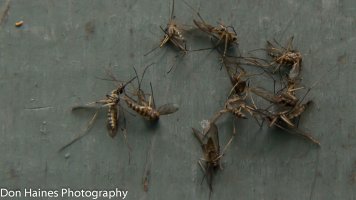
But I must confess, there is one flying creature that I have killed in order to take a photograph....
 

Attachments

  • dh270.jpg
    dh270.jpg
    1.5 MB · Views: 348
Upvote 0
Vossie said:
Last summer rented the 600 f/4 II for a weekend to capture kingfishers at the "Oostvaardersplassen" in The Netherlands. I got quite lucky.

5D3, 600 f/4 L II + 1.4x III, f/5.6, 1/400, ISO 1250. I did not use a tripod but was sitting on my knees with a fallen tree as support. The image is uncropped. The amount of detail that this lens can resolve (look at the feathers and water droplets at full res) is amazing.

IMG_3067 by Vossie_NL, on Flickr

Beautiful photo. So colorful and razor sharp! Creamy background. Well done. :)
 
Upvote 0
Don Haines said:
jrista said:
Sorry...the period at the end got included in the link for some reason. Drop the period, and it should work.

Jack Douglas said:
Hmm, but this sounds kind of like cheating!? ;)

Once you see the results, you won't think that. ;D

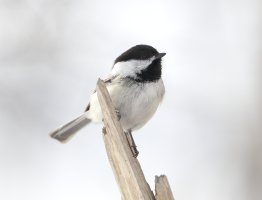
It is no more cheating than hiring a model for a studio shoot..... and the best thing is that chickadees will work for peanuts :)

LOL ;D Very nice photo. Do they sign a release? ;)
 
Upvote 0
jrista and Don,

Very well thought out and correct in my opinion. We can encourage a certain perspective without actually trying to enforce it and allow people to make their own decisions. Often things are done in ignorance and most people respond positively once they know better.

I'm glad there are folk like you guys contributing in support of wildlife. I endeavor to do the same. Imagine a world without birds, not to mention all the other free gifts we enjoy in this life!

I'm going to see what models I can hire for peanuts starting right away cause I've been missing out on something worthwhile. ;)

Jack
 
Upvote 0
Jack Douglas said:
So, my question is, what is the concensus or accepted standard relative to nature photography. What's generally considered acceptable and in what context. Obviously, shooting specimens in zoos is fun and yields, in many cases, very wonderful photos and I personally wouldn't put it down.
Interesting question, and some good responses. Personally, I don't put feed out for wildlife as it changes the dynamics and their behavior. For example, where I live in Australia, we have King Parrots. Beautiful, colourful birds that will take seed from your hand. However, they are easily scared off by other birds, even pigeons will hassle them away :)

If I put seed out, the King Parrots will feed, if I stand there. Then, if I move away, the Bronze Wing pigeons will come in, followed by the Crimson Rosellas, which are then chased off by the Galahs, who are then pushed to one side by the Corellas, the Lorikeets and then they are all moved off by the Sulphur Crested Cockatoos :)

All in the space of 10min, I can go from 2-4 King Parrots to 20+ Cockies :)

Plus, the smaller birds, such as the Pardalotes, Fairy Wrens, Eastern Spine bills won't come to a feeder, as it's too open, and they prefer the dense shrubs.

As it is, I have 20+ acres of bush behind my place, and if I time it well, morning or late afternoon, I can find an area where the birds are feeding in the bushes/trees and wait, until something pops past. In this case, its about learning the behaviors of the birds in question, which is all part of the fun for me.

On a nice day, sitting for an hour in the bush isn't a bad option ;)
 
Upvote 0
Mr Bean said:
Jack Douglas said:
So, my question is, what is the concensus or accepted standard relative to nature photography. What's generally considered acceptable and in what context. Obviously, shooting specimens in zoos is fun and yields, in many cases, very wonderful photos and I personally wouldn't put it down.
Interesting question, and some good responses. Personally, I don't put feed out for wildlife as it changes the dynamics and their behavior. For example, where I live in Australia, we have King Parrots. Beautiful, colourful birds that will take seed from your hand. However, they are easily scared off by other birds, even pigeons will hassle them away :)

If I put seed out, the King Parrots will feed, if I stand there. Then, if I move away, the Bronze Wing pigeons will come in, followed by the Crimson Rosellas, which are then chased off by the Galahs, who are then pushed to one side by the Corellas, the Lorikeets and then they are all moved off by the Sulphur Crested Cockatoos :)

All in the space of 10min, I can go from 2-4 King Parrots to 20+ Cockies :)

Plus, the smaller birds, such as the Pardalotes, Fairy Wrens, Eastern Spine bills won't come to a feeder, as it's too open, and they prefer the dense shrubs.

As it is, I have 20+ acres of bush behind my place, and if I time it well, morning or late afternoon, I can find an area where the birds are feeding in the bushes/trees and wait, until something pops past. In this case, its about learning the behaviors of the birds in question, which is all part of the fun for me.

On a nice day, sitting for an hour in the bush isn't a bad option ;)
I live in a rural area, surrounded by very good farmland and there is a LOT of corn growing here. The farmers let it dry as much as possible in the fields, and then harvest it just before winter. Spillage occurs, and the migrating flocks of geese are now making the area a huge stopover during migration... they have lots of food to eat during the day and a sheltered bay to spend the nights on. We humans have most certainly altered the migration pattern and it seems like every year more and more geese stop here..
 
Upvote 0
It strikes me for my own situation that my preference is towards Mr Bean's. I like to observe what's going on and then return with some tricks up my sleave, like how to be positioned so stuff isn't in the road and the lighting is favorable. I then sit and wait and observe what's going on with anticipation. This time is wasted to some extent because often there are no subjects that show up but still it is medicine to my soul. I can honestly say for this last season there were only two or three times that there was absolutely nothing to shoot and quite often something very interesting came out of nowhere, like the moose that came to within 25 feet of me, knowing full well I was there.

However, as I acquire many shots of what is most common around here, I start to wish for more and so I'll have to take some other approaches including putting feed out etc. or I fear I might get a little frustrated. So far I haven't been using nests to advantage for one thing. I'm all ears to hear what others like to do.

Jack
 
Upvote 0
Don Haines said:
I live in a rural area, surrounded by very good farmland and there is a LOT of corn growing here. The farmers let it dry as much as possible in the fields, and then harvest it just before winter. Spillage occurs, and the migrating flocks of geese are now making the area a huge stopover during migration... they have lots of food to eat during the day and a sheltered bay to spend the nights on. We humans have most certainly altered the migration pattern and it seems like every year more and more geese stop here..
Hi Don, I must admit, the birds tend to feed on anything that's available around here, which is fair enough. I noticed the other day, that the Eastern Rosellas were feeding in my front paddock, on a weed species of grass (called Quaker Grass) that I had been gradually pulling out. It's a fairly invasive species of grass that can overwhelm some of the native plants, such as orchids. These birds have been busy feeding a baby, and, after seeing what they were feeding on, I've left a section of this grass for their benefit. I guess, in some respects, it's my version of leaving seed out for the birds :)
Cheers,
Nick

P.S. Re: my earlier post, I'm not saying putting seed out is a bad thing. But if I did that here, I'd end up with 100's pic's of Cockies only ;)
 
Upvote 0
Jack Douglas said:
....like how to be positioned so stuff isn't in the road and the lighting is favorable. I then sit and wait and observe what's going on with anticipation.
When I first started bird photography, at the beginning of the year, I got rather frustrated with the number of "in focus twigs" and "out of focus birds" pic's ;) Plus, the number of pic's where I had blurry twigs / branches / leaves across the subject. But, like any apprenticeship, if you persist, and take lots of mental notes, you do improve. I'm far better these days of anticipating the setup of the shot and how the subject will move. It is digital after all, so, crank away, it won't cost you :)

With my camera setup (a 5D3), one of the best things I did was to setup a couple of custom settings. They are both similar in settings (AI servo, spot metering, Av, ISO 400, etc), with the only big difference being the focus points. One is setup for a single, center point, the other, a 9 point focus group. The single point is for birds in a bushy / treed environment, the other for more open spaces, where I can use a larger focus area. Plus, I've tweaked the sensitivity of the focus points, to react a little quicker. I think I've set these 2 to C3 and C2 on the dial. The reason being, is that, without looking at the dial, I can turn it all the way and know that the setting is for single point. If I need the group focus setting, I turn it all the way, then come back one notch, if that makes sense :)
 
Upvote 0
Don Haines said:
But I must confess, there is one flying creature that I have killed in order to take a photograph....
Hmmmm .... something wrong with that image, I think the models don't look happy ... I think there's a mismatch between your interpersonal skills and photographic skills ... have you considered talking to them instead of swatting them ;D
 
Upvote 0
serendipidy said:
Rienzphotoz said:
Don Haines said:
I have about 10,000 geese in the bay behind the house! They are LOUD!!!

The second shot is a 7 picture panorama and shows about 5 percent of the total flock....
WOW! ... even the 5% looks like a lot ... that must be LOUD! ... nice pic.

Ear plugs, anyone? ;D
@Don ... I'm just curious, in India we have lots of crows, and they crap a lot (most of them seem to like 'decorating' freshly washed cars) ... and after the first showers in Goa (India), the roads become extremely slippery not just with rain but because the bird crap suddenly becomes like grease on the roads, and a lot of bikers keep slipping and falling during that time of the year, but luckily no serious accidents as people drive slow, well below 40 kms (24 miles) ... anyway, the number of crows that I'm talking about (in one place) are far less than those "10,000 geese behind the house" ... so doesn't it get pretty 'crappy' (maybe even smelly) there?
 
Upvote 0
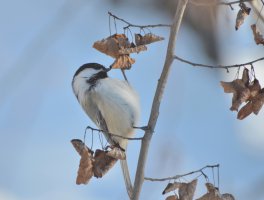
My venture into DSLR photography started last year with a D5100 and a 70-300 and I was thrilled (until I started to look at some sites like CR). Never the less, it was a good year and I learned a lot. So, this shot I'm posting because I think it illustrates what you sometimes get that you wont likely get with a set up. I love the pose but unfortunately the IQ has suffered somewhat.

Jack
 

Attachments

  • Chickadee.JPG
    Chickadee.JPG
    1.2 MB · Views: 331
Upvote 0