Show your Bird Portraits

dolina said:
The Barn Swallow (Hirundo rustica) is the most widespread species of swallow in the world.[2] It is a distinctive passerine bird with blue upperparts, a long, deeply forked tail and curved, pointed wings. It is found in Europe, Asia, Africa and the Americas.[2] In Anglophone Europe it is just called the Swallow; in Northern Europe it is the only common species called a "swallow" rather than a "martin".

Source: http://en.wikipedia.org/wiki/Barn_Swallow

Location: http://en.wikipedia.org/wiki/Los_Ba%C3%B1os,_Laguna


Beautiful picture 8) Lovely shot Paolo.
 
Upvote 0
Krob78 said:
TexPhoto said:
Turkey Vultures in Great Falls National Park. 300mm f4 IS on a 1D Mark 4


REX46287h by RexPhoto91, on Flickr
I like #3 Tex. ISO high enough apparently to offer good detail to his underside. People don't often like Vulture images but I feel challenged sometimes to try and make them look good or to see the beauty in the beast! Thanks for posting!

Thanks. Setting sun at my back partially clouded. So mother nature provided directional light, a soft box, and a warming filter. (and a model) I did compliment her with a little post processing.
 
Upvote 0
IslanderMV said:
rpt said:
DIABLO said:
IslanderMV said:
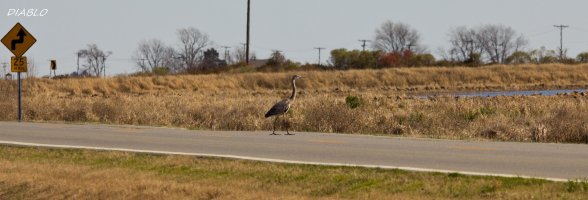
Great Blue Heron
Oct 20 - Martha's Vineyard (Chappaquiddick)
60D 100-400 mm
I have a life-time supply of Heron picts, was looking for something different.

" a life-time supply of Heron pics "

I call and raise you two... LOL...
Ha! Ha! Ha! Looks like Chauncey raised you four!

Har..! I am counting Chauncey's spectacular photo as one. So I will match Diablo - except the photos have to be at least 2000 pixels on one edge, because manly men don't crop excessively. ;)


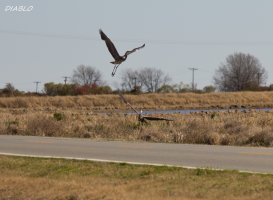
I raise you three law breaking herons.

One who is clearly jaywalking! And two more that are taxiing down a runway without clearance from the tower!
 

Attachments

  • IMG_3265 (2565x873).jpg
    IMG_3265 (2565x873).jpg
    362.4 KB · Views: 627
  • IMG_3271 (2565x1883).jpg
    IMG_3271 (2565x1883).jpg
    2 MB · Views: 650
Upvote 0
DIABLO said:
IslanderMV said:
rpt said:
DIABLO said:
IslanderMV said:
Great Blue Heron
Oct 20 - Martha's Vineyard (Chappaquiddick)
60D 100-400 mm
I have a life-time supply of Heron picts, was looking for something different.

" a life-time supply of Heron pics "

I call and raise you two... LOL...
Ha! Ha! Ha! Looks like Chauncey raised you four!

Har..! I am counting Chauncey's spectacular photo as one. So I will match Diablo - except the photos have to be at least 2000 pixels on one edge, because manly men don't crop excessively. ;)

I raise you three law breaking herons.

One who is clearly jaywalking! And two more that are taxiing down a runway without clearance from the tower!
Ha! Ha! Ha! Well, you made my morning :)
 
Upvote 0
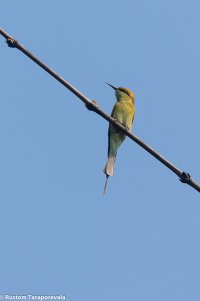
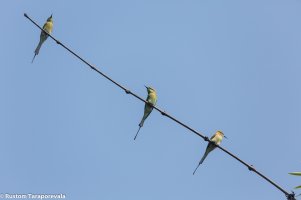
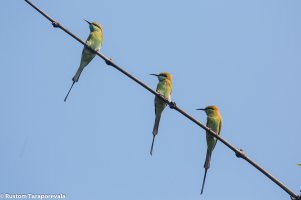
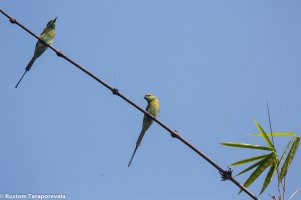
So the Bee-eaters are back. Shot with 5D3, 100-400L @400 Av f11 auto ISO. The third and fourth are with 100-400L + 1.4x
The first one: The classic pose
The second one: The three parties - Center, Right and Left
The third one: Eyes right!
The fourth one: What the beep is that chap up to?
 

Attachments

  • BeeEaters-4.jpg
    BeeEaters-4.jpg
    606.7 KB · Views: 647
  • BeeEaters-10.jpg
    BeeEaters-10.jpg
    457.7 KB · Views: 628
  • BeeEaters-12.jpg
    BeeEaters-12.jpg
    543.2 KB · Views: 609
  • BeeEaters-13.jpg
    BeeEaters-13.jpg
    596.7 KB · Views: 605
Upvote 0

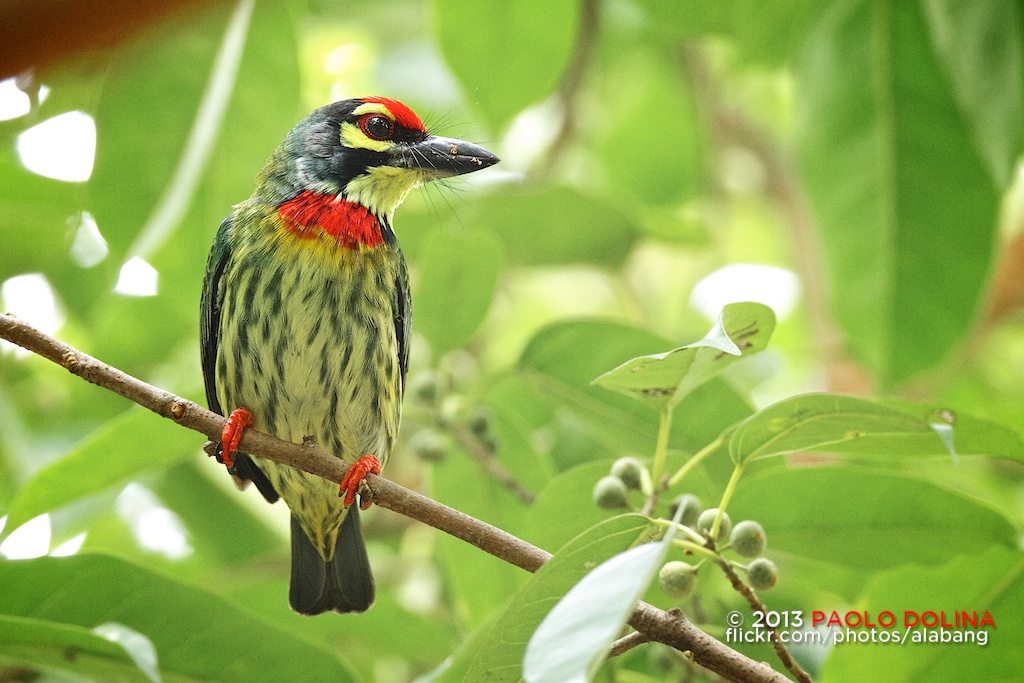
Coppersmith (Megalaima haemacephala) by alabang, on Flickr

The Coppersmith Barbet, Crimson-breasted Barbet or Coppersmith (Megalaima haemacephala), is a bird with crimson forehead and throat which is best known for its metronomic call that has been likened to a coppersmith striking metal with a hammer. It is a resident found in the Indian Subcontinent and parts of Southeast Asia. Like other barbets, they chisel out a hole inside a tree to build their nest. They are mainly fruit eating but will take sometimes insects, especially winged termites.

Source: http://en.wikipedia.org/wiki/Coppersmith_Barbet

Location: http://en.wikipedia.org/wiki/Muntinlupa

Settings: 1/200 ƒ/7.1 ISO 5000 800mm
 
Upvote 0
dolina said:
Coppersmith (Megalaima haemacephala) by alabang, on Flickr

The Coppersmith Barbet, Crimson-breasted Barbet or Coppersmith (Megalaima haemacephala), is a bird with crimson forehead and throat which is best known for its metronomic call that has been likened to a coppersmith striking metal with a hammer. It is a resident found in the Indian Subcontinent and parts of Southeast Asia. Like other barbets, they chisel out a hole inside a tree to build their nest. They are mainly fruit eating but will take sometimes insects, especially winged termites.

Source: http://en.wikipedia.org/wiki/Coppersmith_Barbet

Location: http://en.wikipedia.org/wiki/Muntinlupa

Settings: 1/200 ƒ/7.1 ISO 5000 800mm
Wow! It is very hard to be able to photograph this bird. You can hear it but can't see it. It is very shy. Congratulations! What did it take for you to get this picture?
 
Upvote 0
Thanks Ken, Click, and rpt

Rpt, to shoot the Coppersmith you need to have a fruiting tree that it likes like the Balete tree from the genus Ficus. In this currently fruiting tree we were able to spot a family of four (two adults & two juvi) hoping around the tree looking for food. It took a lot of waiting and focus to get the subject in a frame that somewhat illuminated, does not have front obstruction and whose background isn't that busy or sky.

We were experimenting with using LED torches to defeat the back light with some success. I say some success as the LED torch was able to balance the back light but the subject was looking away from us at the time of exposure.

I normally look for slight movement in the trees and the Coppersmith's signature red head in a sea of green leaves to find it.

It also helps to have a friend with you helping spotting the bird and holding the LED torch for you.

For the above mentioned photo no LED torch was used.
 
Upvote 0
dolina said:
Thanks Ken, Click, and rpt

Rpt, to shoot the Coppersmith you need to have a fruiting tree that it likes like the Balete tree from the genus Ficus. In this currently fruiting tree we were able to spot a family of four (two adults & two juvi) hoping around the tree looking for food. It took a lot of waiting and focus to get the subject in a frame that somewhat illuminated, does not have front obstruction and whose background isn't that busy or sky.

We were experimenting with using LED torches to defeat the back light with some success. I say some success as the LED torch was able to balance the back light but the subject was looking away from us at the time of exposure.

I normally look for slight movement in the trees and the Coppersmith's signature red head in a sea of green leaves to find it.

It also helps to have a friend with you helping spotting the bird and holding the LED torch for you.

For the above mentioned photo no LED torch was used.
Thanks for the description. So I lived from 2004 to 2010 in a 6th floor flat next to a Pipal tree http://en.wikipedia.org/wiki/Ficus_religiosa. You could hear the copper smith every day but I managed to see it only may be ten to fifteen times. I photographed it on three or four occasions with my 300D. The pictures were not as good as yours as the first time it was with my old 80-200 FD lenses and the other times with my 100-400L. If I find the pictures, I will post them.
 
Upvote 0
dolina said:
My Engrish is so bad... I need to edit it to sound somewhat normal. ;D

I think I spent about 2-3 hours just looking up. :) I photographed the Coppersmith at my friend's parents home so I was able to enter their property.
Wow! that time with the 800mm! You must have strong arms :)

I know exactly what you are talking about.
 
Upvote 0
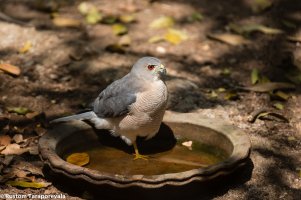
My muse is back! Yes, Mr. Hawk payed us a visit today. He came to cool his feet as you can see. I took 88 snaps. Various combinations of 100-400L and the 70-200L with and without the 1.4x. This one is with my 5D3, 100-400L+1.4xiii - so @540mm. 1/320, f8, ISO 320. I have not wiped off the EXIF so you can examine it.

I am entirely satisfied with both the lenses with and without the 1.4xiii. I have noticed that when the pictures are not sharp it is due to shake. AFMA values with and without the 1.4xiii is the same for both lenses! So AFMA of the 1.4xiii is 0. I am happy. :)
 

Attachments

  • Hawk-1.jpg
    Hawk-1.jpg
    800.1 KB · Views: 713
Upvote 0
rpt said:
My muse is back! Yes, Mr. Hawk payed us a visit today. He came to cool his feet as you can see. I took 88 snaps. Various combinations of 100-400L and the 70-200L with and without the 1.4x. This one is with my 5D3, 100-400L+1.4xiii - so @540mm. 1/320, f8, ISO 320. I have not wiped off the EXIF so you can examine it.

I am entirely satisfied with both the lenses with and without the 1.4xiii. I have noticed that when the pictures are not sharp it is due to shake. AFMA values with and without the 1.4xiii is the same for both lenses! So AFMA of the 1.4xiii is 0. I am happy. :)
A great muse, very inspirational, love the shot :)
 
Upvote 0
Awesome Coppersmith, Paolo! Lots of patience!

Nice wren Snynkka! The black and red really stands out against the green leaves.

Revup67, really like the pose on the Bald Eagle, full extension! Humorously, if I'm not already watching through the viewfinder, I sometimes find it hard to stop watching and get back behind the camera(and then I miss shots :( ).

Waiting for a Northern Harrier to do some passes from under a pine tree and had a little Junco stop by to say hi. Unfortunately the Harrier never came as close as I had hoped.
C6102-X2.jpg
 
Upvote 0