Show your Bird Portraits


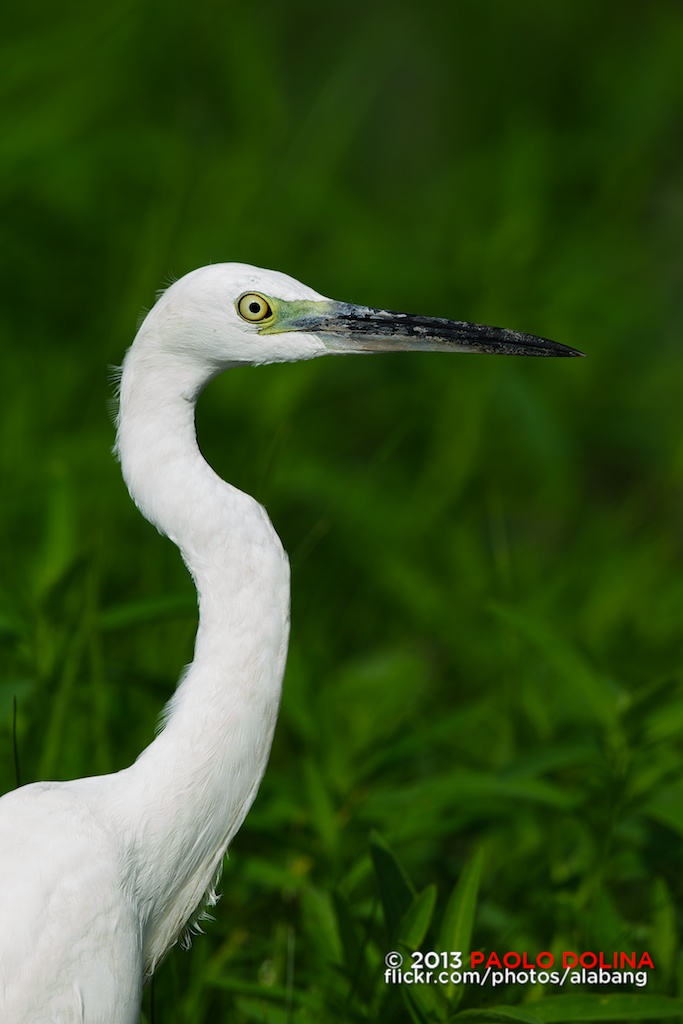
Little Egret (Egretta garzetta) by alabang, on Flickr


Little Egrets eat fish, insects, amphibians, crustaceans, and reptiles. They stalk their prey in shallow water, often running with raised wings or shuffling its feet to disturb small fish. They may also stand still and wait to ambush prey.

Philippine Birds

Source: http://en.wikipedia.org/wiki/Little_Egret

Location: http://en.wikipedia.org/wiki/Los_Ba%C3%B1os,_Laguna

Settings: 1/400 ƒ/9 ISO 160 800mm

===========

Story behind the photo:

I traveled to Los Banos, Laguna hoping that the Chestnut-cheeked Starling (Agropsar philippensis) would have stuck around the area 11 days after it was last photographed. Alas the fruiting Balete tree from the genus Ficus that fed the Starling had run out of fruit to feed the bird. Good thing my good friend and bird photog Doctor Tirso was available on that family day to bring me around the rice fields which yielded this wonderful image of a bird that I would normally ignore. The light was divine and the subject distance was such that an image of the bird would be worth taking a photo of and share on this forum.

I hope you enjoy this photo as much as I enjoyed that day. :)
 
Upvote 0
revup67 said:
Thanks for all the kind words on the Eagle photo.

All photos taken with 5D M3 and 400mm L 5.6

Here's a few more:

Royal Tern

California Gull - 1st Cycle

California Gnatcatcher (Federally protected species) 1

California Gnatcatcher (Federally protected species) 2

White-crowned Sparrow (juvenile 1st Fall)


Great shots. Well done revup67
 
Upvote 0
dolina said:
Story behind the photo:

I traveled to Los Banos, Laguna hoping that the Chestnut-cheeked Starling (Agropsar philippensis) would have stuck around the area 11 days after it was last photographed. Alas the fruiting Balete tree from the genus Ficus that fed the Starling had run out of fruit to feed the bird. Good thing my good friend and bird photog Doctor Tirso was available on that family day to bring me around the rice fields which yielded this wonderful image of a bird that I would normally ignore. The light was divine and the subject distance was such that an image of the bird would be worth taking a photo of and share on this forum.

I hope you enjoy this photo as much as I enjoyed that day. :)


Another beautiful shot Paolo. Thanks for the story behind the picture.
 
Upvote 0
Re: Sleepy Bald Eagle

mackguyver said:
Here's another one I like from this year - it's the same bird as my avatar. I was walking down a trail and stumbled upon him in a tree about 30 yards away. I very slowly got out my telephoto lenses and took some shots of him. I stood there for 3 hours waiting for him to fly off, but he just got bored with me and having had a big breakfast (see full belly and bloody beak), he dozed off! I finally left...

I haven't see or been able to find another shot of a wild bald eagle sleeping, so I'm pretty happy with it. This is a vertical crop of the photo:
_MG_0692_ID_2-XL.jpg

Great image! That is an image that I haven't ever seen before either! I'd love to capture that shot! Very nice! :)
 
Upvote 0
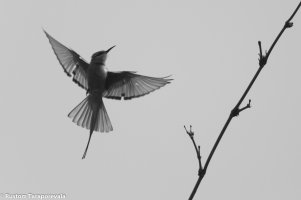
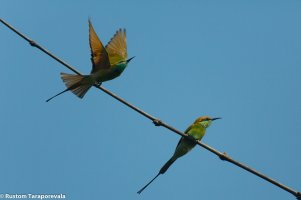
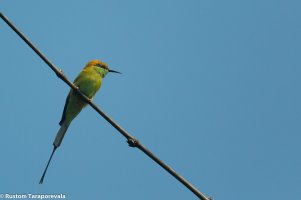
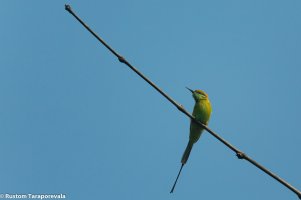
Yesterday was Bee-eater day.

Photo 1: Bee-eater Ballerina
Photo 2: Takeoff
 

Attachments

  • BeeEaters-15.jpg
    BeeEaters-15.jpg
    454.2 KB · Views: 524
  • BeeEaters-16.jpg
    BeeEaters-16.jpg
    625.8 KB · Views: 501
  • BeeEaters-17.jpg
    BeeEaters-17.jpg
    692.9 KB · Views: 522
  • BeeEaters-19.jpg
    BeeEaters-19.jpg
    596.4 KB · Views: 503
Upvote 0

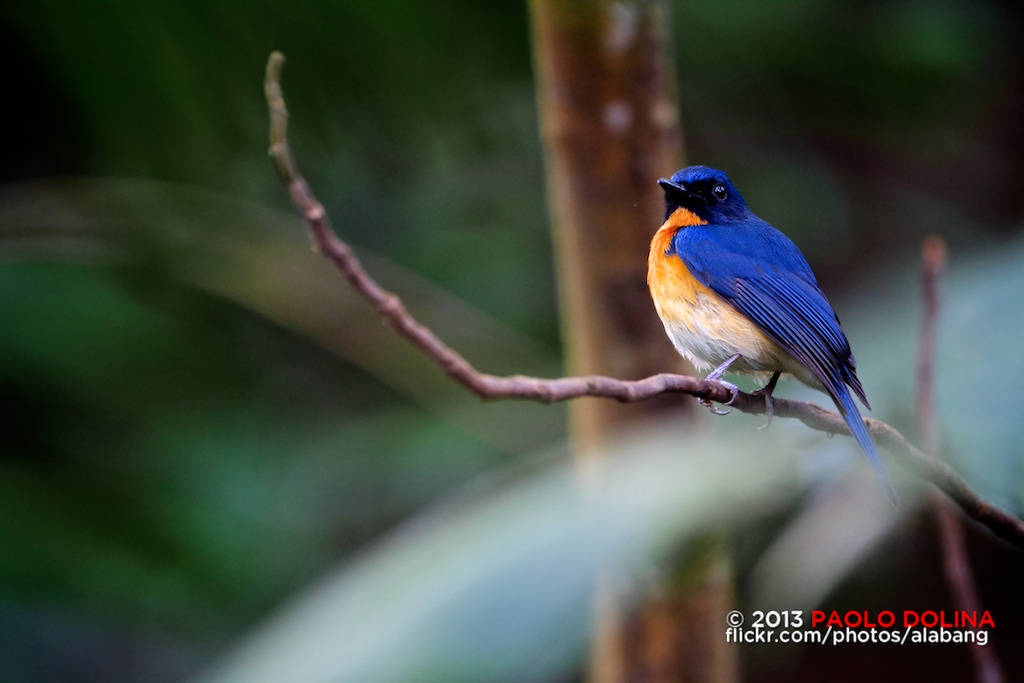
Mangrove Blue Flycatcher (Cyornis rufigastra) by alabang, on Flickr

The Mangrove Blue Flycatcher (Cyornis rufigastra) is a species of bird in the Muscicapidae family. It is found in Brunei, Indonesia, Malaysia, the Philippines, Singapore, and Thailand. Its natural habitat is subtropical or tropical mangrove forests.

Source: http://en.wikipedia.org/wiki/Mangrove_Blue_Flycatcher

Location: http://en.wikipedia.org/wiki/La_Mesa_Ecopark

Settings: 1/25 ƒ/4 ISO 1600 500mm

===========

Story behind the photo:

After taking the photo of the Indigo-banded Kingfisher at the horse stable I was led by Roddel to this lifer (bird watcher talk for a bird you either first seen live in the wild or photographed live in the wild) Mangrove Blue Flycatcher (Cyornis rufigastra) on the opposite side of the hill. By initial description given to me by Roddel I was expecting an Common Emerald Dove (Chalcophaps indica).

Incidentally there I met Gerald, the founder/owner of Istorya.net who was looking for a Red Bellied Pitta.
 
Upvote 0
Thanks Dustin,

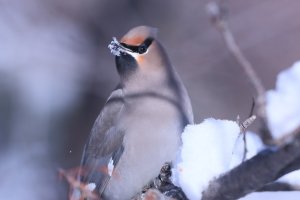
Waxwings seem to yield kind of dreamy pictures at times. I can't take credit for any complimentary colors - I'm just desperately trying to capture the moment with all the hopping that's going on! :)

My 6D purchased in Feb and then shipped to Canon till late April has just turned over 10k! I guess you could say I'm enjoying my revived hobby. I honestly can't believe the number of great shots (by my standard anyway ;)). So far maybe 90% are 300 X2 so I guess that means I should really have the 600 F4 but I can't afford such!
Jack
 
Upvote 0
Jack Douglas said:
Thanks Dustin,

Waxwings seem to yield kind of dreamy pictures at times. I can't take credit for any complimentary colors - I'm just desperately trying to capture the moment with all the hopping that's going on! :)

My 6D purchased in Feb and then shipped to Canon till late April has just turned over 10k! I guess you could say I'm enjoying my revived hobby. I honestly can't believe the number of great shots (by my standard anyway ;)). So far maybe 90% are 300 X2 so I guess that means I should really have the 600 F4 but I can't afford such!

Jack

The fact that you can take good quality pictures at 600mm with the x2 is probably a sign that you got a pretty good lens! I haven't heard too many regretting the 300mm f/2.8II purchase (whose price is a little out of my league!)
 
Upvote 0

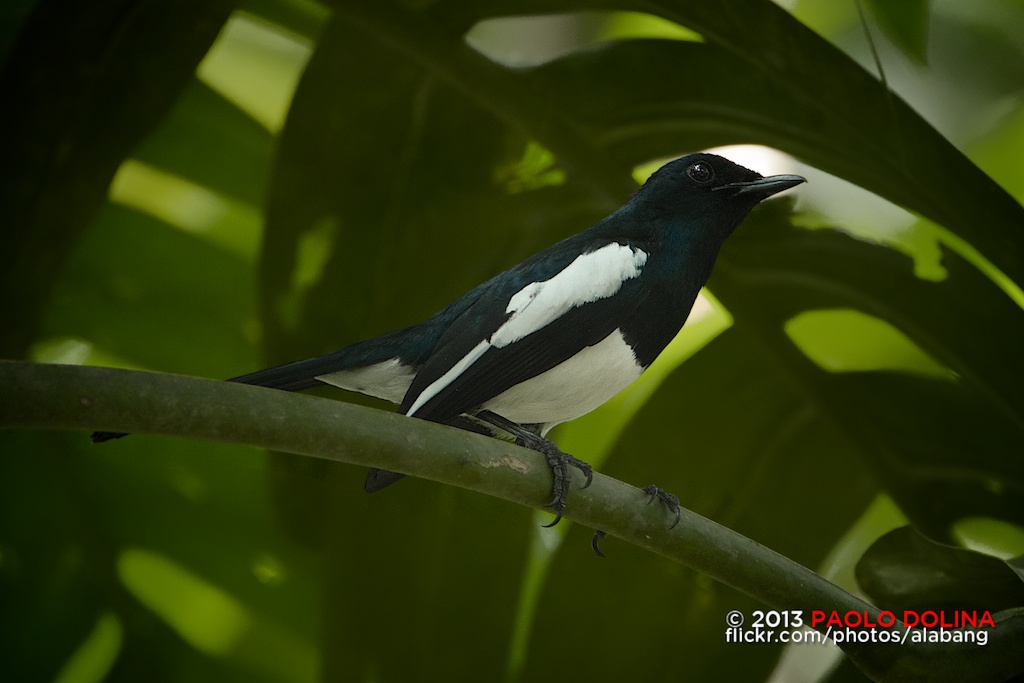
Philippine Magpie-Robin (Copsychus mindanensis) by alabang, on Flickr

The Philippine Magpie-Robin (Copsychus mindanensis) is a species of bird in the Muscicapidae family. It is endemic to the Philippines. It previously was considered a subspecies of the Oriental Magpie-Robin.

Its natural habitats are subtropical or tropical dry forests and subtropical or tropical moist lowland forests.

Source: http://en.wikipedia.org/wiki/Philippine_Magpie-Robin

Location: http://en.wikipedia.org/wiki/La_Mesa_Ecopark

Settings: 1/100 ƒ/5.6 ISO 1250 700mm

===========

Story behind the photo:

I almost did not bother taking a photo of this Philippine Magpie-Robin (Copsychus mindanensis) thinking this was just another Philippine Pied Fantail (Rhipidura nigritorquis) that is extremely difficult to photograph because it rarely, if ever, stays still. I was also disinterested in picturing the Fantail here because I can easily do it from the comfort of my backyard.

What peaked my interest was its behaviour of staying rather stationary in the trees and it not spreading its tail into a fan. Another thing that caught my eye was the white and black feathers being of a slightly different pattern. Anyways, for those curious this is another lifer for me and what is more an endemic bird that can only be found in the Philippines.

For those who would want to take a photo of dark feathered birds you generally need to overexpose by 2-stops to get the bards to show up but you have to be mindful of balancing it out to consider the white feathers as well.
 
Upvote 0
I was looking at who started this popular thread and found that it was 1982chris911 who hasn't been active for over 2 years ... wonder if he knows this thread has become so popular that it is running on over 200 pages ... thanks to all the contributors.
 
Upvote 0
Upvote 0