Sigma 50 f/1.4 Art Lens Should be Amazing

For what it is worth, I'm starting to get annoyed with all the vague-eries that we grade lenses by. This build quality is better than this one. Don't drop your lens and the fact that space age plastic v. A metal housing shouldn't come into play. This lens has a magic bokeh, but this lens's bokeh makes me want to wretch. That reminds me of the one part in Bamboozled where the one producer says, You want to know how I know it is good? Because my d!x hard. I'm paraphrasing of course but praising one lens doesn't mean disparaging another. I'm rambling... Damn it.
 
Upvote 0
jdramirez said:
For what it is worth, I'm starting to get annoyed with all the vague-eries that we grade lenses by. This build quality is better than this one. Don't drop your lens and the fact that space age plastic v. A metal housing shouldn't come into play. This lens has a magic bokeh, but this lens's bokeh makes me want to wretch. That reminds me of the one part in Bamboozled where the one producer says, You want to know how I know it is good? Because my d!x hard. I'm paraphrasing of course but praising one lens doesn't mean disparaging another. I'm rambling... Damn it.
There are some qualities that are objective and there are some qualities that are more subjective. We measure the objective ones and we quarrel over the subjective ones.

Two very good examples are the Canon 50 1.2L and 35 1.4L. From a pure objective measurement perspective, these are fairly poor. But looking at the right images from these two, they are producing stunning results. That's subjective, but still an obvious quality. How do you measure build quality or one weather sealing compared to another? AF speed can be measured, but AF accuracy (where is the threshold for being accurate?) is subjective etc. etc.

In my view we spend too much time pixle peeping and reading graphs and statistics. One of my ohter passions in life is music and high end audio systems. Compared to that domain, photography is like mathematics ;)
 
Upvote 0
Thank god I'm not am audiophile. It does annoy me when the family listens to the tv through the tv speakers. How can you not hear the difference between that and the 5.1 system? It is like chef boy r Dee v olive garden.

Eldar said:
jdramirez said:
For what it is worth, I'm starting to get annoyed with all the vague-eries that we grade lenses by. This build quality is better than this one. Don't drop your lens and the fact that space age plastic v. A metal housing shouldn't come into play. This lens has a magic bokeh, but this lens's bokeh makes me want to wretch. That reminds me of the one part in Bamboozled where the one producer says, You want to know how I know it is good? Because my d!x hard. I'm paraphrasing of course but praising one lens doesn't mean disparaging another. I'm rambling... Damn it.
There are some qualities that are objective and there are some qualities that are more subjective. We measure the objective ones and we quarrel over the subjective ones.

Two very good examples are the Canon 50 1.2L and 35 1.4L. From a pure objective measurement perspective, these are fairly poor. But looking at the right images from these two, they are producing stunning results. That's subjective, but still an obvious quality. How do you measure build quality or one weather sealing compared to another? AF speed can be measured, but AF accuracy (where is the threshold for being accurate?) is subjective etc. etc.

In my view we spend too much time pixle peeping and reading graphs and statistics. One of my ohter passions in life is music and high end audio systems. Compared to that domain, photography is like mathematics ;)
 
Upvote 0
jdramirez said:
Thank god I'm not am audiophile. It does annoy me when the family listens to the tv through the tv speakers. How can you not hear the difference between that and the 5.1 system? It is like chef boy r Dee v olive garden.

Eldar said:
jdramirez said:
For what it is worth, I'm starting to get annoyed with all the vague-eries that we grade lenses by. This build quality is better than this one. Don't drop your lens and the fact that space age plastic v. A metal housing shouldn't come into play. This lens has a magic bokeh, but this lens's bokeh makes me want to wretch. That reminds me of the one part in Bamboozled where the one producer says, You want to know how I know it is good? Because my d!x hard. I'm paraphrasing of course but praising one lens doesn't mean disparaging another. I'm rambling... Damn it.
There are some qualities that are objective and there are some qualities that are more subjective. We measure the objective ones and we quarrel over the subjective ones.

Two very good examples are the Canon 50 1.2L and 35 1.4L. From a pure objective measurement perspective, these are fairly poor. But looking at the right images from these two, they are producing stunning results. That's subjective, but still an obvious quality. How do you measure build quality or one weather sealing compared to another? AF speed can be measured, but AF accuracy (where is the threshold for being accurate?) is subjective etc. etc.

In my view we spend too much time pixle peeping and reading graphs and statistics. One of my ohter passions in life is music and high end audio systems. Compared to that domain, photography is like mathematics ;)
To chime on this discussion, I have some high end audio gear, but I'm not an audiophile. No cone stabilizers, $2,000 power cables, or the like for me, but yes, my 7.1 system blows the doors off TV speakers!

Unlike the "warm sound of tube amplifiers" or "wide sound stage of a balanced XLR interconnect", I think the qualities of these lenses can be objectively explained for the most part.
* Better build quality = more reliable lenses, lenses that can be used in harsh conditions, and lenses that will last longer.
* Better bokeh is more natural and pleasing to the eye because it is less distracting than "bad" bokeh and it comes from three things:
1. Bigger physical apertures along with circular apertures result in larger "blobs" of out-of-focus light that result in simpler backgrounds/foregrounds
2. Circular apertures result in smoother out-of-focus "blobs" that appear more natural to our eyes vs. distinct hexagonal, pentagonal, etc. shapes
3. Lens (elements) designed for good bokeh have less "ringing", "'onion'-like substructures", false color, and other artifacts in the "blobs' that are distracting to the eye
* The "magical quality" that lenses like the 50L, 85L, and 135L have come from the smooth bokeh, shallow depth of focus one can obtain from them, the slight softening of the skin that is flattering, and in some cases from the halation associated from their optics, particularly when used wide open.

 
Upvote 0
jdramirez said:
For what it is worth, I'm starting to get annoyed with all the vague-eries that we grade lenses by. This build quality is better than this one. Don't drop your lens and the fact that space age plastic v. A metal housing shouldn't come into play. This lens has a magic bokeh, but this lens's bokeh makes me want to wretch. That reminds me of the one part in Bamboozled where the one producer says, You want to know how I know it is good? Because my d!x hard. I'm paraphrasing of course but praising one lens doesn't mean disparaging another. I'm rambling... Damn it.

A lot of photographers do not know how to quantify different aspects of a lens. There are objective ways to do so. A old of the confusion stems from rating the color contrast bokeh, bokeh transitions, distortion, and vignette. These are all things you can measure. For example Nikon has two defocus control lenses that let you play with bokeh rendering. There is a pleasing way to render these things and an ugly way.

The 50mm L f/1.2 objectively has some of the best bokeh and bokeh transitions on earth, as well as excellent color and contrast you can analyze the Out of focus areas and see they are some of the least flawed ever and look at color chart photos and see excellent rendering. The lens also delivers resolution that is visibly lacking at 720P, which makes it one of the worst lenses available for resolution. The 50mm 1.4 from Canon has better resolution but has some of the worst bokeh I have ever seen. It's extremely busy and ugly wide open so I only use it stopped down.

As I mentioned in the other thread though all 50mm full frame lenses have used an archaic lens design called the double gauss design. This lens design is very simple and delivers good stopped down performance but inherently cannot deliver good wide open peformance. All 50mm double gauss lenses deliver image quality that is 5-10 times worse wide open than any other modern pro lens, with low resolution high haze and glow, and high CA. That's a mind blowing difference and is like comparing an iPhone to a d800e, literally. Zeiss was the first ever normal lens to use a retro focal design and Sigma will be the second. So Sigma is not kidding when they say that they will make anyone but Zeiss obsolete, there is no question that they are not even trying to compete with Canon or Nikon, and will be clearly superior. Were talking around an order of magnitude difference in performance. Guns vs nuclear weapons. Sigma has gone nuclear on Canon's 50mm lineup.

Here's the difference you can expect wide open between any non retro focal 50mm and this Sigma:

zeiss55.jpg


Sigma's design already inherently has good bokeh and it should have pleasing distortion and vignette.

So basically this lens will be like a higher resolution version of the 50mm 1.2L
 
Upvote 0
Radiating said:
Sigma has gone nuclear on Canon's 50mm lineup.
I think you should revise this to say "Sigma has gone nuclear on Canon's Prime lineup." :)

I'm all for competition and keeping the big guys on their toes. The Zeiss didn't serve that purpose because of its price, but this might give Canon a kick in the pants to revisit the 50L. I hope the new Sigma is a near-Otus on a beer budget. I'll definitely give it a try and will be in line when the pre-order opens up. If it has the sharpness of my 24-70 2.8 II and the smooth bokeh of my 50L, I'll be very happy :)
 
Upvote 0
jdramirez said:
Here's a quick question for y'all? Why didn't sigma or zeiss go f1.2 for their 50's?

Is it a dumb question?
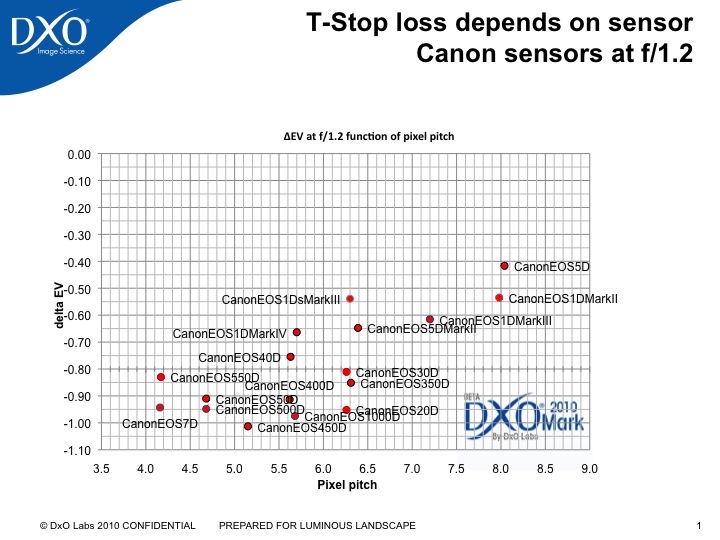
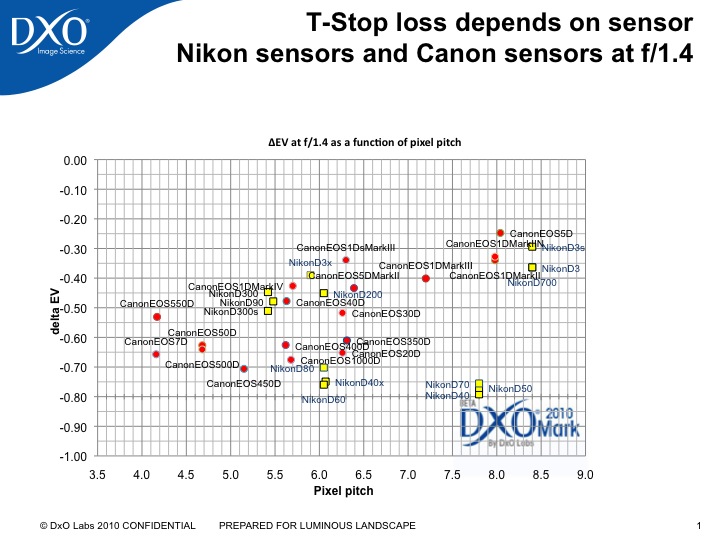
It's not a dumb question, but not a simple one, either. The aperture numbers on the side of the lens are normally the theoretical aperture, not the actual amount of light that comes through the lens. Lens coatings, front elements, physical aperture, and other factors influence the actual light that reaches the sensor. That amount is the T-Stop, which is used in the cinema world and is measured by DxO as well. If you check out their measurements, you'll see that the f/1.2 lenses measure a T-Stop of 1.4 and the Sigma 35 Art and Zeiss Otus measure 1.5.

Putting the marketing aside, the larger the aperture (theoretical or otherwise), the more complex the design, the bigger the lens, and the more expensive the lens. In some cases, the optical abberations of the large aperture simply can't be overcome at an affordable price - hence the 50L trading sharpness for smooth bokeh and f/1.2. I believe Zeiss and Sigma chose f/1.4 to balance cost, size, and performance.
 
Upvote 0
jdramirez said:
Here's a quick question for y'all? Why didn't sigma or zeiss go f1.2 for their 50's?

Is it a dumb question?

Digital cameras have problems absorbing light from lenses that are extremely fast because the pixels are shaped like buckets, so they reject some of the light that enters them at a high angle of incidence. A faster aperture simply allows light at a greater angle of incidence to reach the sensor. Film does not have this effect on the other hand though, and micro lenses on top of pixels have helped to improve but not solve the issue. To compensate for the lost light, most cameras boost the ISO in the background and report the set ISO to maintain exposure relationships.

Slide1.jpg


Slide2.jpg


Basically the difference from f/1.2 to f/1.4 is less than 1/6th of a stop on a 5D Mark III not 1/2.

So you have basically the same results:

f12.jpg


f14.jpg


There would be no meaningful difference between f/1.2 and f/1.4. They looks and performs pretty much the same, and choosing to go f/1.2 would create much worse image quality with little benefit. So f/1.4 is the best choice. Sigma has also been known to understate their apertures, so the lens may be f/1.3 wide open. The difference between f/1.4 and f/1.0 is noticeable though on digital, but not recommended as you get very poor image quality with lenses that have that aperture.
 
Upvote 0
Dylan777 said:
Viggo said:
Dylan777 said:
As much as I love my 50L II, I will give this 50mm ART a try - I'm impressed with Sigma 35mm art

I seemed to have missed the announcement of the new 50 L 8)
I was on my 4th glass of red wine last night when typing that statement ;D
That sounds like some good quality wine Dylan ;D
I actually took your statement seriously yesterday and did a CR and google search for new 50 L, obviously I couldn't find it ... so thanks for robbing 5 minutes of my time, which I will never get back due to your drinking problem ;D
 
Upvote 0
mackguyver said:
It's not a dumb question, but not a simple one, either. The aperture numbers on the side of the lens are normally the theoretical aperture, not the actual amount of light that comes through the lens. Lens coatings, front elements, physical aperture, and other factors influence the actual light that reaches the sensor. That amount is the T-Stop, which is used in the cinema world and is measured by DxO as well. If you check out their measurements, you'll see that the f/1.2 lenses measure a T-Stop of 1.4 and the Sigma 35 Art and Zeiss Otus measure 1.5.

I like that almost all of Canon's latest lenses (24/28/35/40 and 24-70 f4) have a T-Stop that matches their aperture value. Can't say I've seen any other lenses that can claim that achievement.
 
Upvote 0
dilbert said:
Eldar said:
...
In my view we spend too much time pixle peeping and reading graphs and statistics. One of my ohter passions in life is music and high end audio systems. Compared to that domain, photography is like mathematics ;)

If you ever want to kill an audiophile discussion or argument about "quality of sound" then all you need to do is ask someone (particularly vendors) for proper blind testing where the person executing the test (playing the music or producing the sound) has no interaction with the person doing the testing (i.e listening and evaluating what they hear.) That or to measure the results with proper testing equipment rather than human ears.

One thing that I have noticed is that speakers and amplifiers and what not always seem to be producing warmer and more open sound to the point that I'm wondering why they haven't caught on fire yet. Camera manufacturers (like Canon) seem to always claim that image quality is better, more DR, sharper images, etc, and I'm starting to wonder whether or not we're in danger of cutting ourselves with them.
He he, you don´t kill an audiophile discussion by suggesting blind testing, you rather throw fuel on the fire. To manipulate a blind test is the easiest thing to do and to judge a system requires time, which is very difficult with blind testing.

An important element here is the subjectivity of the evaluation and people´s obsession with disagreeing. Some like it loud, some like it soft, some like it hard, some like it analytical, some like it warm, some like classical/acoustic, some like metal, some like surround, some like stereo, some like digital, some like analogue ... the list is endless. Some setups work for orchestra, some for chamber, some for heavy metal, some for voice. But very few works well across them all.

And in photography, we have some of the same issues. Portrait vs. architecture vs. sports vs. landscape vs. wildlife, light, color, contrast, bokeh, AF speed vs. accuracy, size, weight, ruggedness ... the list can be veeerry long. One lens being the ultimate for one thing may well be crap for another. But isn´t that part of what makes this fun? ;)
 
Upvote 0
SeanL said:
Zeiss Otus and now these Sigma claims...

Might these manufacturers have an inside track on high MP 35mm sensors in the pipeline?
They know the empirically proven theory: "Moore's law is the observation that, over the history of computing hardware, the number of transistors on integrated circuits doubles approximately every two years. The law is named after Intel co-founder Gordon E. Moore, who described the trend in his 1965 paper.[1][2][3] His prediction has proven to be accurate, in part because the law is now used in the semiconductor industry to guide long-term planning and to set targets for research and development."
 
Upvote 0
Eldar said:
They know the empirically proven theory: "Moore's law is the observation that, over the history of computing hardware, the number of transistors on integrated circuits doubles approximately every two years. The law is named after Intel co-founder Gordon E. Moore, who described the trend in his 1965 paper.[1][2][3] His prediction has proven to be accurate, in part because the law is now used in the semiconductor industry to guide long-term planning and to set targets for research and development."

in 2005 Moore also noted this cannot be sustained indefinitely and we would eventually run into the limitations of physics (in 10-20 years). There are indications from the semiconductor industry that the rate is already slowing to doubling every three years.
 
Upvote 0
dcm said:
Eldar said:
They know the empirically proven theory: "Moore's law is the observation that, over the history of computing hardware, the number of transistors on integrated circuits doubles approximately every two years. The law is named after Intel co-founder Gordon E. Moore, who described the trend in his 1965 paper.[1][2][3] His prediction has proven to be accurate, in part because the law is now used in the semiconductor industry to guide long-term planning and to set targets for research and development."

in 2005 Moore also noted this cannot be sustained indefinitely and we would eventually run into the limitations of physics (in 10-20 years). There are indications from the semiconductor industry that the rate is already slowing to doubling every three years.
The 5DII with 21.1MP was released in March 2010. A 45MP by March 2014 would be proper then ;)
 
Upvote 0
dcm said:
Eldar said:
They know the empirically proven theory: "Moore's law is the observation that, over the history of computing hardware, the number of transistors on integrated circuits doubles approximately every two years. The law is named after Intel co-founder Gordon E. Moore, who described the trend in his 1965 paper.[1][2][3] His prediction has proven to be accurate, in part because the law is now used in the semiconductor industry to guide long-term planning and to set targets for research and development."

in 2005 Moore also noted this cannot be sustained indefinitely and we would eventually run into the limitations of physics (in 10-20 years). There are indications from the semiconductor industry that the rate is already slowing to doubling every three years.
Yes, it seems that it is beginning to slow, but given the pixel density of the D800(E), Sony APS-C sensors, and most of all cell phones, it's clear that the technology to produce 60+ MP sensors for FF cameras already exists. The yields are probably too low to be cost-effective for FF sensors at the moment but in time they will be. The lens makers (OEM and 3rd party) would be fools to "wait" for the technology. Better to have the lenses ready when the sensors hit the market. Take a look at the number of Nikkor lenses that were essentially made obsolete by the D800 (all of the ones not on this list: http://nikonrumors.com/2013/04/29/nikon-published-an-updated-list-of-recommended-lenses-for-the-d800e-camera.aspx/) and it makes sense to be ahead of the curve :)
 
Upvote 0
mackguyver said:
dcm said:
Eldar said:
They know the empirically proven theory: "Moore's law is the observation that, over the history of computing hardware, the number of transistors on integrated circuits doubles approximately every two years. The law is named after Intel co-founder Gordon E. Moore, who described the trend in his 1965 paper.[1][2][3] His prediction has proven to be accurate, in part because the law is now used in the semiconductor industry to guide long-term planning and to set targets for research and development."

in 2005 Moore also noted this cannot be sustained indefinitely and we would eventually run into the limitations of physics (in 10-20 years). There are indications from the semiconductor industry that the rate is already slowing to doubling every three years.
Yes, it seems that it is beginning to slow, but given the pixel density of the D800(E), Sony APS-C sensors, and most of all cell phones, it's clear that the technology to produce 60+ MP sensors for FF cameras already exists. The yields are probably too low to be cost-effective for FF sensors at the moment but in time they will be. The lens makers (OEM and 3rd party) would be fools to "wait" for the technology. Better to have the lenses ready when the sensors hit the market. Take a look at the number of Nikkor lenses that were essentially made obsolete by the D800 (all of the ones not on this list: http://nikonrumors.com/2013/04/29/nikon-published-an-updated-list-of-recommended-lenses-for-the-d800e-camera.aspx/) and it makes sense to be ahead of the curve :)

This is going to create a clear shift in Canon optical signature. Most of the current L primes are already designed for great creamy bokeh rather than great sharpness across the frame. I believe that releasing sharper lenses in the < 85mm range will partly sacrifice the creaminess. The new Nikon 58mm is quite creamy but, case in point, not amazingly sharp. Having great sharpness and creamy bokeh might take an Otus-like optical effort (and size and price).

With that I don't mean to say they're going to have a bad bokeh. Creamy bokeh is not the only possible pleasant bokeh. But it's just going to be different from what people were used to with their 35L, 50L, 85L, etc....
 
Upvote 0