jdramirez said:
Thank god I'm not am audiophile. It does annoy me when the family listens to the tv through the tv speakers. How can you not hear the difference between that and the 5.1 system? It is like chef boy r Dee v olive garden.
Eldar said:
jdramirez said:
For what it is worth, I'm starting to get annoyed with all the vague-eries that we grade lenses by. This build quality is better than this one. Don't drop your lens and the fact that space age plastic v. A metal housing shouldn't come into play. This lens has a magic bokeh, but this lens's bokeh makes me want to wretch. That reminds me of the one part in Bamboozled where the one producer says, You want to know how I know it is good? Because my d!x hard. I'm paraphrasing of course but praising one lens doesn't mean disparaging another. I'm rambling... Damn it.
There are some qualities that are objective and there are some qualities that are more subjective. We measure the objective ones and we quarrel over the subjective ones.
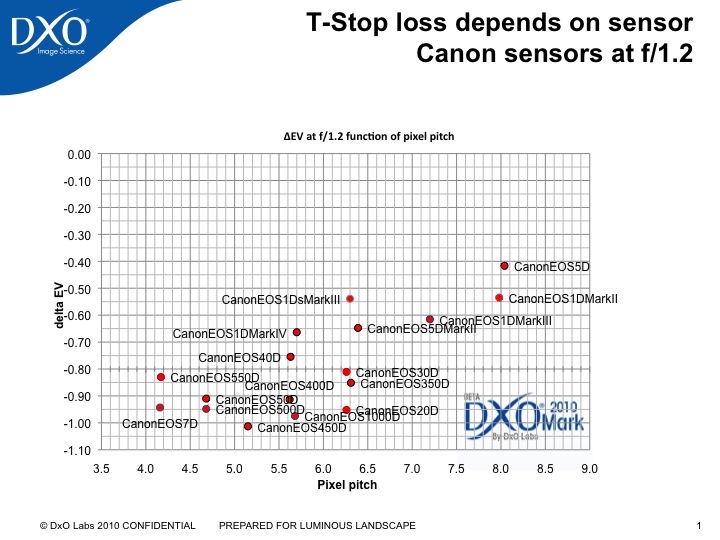
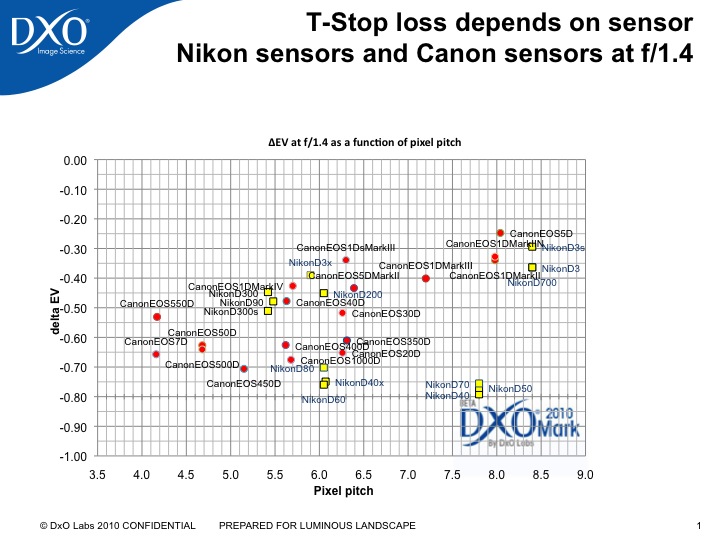
Two very good examples are the Canon 50 1.2L and 35 1.4L. From a pure objective measurement perspective, these are fairly poor. But looking at the right images from these two, they are producing stunning results. That's subjective, but still an obvious quality. How do you measure build quality or one weather sealing compared to another? AF speed can be measured, but AF accuracy (where is the threshold for being accurate?) is subjective etc. etc.
In my view we spend too much time pixle peeping and reading graphs and statistics. One of my ohter passions in life is music and high end audio systems. Compared to that domain, photography is like mathematics

To chime on this discussion, I have some high end audio gear, but I'm not an audiophile. No cone stabilizers, $2,000 power cables, or the like for me, but yes, my 7.1 system blows the doors off TV speakers!
Unlike the "warm sound of tube amplifiers" or "wide sound stage of a balanced XLR interconnect", I think the qualities of these lenses can be
objectively explained for the most part.
* Better build quality = more reliable lenses, lenses that can be used in harsh conditions, and lenses that will last longer.
* Better bokeh is more natural and pleasing to the eye because it is less distracting than "bad" bokeh and it comes from three things:
1. Bigger physical apertures along with circular apertures result in larger "blobs" of out-of-focus light that result in simpler backgrounds/foregrounds
2. Circular apertures result in smoother out-of-focus "blobs" that appear more natural to our eyes vs. distinct hexagonal, pentagonal, etc. shapes
3. Lens (elements) designed for good bokeh have less "ringing", "'onion'-like substructures", false color, and other artifacts in the "blobs' that are distracting to the eye
* The "magical quality" that lenses like the 50L, 85L, and 135L have come from the smooth bokeh, shallow depth of focus one can obtain from them, the slight softening of the skin that is flattering, and in some cases from the halation associated from their optics, particularly when used wide open.