
You are using an out of date browser. It may not display this or other websites correctly.
You should upgrade or use an alternative browser.
You should upgrade or use an alternative browser.
- Status
- Not open for further replies.


Ok everybody, let's take a deep breath and say
'I must stop refreshing my browser every 2 minutes,
I must stop refreshing my browser every 2 minutes,
I must stop refreshing by browser every 2 minutes,
because I will bring the server down again'

'I must stop refreshing my browser every 2 minutes,
I must stop refreshing my browser every 2 minutes,
I must stop refreshing by browser every 2 minutes,
because I will bring the server down again'
Upvote
0
A
Astro
Guest
ramon123 said:I think if those IT guys at canon did that on purpose/joke they'd get sent to prison by canon!!
you don´t go to prison for violating a NDA....
maybe in north korea....
oh it seems im wrong... other countrys seem to take it more seriously then my country.
CRIMINAL PROSECUTION. Several states and the federal government have passed laws that make the unauthorized disclosure, theft or use of a trade secret a crime. Under these laws the government, not private businesses, arrests the perpetrators and brings criminal charges. The penalties-including imprisonment-can be much more severe than in a civil suit. A person convicted of violating the federal Electronic Espionage Act of 1996 can be imprisoned up to 10 years. The filing of a criminal case does not prevent you from suing. For example, in a case involving the Avery-Dennison company, a Taiwanese competitor was ordered to pay $5 million in fines to the government as a result of criminal charges and $60 million to Avery-Dennison as a result of a civil lawsuit involving claims of trade secret misappropriation, RICO violations and conversion. Criminal prosecutions of trade secret theft are rare because many businesses prefer not to bring law enforcement officials into the fray. Also, in some cases, law enforcement officials don't wish to prosecute because there may not be sufficient evidence to obtain conviction. Keep in mind that the standards of proof for criminal cases are higher than for civil battles.
http://www.ndasforfree.com/4StepstoTake.html
but i still don´t think posting images of a new product, when your under NDA, would get you into jail.
a civil lawsuite yes.. but i doubt it would get you jail time.
Upvote
0
D
D.Sim
Guest
neuroanatomist said:Gcon said:Gcon said:Canon still don't have a built-in eyepiece cover for the 5D line like the Nikon D700 - making you use that S___ty little rubber eyepiece cover that might be attached to your neck strap, if you use a neck strap.
It's for light leakage doing low-light long exposures. Star trails, Lee Big Stopper work especially. Read you camera manual about why it's useful, and in some cases required. Similarly it's why we use lens hoods. Not all light is good light.
Have you read the camera manual? I'm guessing no, so you might want to take your own advice. The manual states, "If you take a picture without looking at the viewfinder, light entering the eyepiece can throw off the exposure. To prevent this, use the eyepiece cover..." What 'throw off the exposure' means is that the metering will be affected, not the image itself, directly. As others have tried to explain, shooting in manual mode solves this problem - you set the exposure while looking through the VF to compose the shot, then when you step back to remotely trigger, light entering the VF is irrelevant since the exposure will not change in manual mode (assuming you've set your ISO to a specific value, on models which support Auto ISO in M mode).
During the exposure, the reflex mirror (the 'R' in dSLR) is flipped up and completely blocks light entering the viewfinder from reaching the sensor. If your camera is leaking light during long exposures, you should send it to Canon Service, because light leakage sufficient to affect an image directly means a defective camera.
Could we sticky this somewhere? Its bound to be brought up again... and again and again...
Upvote
0
I had one of those on my 300D neckstrap - my 40D does not have one.wookiee2cu said:Can't remember if it was on my 10D or 40D canon neck strap that came with the camera but there was a little rubber rectangle on the portion you thread through the loops. If you take the eye piece off the camera view finder that rubber rectangle has guides on it and you actually use it to cover the viewfinder and it caps it so there is no light leakage. It's kind of a nuisance to have to remove that cover but it works.
Upvote
0
P
plam_1980
Guest
yes, refresh CR's FB page, it can withstand the trafficmelbournite said:Ok everybody, let's take a deep breath and say
'I must stop refreshing my browser every 2 minutes,
I must stop refreshing my browser every 2 minutes,
I must stop refreshing by browser every 2 minutes,
because I will bring the server down again'
Upvote
0
plam_1980 said:yes, refresh CR's FB page, it can withstand the trafficmelbournite said:Ok everybody, let's take a deep breath and say
'I must stop refreshing my browser every 2 minutes,
I must stop refreshing my browser every 2 minutes,
I must stop refreshing by browser every 2 minutes,
because I will bring the server down again'
or use RSS reader

Upvote
0

kirillica said:It looks like 1DX announcement has less stir than "semi-professional" 5Dm3
C'mon guys, I'm already tired of refreshing
I'm with you too.
The 5D is Canon's mass professionals commitment. The 1D is a small share of the market.
Here I go again. I have to sleep tuesday wednesday, thursday and wake up on friday; such a long sleep and I can't close an eye.

Upvote
0
D.Sim said:neuroanatomist said:Gcon said:Gcon said:Canon still don't have a built-in eyepiece cover for the 5D line like the Nikon D700 - making you use that S___ty little rubber eyepiece cover that might be attached to your neck strap, if you use a neck strap.
It's for light leakage doing low-light long exposures. Star trails, Lee Big Stopper work especially. Read you camera manual about why it's useful, and in some cases required. Similarly it's why we use lens hoods. Not all light is good light.
Have you read the camera manual? I'm guessing no, so you might want to take your own advice. The manual states, "If you take a picture without looking at the viewfinder, light entering the eyepiece can throw off the exposure. To prevent this, use the eyepiece cover..." What 'throw off the exposure' means is that the metering will be affected, not the image itself, directly. As others have tried to explain, shooting in manual mode solves this problem - you set the exposure while looking through the VF to compose the shot, then when you step back to remotely trigger, light entering the VF is irrelevant since the exposure will not change in manual mode (assuming you've set your ISO to a specific value, on models which support Auto ISO in M mode).
During the exposure, the reflex mirror (the 'R' in dSLR) is flipped up and completely blocks light entering the viewfinder from reaching the sensor. If your camera is leaking light during long exposures, you should send it to Canon Service, because light leakage sufficient to affect an image directly means a defective camera.
Could we sticky this somewhere? Its bound to be brought up again... and again and again...
I struggle to understand what the problem with light leaking through the viewfinder is. When I use my camera on a tripod, I simply look through the viewfinder whilst metering and then press the shutter release to lock up the mirror and the exposure (you are all using mirror lockup, right?). I can then take my picture after several seconds when all the vibrations have died down and when I judge it to be the decisive moment.
If you want to moan at Canon for excluding a feature that Nikon has, then try the lack of a direct mirror lockup button (OK, so it's a minor annoyance and there are ways around it). A variable timer for the mirror lockup would also be nice (to stop it releasing the mirror so quickly).
Upvote
0
The 5D3, on the specs, is one of the long awaited bodies that fulfills our requests as professionals.
Even the 1D X it's not that perfect due to its price.
The 5D had for each generation something innovatory. The 5D was the first low price FF. The 5D2 was the video DSLR that turned the world up side down. The 5D3 is not that innovatory maybe but it will be what photographers demanded for a long time.
Cross my fingers for the price.
I've already passed 24-70 to "at this price, no thank you" so a 5D3 hope to be the chosen.
Even the 1D X it's not that perfect due to its price.
The 5D had for each generation something innovatory. The 5D was the first low price FF. The 5D2 was the video DSLR that turned the world up side down. The 5D3 is not that innovatory maybe but it will be what photographers demanded for a long time.
Cross my fingers for the price.
I've already passed 24-70 to "at this price, no thank you" so a 5D3 hope to be the chosen.
Upvote
0
ramon123 said:Craig (CR) is really quiet, where is he now when we need him
Ecuador?
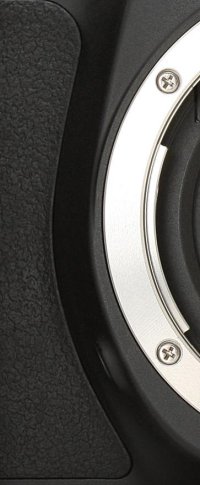
I think the best thing about those pics, I can't see the right-hand side of the camera, but at least on the left-hand side, the DOF-button has been shifted from its normal position.
Does this mean that it's on the right-hand side within easy reach?
That's a feature I was hoping would trickle-down from the 1DX to be standard on all bodies.
(now, can we please have a "lockable" DOF-preview? Otheriwise i'm just going to keep doing macro with my old manual lenses...)
Upvote
0

ramon123 said:1. What do you guys read into this mistake made by Canon Japan?
2. Why so many times do Canon and Nikon make this mistake on their very own website! I mean, does the web admin type in Canon EOS 5D Mark III then click upload/update and then only realize that it's live and therefore needs to put the page "down" asap?
The credibility is high here, we're talking about Canon Japan's website!
1. Humans make mistakes.
2. Web admins have to update the code, create new pages, etc. in order to get things ready. It's probably just a case of saving the new page in the wrong place (updating it prematurely).
Upvote
0

DJL329 said:ramon123 said:1. What do you guys read into this mistake made by Canon Japan?
2. Why so many times do Canon and Nikon make this mistake on their very own website! I mean, does the web admin type in Canon EOS 5D Mark III then click upload/update and then only realize that it's live and therefore needs to put the page "down" asap?
The credibility is high here, we're talking about Canon Japan's website!
1. Humans make mistakes.
2. Web admins have to update the code, create new pages, etc. in order to get things ready. It's probably just a case of saving the new page in the wrong place (updating it prematurely).
Most web sites I've worked on have an approval process on publishing new/updated pages. I would have expected canon to have this so to me it is quite surprising that this kind of error happened as is should require multiple 'mistakes'
Upvote
0
- Status
- Not open for further replies.
Similar threads

- Replies
- 55
- Views
- 5K

- Replies
- 4
- Views
- 589
- Replies
- 1
- Views
- 506

- Replies
- 115
- Views
- 17K
