What equipment to bring to get the stars

  • Thread starter Thread starter m
  • Start date Start date
Status
Not open for further replies.

m

Nov 24, 2012
204
0
6,231
hello,

I'm about to visit an area that has rather low light pollution, so I thought I give star photography a go.
But what's equipment gives the best results?

I found this website with some helpful information:
http://www.davidkinghamphotography.com/

I still have a few questions though and I hope you guys can help me figure them out.

1.) I have a digital crop body and film body + 3 rolls of ilford delta 3200.
-> 3200 iso on the 40D sure is noisy but it's in color + general digital advantages
-> I guess the film body should handle extreme long exposures better (very low power consumption) + being full frame

I'll probably pack both, but which one would be better suited?

2.) lens
I don't think the kit lens will cut it at its wide end with 17mm and f4.0, so the samyang/rokinon/bower 14mm looks tempting.
But then there's this crazy distortion it produces. How well can I take care of this in post?
Are there other wide angle lenses you would recommend? (am on a budget)

3.) iso settings
The website suggest starting at 3200.
I cannot go any further with my setup.
The question is whether the iso is necessary to capture the light of the stars at all or if it's to keep the exposure time low to prevent star trails.

Say I wanted to try a trail, could I go with a lower iso because I want a longer exposure?
Or would that reduce the visibility of the stars too much?


Tripod + head + remote are not a problem.

Thanks guys!
 
You can do an insane amount of post-processing.... including taking "dark shots" and image subtraction, image stacking...etc..etc..

It all comes down to time.... how much time do you want the shot to be? On a star trail it could be hours, on a still image it could range from seconds to minutes.... the wider angle the lens the more time you have before motion is apparent.... you will have to experiment for your setup. I like to use the lowest ISO I can get away with....

I strongly advise getting some software like Stellarium (free download) and set it up for the destination.... you will be able to see on your computer what objects are in the sky and how to locate them. Things like the Andromeda galaxy are hard to see with the naked eye but very visible in a time exposure.... all you need is a 200mm or longer lens and it shows up very well in a photo.
 
Upvote 0
Why would I pick a 200mm?
I read that the longer the focal length is, the shorter is the longest exposure time that I can use without getting star trails.

I don't have a tripod head that compensates the rotation of the earth.
 
Upvote 0
The Samyang's 14mm distortion is only a problem for architectural photography. You will have no problem for the type of photography you want.
Keep in mind the 500 rule:

500 / <lens focal length> is about the maximum you can shoot in seconds to avoid star trails.

So for Samyang 14mm it is 500/14 = a little more than 30sec (35sec actually so 30sec is a rather safe selection).

Even so you will see some star trails at 100% or more...

The more the megapixels the more star trails you get for the same exposure!

Since 40D is an APS-C camera it has the pixel density of a 10*1.6*1.6 = 25.6 Mpixels.
You may need to decrease the exposure to less than 30sec.
 
Upvote 0
I've used a 40D for night sky time lapse a number of times, I spent years doing astrophotograpy with film and do NOT miss film AT ALL.

Tokina 11-16/2.8 (usually set to 3.5). RokSamBow 14 would be a nice substitute.
ISO 1600 (3200 is noisy), Raw.
WB either daylight or custom, gets tweaked in PP anyway. The kinda brownish tinge you can see from long exposures in non-light polluted areas is really the color of the night sky, it seems jet black to our eyes because we can't detect the color and our brain expects it to be black. The camera doesn't lie. Incandescent WB can counteract that but affects star colors.

15 seconds exposure, 5 seconds off, yielding 3 exposures per minute
25 seconds exposure, 5 seconds off, yielding 2 exposures per minute
Off times allow for image saving to card and help a bit to keep sensor heating down
17mm f4 should let you get away with 25 second exposures easily, I'd be more concerned with the IQ of the lens wide open
PP in Lightroom. A free program that can also be used is Startrails....but you're shots will have to be good, it doesn't do any tweaking, just generates a video or a startrail shot

Hands down, the single toughest issue I have is dew on the lens, it has ruined more sequences than anything else. Have fun, but understand it can be a gateway to motorized mounts, telescopes and other appurtenances that will suck the life out or your wallet and nights. Sure is enjoyable, though.....
 
Upvote 0
You don't mention what the temperature will be but my 40D's noise is unusable to me above 65-70 deg and iso 800. You also need to almost over expose or you'll get banding trying to stretch it. I still use and like the 40D but its low light abilities are lacking, but getting out and trying in good skies is worth it even if your success is limited.
 
Upvote 0
good advice here, another free program out there is starstax - http://www.markus-enzweiler.de/StarStaX/StarStaX.html --- I have not used it yet but this was recommended to me by a good source

I've only attempted this a few times, once during a meteor shower (used high ISO at 2.8, 16-35mm lens) I was running at closer to 8 second exposures (meteors are bright but too fast for a 30 sec exposure)

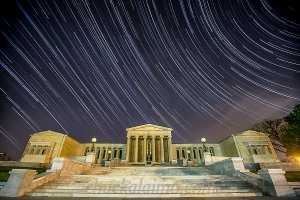
Second attempt was urban - so lots of light pollution --- to reduce the overall amount of shots, I went with IS) 100, f3.5, 60 exposures at 5 second intervals (I'm attaching this one). When time allows it, I'll be doing more of this kind of stuff.
 

Attachments

  • CAPM8251-Edit-Edit.jpg
    CAPM8251-Edit-Edit.jpg
    784.4 KB · Views: 660
Upvote 0
Chuck Alaimo said:
I've only attempted this a few times, once during a meteor shower (used high ISO at 2.8, 16-35mm lens) I was running at closer to 8 second exposures (meteors are bright but too fast for a 30 sec exposure)

What you mean with too fast?

I though moving lights are pretty much dictated by your aperture and ISO, but shutter speed doesn't matter. Same as with fireworks and light painting, no?
 
Upvote 0
tpatana said:
Chuck Alaimo said:
I've only attempted this a few times, once during a meteor shower (used high ISO at 2.8, 16-35mm lens) I was running at closer to 8 second exposures (meteors are bright but too fast for a 30 sec exposure)

What you mean with too fast?

I though moving lights are pretty much dictated by your aperture and ISO, but shutter speed doesn't matter. Same as with fireworks and light painting, no?

at 30 seconds exposures it's just not enough light at enough of a duration...airplanes get caught because they are slower moving, but fast moving ones blaze in and out in 1-5 seconds (at least that was the case the night I was shooting) I watched as the camera was exposing... over the course of 10 shots I saw at least 6 meteors, but when I paused to check, no evidence of meteor was present. So I backed things up to 25, then 20, then 15...found that 8 was the sweet spot
 
Upvote 0
Chuck Alaimo said:
tpatana said:
Chuck Alaimo said:
I've only attempted this a few times, once during a meteor shower (used high ISO at 2.8, 16-35mm lens) I was running at closer to 8 second exposures (meteors are bright but too fast for a 30 sec exposure)

What you mean with too fast?

I though moving lights are pretty much dictated by your aperture and ISO, but shutter speed doesn't matter. Same as with fireworks and light painting, no?

at 30 seconds exposures it's just not enough light at enough of a duration...airplanes get caught because they are slower moving, but fast moving ones blaze in and out in 1-5 seconds (at least that was the case the night I was shooting) I watched as the camera was exposing... over the course of 10 shots I saw at least 6 meteors, but when I paused to check, no evidence of meteor was present. So I backed things up to 25, then 20, then 15...found that 8 was the sweet spot

I'm confused. i don't understand why you would lose the meteor trails in a longer exposure. since the meteor is a transient light source, leaving the shutter open before or after its occurrence should only allow you to capture other transients, but have no impact on those previously detected. I would think the only issues should be the ability of the sensor to detect the transient and blowing out the area of the transient with background light. Increasing the shutter duration shouldn't decrease the sensor's sensitivity.
 
Upvote 0
LarryC said:
Chuck Alaimo said:
tpatana said:
Chuck Alaimo said:
I've only attempted this a few times, once during a meteor shower (used high ISO at 2.8, 16-35mm lens) I was running at closer to 8 second exposures (meteors are bright but too fast for a 30 sec exposure)

What you mean with too fast?

I though moving lights are pretty much dictated by your aperture and ISO, but shutter speed doesn't matter. Same as with fireworks and light painting, no?

at 30 seconds exposures it's just not enough light at enough of a duration...airplanes get caught because they are slower moving, but fast moving ones blaze in and out in 1-5 seconds (at least that was the case the night I was shooting) I watched as the camera was exposing... over the course of 10 shots I saw at least 6 meteors, but when I paused to check, no evidence of meteor was present. So I backed things up to 25, then 20, then 15...found that 8 was the sweet spot

I'm confused. i don't understand why you would lose the meteor trails in a longer exposure. since the meteor is a transient light source, leaving the shutter open before or after its occurrence should only allow you to capture other transients, but have no impact on those previously detected. I would think the only issues should be the ability of the sensor to detect the transient and blowing out the area of the transient with background light. Increasing the shutter duration shouldn't decrease the sensor's sensitivity.

I think he's also adjusting aperture/ISO to match exposure for the stars for that shutter speed, but he misses the point that meteors don't care about shutter speed, only aperture and ISO.

So using those aperture/ISO settings for stars at 8 seconds, but shutter speed at 30 seconds, you'd get overly bright stars (if possible), but also capture longer time and usually easier to catch meteors then too.
 
Upvote 0
I've used a lot of Jim Kendrick's dew prevention gear on my scopes - it works well. http://www.kendrickastro.com .

In lenses, apertures, ISO... The short version is that you need to experiment with your camera. I strongly recommend stopping your lens down at least 1 stop. I do not recommend a zoom because sometimes the focal length changes and things get weird. This is not a bad thing - simple primes can do a very good job.

The 500 / focal length rule is ok - it may be a little conservative. Pixel size is important but the sensor size is is irrelevant. This means that if you have ~6 micron pixels - like the 40D and 5D2, the motion blur will be essentially the same.

Bear in mind that it is easy to construct and use the most basic of tracking mounts, the barn door tracker. There are many designs on the web, some are complex while others are trivial. For those inclined to buy a tracking mount, Astrotrac and Losmandy offer ready bought solutions.
 
Upvote 0
Status
Not open for further replies.