What We Expect Canon to Announce in the Coming Months

I'm headed to Kenya on safari this spring, particularly looking for migratory birds that should be really plentiful in the rainy season. My main gear is the current RF 600 f/4 on the R5ii, and I'll also have an R7 with a much shorter lens, probably a 70-200 f/2.8, for larger and closer subjects. In my experience, the 600 sees almost all of the action on safari.

I'd happily shell out to replace it with a 300-600 f/4L even if it's heavier. No interest in a slower lens, as I've absolutely loved the extra light collection in poor conditions vs the otherwise excellent 100-500 lens, and honestly I struggle to see the big draw of 300-600 f/5.6 over that lens.

If they make a true RF 600 f/4 with a 1.4x toggle built in, I'll pre-order day 1.

Example shot from the 600x1.4 wide open; I don't buy the "have to stop down to get focus" argument.

There's nothing to "buy", it's math. Your example image is either cropped or poorly processed and a poor example of whatever point you're trying to make. You may be the first person to ever shoot hippos with 800mm 😜
 
Upvote 0
Canon has a big gap in their APS-C lineup, which they treat like a stepchild. Before they release more lenses for full frame, they should rather fix the missing parts in their APS-C patchwork blanket.
The only half-decent standard zoom so far is from Sigma (18-50mm), and it doesn't even have stabilization.
So, how about a lighter successor of the EF 17-55mm? And I'm still waiting for an alternative to two of the greatest Canon APS-C primes ever produced, the EF-M 22mm f/2 and the EF-M 32mm f/1.4. Would've been easy enough to port them over, since they're already calculated for a similar flange distance.
 
Upvote 0
Canon has a big gap in their APS-C lineup, which they treat like a stepchild. Before they release more lenses for full frame, they should rather fix the missing parts in their APS-C patchwork blanket.
Why? Meaning, what is the business justification for filling in what you believe is a gap vs. releasing more lenses for full frame? I get that you want them to do that, but you wanting something doesn't mean it's something Canon should do.

Personally, I couldn't care less what lenses are available for APS-C R-series bodies. I don't have one and have no plans of buy one. So I think what Canon should do fill some of the gaps in their FF RF lineup. So, how about a TS-R 14mm? How about a 600/4 with built-in 1.4x?

Regardless of what you and I think Canon should do, what Canon will do is develop and launch lenses for which there is the best business justification, based on their experience of leading the camera market for over 20 years.
 
Upvote 0
Not next from Canon, but probably next to Canon....

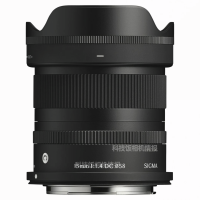
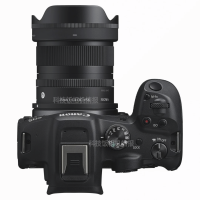
Sigma RF-S 15mm f/1.4 DC DN (to replace their current RF-S 16mm f/1.4)

1771784129340.png

1771784749284.png


The old 16mm was equivalent to 24mm on fullframe when mounted on a 1.5x APS-C camera.
The new 15mm is equivalent to 24mm on fullframe when mounted on a 1.6x APS-C camera.

It is probably putting too much significance into this, if thinking Sigma has prioritized Canon's 1.6x crop-factor higher than 1.5x when considering fullframe equivalence of their new lens?
 
Last edited:
  • Like
Reactions: 1 user
Upvote 0
A replacement for the old 180mm Macro would be very welcome, perhaps 180mm or 200mm. But I'm not going to hold my breath. Higher end RF-S lenses are obviously needed and allow third party manufacturers, other than Sigma, to issue zoom auto focus lenses!
 
  • Like
Reactions: 1 user
Upvote 0
Fingers crossed for a 15-60/85 RF-S lens, whether bright or not. Zoom lenses starting at 17 or 18mm on Canon APS-C just aren't quite wide enough for true general purpose use IMO, and as decent at the EF-S 15-85 might still be IQ-wise on high res sensors, it's got plenty of QOL deficiencies by modern standards, especially for video.
 
Upvote 0
A replacement for the old 180mm Macro would be very welcome, perhaps 180mm or 200mm. But I'm not going to hold my breath. Higher end RF-S lenses are obviously needed and allow third party manufacturers, other than Sigma, to issue zoom auto focus lenses!

I had no idea how popular the 180 was. I hear it a lot. Does max aperture matter with long macros? Is 200 f/4 fine for example?
 
Upvote 0
Canon has a big gap in their APS-C lineup, which they treat like a stepchild. Before they release more lenses for full frame, they should rather fix the missing parts in their APS-C patchwork blanket.
The only half-decent standard zoom so far is from Sigma (18-50mm), and it doesn't even have stabilization.
So, how about a lighter successor of the EF 17-55mm? And I'm still waiting for an alternative to two of the greatest Canon APS-C primes ever produced, the EF-M 22mm f/2 and the EF-M 32mm f/1.4. Would've been easy enough to port them over, since they're already calculated for a similar flange distance.
How many years did it take for the EF lineup to be mature? Many more years than the RF has been with us. I guess if I were many years younger I'd be in the 'I want it now Daddy' crowd but, well, I'm not. What do they say about it being a virtue?
A replacement for the old 180mm Macro would be very welcome, perhaps 180mm or 200mm. But I'm not going to hold my breath. Higher end RF-S lenses are obviously needed and allow third party manufacturers, other than Sigma, to issue zoom auto focus lenses!
I'm always amazed how longer macro focal lengths and higher than 1.0 lenses get left out of the equation due to manual focus. I get that AF is great for 100mm glass what with portraiture and such but macro, real fucking macro. You've got a rail, a tripod perhaps even software for stacking. Are these folks using auto focus? My vote is no. All the macro lenses I could ever ask for are available now, mostly from Venus Laowa. (not to mention adapted EF glass)
 
Upvote 0
I had no idea how popular the 180 was. I hear it a lot. Does max aperture matter with long macros? Is 200 f/4 fine for example?
The EF 180mm is a very sharp lens, ideal for when you need more distance to the subject (e.g. insects). A 200mm f4 macro would be fine. The 300mm f4 macro from the patent application would be, for me, even better, but even more niche than a 180-200mm macro, so not very likely:cry:.
 
  • Like
Reactions: 1 users
Upvote 0
I want to see a
  • RF 135mm f/1.4L IS USM
  • RF 200mm f/1.8L IS USM
  • RF 300mm f/2.0L IS USM
  • RF 500mm f/4L IS USM
But I'd be surprised to see further lenses later in 2026.

As for the Series II RF 400mm f/2.8L IS USM & RF 600mm f/4L IS USM. It would likely be out approx 10 years later after Series I's 2021 release. By early 2030s to be used at the 2032 Summer Olympics in Brisbane, AU. A R1 Mark III & R5 Mark IV would be released with those 2 lenses as well hopefully with CFexpress 4.0's 4.0GB/s for 80-120fps @ 2x the MP of today's R1 & R5 Mark II.

What improvements to expect from these Series II fast white long primes at a higher price?

- physically squatter
- lower weight
- more stops of IS
- better USM
- shorter MFD
- optical improvements for higher MP FF image sensors
- >40fps continuous shooting support

We then can expect a Series II RF 800mm f/5.6L IS USM & RF 1200mm f/8L IS USM a year later. Likely with a permanently placed 2.0x TC to keep R&D cost down and profit margins up.

Then again Nikon's 400mm and 600mm lenses with built-in 1.4x Extenders are so desirable that Canon may push up the release of the RF 400mm f/2.8L IS USM & RF 600mm f/4L IS USM replacements to 2030 in time for the FIFA World Cup or Winter Games.
You can't have everything...like lighter weight and a faster lens...well not until you successfully break the laws of physics. Same probably goes for the other options: longer and lighter or longer and faster. Or maybe you can have them if your name is on this list: https://www.bloomberg.com/billionaires/. Fortunately for me, I've got the lenses I want and I can rent the others........
 
Upvote 0
I had no idea how popular the 180 was. I hear it a lot. Does max aperture matter with long macros? Is 200 f/4 fine for example?
Depends what you're using it for. I use a 180 macro primarily for flowers and smooth out of focus backgrounds are an important part of that. 200 f/4 might be okay, but any narrower and imo you're butting up against the 100-400, which can produce very good semi-macro insect portraits where you want more in focus (as its max aperture is so much narrower).
 
Upvote 0
Example shot from the 600x1.4 wide open; I don't buy the "have to stop down to get focus" argument.
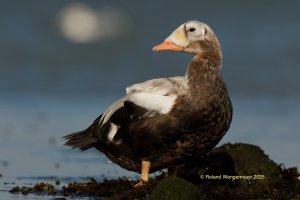
Stopping down does expand depth of field, but with very long focal length the gain is limited, of course. Here is an example shot with my EF 600mm F/4.0 III and my R7, stopping down to f/8.0 allowed me to get the spectacled eider nearly fully sharp from head to tail:

Plüschkopferpel Texel 2025-20-30 3 Copyright.jpg
 
  • Like
Reactions: 4 users
Upvote 0
Stopping down does expand depth of field, but with very long focal length the gain is limited, of course. Here is an example shot with my EF 600mm F/4.0 III and my R7, stopping down to f/8.0 allowed me to get the spectacled eider nearly fully sharp from head to tail:

View attachment 228067

Well, it depends how close you are. On a crop camera, your DOF is multiplied. On FF it's far more pronounced. Your shot here is about f/11 on FF, give or take.

Pick a medium sized mammal. If the target is in 1/4-1/3 of the frame and angled towards you, you will not get the entire target in focus with a 600 at f/4. You're going to be about f/7.1 or higher. I threw up an example of shooting f/4 at 400mm on a hummingbird scene, the DOF was too shallow for the scene.

If you're cropping because you're not close enough, DOF is less of an issue.

Field sports are different and one will likely utilize the lens being wide open depending on where you're positioned. There is also a ton of cropping with sports to get things online as fast as possible. It doesn't matter if it's a 2MP image.

When I wander around socials, the two biggest things bird and wildlife shooters screw up are backgrounds and DOF.
 
Upvote 0
For live insects (and I gather reptiles and amphibians) in the wild autofocus can help a lot. I've done macro with rails, but it's not often practical with eg butterflies (unless they're dead).
Same here!
Even though I almost never use AF for static subjects, things get different when motives move.
AF can be very valuable for butterflies, dragonflies etc, or when I'm tired.
PS: I never use a tripod, but often a ringflash.
 
  • Like
Reactions: 1 users
Upvote 0
Same here!
Even though I almost never use AF for static subjects, things get different when motives move.
AF can be very valuable for butterflies, dragonflies etc, or when I'm tired.
PS: I never use a tripod, but often a ringflash.
I have used AF for quick-and-dirty focus stacks of stationary subjects - rapidly select points over various parts of the animal and you can cover a lot, although it can be rather hit and miss.
 
  • Like
Reactions: 1 user
Upvote 0
I'm always amazed how longer macro focal lengths and higher than 1.0 lenses get left out of the equation due to manual focus. I get that AF is great for 100mm glass what with portraiture and such but macro, real fucking macro. You've got a rail, a tripod perhaps even software for stacking. Are these folks using auto focus? My vote is no. All the macro lenses I could ever ask for are available now, mostly from Venus Laowa. (not to mention adapted EF glass)
Maybe you should get a grip on reality. Macro means many things to different people.

Sure, I have done stacked macro in manual focus in controlled light enclosures but there is no way I could setup something like that shooting small critters underwater.
Similarly for insects (bees in one shoot I did) or butterflies shot handheld needs good AF and the RF100/2.8 is reasonably priced.

It is great that you have options from Laowa for your requirements although nothing exists like the MP-E for instance. Canon doesn't want to make a lens for your use case.

I would love a reasonably priced, manual focus, good coma etc 14/1.4 that would fit on EF/RF but it doesn't exist.
I either use what I have or pony up some $$$$ for the RF14/1.4
 
Upvote 0
Maybe you should get a grip on reality. Macro means many things to different people.

Sure, I have done stacked macro in manual focus in controlled light enclosures but there is no way I could setup something like that shooting small critters underwater.
Similarly for insects (bees in one shoot I did) or butterflies shot handheld needs good AF and the RF100/2.8 is reasonably priced.

It is great that you have options from Laowa for your requirements although nothing exists like the MP-E for instance. Canon doesn't want to make a lens for your use case.

I would love a reasonably priced, manual focus, good coma etc 14/1.4 that would fit on EF/RF but it doesn't exist.
I either use what I have or pony up some $$$$ for the RF14/1.4
Have a great night!
 
  • Like
  • Wow
Reactions: 1 users
Upvote 0