Why the DxO bashing?

privatebydesign said:
Don Haines said:
Perhaps it's time to start posting squirrel pictures in the hope of restoring sanity here :)

OK, taken with a Canon camera a 300 f2.8 and a MkII 2X TC and cropped.

Nice!

At least your feeder is in tact. I have an army of squirrels that hit my yard every day or two...the family from two houses down. ;) I call them "The Destros", because they truly live by their own moral code: DESTROY ALL ON THE PATH TO FOOOOD!!! They've ripped apart my bird seed feeders more times than I can count (and some of them were expensive...one was $40!)
 
Upvote 0
dilbert said:
That particular quote comes from Gale Tattersall - the guy that used the 5D Mark II for House where they used the 5D Mark II to shoot the final TV episode. So what you're now saying is that a well respected professional is wrong?

Do you realize that G.T. is in the motion picture business?
I.E., esp. given the time frame of the statement, thats comparing of what remains after the cameras internal conversation, the lossy compression and then the color grading on top of that are applied vs. raw sensor data?
 
Upvote 0
privatebydesign said:
Here is a pretty crappy image shot with a completely outdated tech Canon sensor, that many posters here will adamantly tell you is impossible to do. Now I know it is no award winner, but I also know it would get me out of the sh-t if it was an important moment. I just thought it might be interesting to post an actual photographic example of the appallingly bad Canon tech.

Anybody care to guess how many stops under exposed the image was? It was at a wedding reception and the on camera flash that I was bouncing hadn't recharged in time, so did not fire.

OK, it's pushed fairly hard, hugely downsampled so hard to tell what body it came from.
But, whatever body it did come from exhibits horizontal and vertical banding almost evenly at the conditions of that shot and it's showing up as magenta crosshatch on her neck and some other areas. So it could be any brand of camera at this point.

In a bit of a leap I'd say its from an old digic 2, possibly digic 3 body, maybe a 20D or an early Rebel?

From the histogram, the red and green channels are showing a lot of quantization stretch, so you've pulled this from pretty low down and from likely moderate ISO.
maybe 800 to 1600, depending on the body.

With some of your PS talent you could still make a passable print out of this, ultimate IQ rarely required for portraits.

Exif is scrubbed except for "Ducky" and "Photoshop 3.08" ...

Heh! what kind of surprise are you tryin' t' pull here, bub?
let's see you try that with a digic 4 camera ;)
 
Upvote 0
philmoz said:
ajfotofilmagem said:
philmoz said:
There's obviously a lot of very knowledgeable people here so I'll pose a question that's been bugging me for a long time.
How is it possible for DxO to claim > 14 stops of dynamic range for cameras with a 14 bit ADC ???
Phil.
Noise determines what is considered "absolute black", and from this absolute black is counted how many points of DR to reach full white (highlights without texture). When DXO makes downsize to 8 megapixel, the noise is reduced, and this aspect of sensor 36 megapixel lead comparative advantage. If you do not apply to downsize 8 megapixel count DR will not reach 14 stops.

But how can you possibly get more than 14 stops from a 14 bit conversion?

Phil.
There are many ways to do this -- one thing to consider, for example, is some CD audio equipment that used 12 bit converters to get 16 bits of performance through oversampling or the so-called "1" bit designs that produced 16 bit equivalence. I don't think this is what is going on here though. I think if you pick the correct settings on the DxO presentation the Sony's measure out at about 13.8 bits of DR which is not surprising for a low speed SAR design.
 
Upvote 0
Rienzphotoz said:
Atheist: I do not believe in DR, but I have no problem if others believe in it.
Believer: You must believe in my religion, else your image is doomed.
Atheist: But I've done fine without worshiping DR for decades.
Believer: No you ignorant fool, worshiping DR is the only way to image salvation.
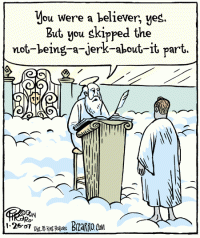
One more cartoon for your reading/viewing pleasure ;D
 

Attachments

  • you-were-a-believer-yes-skipped-jerk.gif
    you-were-a-believer-yes-skipped-jerk.gif
    84.1 KB · Views: 763
Upvote 0
jrista said:
It really isn't about the IQ or the Art. It's just about the fact that Tech A has more DR than Tech B, therefor religiously speaking, Tech A must be better. All that matters to Tech A fanboys is that "they won". That's it.

It's unfortunate that it often boils down to school-backyard "mine is bigger" - but as for dr, I (again) have to mention that I'm not a member of the "11 stops is enough" fangroup.

How do I know? Because Magic Lantern recently gained the dual_iso module boosting the dr to 14.5ev (iso 100 interlaced with iso 800) - and they've got auto-ettr to measure when it is required. That's why I know for what I shoot (let's say white furry animal in bright sunlight/shadows even w/ fill flash) I often require more dr, and for these scenes obviously bracketing is not an option.

It's not necessary all the time mind you, but another advantage of higher dr is more exposure safety - you don't need to (spot) meter 100% correctly if short on time which usually is the case if your subject is about to move away.
 
Upvote 0
Rienzphotoz said:
Rienzphotoz said:
Atheist: I do not believe in DR, but I have no problem if others believe in it.
Believer: You must believe in my religion, else your image is doomed.
Atheist: But I've done fine without worshiping DR for decades.
Believer: No you ignorant fool, worshiping DR is the only way to image salvation.
One more cartoon for your reading/viewing pleasure ;D
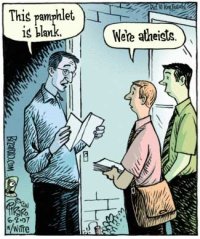
...and this one is for appeasing the opposition
 

Attachments

  • bizarro_atheists.jpg
    bizarro_atheists.jpg
    29.6 KB · Views: 746
Upvote 0
Rienzphotoz said:
Rienzphotoz said:
Rienzphotoz said:
Atheist: I do not believe in DR, but I have no problem if others believe in it.
Believer: You must believe in my religion, else your image is doomed.
Atheist: But I've done fine without worshiping DR for decades.
Believer: No you ignorant fool, worshiping DR is the only way to image salvation.
One more cartoon for your reading/viewing pleasure ;D
...and this one is for appeasing the opposition

Nice one Rein :D

And this is what happened after the Miss Universe contestants witnessed the DXO/DR discussion.....

women-beauty_pageant-fight-fight-fights-world_peace-rde6618l.jpg
 
Upvote 0
dilbert said:
Which all really boils down to people beat up on DxO here because it doesn't make them feel good about the equipment they've bought.

No. I bash DxO because their numbers are MEANINGLESS.

Just because their are "formulas" and "calculations" does not mean the measurements are either accurate or correct. As an example I can come up with a formula that uses a standard IQ test, but some of the questions deal with color, so a colorblind person will always be handicapped and measured low. Has nothing to do with their intelligence, but does show that as a whole the numbers are really meaningless.

As an example... Which is a better Camera - Nikon D600 or Nikon D4?

Which is better? Sony Cybershot DSC-RX1 or Nikon D3X?

Nikon D5200 of Nikon D3S?

So remember... In terms of Raw performance...

If you bought a Nikon D4 when you could have bought a D600, you are an idiot
If you are a pro and still using the lousy D3X when you could be using a Cybershot DSC-RX1, you are a fool
Have a D3S instead of D5200? TOOL!

Afterall... That is what DXO said are better sensors. Which are actual better cameras?

Nikon D600 or Canon 1Dx???

And sorry... I have used both of those, and the 1Dx is 10x the camera the D600 is in what it can produce, though DXO tries to say the D600 has a sensor that is 15% better than the 1DX.

Again, just because there is a test, does not mean it is relevant... I can come up with a benchmark that says the Kia Optima and Ford Fusion are 40% better than the Lamborghini in engine performance based on fuel efficiency... Which do you want in a race?

So tell you what - If you think DXO Mark numbers are so relevant - go out to Fashion Week in NY and find the Pro photographers... you know... the ones making the serious big bucks and try and trade them their D4, D3X etc for a D600 and show them the DXO marks and tell them how much better the sensor is in Raw Performance and see what they say. Better yet,video it and post it.
 
Upvote 0
dilbert said:
neuroanatomist said:
dilbert said:
Sporgon said:
As Neuro has pointed out, if a landscape is going to have more than 12 stops of DR it is likely to be well over 14 - because the only thing that is going to take it over about 10 or 11 is including the actual light source in the picture.

If you're basing your comment on Neuro's then you've no personal experience to base this on. Similarly, in Neuro's comment he doesn't actually reference any personal experience either, just makes a grand statement. If he said the sun would rise at midnight, would that make it true?

Why don't you go out there and find out for yourself what the limitations are of the equipment? Yes, that would mean going outside and taking photographs but it won't hurt you.

In Sporgon's signature, there a link to his images. I recommend that you not click it, or else you might realize how asinine your statements are (assuming that would come as a surprise).

Well if he has his own experience to build on then he doesn't need to quote or cite your comments, does he?

I was expanding on a point made earlier by Neuro. It was common courtesy to acknowledge that he made the original point. It also lets readers know that I have been following what had been said earlier in the thread. Beginners Guide to Debating, Chapter One.

From the threads on CR it is clear there is a total misconception of the amount of EV range in a scene. No doubt this is partly stoked by people using reflective light meter readings.

I could post a picture taken into the morning sun of a beached fishing boat, which, as well as exposing for the sky has absolutely zero noise or banding in the dark underside of the boat's hull, but as PBD has already posted a picture which trolls have taken zero notice of, I'm not going to bother.

I'm not saying 11.5 stops is always enough. I'm saying that the difference between 12 and 14 ( or 11.7 and 13.2 if we are going to be anal about it ) is not a deal breaker. The difference between 12 and 20 would be a deal breaker. Why such a big jump ? Read what was written earlier.

Here's a link to a shot into the sun with the dreadful noise plagued 5D mkii (not one of mine). When you get beyond this start complaining about DR.

http://500px.com/photo/35632728

It's also worth mentioning that to a certain extent, photography is defined by its limitation in DR. Reproduce a scene as we really see it and it will be quite boring as the human eye ( or to be more correct, the brain ) has around 24 stops due to our HDR computing ability.

Again you might find this an interesting read:

http://www.cambridgeincolour.com/tutorials/cameras-vs-human-eye.htm
 
Upvote 0
Marsu42 said:
It's not necessary all the time mind you, but another advantage of higher dr is more exposure safety - you don't need to (spot) meter 100% correctly if short on time which usually is the case if your subject is about to move away.

If you're going to use spot metering through your camera ' on the fly' as it were you are certainly gong to need all the exposure latitude help you can get ;)

In the film days the reason we bought spot meters was specifically not to take one reading, but to take various reading from around the scene to get a range and average, or to take a reading from a grey card, again from the different illumination within the scene.

Using spot as a one off meter reading can lead to real exposure error unless you have hit the correct reflectivity within the scene with your one reading.
 
Upvote 0
dilbert said:
Discussion out of context? Well obviously my lead in doing so set a good example for you as you henceforth have followed up with pictures of wolves baying at the moon. So +1 to me for being a trend setter that you've followed :)
The coyotes were, to this bystander, a bit of comic relief, not an actual part of the discussion.

dilbert said:
I think you're calling "Foul!" because all of a sudden an argument was brought into the discussion that you know nothing about. Not my problem.

"All of a sudden" is the key phrase here. A legitimate discussion of the facts of this issue should not involve "all of a sudden." Throwing your counter-party off kilter with a confusing argument does two things: (1) it fails to advance your argument; (2) it serves as a concession that you had no legitimate reply; i.e. it's an admission that you perceive your own argument as weak.

The question before us was why the DxO bashing. That was largely settled with the answer "their measurements of sensors are generally fine, but their measurements of lenses are poorly explained, and their "scores" go beyond "crap" into the land of "misleading." (at least that's my take on it)

This led to the inevitable and perpetual debate about DR. To me, that question is something like this: Everyone acknowledges that D800 (and other Sony sensors) have more real DR than the 5D3 (and other Canon sensors); however, is it enough to make a difference in real-world photography?

This question can be addressed by breaking down the original question into its parts, which Neuro and jrista have been trying to do. These are the parts I see:

(1) What is the real-world DR difference between the 5D3 and D800?
(2) How common is it to find a scene which falls into the real-world DR of the D800, but not into the real-world DR of the 5D3?

Part of "real world" performance has to do with the techniques employed by the photographer. Remember the early days of CD music? The engineers often used the wrong processing techniques, creating a CD that sounded truly bad. Analog fans used this as proof that digital was inferior, but it was just evidence that it was not being done correctly. If the photographer is not exposing properly (on either of these cameras) it won't generate useful examples.

Dilbert, for future reference, citing an "expert" to support your factual assertion is risky. This is true for two reasons: first, "experts" often contradict themselves in different contexts. Second, there are many different experts, and your opponent may have a list of experts who contradict your expert. The question is not what the "expert" says, but why that expert says it.

And we're all still waiting for some real-world examples of (2) to be posted. (raw files, please)

 
Upvote 0
neuroanatomist said:
privatebydesign said:
dilbert said:
privatebydesign said:
What I find really interesting is when the DR/FPN Evangelists are actually challenged with an image that squarely disputes their assertions religion, they all ignore it.

hmmm?? Don't get "FPN"?

Fixed Pattern Noise, it is the banding that can be seen if you process files badly, particularly if they are badly exposed files processed badly.

FPN = Five-stops Pushed Noise

LOL +1
 
Upvote 0
dilbert said:
jrista said:
dilbert said:
jrista said:
You can't do that, though.

But I did, so quite obviously I can.

Sure, you "can" do it if you so please. You just can't expect to have a coherent, comprehensible discussion when no one else involved knows you've suddenly taken the discussion out of context. The joke is really on you here...but apparently you don't quite seem to get that. Your naiveté is apparently boundless...

Discussion out of context? Well obviously my lead in doing so set a good example for you as you henceforth have followed up with pictures of wolves baying at the moon. So +1 to me for being a trend setter that you've followed :)

dilbert said:
I think you're calling "Foul!" because all of a sudden an argument was brought into the discussion that you know nothing about. Not my problem.

Well, yes...you made an argument that appeared to have to do with what we were discussing, and only after the fact did you disclose that it actually had NOTHING to do with what we were discussing. It is a simple matter of common courtesy to keep the people you are conversing with appraised of all the details, such as the fact that your quoting someone else from a different context entirely, and quoting an opinion rather than any kind of discernible fact, rather than making a quote of your own within the current context.
...
Your clearly not interested in facts in proper context, or any level of decorum or common courtesy, however...you don't care that your random internalized context switches are unknowable to the outside world unless you have the courtesy to let everyone else know that you've switched contexts...which renders any discussion with you 100% entirely pointless, useless, and a total waste of time.
...

Oh, I disagree.

It proved the point I want to prove quite well in that people attacked the comment using DxO as the reference. Afterall, if DxO was really as worthless as you all claim then nobody would have used them as the reference to say "Here, you're wrong", would they?

You epitomize my earlier point about "Team A"s arguments purely being for the purpose of "winning" the competition more than I ever thought possible. Thanks for literally personifying the point for me. Now I can ignore the rest of this debate and do something interesting.
 
Upvote 0
Don Haines said:
When a thread goes nuts, call out the squirrels :)
We all know how that goes down ... the indecent Squirrels expose their nuts ;D ... if I'm not wrong, the last time, wasn't it the same DxO discussion that prompted many people to show case Squirrel nuts? ;D
 
Upvote 0
Sporgon said:
In the film days the reason we bought spot meters was specifically not to take one reading, but to take various reading from around the scene to get a range and average, or to take a reading from a grey card, again from the different illumination within the scene.

Thanks for the information, I'm really not experienced with spot metering as the eval metering on the 60d is very good and with a bit of experience I was always able to guess a good ec.

Unfortunately, the same metering module put on the 6d is more erratic, and that's why I have to think about other means of getting a correct exposure - which is difficult when in a hurry, that's why I'm happy about as much dynamic range as I can grab, for example the +1/3-1/2 stops added by Magic Lantern.
 
Upvote 0
Marsu42 said:
Unfortunately, the same metering module put on the 6d is more erratic,

+1; you're not the only person to find that; I'm finding the matrix metering (pattern) almost 'erratic' too. It's as if it's trying to be too clever in certain lighting conditions. It also seems to react to blue by underexposing but I believe it doesn't have colour metering.

Certainly the matrix on the 5D behaved differently to the mkii which behaved differently to the 6D. I would recommend trying average metering mode - where there is nothing in the metering icon box. This is actually centre weighted, and should be more predictable but not 'intelligent'.
 
Upvote 0