zooms vs primes for landscape

I had the same choice and tried many lenses for travel photography, including 17-40, 16-35II, 35L, 50 1.8 and others,and ended up with this combo: TS-E 17, 24-70 II and 70-200 4 IS. All these lenses are very sharp, maybe 24-70 is litte sharper and gives more contrast. Since most of landscape photos are shot with aperture 4 and closer - there is no need for fast primes.
 
Upvote 0
Albi86 said:
Zooms offer versatility, but it always comes at the price of compromising on IQ - in one way or another.

I disagree with this statement and the previous post as well regarding the 24-70ii. Practically speaking the 24-70ii is about as good as it gets. While the 300f2.8ii is sharper then the 300f2.8i.... both lenses are razor sharp!!! Saying that canon's primes in this focal range has better IQ then the 24-70ii is just splitting hairs.

Have you used the 24-70ii? With this lens... there are no compromises. Its tack sharp through the entire zoom range, from wide open through f/14 and all the way to the corners. Unless you really need faster then f2.8, this lens effectively replaces all primes in this focal range.

Also to the OP... the 17-40 is not the best choice for a landscape lens. There is a ton of distortion, it's not all that sharp and has compatibility issues with some variable ND filters. I have used this lens extensively and unless I absolutely need wider then 24, I don't use it. It's just not that exciting of a lens.
 
Upvote 0
GMCPhotographics said:
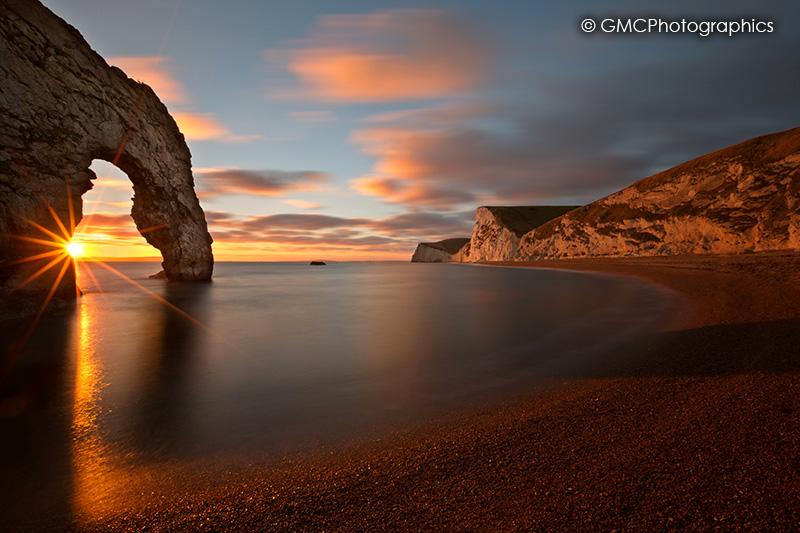
11375426476_5673a8e606_o.jpg
Great shot, GMC!! I love how the waterline takes the eye back to the sunset and the contrast between sharp rock formation and the soft water, beach, and clouds.
 
Upvote 0
Canon1 said:
Albi86 said:
Zooms offer versatility, but it always comes at the price of compromising on IQ - in one way or another.

I disagree with this statement and the previous post as well regarding the 24-70ii. Practically speaking the 24-70ii is about as good as it gets. While the 300f2.8ii is sharper then the 300f2.8i.... both lenses are razor sharp!!! Saying that canon's primes in this focal range has better IQ then the 24-70ii is just splitting hairs.

Have you used the 24-70ii? With this lens... there are no compromises. Its tack sharp through the entire zoom range, from wide open through f/14 and all the way to the corners. Unless you really need faster then f2.8, this lens effectively replaces all primes in this focal range.

+1

The 24-70 f/2.8ii is outstanding
 
Upvote 0
growler said:
Hi. I'm hoping to prevail on the collective wisdom of CR regulars for advice on building my lens kit after making the change from crop sensor to FF (I've got the 6D - great camera). I got rid of the last of my crop sensor lenses, leaving me with the following lenses: 24-105 f4L, 50 f1.8II, and an older Sigma 70-200 f2.8 APO HSM (no OS) that I've had since my Elan IIe days. I shoot landscapes, occasional portraits, and I would like to get into macro. I don't shoot sports and don't plan to. I see two possible paths forward: go mostly with primes or rely mostly on zooms. In either case, I plan to keep the 24-105 because of its versatility as a walk around lens.

Plan 1. Add the 24mm f2.8 IS, 35mm 2.0 IS, 100mm f2.8L IS, and 200mm f2.8L. Sell the Sigma. Perhaps add a Rokinon 14mm manual focus later. On hikes when I want to keep the weight down, I could go with the 24, 35, and 100 and have most of the bases covered.

Plan 2. Add the 17-40mm f4L, 70-200mm f4L IS, and 100mm f2.8L IS. Sell the Sigma 70-200 f2.8. I don't want to buy the Canon 70-200 f2.8L (IS or non-IS) both because of the weight and the fact that for most landscape I don't need shallow DOF. Similar comments apply for the 16-36mm f2.8L. On hikes when I want to minimize weight, I would go with the 17-40, the 50, and the 70-200 f4L. I suppose that I could add macro ability by swapping the 50 1.8 for a 50 2.5 macro.

Any thoughts about either of these plans or other recommendations? Thanks.

Sell the Canon 24-105mm f/4L IS and the Sigma 70-200mm. Get the 24-70mm 2.8L II, the 100L macro and 70-200 f4 IS and your set is complete and light enough for trekking.
 
Upvote 0
Canon1 said:
Albi86 said:
Zooms offer versatility, but it always comes at the price of compromising on IQ - in one way or another.

I disagree with this statement and the previous post as well regarding the 24-70ii. Practically speaking the 24-70ii is about as good as it gets. While the 300f2.8ii is sharper then the 300f2.8i.... both lenses are razor sharp!!! Saying that canon's primes in this focal range has better IQ then the 24-70ii is just splitting hairs.

Have you used the 24-70ii? With this lens... there are no compromises. Its tack sharp through the entire zoom range, from wide open through f/14 and all the way to the corners. Unless you really need faster then f2.8, this lens effectively replaces all primes in this focal range.

If your only measure of IQ is resolution then you have a point. But then that isn't the only measure or the only factor that contribute to IQ.

Here are a few hairs to split;
http://www.the-digital-picture.com/Reviews/Lens-Vignetting-Test-Results.aspx?Lens=787&Camera=453&FLI=0&API=0&LensComp=480&CameraComp=453&FLIComp=0&APIComp=2

http://www.the-digital-picture.com/Reviews/Lens-Distortion.aspx?FLI=0&FLIComp=0&Lens=787&Camera=453&LensComp=480

http://www.the-digital-picture.com/Reviews/Lens-Flare.aspx?Lens=787&Camera=453&FLI=0&API=0&LensComp=480&CameraComp=453&FLIComp=0&APIComp=2
 
Upvote 0
The 24 f1.4 is an appalling choice for a 24 mm dedicated landscape lens. The TS-E24 MkII is probably the best current 24mm 135 format lens available, and it is uniquely orientated towards landscape work. How many landscapes are you going to shoot between f1.4 and f3.5?
 
Upvote 0
Canon1 said:
Sell the 24-105. Get a 24-70ii. (With this lens you can forget about primes in this focal length for landscape photography.

Get a rokinon if you need wider then 24mm. I rarely wish I could go wider then 24mm on ff.

+1. The IQ of the 24-70 is so much better than the 24-105 that it will suffice for 24mm (considering you are contemplating 24mm II). And for wider angles, get the Rokinon. It will be cheaper, and will give you the option of a faster lens throughout the 24-70 range.
I had a similar dilemma when moving to FF from APS-C. I didn't want to get the 17-40 because I hadn't liked it earlier. You are not getting much advantage for the price you pay going for the 17-40 and 24 II. Considering you are paying $ 2300 for that, you are actually better off getting the 24 TS-E which will be versatile in so many more ways beside being one most praised landscape lenses.
 
Upvote 0
Don't forget about the 40mm f/2.8 for landscapes. I use mine a ton. The detail from pancake + 6D at f/4 through f/10 is amazing. Plus it's so small and light (and inexpensive), there's no reason not to carry one.
 
Upvote 0
growler said:
Plan 2. Add the 17-40mm f4L, 70-200mm f4L IS, and 100mm f2.8L IS. Sell the Sigma 70-200 f2.8. I don't want to buy the Canon 70-200 f2.8L (IS or non-IS) both because of the weight and the fact that for most landscape I don't need shallow DOF. Similar comments apply for the 16-36mm f2.8L. On hikes when I want to minimize weight, I would go with the 17-40, the 50, and the 70-200 f4L. I suppose that I could add macro ability by swapping the 50 1.8 for a 50 2.5 macro.

go with your option 2 and you'll spend and carry a LOT less than many of these guys are encouraging you to and have most everything well covered.
A light monopod with small ballhead can be helpful.
maybe add the excellent bang/buck 50mm f/1.4 USM instead of the 1.8 v2

The 17-40 can be very soft in corners at times, stopped down to f/8-11 and pick your focus and composition to fit the lens a little and you'll do fine. Experiment with it to see where its weaknesses are so you'll know. It's otherwise not a bad lens and you can spend a lot more in this FL range for only slight improvements. (or Tokina 17-35 f/4)

14mm Samyang when you're ready for it.
consider 24-70mm Tamron too.
 
Upvote 0
sagittariansrock said:
Canon1 said:
Sell the 24-105. Get a 24-70ii. (With this lens you can forget about primes in this focal length for landscape photography.
Get a rokinon if you need wider then 24mm. I rarely wish I could go wider then 24mm on ff.

+1. The IQ of the 24-70 is so much better than the 24-105 that it will suffice for 24mm (considering you are contemplating 24mm II). And for wider angles, get the Rokinon. It will be cheaper, and will give you the option of a faster lens throughout the 24-70 range.
I had a similar dilemma when moving to FF from APS-C. I didn't want to get the 17-40 because I hadn't liked it earlier. You are not getting much advantage for the price you pay going for the 17-40 and 24 II. Considering you are paying $ 2300 for that, you are actually better off getting the 24 TS-E which will be versatile in so many more ways beside being one most praised landscape lenses.

+2 I shoot lots of landscapes and love my current set-up of Rokinon 14mm 2.8, EF 24-70 2.8 II and EF 70-200 2.8 II. I use the 70-200 2.8 quite a bit for portraits, if I was just using it for landscapes, the f/4 IS would be a better option (much lighter to carry on hikes!). The 100mm L Macro is also nice for landscapes. I take it as a tele option when I don't want to carry the 70-200 and is also nice for macro shots of flowers and other small objects encountered when hiking.

I'm saving up for a TS-E 17mm or 24mm as well. By the time I have the money set aside, I will hopefully have my mind made up as to which one!
 
Upvote 0
privatebydesign said:
Vignetting and distortion at those levels are complete non sequiturs with the mp cameras we have and the vast majority of output scenarios.

MP of cameras improves Vignetting and Distortion? I didn't know this.
You can change these in defects in PP, so I guess we should use a lens that we know we have correct its problems.

The output scenarios we are talking about are landscapes.
 
Upvote 0
privatebydesign said:
The 24 f1.4 is an appalling choice for a 24 mm dedicated landscape lens. The TS-E24 MkII is probably the best current 24mm 135 format lens available, and it is uniquely orientated towards landscape work. How many landscapes are you going to shoot between f1.4 and f3.5?


An appalling choice?
Maybe we should all switch to Nikons high MP camera, then things like vignetting and distortion wouldn't even exist.
 
Upvote 0
takesome1 said:
privatebydesign said:
Vignetting and distortion at those levels are complete non sequiturs with the mp cameras we have and the vast majority of output scenarios.

MP of cameras improves Vignetting and Distortion? I didn't know this.
You can change these in defects in PP, so I guess we should use a lens that we know we have correct its problems.

The output scenarios we are talking about are landscapes.

Correction of vignetting in post means raising exposure, which adds noise. With current sensors and since landscapes are rarely shot at high ISO, that's not really an issue. Correction of distortion in post costs sharpness. Higher resolution sensors mitigate the loss.

Landscapes are the input. "Output scenarios" refers to how the images of the landscapes are presented - online or prints of various sizes. With higher MP sensors, most output scenarios involve downsampling the image, and that further mitigates the effects of correcting vignetting and distortion in post.
 
Upvote 0
takesome1 said:
Canon1 said:
Albi86 said:
Zooms offer versatility, but it always comes at the price of compromising on IQ - in one way or another.

I disagree with this statement and the previous post as well regarding the 24-70ii. Practically speaking the 24-70ii is about as good as it gets. While the 300f2.8ii is sharper then the 300f2.8i.... both lenses are razor sharp!!! Saying that canon's primes in this focal range has better IQ then the 24-70ii is just splitting hairs.

Have you used the 24-70ii? With this lens... there are no compromises. Its tack sharp through the entire zoom range, from wide open through f/14 and all the way to the corners. Unless you really need faster then f2.8, this lens effectively replaces all primes in this focal range.

If your only measure of IQ is resolution then you have a point. But then that isn't the only measure or the only factor that contribute to IQ.

Here are a few hairs to split;
http://www.the-digital-picture.com/Reviews/Lens-Vignetting-Test-Results.aspx?Lens=787&Camera=453&FLI=0&API=0&LensComp=480&CameraComp=453&FLIComp=0&APIComp=2

http://www.the-digital-picture.com/Reviews/Lens-Distortion.aspx?FLI=0&FLIComp=0&Lens=787&Camera=453&LensComp=480

http://www.the-digital-picture.com/Reviews/Lens-Flare.aspx?Lens=787&Camera=453&FLI=0&API=0&LensComp=480&CameraComp=453&FLIComp=0&APIComp=2

So you split some hairs... who cares. My point was that splitting hairs was a pointless exercise. When comparing sharpness of a 24-105 to a 24-70ii the IQ difference is obvious with big prints or even when viewing on the pc without any zoom. (IQ, Vignetting, distortion, CA, etc...)

What you showed me in those links are comparisons between 2 excellent lenses. Unless you need f1.4, there are no "practical" advantages of the 24mm prime to the zoom.
 
Upvote 0
neuroanatomist said:
takesome1 said:
privatebydesign said:
Vignetting and distortion at those levels are complete non sequiturs with the mp cameras we have and the vast majority of output scenarios.

MP of cameras improves Vignetting and Distortion? I didn't know this.
You can change these in defects in PP, so I guess we should use a lens that we know we have correct its problems.

The output scenarios we are talking about are landscapes.

Correction of vignetting in post means raising exposure, which adds noise. With current sensors and since landscapes are rarely shot at high ISO, that's not really an issue. Correction of distortion in post costs sharpness. Higher resolution sensors mitigate the loss.

Landscapes are the input. "Output scenarios" refers to how the images of the landscapes are presented - online or prints of various sizes. With higher MP sensors, most output scenarios involve downsampling the image, and that further mitigates the effects of correcting vignetting and distortion in post.

+1
 
Upvote 0
neuroanatomist said:
takesome1 said:
privatebydesign said:
Vignetting and distortion at those levels are complete non sequiturs with the mp cameras we have and the vast majority of output scenarios.

MP of cameras improves Vignetting and Distortion? I didn't know this.
You can change these in defects in PP, so I guess we should use a lens that we know we have correct its problems.

The output scenarios we are talking about are landscapes.

Correction of vignetting in post means raising exposure, which adds noise. With current sensors and since landscapes are rarely shot at high ISO, that's not really an issue. Correction of distortion in post costs sharpness. Higher resolution sensors mitigate the loss.

Landscapes are the input. "Output scenarios" refers to how the images of the landscapes are presented - online or prints of various sizes. With higher MP sensors, most output scenarios involve downsampling the image, and that further mitigates the effects of correcting vignetting and distortion in post.

mitigates or eliminate? Of course a few clicks of the mouse correct distortion in LR.

Someone could make the same argument that you really do not need the Tilt Shift with todays technology. LR can simulate much of what a TS can do.

I do not know about you but I would rather have fewer things to correct in PP no matter how rare or insignificant they are.

It really is subjective, why spend thousands of dollars on this equipment if we are not looking at using it at its limits.
 
Upvote 0
takesome1 said:
neuroanatomist said:
takesome1 said:
privatebydesign said:
Vignetting and distortion at those levels are complete non sequiturs with the mp cameras we have and the vast majority of output scenarios.

MP of cameras improves Vignetting and Distortion? I didn't know this.
You can change these in defects in PP, so I guess we should use a lens that we know we have correct its problems.

The output scenarios we are talking about are landscapes.

Correction of vignetting in post means raising exposure, which adds noise. With current sensors and since landscapes are rarely shot at high ISO, that's not really an issue. Correction of distortion in post costs sharpness. Higher resolution sensors mitigate the loss.

Landscapes are the input. "Output scenarios" refers to how the images of the landscapes are presented - online or prints of various sizes. With higher MP sensors, most output scenarios involve downsampling the image, and that further mitigates the effects of correcting vignetting and distortion in post.

mitigates or eliminate? Of course a few clicks of the mouse correct distortion in LR.

Someone could make the same argument that you really do not need the Tilt Shift with todays technology. LR can simulate much of what a TS can do.

I do not know about you but I would rather have fewer things to correct in PP no matter how rare or insignificant they are.

It really is subjective, why spend thousands of dollars on this equipment if we are not looking at using it at its limits.
EVERYTHING adds distortion or reduces light and contrast.

Software can correct for distortion or lighting, but always at a cost.

I think that all will agree that a lens of higher quality will result in less need for post correction through software, but the big question is what is an acceptable level, and that answer is on a case by case basis with so many variables as to render the question unanswerable.
 
Upvote 0