Two Never Before Seen Lenses Coming from Canon This Year

Optically the rf 100-500 is excellent. however using it with an extender is significantly annoying. It just won’t collapse completely. A mark II that fixed that would be a great feature. Reducing the f/7.1 at the high end would be better for low light, even if it added some size / weight. For example f/6.3 would increase the front element from the current 77mm to approximately 82mm. Not much of an improvement I know, but according to Tesco every little helps.
Im afraid any aperture increase will be a significant size and weight increase and im not sure Canon will do that. The main selling point of this lens is being a compact do-everything sports, wildlife and events. But full TC compatibility would be great.
  • Like
Reactions: 5 users
Upvote 0

What’s Coming Next from Canon?

AlanF: thank you very much for the advice, it is really useful for me, because I have been shooting for a short time (a year with the R10 and now for some time with the R7). But I had to react to the debate like it was a free lunch, go bury yourself with the APS-c, etc.

I thought for a very long time what to buy, and I decided on the R7 precisely because I only shoot wildlife.

I am thinking about where to move next.. 200-800 attracts me because of the range...

So far I only have 100-400 + TK 1.4

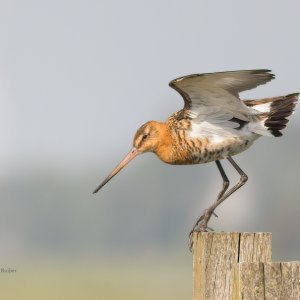
For example, these are the photos taken with the R10:
  • Like
Reactions: 1 user
Upvote 0

What’s Coming Next from Canon?

yes 1.3 EV exactly physically...

yes, FF wins hands down in low light at weddings, take a little bird in the sun photographed with an R7 with a quality lens and FF owners cry, do you want to argue any further? : )
It's more nuanced than that. For difficult shots of birds or dragonflies in flight, I would use the RF 100-500mm (which I too highly recommend) on the R5ii any day because it's so much easier to keep the fast moving critters in frame on an FF. Otherwise, with the APS-C I would zoom out to 300mm to give a similar field of view. For slow moving distant birds, it's a different situation and I go for maximum magnification.
Upvote 0

What’s Coming Next from Canon?

Don't sweat, you'd be hard pressed to find any difference between APS-C and FF under proper lighting.
Full frame merely raises the ceiling of what you can theoretically achieve in terms of image quality by giving you a bit more flexibility, that's it. I take much better pictures with my R7 + RF 100-500L than the R5 Mark II + 200-800 I was lent. Possibly because I know my setup much better and know how to go around its weaknesses, but also because I simply have a superior lens.

Depth of field is a much more compelling argument in favor of FF for portrait photographers than dynamic range is for birders.
I have had the the R7, R5, R5ii and RF 100-500 and RF 200-800mm since they first came out, and have taken 100s of 1000s of bird photos with the permutations, and I think I know their quirks and how to get around them. When it comes to IQ, the RF 100-500mm on the R7 and the RF 200-800mm on the R5ii are close to the same. I frequently take the R5ii/200-800 bird photographing with my wife who uses the R7/100-500, and our images are of identical quality. So, your experience may either be due to a bad copy of the 200-800mm or your lack of experience with it. The 200-800mm is not at its best at 800mm, but it is compensated by the better AA-filter on the R5/R5ii.
  • Like
Reactions: 1 user
Upvote 0

Two Never Before Seen Lenses Coming from Canon This Year

Optically the rf 100-500 is excellent. however using it with an extender is significantly annoying. It just won’t collapse completely. A mark II that fixed that would be a great feature. Reducing the f/7.1 at the high end would be better for low light, even if it added some size / weight. For example f/6.3 would increase the front element from the current 77mm to approximately 82mm. Not much of an improvement I know, but according to Tesco every little helps.
Upvote 0

What’s Coming Next from Canon?

The difference would still be 1.3-stops worth of noise. ISO 6400 on the 85 MP FF sensor will still look like ISO 2500 on the 32 MP APS-C sensor.

You can argue with physics, but you’ll lose. Every. Single. Time.
yes 1.3 EV exactly physically...

yes, FF wins hands down in low light at weddings, take a little bird in the sun photographed with an R7 with a quality lens and FF owners cry, do you want to argue any further? : )
Upvote 0

What’s Coming Next from Canon?

here we are at the heart of the problem. R5 will probably never have 80-85 MP, why? because then it would have the same pixel density as R7 and the noise in the photo would be very similar.
The difference would still be 1.3-stops worth of noise. ISO 6400 on the 85 MP FF sensor will still look like ISO 2500 on the 32 MP APS-C sensor.

You can argue with physics, but you’ll lose. Every. Single. Time.
  • Like
Reactions: 1 user
Upvote 0

What’s Coming Next from Canon?

here we are at the heart of the problem. R5 will probably never have 80-85 MP, why? because then it would have the same pixel density as R7 and the noise in the photo would be very similar. Yes your buckets of water ... I write similar not the same because, yes there is still a camera sensor size but this factor is smaller than you think. Even with a small puppet you can play a big show!
Upvote 0

What’s Coming Next from Canon?

Don't sweat, you'd be hard pressed to find any difference between APS-C and FF under proper lighting.
Depth of field is a much more compelling argument in favor of FF for portrait photographers than dynamic range is for birders.
In this context, dynamic range is really a surrogate for image noise.

Perhaps you usually shoot in 'proper lighting' (by which I think you mean lots of it). I shoot in the light I have, and it's often not very bright, either due to the fast shutter speeds needed for flying birds, or because I need to stop motion at indoor events.

I shoot a lot of birds in flight, and that requires a fast shutter. You mention your preference for the R7 and the 100-500L combo, and for my birding shots with that relatively slow lens, my most commonly used ISOs are at or over 12800.

100-500L by ISO.png

Personally, I would not shoot with an APS-C camera at those high ISOs. YMMV.

The story for me is similar for indoor events – I am usually shooting those with the 24-105/2.8 and 100-300/2.8, and almost all my shots are at ISO 6400 or higher. Here are the ISOs from my 100-300/2.8 shots, for example.

100-300L by ISO.png

If 'proper light' means, for example, in the ISO 100-1600 range, then for me that's a small minority of my images in some use cases.

And once again, the point is not about one sensor size being 'better' than another, but to be aware of the capabilities and limitations so an informed choice can be made based on an individual's needs.
  • Like
Reactions: 1 users
Upvote 0

Two Never Before Seen Lenses Coming from Canon This Year

As a benchmark, the EF 100-400L II came out 16 years after the original. I would not expect a 100-500L II any time soon. I'm sure there will be a first MkII RF lens at some point, but that won't be the one.
and when was the EF 100-400 III released? exactly. why would the 100-500 need a refresh
Upvote 0

Two Never Before Seen Lenses Coming from Canon This Year

Reminds me that mine is now over 5 years old. It's an absolute cracker of a lens, really sharp and lightning fast AF in a relatively light package.
I went out today Banded Demoiselle hunting and took the R 100-500mm on the R5ii. This is a crop of one of the images not downscaled. To get these really fast fluttering tiny damselflies this sharp the lens has to focus to the nearest mm or two in milliseconds, and it has to be light enough to swivel quickly. What a lens!


6L8A2014-DxO_Banded_demoiselle_flying.jpg
  • Like
Reactions: 6 users
Upvote 0

Two Never Before Seen Lenses Coming from Canon This Year

I disagree: for tele lens birding/wildlife photography the R7 is within Canon's current eco system still the camera that provides the highest resolution in the center of an image, and that allows for more "reach" (if there is enough light available so noise doesn't kick in too much). With the same pixel pitch, a FF camera would have about 80 MP. Wildlife photography is of course a special branch of photography, but I guess most buyers of the R7 do use it for tele photography and possess also a FF camera for other settings (like me). So, I am overall happy with my R7 for that purpose, despite its shortcomings. Okay, if Canon would come up with an 80 MP FF camera, then one could activate the crop mode in typical birding settings. Such a camera would maybe kill the high res APS line. But the question whether an 80-100 MP FF camera really makes sense in real life photography, was discussed here already extensively - I don't want to open THAT can of worms.

Yepp, that's for me more a "minus" than a "plus", despite the fact that I don't care much about RF-S lenses. But this may also be a hint that Canon realized at least that R7 users have also FF cameras anyway.

The thing is, I agree with most of what you say and that's possible because I don't see how you questioned what I said ;)
So my line was "Imho evolution of photo tech these years should include the transition from crop sensor more towards to full frame.".

By no means did I say APS-C should be killed all together or that has zero relevance. It means what it reads. I meant the balance should go steps towards FF.
Trust me, I know what APS-C means, I started nature photography in 2000.
And yes, birders are a special type of animal and their existence will not change the world. I also need to make a note - even in birding, it depends on the situation. When shooting from a hide I remember switching from the big tele to 70-200 and then even to 135.
Most of the time the way to a better photo is not a longer lens but getting closer.

In general ff is absolutely better than aps-c, with a few exceptions (which are also fading away as we are getting 45-67MP ff bodies).

Now that I'm thinking about this, I managed to getting myself annoyed. I've been a Canon user for ~30y but sometimes I just hate their policy.
At least Fuji takes APS-C seriously, I love their strategy. Sometimes I feel Canon is photography's Microsoft ;)
Upvote 0

Filter

Forum statistics

Threads
37,473
Messages
975,040
Members
24,816
Latest member
GLBDD

Gallery statistics

Categories
1
Albums
29
Uploaded media
372
Embedded media
1
Comments
25
Disk usage
1 GB