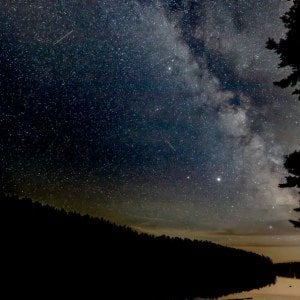
A Canon RF 300-600mm f/4-5.6L IS USM on the Horizon
"soccer" or did you mean football?
Upvote
0
"soccer" or did you mean football?
I agree, between the outdated still too pricey R3 or very new latest model less pricey R6III i will go for R6III, heck i even can't afford R5II which is newer model although it is cheaper than R3, i do sports, and i know people in sports prefer build quality more for reasons and battery time, but all those years i learnt that money affordable value is what i should go for over whistles and sparks, i came from 1DX which was top of the line for Canon and bloody expensive, time passed and it is outdated and just a thing of a past and all that spending didn't make history for me, it served me excellent for sure, but it wasn't that i can't make the difference with lesser bodies, such as 1D mkIII or 7D mkII, i do have 1D3 and 1Dx is superior, but my outdated very old model of Sony A7R did put both into shame and also my 1Ds2 and 1Ds3 into shame for pure resolution, not about focus or speed, and that was an old model camera, imagine what a Canon mirrorless current cameras can do now, and i don't think R1 will make superior quality over R7 or R6II, but it is better overall performance, so i won't choose R3 for sports by myself.Well, you mentioned "pro build" twice, just to make the list of which the R3 superior is look longer.))
Anyway, for me who shoots mostly wildlife, it would not be reasonable to buy even a used R3 anymore, which has only the benefit of stacked sensor and pro build over the R6 III. I am not sure if there is a major difference in buffer between these two, 150 RAW pics of the R6 III is plenty even at 40 fps. I rarely photograph birds, so rolling shutter is less of an issue for me. More video options, precapture/prerecording, 40fps, 32 MP, lower price etc outweights not having stacked sensor or pro build, which I also like.
Maybe a sports photographer, who can not afford the R1 would gravitate towards the R3, but still precapture, 40 fps, the price point of the R6 III is very tempting.
I also noticed the increasing number of used R3s for sale just prior to the announcement of R6 III...maybe just a cooincidence.
Well, you mentioned "pro build" twice, just to make the list of which the R3 superior is look longer.Not really. the R3 still has a stacked sensor, larger buffer and higher Rez EVF. Pro build, superior battery and top pro build.
The R6II was a R3 lite, the R6iii is still very much related to the previous model.
I addition to what others have posted: these people on Sony rumors live in the past. The days that Sony BSI sensors had a better dynamic range are more than 5 years behind us. I’ve compared the R8(FSI sensor) with the A7 IV (BSI) sensor:Someone over at Sony rumors is spouting off that the Canon sensors are all FSI (front side illuminated) and basically have poor dynamic range (trash) compared to Sony's BSI (back side illuminated) sensors. Can anyone explain the difference as if they are speaking with a child? My brain starts to hurt after a long day at work and I try to read a photon chart. But its sort of a big decision: Sony or Canon for church event photos and videos. Once we start buying lenses its hard to climb out of that hole.

I like the 300 to 420, a good compromise on size and weight if the image quality is what one would presume.
Earlier this year it was rumored that new supertelelenses would be coming in 2026. Time is probably too short for the winter Olympics in February 2026, but the World Cup in soccer is in June - July 2026. 400mm and 600mm with built in teleconverters were also rumored.This is exactly why I won't buy another 24-70 or 28-70 presently.
Yet, if nothing juicy is announced within the next few months, I too could break down and regret it...![]()
My understanding is that BSI sensors are more efficient at light gathering and that has positive effects such as better DR... but the improvements are dependent on sensor density: the higher the density the bigger the improvement.Someone over at Sony rumors is spouting off that the Canon sensors are all FSI (front side illuminated) and basically have poor dynamic range (trash) compared to Sony's BSI (back side illuminated) sensors. Can anyone explain the difference as if they are speaking with a child? My brain starts to hurt after a long day at work and I try to read a photon chart. But its sort of a big decision: Sony or Canon for church event photos and videos. Once we start buying lenses its hard to climb out of that hole.
I'll take a stab. I have used Canon's Rebel, Rebel XT, T2i, 80D, 6D II, 5D IV, R6, R6 II, R5, and R3. All of my personal glass is EF, mostly L, both primes and zooms, 20mm -> 600mm. This is my opinion based on my experience. No doubt others will contribute other excellent points and experiences!
BSI is physically organized to be more efficient at capturing light than FSI -- in theory. But, in the real world, only the effect matters.
Car engines come in varieties of combustion chambers, oxygen injection, etc. Each one is also, to a degree, special to the manufacturer in terms of their experience making that kind of engine, the skill of their design team, the ability of their factories, and their choices in materials. It's possible for a V8 to outperform a V6 and a V6 to outperform a V8 -- the implementation matters as much as the general technology. The driver helps too.
Yes, many Sony sensors are BSI but their architecture is unique to Sony's capability and Canon's sensors are unique to Canon's manufacturing capability. And all of the technology tricks/secrets that each company possesses.
All of Canon's mirrorless sensors are great. If you know how to use your camera well for your situations then the R8, R6, R5, R3, and R1 can all do very well. The nitpicking you see in these forums is specific to each of our individual experiences, needs, and capabilities -- don't fret over any of it. I have full confidence the R6 II and R6 III will each take magnificent photos when used to their fullest, but there are slight strengths in each case. Nothing you cannot overcome with good attention.
That stated, the R6, R6 II, and R6 III each can capture 14-bits of dynamic range -- that's 16,384 shades or tones from pure black to pure white. A JEPG, which is often used in book printing, offers 256 shades/tones. Getting the full use of that range also depends on the lighting, lens, shutter speed, etc.
The R6 II has 102,400 ISO and a sensor released late 2022. The R6 III has ISO 64,000 and a sensor released late 2025 -- three years of time in which Canon can perfect its tricks. ISO is how the sensor translates light (photon strikes) into dark and bright in a unit of time. Pictures can become noisier if the sensitivity is high and the available light is minimal, but Canon puts significant energy into making that noise look good -- such as by approximating film photo graininess. A lot of the extra work carried out by the more advanced computer chips in each generation is put towards making the best interpretation possible. The more recent the camera, the better the effect. Strobes / flashes add extra light, as you probably know, that significantly overcomes most of the worry here. But even in limited natural light with fast action these sensors will provide a solid start and include enough additional data that you can probably get any photo you make an effort at when taking the picture shine by the time it's ready for print or online.
Canon's colours also tend to be generally acceptable as desirable or satisfactory across its camera and lens range.
Don't forget the shape of the camera bodies and placement of buttons and organization of menus. That matters when speed matters. Anything out of place or that tickles an annoyance will slow you down, take you from the moment, etc. I'd say the body is easily worth 50% of the decision if you're moving at speed, given that most modern options are going to at least be good in capability.
Finally, modern cameras include Canon's formulas that understand lens imperfections and sensor attributes such as anti-alias overlays to create adjusted final images in TIFF (PC/Mac) or HEIF and JPEG (in-camera) form from the RAW file. Even amazing glass often benefits. Not all other camera manufacturers seem to include this capability, and not all third party lenses participate.
There is also the lens investment you might already have in place. Even if a Sony camera were a smidge better in the sensor department than what you choose to afford on the Canon side, if you have a solid lens collection and your muscle memory is trained for the placement of zoom rings, buttons, etc. than you will probably do better out of the gate with familiar equipment than new equipment.
But, in the end, you should do what you are comfortable with. I assume if you're shooting weddings you're mostly doing it for money, and since it's your rent you should go with your gut. You might consider downloading sample raw images from each competing camera model from reputable review sites and play with them in your image editing application(s). Pay attention to grain, colours, contrasts, and the ability to make them brighter or darker by a few stops. See how the files behave.
What makes sense for you will very likely be different for each of us. I'll push my R6 original to 25k ISO with fast outdoor action and be thrilled with the images I have to work with. Others here will think I'm nuts or blind. Our use cases are probably very, very different. And once you throw in strobes the game changes dramatically -- to such as extent all of the Canon series cameras are probably on equal footing.
All that matters is how good the sensor is.Can anyone explain the difference as if they are speaking with a child?
This is exactly why I won't buy another 24-70 or 28-70 presently.Since I just broke down and bought a 200-800, the 300-600 L is imminent.
Sure as if you wash your car, it will rain - if I buy a long tele, a newer, better long tele will be released.
All cropped so that 1 px of the crop posted = 1 pixel of original (100% crop). Just bulk standard DxO PL6 Prime output. Light was fine and that's all I use 99% of the time.We're these cropped and / or denoised?
You just shattered my hopes for a 24-70 f/2, should number 7 be the 300-600.Some years they did 6 and some 7. Unless, I miscounted 45mm was #6 for 2025. It could be 1:2 odds?
I'll take a stab. I have used Canon's Rebel, Rebel XT, T2i, 80D, 6D II, 5D IV, R6, R6 II, R5, and R3. All of my personal glass is EF, mostly L, both primes and zooms, 20mm -> 600mm. This is my opinion based on my experience. No doubt others will contribute other excellent points and experiences!Someone over at Sony rumors is spouting off that the Canon sensors are all FSI (front side illuminated) and basically have poor dynamic range (trash) compared to Sony's BSI (back side illuminated) sensors. Can anyone explain the difference as if they are speaking with a child? My brain starts to hurt after a long day at work and I try to read a photon chart. But its sort of a big decision: Sony or Canon for church event photos and videos. Once we start buying lenses its hard to climb out of that hole.
Some years they did 6 and some 7. Unless, I miscounted 45mm was #6 for 2025. It could be 1:2 odds?I was hoping to at least hear a development announcement even if it did not ship until Q1 2026. We shall see.....
We're these cropped and / or denoised?Craig has reinstated the bird threads (thanks!) so here are a few shots to get it going again. A Stonechat briefly present far away, and a Kestrel today with the RF 200-800mm on the R5ii.
View attachment 226860View attachment 226861View attachment 226862
Thanks Click, I didn't know it's up...Thanks Craig!
Beautiful shots, Alan.![]()
I'd say this seals the deal (in negative) on the lens, but, as seen in the first reviews, it was to be expected.Overall I'd say the 50 1.8 is always sharper.
One last Mirror. This is one I just got in (two copies). Sigma 400mm f/5.6. I have two copies of the Sigma 600mm f/8 and they are both very soft. These are a little better, but not by much. However, with a lot of help from Topaz, these make some interesting shots due to the unique bokeh from the faster f stop. All with R8.
View attachment 226863
View attachment 226864
View attachment 226865
Craig has reinstated the bird threads (thanks!) so here are a few shots to get it going again. A Stonechat briefly present far away, and a Kestrel today with the RF 200-800mm on the R5ii.
View attachment 226860View attachment 226861View attachment 226862