The Canon EOS R5 Has Officially Been Discontinued

The time was coming, and it has arrived. The Canon EOS R5 has been officially discontinued, This may not be news to everyone, but I think it could help with some buying decisions over the next few months for some shooters. What can you say about the EOS R5? It was Canon's real arrival into […]

See full article...
the R5 is a good camera, and and as long it will work well and not be "too behind the technology" I will keep it. I would rather spend my non existing cash on some good RF lenses.
  • Like
Reactions: 1 users
Upvote 0

Canon Announces the Canon RF 14mm f/1.4L VCM

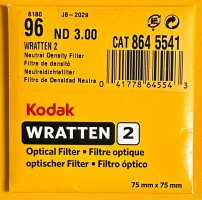
I’ve bought some clip in ND filters that will work with any lens. Not the magnetic ones.
I have a set of the Kolari magnetic NDs (3-, 6- and 10-stop) that I use with my R8 (had to install the metal mount plate in it) and the R1 (no plate needed). That's why I have not bothered cutting another piece out of the 10-stop gel filter (I did cut a piece from it for the rear slot of the Ef 11-24/4L).
  • Like
Reactions: 1 users
Upvote 0

Canon Announces the Canon RF 14mm f/1.4L VCM

ND is pretty much the only thing one would use in a rear gel holder these days (since color correction and effects are handled in post processing with digital).

I still have most of a sheet of 10-stop, enough to cut out another 3-4 pieces.

View attachment 227905

Canon has a downloadable template to cut the filter for the holder:

Not sure if $125 is ‘huge cost’ for you (it’s similar to a 77mm round filter and you can cut several rear filters from one piece). B&H has several densities in stock (1, 2, 3, 6.6 and 10 stop). Here’s the 10-stop that I have:
They’re not available here in the UK (at least I couldn’t find any). Once I added delivery $20, and taxes, 20%. It got expensive.

I’ve bought some clip in ND filters that will work with any lens. Not the magnetic ones.
Upvote 0

Canon Announces the Canon RF 14mm f/1.4L VCM

Lenzbuddy has custom front lens caps, from 43 to 95mm, prices from $13 to $ 20, depending on the amount of information you want on the cap.

I’m not commenting on those particular caps, but, I did once buy a replacement from cap on eBay and it turned out to have raised lettering on the inner face of the cap. I didn’t notice at the time but the real caps have indented lettering.

I have a habit of straightening the cap orientation after attaching it, which ended up rubbing the coating off the front lens element. Right in the centre of the lens. I only noticed during a trip to Namibia, where it caused ghosting and flair in my pictures. Cost me £180 to have the front element replaced. I’ve been wary of replacement caps since.
Upvote 0

Canon Announces the Canon RF 14mm f/1.4L VCM

It looks the same. I never found anything that would go in it. Only some very old stock ND at huge cost.
ND is pretty much the only thing one would use in a rear gel holder these days (since color correction and effects are handled in post processing with digital).

I still have most of a sheet of 10-stop, enough to cut out another 3-4 pieces.

IMG_1274.jpeg

Canon has a downloadable template to cut the filter for the holder:

Not sure if $125 is ‘huge cost’ for you (it’s similar to a 77mm round filter and you can cut several rear filters from one piece). B&H has several densities in stock (1, 2, 3, 6.6 and 10 stop). Here’s the 10-stop that I have:
Upvote 0

Canon Announces the Canon RF 14mm f/1.4L VCM

Not true. The smaller opening of the 14 mm lens lets in an equal amount of light. It does so because light passes through the opening at a greater range of angles.
Think of this hypothetical experiment. Suppose you have a perfectly grey sky. Suppose you shoot two frames, one with the 35 mm and one with the 14 mm, both with the same exposure values. They will look the same. The total amount of light collected by the sensor will be the same.
The size of the entrance pupil of a 35mm at f1.4 is much larger (25mm) than the size of the entrance pupil of a 14mm at f1.4 (10mm). The larger entrance pupil collects more light.

Clarkvision has an explanation with examples.
  • Like
Reactions: 1 users
Upvote 0

Canon Announces the Canon RF 14mm f/1.4L VCM

the much larger opening of a 35mm lens is gathering MUCH more light compared to a 14mm lens
Not true. The smaller opening of the 14 mm lens lets in an equal amount of light. It does so because light passes through the opening at a greater range of angles.
Think of this hypothetical experiment. Suppose you have a perfectly grey sky. Suppose you shoot two frames, one with the 35 mm and one with the 14 mm, both with the same exposure values. They will look the same. The total amount of light collected by the sensor will be the same.
Upvote 0

Show your Bird Portraits

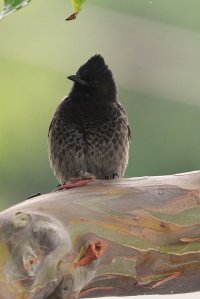
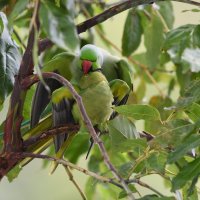
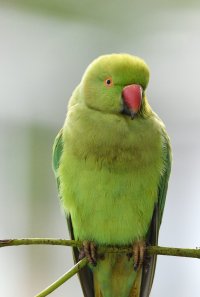
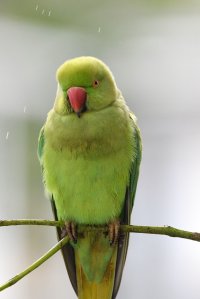
Gloomy Saturday but so far the rain is light to moderate or time to time missing at all. I know if I say "cold" some people around will laugh at me but day-time 19-20C in Hawaii is accepted as cold... Totally wasted weekend (this kind of weather and from tonight even worst, will persist for few more days). Took few photos from the lanai when there was no rain.

View attachment 227898View attachment 227899View attachment 227900View attachment 227901
Lovely photos! Especially if you can take them from the comfort of your lanai.
  • Like
Reactions: 1 user
Upvote 0

Show your Bird Portraits

Gloomy Saturday but so far the rain is light to moderate or time to time missing at all. I know if I say "cold" some people around will laugh at me but day-time 19-20C in Hawaii is accepted as cold... Totally wasted weekend (this kind of weather and from tonight even worst, will persist for few more days). Took few photos from the lanai when there was no rain.

DSC_0381.jpgDSC_0394.jpgDSC_0437.jpgDSC_0441.jpg
  • Like
Reactions: 12 users
Upvote 0

A Canon RF 7-14mm f/2.8-3.5 Fisheye Zoom is Coming Soon

As an underwater photographer I've been waiting for an RF fisheye for a long time now. The EF 8-15 f/4 L fisheye is a mainstay for basically anyone who shoots Canon underwater.

That said, I'm a bit underwhelmed. The slightly wider aperture isn't really useful, the lens is at least as large as the 8-15 fisheye with an RF adapter attached, they went and made it even wider for some reason, it won't take teleconverters, and no IS. Shooting 180 degree circular fisheye has always been a very niche thing which requires a lot of preparation like removing dome port shades, and many photographers do what I do and tape their lens at 15mm all the time. ~190 degrees underwater would be even more difficult to pull off and I don't see many people itching to try it. And losing that 1mm of reach on the long end hurts for a lens where you already have to have it within 1-2 feet of a big animal to get a decent shot much of the time.

The holy grail for underwater would either be a fisheye zoom with more reach out to maybe 18-20mm, an RF 7-14 that takes a 1.4 TC, or maybe one that ditches the widest 180 degree circular end and shifts the whole range up to simplify lens design, like a 14-20 fisheye or something.

Anyways, if I didn't own the EF fisheye yeah maybe I consider buying this since it's functionally very similar and not too much more expensive than the EF (if you can find one) plus the RF adapter. But I don't see any reason to upgrade to it.
  • Like
Reactions: 1 users
Upvote 0

Show your Bird Portraits

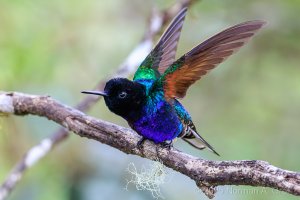
The Velvet-purple Coronet is found only in western Colombia and Ecuador. In poor light it appears overall blackish (as the head in this photo), but when the sun hits it just right its plumage erupts into a dazzling array of colors, dominated by a deep purple body and greenish wing coverts. This individual, seen while birding at Parque Nacional Natural Tatamá, Colombia, November, 2025, is holding its wings up for a few seconds after landing, a behavior characteristic of Coronets, providing a brief glimpse of its chestnut underwings.

R5MkII RF200-800mm

2025-11-24-08-12-20_7X4A3889_R5MkII.JPG
  • Like
Reactions: 12 users
Upvote 0

BIRD IN FLIGHT ONLY -- share your BIF photos here

Most of the hummingbirds were photographed near feeders, so you can get a lot of time with some of the species. The aggressive individuals, such as Rufous-tailed Hummingbirds, Shining Sunbeam, and White-necked Jacobins, can dominate the space, so photographing some of the shyer species takes patience. Taking photos of the birds in flight would be challenging from a tripod, as most species zip in, perch while feeding and then zip away. There are a few species, such as Incas, which will hover close in after feeding, making them easier to photograph in-flight. However, most of the feeding stations are set up with nearby perches where you can often catch the hummingbirds hanging out between visits in case you want photos of them "in the wild.". Some species, such as Hermits or Sicklebills are rarely, if ever, attracted to feeders.
  • Like
Reactions: 1 users
Upvote 0

Filter

Forum statistics

Threads
37,419
Messages
972,747
Members
24,776
Latest member
LukyLuke83

Gallery statistics

Categories
1
Albums
29
Uploaded media
372
Embedded media
1
Comments
25
Disk usage
1 GB