Indeed. Same with DoF – for example, with an f/1.2 lens on FF you can achieve shallower DoF than you can on APS-C (for the same framing), and while you can stop the lens down to f/2 on FF, you cannot use an f/0.75 lens on APS-C (at least, not easily).
Short of adding light to the scene, your options are a larger sensor or a faster lens. Both are valid approaches, and both enable you to capture more light. Depending on the focal range you need, a smaller sensor may not be cheaper or lighter with a crop sensor. Once you get longer than about 300mm, there is zero benefit of a smaller image circle for lens design. That's why there aren't 'crop lenses' in supertelephoto focal lengths, and that's why long lenses from Oly/OM that are for use on their m4/3 2x crop cameras are the same size, weight and as similar lenses for FF bodies (which Oly/OM doesn't make).
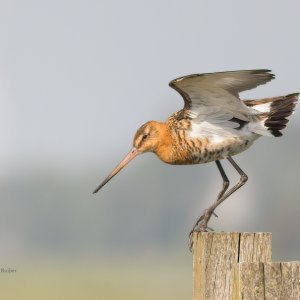
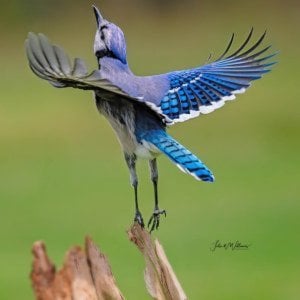
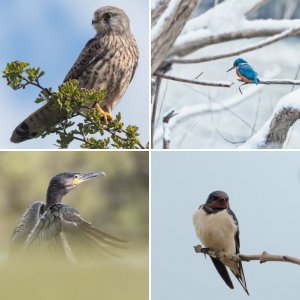
Personally, my approach is to do both – use a FF camera with fast lenses. Most of my bird shots are at 840mm f/5.6 (600/4 + 1.4x). But smaller sensors have their utility, which is why I have a full EOS M kit, a PowerShot V1, and an iPhone. For me, the utility is mainly about size and weight. For many, the utility is also about lower cost.
I suppose that depends on the car.

I did spend more for the EF 600/4L IS II than I did on the first car I bought, a Saturn SL (though adjusting the $10K cost of that car in 1991 to the 2012 dollars that I used to buy the lens, the car did cost a bit more). I just handed down my previous car to one of my kids, it's current blue book value is ~$17K and I will admit it was a bit weird going out to shoot birds knowing that the R1 + 600/4L II that I had in the car was worth more than the car.



 Maybe a full frame zoom with aperture below f2 then