Upvote
0
Would the difference in weight between the two bodies really make that much difference? I would think you'd be better off getting lighter lenses if it's an issue.I have Been a canon supporter for 44 years and my passion is doing wildlife, And In my option they seem to be more interested in Video than stills nowadays ? I have the r5 camera at the moment and some big prime lenses but are now getting increasing to heavy for me nowadays so I for one was looking forward to the r7mk2
I don't see that a 100-400+1.4x is different enough from the existing 100-500 to make sense. "Self defined superiority" hmm. Or charging what the market will bear?You are right. The bare Sony 100-400 f4.5 GM lens is priced at around USD 4,300.
A Canon 100-400 f4.5 L lens with a built in 1.4X converter would probably cost $5,000 for a bare lens because of Canon’s self defined superiority plus an additional $1,000 for the internal teleconverter.
My hoped for price point of $4,750 is more likely to be around $6,000.
It will be interesting to see what Canon brings to the market in the next 6 months and how it competes with Sony.
I love my Canon gear but there is a point of no return for wildlife photographers that is approaching rapidly.
The day after I potentially dump my Canon equipment, I am absolutely certain that Canon will offer an amazing 200-600 f4.5 to f5.6-f6.3 L lens.
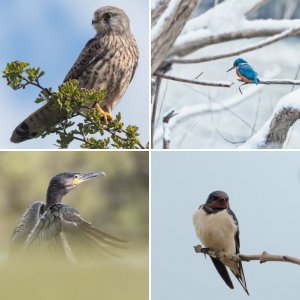
I go out birding most days and see a large number of Canons and a sprinkling of Nikons and Sonys, but not a single OM in the past few years. I occasionally saw an Olympus pre-Covid. Canon and Sony have about 70% of worldwide mirrorless sales and OM are now down to only 2-3% from higher when they were Olympus. They are more popular in Japan but have dropped behind Nikon at around the 12% mark or less.Which is why OM Systems OM-1 mark II is my birding camera of choice. What Canon, Nikon and Sony do are of no interest.
I do like your optimismYou are right. The bare Sony 100-400 f4.5 GM lens is priced at around USD 4,300.
A Canon 100-400 f4.5 L lens with a built in 1.4X converter would probably cost $5,000 for a bare lens because of Canon’s self defined superiority plus an additional $1,000 for the internal teleconverter.
My hoped for price point of $4,750 is more likely to be around $6,000.
You are right. The bare Sony 100-400 f4.5 GM lens is priced at around USD 4,300.Sure. With a free thai massage coupon to make it more realistic.
I have had some excellent post-sales service from Canon. I've been helped several times by sales reps and technicians that wet beyond what I thought was reasonable to help resolve an issue.I'm always a little bemused because I've never sought Canon's input on anything after purchasing. It wouldn't even occur to me that they could or would solve a problem.
Which is why OM Systems OM-1 mark II is my birding camera of choice. What Canon, Nikon and Sony do are of no interest.It appears that crop sensor bodies are the redheaded stepchild of multiple brands. Birders of limited means are not amused.
Well they need no endurance so can be super pumped up for the very short bursts of game time between ad breaks whereas try keeping that up for 80 minutes of continuous actionAs a retired rugby player (I retired in the 1990s), I see more testosterone in any American football game than in any rugby league in the world.
As for your specific question, I haven't made the leap to playing without a mirror yet.
It also has the benefit of being half the weight, it thought about it while chasing swallows with the 100-500The R7 plus RF 100-400mm is a winning combination, and for perched birds is pretty close to the R5ii + RF 100-500mm. It's also great for dragonflies and butterflies etc. I've posted dozens of shots on CR of birds and insects taken side by side by my wife with the R7 + RF 100-400mm and by me with the R5ii/R5 + R 100-500mm, and it's pretty difficult to distinguish between them. Here are some shots from yesterday. https://www.canonrumors.com/forum/threads/dragonflies-and-damselflies.35543/page-148#post-1046336
they're always gonna whineYou have the RF 35 f1.4L, what do you mean?
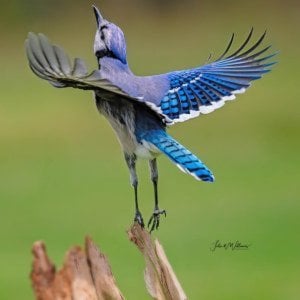
I don't use Pre-shooting much at all waiting for birds or insects to take off. For me, it's far more useful for birds in flight in general as it enables you to track and capture an action that you would otherwise need to save images continuously and have more to process. It's also very useful when you are trying to capture very fast erratically flying birds or insects that flash across your viewfinder and you react only after they have disappeared off screen.Despite its shortcomings it is an incredible camera, and very capable of capturing quite a lot of avian wildlife including hummingbirds. The only BiF it might struggle with is take-offs, of which pre-capture on cameras can sometimes make that scene more obtainable than in the pre-mirrorless days.