The Canon EOS R6 V and RF 20-50mm f/4L IS USM PZ are Coming May 13
- EOS Bodies
- 92 Replies
Upvote
0
Huh? What doesn’t work about it?Make Exposure Compensation work in Manual Exposure with Auto ISO.
I use the Canon BR-E1 with the Canon R5.A new remote? That tiny little detail in this rumor is what might actually interest meDoes anybody use the Canon BR-E1 with the Canon R5? I´d love to hear about your experience. I´m getting tired of using "camera connect" as a remote and I am actively searching for BT option. It would be great if I can find one with a timer or a small display that shows the time in bulb mode. I am open for any suggestions
![]()
I don't click on anonymous links. What's it about?
I've seen my posts on CR quoted by ChatGPT so don't believe them! Seriously, those AI sites are very reliable for where there is extensive official information like from governments on tax and law, or for health when they weight info from the Mayo Clinic, NHS, Harvard Med School, John Hopkins etc. But for information on issues like the R7ii, they just trawl the rumour sites because nothing official is out.Don't trust ChatGPT. Gemini and Claude both told me that the R7 Mark II has been released early 2026. They're extrapolating a lot of things from rumor sites. There's no way they would know if production has stopped unless this information is readily available on the internet.
I don't click on anonymous links. What's it about?Saw this today
- YouTube
Enjoy the videos and music you love, upload original content, and share it all with friends, family, and the world on YouTube.www.youtube.com
More pixels are mostly about flexibility. In good light, you keep the extra detail and cropping room. In lower light, you can downsample, which averages out random noise and improves SNR, giving a cleaner final image, especially in the shadows. So smaller pixels do not automatically mean worse real-world DR. Even if sensor DR does not increase, cleaner shadows can make the final image look like it has more usable dynamic range.Of course the dreaded dynamic range of smaller pixels would raise its head for reviewers.
No free lunch. 45mp is sufficient for most applications with reasonably powerful PCs
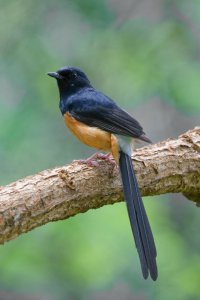
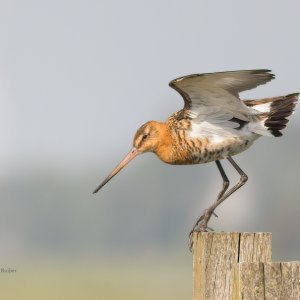
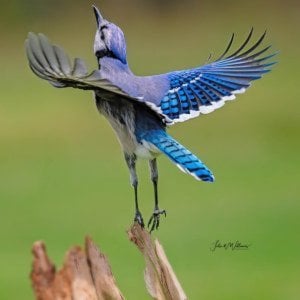
The Snowy Egret on the first photo is very good photo!
The 20-50mm could be a very good lens for photography if the price is right. The focal length is useful. Power zoom is an annoyance.
It is hard to feel envious of Sony users, every camera except the A9 III and A1 II is less ergonomically then a clay brick.
The gap from 45mp to 61mp was only about a 16% increase in linear resolution. It's not nothing, but it's not huge. But from 45mp to 67mp is now a 22% linear difference, which starts to become quite a thing. With a fast enough sensor, being able to shoot 29.8mp photos in crop mode would also be quite a benefit.
We'll have to wait and see what Sony actually brings to market, and at what price point.
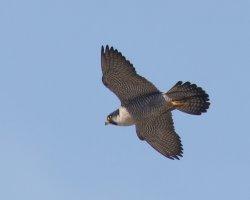
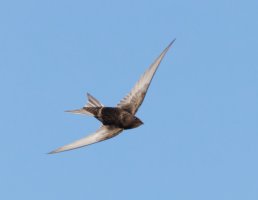
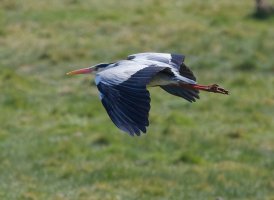
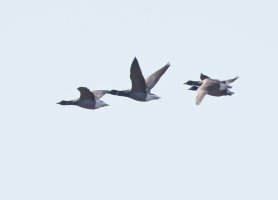
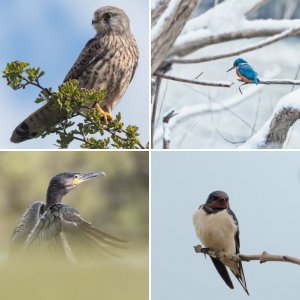
Maybe it is the combination of your EF 600mm with the R7 that is the problem. My wife was using the R7 with the RF 100-500mm last week and had no problems. Here are all of her shots. She is no expert BIF photgrapher - she just points in the right direction with settings programmed by me. There is one image by me from last summer - the Swallow in full flight, and they are very difficult to shoot. They are all very small crops, not reduced in size.Oh Lord, won't you buy me an R7 twoohoo (imagine Janis Joplin's whiskey & cigarettes hardened voice...).
Dear Canon, here is my wish list for AF improvements that should come with the Mark II for birders/wildlife shooters:
- Generally: if the AF system detects a spot roughly in bird shape against a blue background, the spot is most likely the object to focus on.
- In addition to these sky background issues, please, train the AI subject recognition (animals) with enough birds-in-flight (BiF) images shot against different skies - from partly cloudy to completely overcast, and with blue skies in different angles relatively to the sun.
- For shooting with really long supertele setups (600+ mm), please implement a sort of "AF focusing start always with infinity" option (or call it "reverse focus search function"). In typical settings when I shoot BiF, and the R7 doesn't get enough contrast (you already can recognize the bird as a washed-out spot in the EVF), the bloody AF system retires to the most narrow focusing distance and then starts to try to re-focus. Even switched my tele lens to 16m minimum distance, I often lose track completely, because any visual information in the EVF is then gone. If the AF would always start at infinity, in such settings I still could see a soft spot in the EVF I can follow until the AF finally succeeds in finding the correct focus distance and can follow the bird. This "AF always resides to narrowest distance" behavior is really annoying! I lost many potentially interesting shots with my R7 because this happened. Another solution would be to implement an option in which you can set a minimum distance digitally (and an option to program this on a camera button), so I could e.g. select 20 or 30m, what also would help much (but I guess this only would work with RF lenses, not with e.g. my EF 600mm f/4.0 III which I currently do not feel forced to upgrade).