Big Difference in real focal lenth btw. 100-400 Mk II and 70-200 IS MK2 + 2xEXT3

neuroanatomist said:
risc32 said:
I also just got a kick out of someone saying that a lenses true fstp is different than what's advertised. This I don't believe but I see it mentioned now and then. I'm not referring to tstops, but you guys are very welcome to show me that a 100mm f2 doesn't have a 50mm aperture. Horseshoes and hand grenade rules of course, we live in an imperfect world.

400mm f/5.6, has a 71.4mm aperture – right?

The patent for the 100-400mm f/4.5-5.6L IS II is:

Example 3
Zoom ratio 3.75
Focal length f = 104.16-166.66-391.00mm
Fno. 4.60-5.20-5.80

So the lens is really 391mm f/5.8, that's a 67.4mm aperture. A 6% difference? Maybe that's close enough.

Dunno how it is in the US but in Europe(Germany) with many things its legally OK if you re within plus minus 10% of the advertised performance specifications (e.g. horsepower of cars, square footage of rental units, etc)
Upvote 0

Review - Canon EF 100-400mm f/4.5-5.6L IS II

Might be a fine lens but I still cannot get past 400mm at F5.6! The loss of light is so severe that it's practically useless for wildlife during sunrise or sunset or under a forest canopy. Add a couple of clicks to tighten the lines and you are at F8! May be fine for air shows and surfing which are typically occurring in bright sun but for a wildlife lens, this is for harry homeowner.

I will stick with my 300 f2.8 and crop a bit.
Upvote 0

... the A7rII has killed the Canon 5Ds 50 Megapixel camera.... :-(

dilbert said:
Solar Eagle said:
xps said:
But I am convinced, Canon is able to do "more".

Of course they can, but that's not how industry works. There was technology for flat panel TV's in the 70's, but none of that came to market until decades later. Every new generation of TV that comes out only comes out after the previous generation has been milked. 3D after 1080, but nobody took to 3D so now its curved panel. 4K is out, but not until after everybody bought 1080. The camera industry is no different. Canon can make a 150 megapixel FF sensor if they wanted to, but that's makes no sense.

You're wrong about TVs. The TV manufacturers saw such a large take up of new TV sales when 1080p screens became affordable that they have been looking for ways to maintain that level of sales. 3D was one attempt to do that. 4K is the next (next year nearly all flat panel TVs will be 4K - only the very cheap models will be 1080p - 4K is the new 3D.) Curved panels are another gimmick to try and drive replacement sales of TVs.

Its tough to separate the gimmicks from decent advances, particularly from reading advertising and spec sheets. I take a wait and see approach. I bought a Panasonic LCD TV a couple of years back after they started to slide and cut prices. First, I brought home a top of the line Samsung 3D model. I did not like so many things about it, but the shiny screen that picked up every reflection was the final straw, so it went back after 2 weeks. The Panasonic has a matte screen, and IPS panel, and the remote is much easier to use too. Little things like a much faster processor that makes use of the internet videos much faster and easier add up. You have to hand it to Samsung though, they are selling while everyone else is struggling.
Upvote 0

Yellowstone Kit and ideas

quod said:
Travler said:
To keep it light I would take the 16-35, 24-70, &100-400. That way you have all focal lengths and not all the weight
+1 If you know you will shoot macro, then bring that lens too; if unsure, I would opt for the lighter bag and leave it. If you have an extender, bring it, as the wildlife is often far away -- my 500 + 1.4x was often not enough reach on the 5D3.
I agree with both posters - you will want as much reach as possible for the wildlife. There are the usual big mammals that most think of (wolves, bears, bison), but also a lot of birds and smaller creatures like pika and marmot that a long lens will help capture better.

Your name implies that you are in to tilt shifts. If you have the 17 or 24 TS-E, I would recommend bringing it for the parkitecture. The insides of Lake Yellowstone Hotel, Old Faithful Inn, and Old Faithful Snow Lodge are great, but are hard to capture with a regular lens. If you do want to get interior shots, you will need to start really early (4-5am). Yellowstone is filled with senior citizens who get up at the crack of dawn and mull in the lobby. If I didn't know better, I would say they are on the park service's payroll to mess up your shots so that you will buy their postcards instead ;).
Upvote 0

Canon 100-400 II with Canon 1.4 extender II

Hello Phil,

I have not done any testing in particular. The MKIII seems to me that little bit better in focussing, contrast and sharpness on the 100-400 MKII. I would not use the MKII extender on it for anything other than record shots.

What I find interesting is that the MKII extender works great on my 400 LIS II, but not so on my new 100-400.

Ron
Upvote 0

16-35mm f/4 IS vs 24-70mm f/4 IS - First Lens for 7D MkII

Sabaki said:
Here's another one of those 2c opinions people throw about.

My buying cycle for my gear list is still another 2-3 years away. A big part of my buying philosophy is future proofing.

Sure you could buy those EF-S lenses but their role in your kit bag seems more stop gap than anything else. Get the 16-35, use it as a general purpose lens for now and once you have your 6Dii someday, you can use it in its full frame glory.

The 24-70 f/4.0 is a good lens but I'll make an assumption that you will always wonder about the f/2.8 mkii version.

I agree with what you've purchased, just make sure you don't have buyers regret 6 months or a year down the line due to not future proofing your purchases.

The EF-S lenses are so affordable though! And better than they're given credit for - I kind of wish I'd gotten the 7D2 instead of my 5D3 just to be able to continue using my 18-135 STM (and may just get the SL2 when it comes out). I'd also, then, be looking at a used (~$200) 55-250 STM instead of the (~$1000 used) 70-300L. I couldn't resist the FF siren's call, though. I just wish there were a 7-8x zoom for FF on par with the 18-135 STM.
Upvote 0

Blurryberries

Mt Spokane Photography said:
ecka said:
No, it is the non-IS Sigma 150/2.8 Macro. No tripod either. None of those would help much while catching something "dancing in the wind" :). I used 1/320 SS.

Yes, I try to use as high of a shutter speed as possible. A wide open aperture makes it easy, but if I need real depth of field, then at f/16 it gets tougher.

Yes, I agree, but for moving subjects IS wouldn't help much. Maybe for framing.
Upvote 0

Protecting plastic filter threads on "L" lenses.

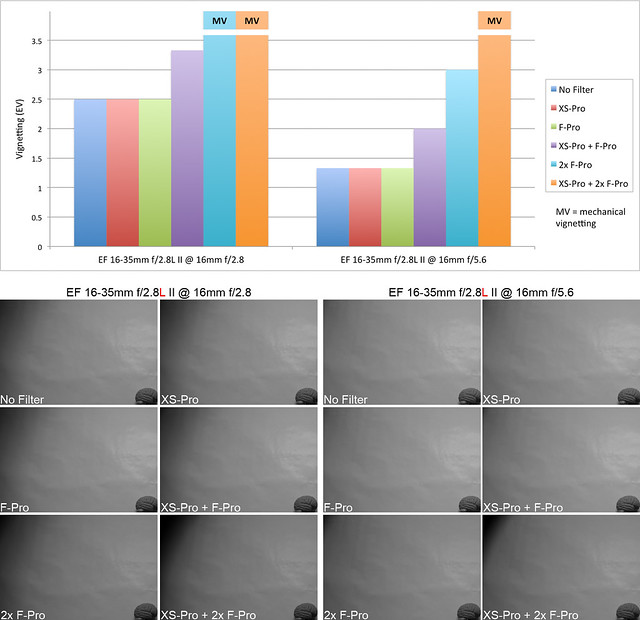
I already knew the Canon EF 24-70 f/2.8L II was going to have plastic threads where filters attach. I do not use a UV filter to protect the front element. I've got drops and spills insurance for that. However, my new lens came with a very inexpensive set of Pro Optic filters (UV, ND, Circ. Pol.) thrown in free by Adorama. I'll never use them, or so I thought.

I'm no plastics chemist. I've no idea how tough the plastic threads or the edge of that part of the lens is. I just thought I would try something to protect that edge and those threads beyond what the lens hood offers..

I took the UV Haze filter, wrapped it in a paper towel, placed it in a ziplock bag and used a small hammer to shatter the glass of the filter. I then removed the metal filter ring from the ziplock bag and cleaned all remaining glass from it and screwed the now filter-less metal ring onto the filter threads of my lens. Voila!

Just a little peace of mind and added protection. I think so anyway.

Canon 5ds(r) - which SDXC UHS-1 Card is recommended?

There have been tons of warnings about them, not everyone gets a dud, but the often do not work out well. They were run out of many places for counterfeiting, so started branding with their own name. They sell on ebay and Amazon, and new egg, sites that allow sales by 3rd party sellers. You won't see them in reputable photography stores.

http://www.bing.com/search?q=komputerbay%20counterfeit&qs=n&form=QBRE&pq=komputerbay%20counterfeit&sc=1-23&sp=-1&sk=&cvid=87764fc1d0be44498845cea054d95b58
Upvote 0

Canon life size converter with Zeiss 50 and 100mm Macro lens

you probably better off with extension tubes only - it's also a know fact that the extra glass with affect the image IQ, and filters even more.
The only exception I know is with the Leica elmarit APO 100mm 2.8. There is a 1:2 to 1:1 converter that barely degrades the IQ.
However, you will still loose the infinity focus.
So, if you really need a 1:1 lens you should get a native ratio one
Upvote 0

Sigma Product Advisory for EOS 5DS and EOS 5DS R

Act444 said:
neuroanatomist said:
9VIII said:
Theoretically those lenses will never be permanently disabled, and Sigma can even improve them as time goes on. Even Canon can't do that.

For newer Canon lenses, firmware updates can be applied via a newer Canon body. That happened with the 40/2.8 STM.

Apparently there was a firmware update for the 300 2.8 II and 400 2.8 II that required sending the lenses to Canon...don't know of a way to "DIY" those through a camera body, etc...unless I'm missing something?

Must be only certain lenses?

Given the age of those lenses (the update applied to all four MkII superteles), I suspect Canon could have let users do the update, but chose not to. I ordered my 600 II before the firmware update was announced, but it arrived with the new firmware. We're likely talking relatively few lenses in terms of absolute numbers, and Canon may have not wanted to deal with users not having a new enough camera (I'd bet many MkII supertele owners were using 1DIV or 1DsIII bodies which can't push a lens firmware update). Canon paid for shipping both directions for affected users.

The 40/2.8, OTOH, vastly many more copies and easier for Canon to put the burden on the owner.
Upvote 0

STM vs Cinema lenses.

Policar said:
CanonFanBoy said:
Mt Spokane Photography said:
A STM lens is cheap to make, but has smooth focusing for consumer video. At some point, Cinema lenses may autofocus, but for now, they tend to be manual focus.

Cinema lenses from Canon and Zeiss are a step above "L" lenses. They use hand selected elements to assure the best opts, and the higher end ones are parfocal, and do not change focus as they are zoomed in or out. They really don't compare, since different characteristics are wanted by cinematographers.

Have you shot any stills with a Cinema lens? Sounds like it may be interesting. Thanks for the explanation.

They're basically just re-housed "Ls." The Zeiss Compact Primes are pretty boring, just rehoused ZEs.

The Canon cinema lenses certainly have better mechanics, but they don't have substantially better optics (same designs, just better coatings) than the much cheaper L lenses. There's no magic. What you're paying for is the mechanics because your AC wants something like this to pull focus.

The STM is the opposite end–terrible mechanics, but great autofocus.

It's a matter of where you want to spend your money. If you have tons to burn, the cinema lenses and a crack AC will be better than STM and autofocus. By far. (Less in terms of image quality than in terms of having someone pull focus properly and well.)

But if you don't have tons of money, wouldn't you rather spend it on talent/art/locations/sound/etc. than on renting a lens with good mechanics? Optically the difference is small.

That said, there are cinema-specific lenses that do have major optical advantages, but many of those advantages (a lack of focus breathing and better color matching lens-to-lens, for instance, as well as better mechanics for pulling focus and such) are cinema-specific. And those that are just optically awesome on top of that.... well...

http://www.bhphotovideo.com/c/product/840523-REG/Fujinon_hk4_7x18_f_18_85mm_T2_0_Premier_PL.html

You pay for it.

The lens you link to is not full frame. While its true that super 35 is pretty much the standard for cinema, you can't replace a FF lens with a super 35.

I think the term Cinema is pretty widely tossed around, and is losing its meaning. It used to be that we had still camera lenses, broadcast lenses, and Cinema lenses. Now that DSLR's can take cinema quality video (or close), and Cinema has concentrated on super 35, its a scrambled mess with a lot of crossover between the three usages.

Its no wonder that a person is confused by a cheap stm lens and the difference to a Cinema lens.

Anymore, all that is needed to call your lens a Cinema lens is to add gearing on the focus ring so that it can be operated by a focus puller, and hard gear the focus rather than using a slip clutch as used in autofocus systems.

Canon does make a couple of interesting Broadcast/Cinema Super 35 lenses, but the cost is North of $70,000. I'd like to have one to review on a 7D MNK II, the come in EF or PL mounts. Being able to cover 50mm to 1500mm in one lens sounds interesting, and its not based on any existing "L" lens.


http://usa.canon.com/cusa/professional/products/lenses/cinema_lenses/cine_servo_lenses/cine_servo_50_1000mm_t5_0_8_9_pl
Upvote 0

Canon 600mm f/4L IS II USM Lens and Backpack-Roller Bag

East Wind Photography said:
Yes. Usually taking big glass on an airplane means either having to leave some other options behind or put them at risk in checked baggage.

If you can, it may be better to ship it separately using a reputable shipping service with full tracking. You may also "double pack" the lens - put it in a good hard case with foam, then put the case into a cardboard box with some dampening stuff between the two. This makes the box safer, less interesting, and will also protect the hard case handle, locks, etc.
Upvote 0

Review: Canon XC10 With Footage

KrisK said:
More YouTube footage. Not mine. High ISO samples starting at 2:25.

Not sure if anything meaningful can be gleaned, given it's, well, YouTube.

https://www.youtube.com/watch?v=-M84vVDx4mU

The issue isn't YouTube, it appears to be the camera, or at least the edited material. The outdoor shots look unacceptably soft compared to 4K from other cameras. In fact, it looks worse than even HD from a decent modern camera, so I don't know.

There is a distressing amount of purple fringing going on around the backlit trees. That is what I hated about my G30, and it seems the XC10 has the same problem.
Upvote 0

Canon Speedlite 600EX-RT and Profoto D1, B1

Are you shooting the 600's as TTL or manual? A couple of cheap optical triggers on the 600's would work if manual. Are you shooting the B1's in TTL? If not, reality you only need 'sync' on a dumb Air transmitter, and you can use a smart Air remote to power up and down as needed. If you're trying to do it all in TTL, you're out of luck at this point.

Profoto really needs to create a TTL speedlight adapter so it can fall into their groups and stuff. Oh well, Phottix has this with their Odin units, with the Indra500 and their Strata bits.
Upvote 0

Zeiss 21: which UV and polifilter to buy?

Niels123,

You're going to love that lens. I bought the Ziess polarizer 82mm and it works great! I own B&W polarizers for other lenses and this one performs perfect. No problems here using it. Sample picture of end results bringing up submerged rocks and clarity.

https://www.flickr.com/photos/1and0hound/16636216900/in/dateposted/

Good luck and happy shooting!

Mario
Upvote 0

Why can't I see the shallow DOF through the viewfinder?

Eldar said:
The lack of support for high precision focusing screens is something that irritates me with Canon.

To be fair the other dslr makers are worse. Nikon have forsaken interchangeable screens for some time now and although Pentax do them, if you want a true dof screen like the Canon 's' the advice on Pentax forums is to buy the Canon one and cut it down !

When Canon followed Nikon's example with the LCD overlay I suspect there were cost issues with making the screens work reliably; hence why the 7D and 5DIII didn't have them. I think they may have a cost effective solution because now the 7DII does have them. The reason the 5Ds doesn't is that it is pretty well a 5DIII architecture with a higher res sensor.

Expect the 5DIV to go back to having one, especially if, as I think, the IV may have an interchangeable prism, one OVF and the other an EVF which automatically locks the mirror up when fitted. This is if of course, the 5DIV is further video orientated.
Upvote 0

T6i and T6s naming question...

The s has always been added to a advanced version of the basic model numers.

https://en.wikipedia.org/wiki/Comparison_of_Canon_EOS_digital_cameras


Thus, the Canon 1Ds was a upgrade from the 1D and used FF for the first time in a DSLR. Then, there was the 1D MK II and the 1Ds MK II which was FF, the 1DMK III and the FF 1Ds MK III, so at that time, it indicated a FF model.

The 5Ds is a 5D with a higher resolution FF sensor.

So why a T6s?? Does not fit into the previous naming scheme very well. Its the first non FF non pro model with a "s" suffix.
Upvote 0

Patent: Canon EF-S 20mm f/2.8 STM

neuroanatomist said:
LonelyBoy said:
Matthew Saville said:
It is a shame that Canon decided to deliver zero "L" lenses for EF-S, though, that was a corporate tactical error that I think their lens engineers are still shaking their heads over...

I still swear I saw a line from a Canon rep, somewhere, that L means, among other things, it will work on all EOS cameras, so no EF-S L lenses will be produced.

Last time I said this someone brought up a fixed-lens bridge camera with a red ring and L on its lens, which is sort of a side point to a standalone lens.

There are also the 10x42L IS binoculars.

Interesting.

I'm still extremely comfortable in saying they'll never make an EF-S L lens.
Upvote 0

Filter

Forum statistics

Threads
37,445
Messages
973,943
Members
24,808
Latest member
Djiran

Gallery statistics

Categories
1
Albums
29
Uploaded media
372
Embedded media
1
Comments
25
Disk usage
1 GB