• The Canon Rumors Forum has officially been shut down as of July 10, 2026.

    All data will be deleted on September 16, 2026.

    the ad free experience will return by July 17, 2026.

DXO tests the Canon 500 II and 600 II lenses

GMCPhotographics said:
My opinion on DXO labs hasn't changed over the last 4 years. Their weighting for their point scores are heavily swung according to their own internal brand bias.

Bias is debateable... it may or may not be true.... but it appears to be.

What is not debateable is that an attempt to represent a complex system of interactions between diverse technologies and conflicting user requirements with a simple number is doomed to failure.
Upvote 0

EF 200-400 f/4L IS 1.4x Announcement Tonight

zim said:
GMCPhotographics said:
Hannes said:
Mick said:
Fantastic lens but the cost is a lot. USA £7800, UK£ 12000. Over a third more expensive. Ouch!

See it from the bright side, you can do a weekend trip to New York, live in a swanky hotel and eat nice and on the Saturday pick a lens up from an actual shop stocking it while still saving money overall.

That price differnetial isn't the fault of Canon....they base price to the dealers is pretty much the same. It's juat a bit of blatent profiteering from the UK vendors who are selling at full RRP and think they will sell every copy they can get their grubby hands on.
At the current price differential, get a standby flight to the US and go and get one Stateside. It'll cost you time and energy, but will yeild a serious price saving.

and good luck with customs on the way back ;D

sorry off topic but as an aside is it correct that unlike bodies lens warrenties are world wide? I seem to remember reading that somewhere but It may have been on the back of a bottle of red ::)

Some Pro photographers have been known to write the journey off against tax...post the empty box and case to the UK and walk though customs with the lens in their camera bag with camo covers over the lens. With very little bother from the customs guys. Not that I would do such a thing because it's illegal. But it's been done many times before.
Upvote 0

Advice needed: performance of 6D

daniela said:
Does anybody know an good and honest company/forum e.g. where I can look for used Cams?
I do not want to buy at Ebay, I was cheated buying the 300mm 2.8 lens (lenses inside were broken).

Lenses are a big gamble because you cannot really check them, but afaik it's different for camera bodies: The only moving part is the mirror, and you can just ask how many shutter cycles it has (there are windows utilities for that, or use Magic Lantern) & compare vs. the shutter rating Canon warrants. If you then check for dead pixels (get a raw shot) & the overall impression (in person or photos), imho there are few things that can go wrong. If in doubt, check ebay Kleinanzeigen and such for local offers and get the item in person and not via mail.

Buying used has one advantage: you can get older pro-grade bodies very cheap, check for the Canon 1D IV - 16mp is enough for just about everything and for still shooting this is an absolutely stunning camera with 1.3x crop factor for birds.
Upvote 0

How to measure and set white balance on 60D

dmills said:
You're (mostly) correct. The small caveat is that if you're shooting in the wrong white balance mode for RAW, it means that you MUST go back and change it in post-production.
I will say, even shooting in RAW, I'd have a few shots that were nearly impossible to correct in post becaue the colors were so far off. They all came from the awful fluorescent lights they have in schools, but, it's definitely advisable to at least use one of the presets to get close to the correct WB for a scene. If you're coming up with Kelvin values in the 3-4000 range on a scene that needs 7000, it's not as easy to correct
Upvote 0

Alterntive to tripod mount ring

neuroanatomist said:
viggen61 said:
But I find it very handy as a rest, and more comfortable than trying to hold the lens barrel. I do have a Wimberley P20 plate which makes the foot a bit longer, but it also fits my hands better.

Ditto.

on a gripped or 1D body the foot is convenient and comfortable but on an ungripped body I too find it gets in the way so typically mine is removed and in my bag with a plate attached as mentioned above. personally i dont worry about the screws. Are you a little OCD to be THAT worried about this?
Upvote 0

Desired fantasy gear

sanj said:
Grulon said:
Some sort of diaphragm shutter could prevent dust from entering the camera during lens changing.

I keep wondering why they do not make a TC with zero power. That does not change magnification or degrade lens quality. Then we could leave the 'plain glass' on the camera and change lenses without fear of dust on sensor. We could just blow away, wipe away the dust from the plain glass.

Nice idea ya? I wish I could manufacture this and sell! lol

get a sigma, they have a dust screen in front of the mirror.
Upvote 0

what to do

500d said:
Zv said:
If the 500D is anything like the 550D then you can take really good pictures with it - including cityscapes. I imagine it won't be so good at high ISOs but as people have mentioned a tripod is what you need not a new camera. Also shoot in RAW and get a nice long exposure with a fair amount of detail using a smaller aperture like f/8. You can then dial down the exposure and brightness in post or dodge and burn to bring out more detail where you need it. I find lightroom's adjustment brush to be quite useful for a quick fix but for more detailed work move over to photoshop and use layer masks to adjust specific areas.

Getting the color balance right in camera for night scenes can save a lot of headache - Personally I like to shoot near the tungsten side of the white balance scale for night/blue


When I first started I never could figure out why my night landscapes looked crappy. Mostly because the camera was choosing white balance, focus point and aperture for me in P mode. Shoot in manual mode, using live view to focus manually. Use mirror lock up and a remote release. helps to shoot on a calm day, with little wind.

A speedlight might help illuminate some of the foreground if nothing else. Just make sure you gel it to match the white balance setting.


is there a site or books that teach how to shoot in manual
how do you know what wb setting to use

Here:
http://www.cambridgeincolour.com/

As for white balance, you can get a gray card or a white non-reflective material and take a picture of it under the lighting condition you were in, then use it as your WB (you can consult your manual on how to use custom WB, don't worry it's easy). Or, just take it with DAYLIGHT WB in RAW and adjust it in PP (lightroom or Canon's DPP) later. I always use full manual mode when taking landscapes. Expose to the right (ETTR), http://en.wikipedia.org/wiki/Exposing_to_the_right, means using your histogram and make sure almost all the graphs are in the right. Just be careful of clipping. It's a technique used with RAW and later adjusted during post-processing in order to decrease noise especially in shadows. Canon cameras are famous in good highlight recovery but bad with the shadows that's why you overexpose a little bit and then just adjust (darken) it later in post process. I'm sorry but I just assumed that you don't know these and I just want to help you. Have fun! :)
Upvote 0

Stills photographer Doing some video

joema said:
dmills said:
...little bit of video for a website that I'm working on. The job will be for a ballet studio...One (or maybe a few) short 30-45 second clips showing the dance studio, and some classrooms, and what it's like...
Two "dancer profiles" featuring interviews, some shots of them warming up and performing, etc. Maybe 1-2 minutes each....I have a somewhat cheapy LED video light as well....I think a budget of $1500 would be about the max I should spend....what, if any of things things are necessary/would help my video look more professional? Is there anything else that's important that I forgot? Is there anything on this list you wouldn't recommend, or would recommend something else?

I do video documentary production using some of this equipment. Comments:

Your stills background is a plus. Stanley Kubrick started as a still photographer, and his skills in composition and lighting helped in cinematography.

Accept the first pieces you do won't be as good as you want. It will be a learning experience.

There are a few simple techniques which can help to set your material apart from humdrum stuff. This by itself won't make it great -- that's up to your artistic ability. However these technical methods (some of which you already know) can inject some polish and pizzazz. They inform the viewer (whether they understand it or not) this wasn't shot by a kid with a camcorder.

(a) Use rack focus where reasonable: http://www.criticalcommons.org/Members/jbutler/clips/CSI20090226qq00_10_19qq_MPEG-SC.mp4/view

You don't need a follow focus for this, although it can help. A variation is a "focus reveal" where you fade into sharp focus, often used while a narrator is talking.

(b) In editing, use J-cuts (audio advance cut) and L-cuts (video advance cuts): http://vimeo.com/videoschool/lesson/239/j-cuts-and-l-cuts

(c) Use two-camera shots for interviews. Cut between them in post. Don't use the same framing on each camera.

(d) For interviews make sure you frame correctly, with the top border at top of subject's head, and with "look space" (open space in front of their face). In general main interview camera should be a 5 o'clock or 7 o'clock position. The b-camera can be more offset L/R or high/low, or even be a roving hand-held camera. If hand held you generally want an optically stabilized lens like the 24-105 or similar.

(e) Tip for informal stand-up interviews: get a partner to conceal a wireless lav mic in a clipboard while interviewing subject, and you stay back with the 70-200 f/2.8 at 200mm. Note this is NOT a clandestine interview -- the subject knows you're there and the mic is there. However by keeping the camera out of their "personal space" and the mic not obvious, it produces more natural, conversational results. Shooting at f/2.8 also helps blur out background distractions.

(f) Generally use a wireless lav mic for interviews. A hand-operated shotgun mic on a boom is better in some cases, but takes another person to run it.

(g) Monitor with earphones your main audio. It is much easier to get the audio right then spending hours with a spectral editor trying to clean it up in post.

(h) Use your GoPro creatively: get some 120 fps shots for slow motion of dancers. GoPro can also take time-lapse stills for building a sequence in Premiere Pro: Create a time lapse video in Premiere Pro

(i) Get plenty of b-roll shots: close-up of hands lacing up ballerina slippers, close-up of feet walking across floor, high angle shots from rafters looking down at dancers, shots of dancers entering studio, establishing shots of studio exterior, etc.

(j) Use shallow depth of field extensively, where appropriate. E.g, out-of-focus dancers in background, and subject interview in foreground. You can also rack focus from one to the other.

(k) Get a cheap black background and consider shooting interviews against that. This is easy and looks professional. However it must be used cohesively with the other material, otherwise the transition to on-scene interviews and black backround interviews is jolting: How I Create A Totally Black Background

(l) Consider using three-point lighting for formal interviews, or two-point bolstered with natural light. Be cautious about mixed lighting temperatures that are difficult to fix in post: Video Lighting Basics - Three Point Lighting

Other comments and suggestions:

Shoot video in manual mode -- not aperture priority or programmed -- with AUTO ISO on. Make sure shutter speed is 2x the frame rate, e.g, 1/60th for 1080p/30. This follows the "180 degree shutter rule" and avoids odd, strobing effects: http://tylerginter.com/post/11480534977/180-degree-shutter-learn-it-live-it-love-it

If scene is too bright for f/2.8 (because ISO won't go low enough), use a neutral density filter. Don't balance the exposure by increasing shutter speed.

Practice, practice, practice before the actual shot. DSLRs are complicated to operate for video. You don't want to fiddle around with camera modes, cables and quick-release fittings in the field. This should be second nature before going. E.g, know how to adjust audio volume level on both cameras -- while shooting and before shooting. The 5D3 is particularly tricky because the controls behave differently when shooting video vs in standby.

Before leaving home, compose a rough "shot list" of shots you want. Hand-draw storyboards (stick figures perfectly OK). Don't wait until you're on set to begin the creative process. Of course you can deviate from your shot list as required, but do as much creative brainstorming beforehand. If possible visit the site beforehand to get ideas.

Suggestions about other hardware you mentioned:

(1) Rhino slider: I use a Kessler Stealth slider: http://www.kesslercrane.com/stealth-s/141.htm

Sliders are good but one more thing you have to manage. It's nice to have one that does vertical slides, and has adjustable tension.

(4) Tripod head: I use the Manfrotto 504HD head and 546B tripod. The 502 is probably OK for your purposes.

(5) Atmos Ninja 2: I would not get this; it's a great product but you don't need it for this project and it won't add significant value, yet will inject production complexity. On your limited budget there are other items with greater cost/benefit ratio.

(7) Zacuto Z-Finder: I use the Z-Finder Pro EVF. It's expensive but gives focus peaking, exposure zebras, facilitates low and high angle shots, eyecup adds a 3rd contact point to help stabilize hand-held shots. Also doubles as a small field monitor. It also has built-in adjustable optical diopter. I personally prefer it over a field monitor, although I've used both. http://www.zacuto.com/zfinderevf

Wow, what an informative post. Thanks so much for taking the time to type this!

I'm also a stills photographer than has started to get sucked into video (thanks ML RAW recording!), this is very helpful stuff for me!
Upvote 0

TS-E 17mm or 24mm

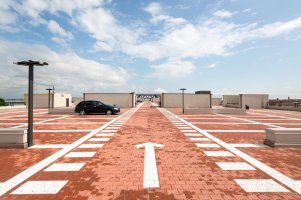
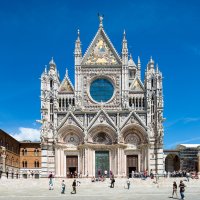
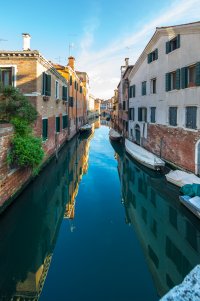
A few samples with the TS-E 17mm...

2920: Tilted downwards to have the focal plane equal the floor thus that the latter is sharp foreground to Background.

3365: Most classical usecase (in my opinion), shifted upwards to preserve parallel lines.

3208: Less obvious usecase (in my opinion), shifted downwards to have more water and thus reflection in the picture while maintaining vertical lines.

All pictures were taken with camera handheld. Shifting is not so much of a problem handheld, the electronic gauge helps altough you can also control the parallel lines quite well trough the viewfinder.

Attachments

  • Italien-2920.jpg
    Italien-2920.jpg
    162 KB · Views: 733
  • Italien-3365.jpg
    Italien-3365.jpg
    304.6 KB · Views: 759
  • Italien-3208.jpg
    Italien-3208.jpg
    1,017.3 KB · Views: 746
Upvote 0

Do you use Long Exposure Noise Reduction?

dgatwood said:
Seems like it would be better if the camera contained a series of profiles indexed by sensor temperature, with each profile generated from the average of a few thousand consecutive 30-second black shots. Averaged over a large enough number of black shots, random noise should converge towards zero and static noise should converge towards a particular value.

I have noticed weird things like hot pixels one night, in a series of shots; and lack of them or hot pixels somewhere else later the same night or the next evening.
Upvote 0

70-300L IS + Kenko 1.4 PRO300 DGX

CanonMan said:
Hi. At the moment I am using a 450D but this will change shortly to either a 70D or a 7D.

In the 70d case I'd say wait until it's confirmed the new cameras are compatible with the Kenko tc, you cannot update the fw and Canon has a habit of somehow screwing 3rd party manufacturers (purely by coincidence, mind you...). But if you get a 7d1 it'll be a nice combination, it does f8 af with the Kenko and multipoint af is easier vs. 60d.
Upvote 0

Genus 77mm ND Fader Circular Filter: Adequate for a serious amateur?

neuroanatomist said:
CanadianInvestor said:
..asked them for the Teffen filter. The rep came back with a Genus GL GNDF 77mm and said, ‘This is better’.

Maybe the sales person meant 'better for me because I have stock that I need to offload'.

Having said that, the Genus isn't bad, the Tiffen is just a little better.

http://www.learningdslrvideo.com/variable-nd-filter-shootout/

+1 on Dave video and also IMO, you can go wrong with Bryan Peterson suggestion on Tiffen filter

http://www.adorama.com/alc/0014198/article/MeetThe-Only-Neutral-Density-Filter-Youll-Ever-Need

CanadianInvestor: i thought NIL (CPL Term) = Zero :P
Upvote 0

7D frozen when turned on

Mt Spokane Photography said:
It seems to happen to all cameras at rare instances. Perhaps something gets corrupted in the memory. I've had it happen when changing lenses while the camera was on.

Removing the battery resets things so that it does a clean boot the next time. Its like rebooting a computer when it is acting up.

I dont know... I think it's a slightly bigger problem... One time for instance, I was shooting a retail center for a large national bank and I had my 7d and it was breezy... the damn camera froze on me at least a dozen times during the shoot. I got so used to removing the battery it became second nature. Afterwards i went back and forth with Canon CPS who thought it could be my lens, my settings, etc... It all came down to the camera and sealing... Then the realization came in that I could pay to replace sealing in the 3 now 4 year old camera or just sell it/retire it and get a new camera that will service me for another 3-4 years... It sucks but it happens
Upvote 0

7DII and D400 Specs

Sharpness comparisons r interesting up to a point. Looking at a National Geo book of "Simply Beautiful Pictures" are hundreds of fantastic shots and not one of them is nearly as encumbered as the shots of the back yard birds with the notion that pixels are more important than the context as described by the author which includes light, moment, subject etc. In fact the first few pages are literally filled with what beginners and neophytes and those captivated by the cost of a lens believe are completely dull shots because there is no sharpness involved. None of the pictures of sharp shots can be found at the Smithsonian. Now they may appear after much digital editing in a magazine for emphasis. But to buy a lens based on its apparent sharpness is to lose the efforts of photography and make no use of ones skills and talents. If it were than merely spending money would encapsulate the total equation of "superior" shots. It ain't that at all.
Upvote 0

Auto ISO

Skirball said:
Auto ISO, in Av, with eTTL... At that point you might as well use the green square.

Av generally Does Not Do What You Want when using speedlights. Make sure you have read & undersand this:
http://photonotes.org/articles/eos-flash/index2.html#flashmodes

I haven't used the 6D with flashes much yet, but when I was shooting lots of flash stuff with the 40D, the way I preferred to work in low light with flash was:

  • shoot in M mode
  • set ISO as high as tolerable (maybe 1000 or so)
  • user a wide-aperture lens & set shutter speed as low as tolerable (can be 1/30th for easy stuff with an IS lens, but more like 1/100 for dancing etc.
  • aperture one click off of wide-open
[*]set flash up for bounce off ceiling or 45° diffusion with a softbox, and use a color filter on it to get it close to the color of ambient light. Leave flash in auto e-ttl2.
[/list]

In M mode the flash becomes your 4th exposure parameter after ISO, aperture, & shutter, and it's automatic. Adjust flash exposure compensation to get ETTR where you want it.

This method augments the ambient light with the flash & gets very natural looking shots (if you get it right, many non-photographer people don't realize that they're flash photos). If you've got a decent amount of ambient light it also keeps the flash power down so that your batteries last longer & your speedlight recycles faster.

On the 6D I'd probably set the ISO to 6400 and be a little more conservative with the shutter speed, but so far I haven't needed flash as long as I stick to fast primes.

BTW I've got a little 270EXII that lives in the bag now, which compensates nicely for the lack of built-in on the 6D. I leave lithium batteries in it as they're as light as you can get & they don't fade.
Upvote 0

Olympus OMD EM5 or 6D

funkboy said:
If you're considering the Oly EM5 then I think you should also have a good look at the Fuji X-mount bodies. Much closer to the 6D in terms of IQ, the handling & ergonomics are great, and the lenses, oh man the lenses... Fancy a 35mm f/1.4 better than Canon's 35L for $600?

The only things that should hold you back from switching to mirrorless are:

- if you need fast AF for sports, birds, etc.
- your existing investment in Canon gear i.e. do you want to keep your 70-200L?

Big feature of the OM-D is the AF, super fast and accurate, while the Fuji cameras are awesome for IQ and yes, those lenses~ The AF department still needs catching up, even going up against the 6D, which doesn't have the world's best AF but I'd say a lot more responsive and accurate than Fuji bodies. While I have a Panasonic GH3, got that for video work as well as a second body to my 5DII. I am impressed with the noise performance, the 5D still feels like it cleans up better but at high ISOs from 3200 and beyond the GH3, to me, retains more detail, and at least doesn't get ruined with banding.
And the AF on the GH3 smokes the 5DII, in daylight they're pretty close, but once lights go dim the Gh3 still gets the focus right on and speedy. And I assume the OM-D is similar or maybe better.

I would agree though the 70-200L is a keeper, if I go two camera set up then I have a WA on my GH3 and a 70-200 on my 5DII, I will see how things go next wedding, but Ryan Brenizer loves the OM-D and has photos to show during wedding shoots.
Upvote 0

Tronix Explorer XTSE - any experiences

After a bit of thought I ended up with a pair of Elinchrom BXri 500 (instead of the older Bowens 500 and 250ws that I posted about a couple of weeks ago). I am starting to inform myself about possibilities of on-location opportunities, thus battery packs. I have found one that looks promising - Tronix Explorer XTSE. It is relatively inexpensive and seems on spec like a good option for me (it says it can shoot the two strobes at full power for about 500-550 pictures if you do not use the modelling light, and that will be good enough for my use).

Has anyone used them and can you share your experiences?

G.

Looking to upgrade, could use some advice [Casual/Enthusiast]

Since no one has yet asked, I suppose I should...what exactly are you looking for in the new camera? What features of the XS do you wish to upgrade, or are lacking that you wish to have in a new camera? What things about the XS make you yearn for an upgrade?

For example, do you find yourself needing more AF points? More accurate AF points? Better low-light performance? The ability to customize the controls and features of the camera? Faster continuous shooting speed? More megapixels? A rotating touch-screen?

While the 60D, 6D, and 5DIII - and even the T5i - all offer more features and quality than the XS, one or the other may best fit your specific needs. Depending on how you shoot, how much control you wish to take over the camera, and what features you commonly need, the T5i may provide all you need. Or perhaps you are looking for additional features and controls, in which case the 6D, 7D, or the 60D may have exactly what you are looking for.

And beware, Snapsort doesn't really indicate some of the actual important features and differences - such as menu and Custom Function settings/ features that one camera offers over another, differences in controls, or important details of the AF systems. You are better off reading a real-life comparison / review of the cameras.

As far as new models to come, yes, the 70D should be arriving soon, and then 7DII. But there are always new cameras coming, so you should only worry about them if one of the current cameras doesn't fit your needs, and you wish to wait to see if one of the new ones will. Or, in the case of the 70D, the release is imminent and thus worth waiting to see what it offers.
Upvote 0

What's wrong with shooting at Small Raw size? (Output if for the web)

omar said:
I'm taking photos of jewellery

My end output is for the web
+ Some printing - but this is only off an inkjet

Is there anything wrong with shooting in small raw size??

EDIT: For some shots, I do need to be further away and then crop around the main object
Does that change anything?

Thanks


Omar

You can always down size, but up sizing is much more difficult. Why limit yourself? Unless space is truly limited (in which case I wonder about your commitment to your photography), shoot RAW, not sRAW
Upvote 0

Filter

Forum statistics

Threads
37,480
Messages
975,426
Members
24,816
Latest member
GLBDD

Gallery statistics

Categories
1
Albums
29
Uploaded media
372
Embedded media
1
Comments
25
Disk usage
1 GB