TS-E 17mm or 24mm

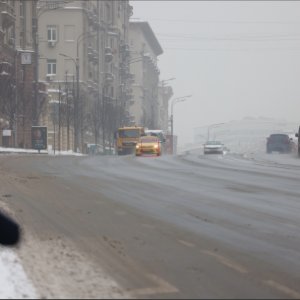
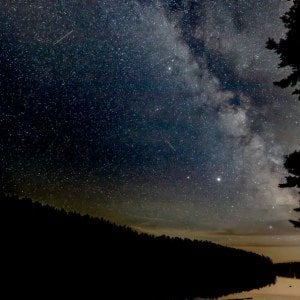
A few samples with the TS-E 17mm...

2920: Tilted downwards to have the focal plane equal the floor thus that the latter is sharp foreground to Background.

3365: Most classical usecase (in my opinion), shifted upwards to preserve parallel lines.

3208: Less obvious usecase (in my opinion), shifted downwards to have more water and thus reflection in the picture while maintaining vertical lines.

All pictures were taken with camera handheld. Shifting is not so much of a problem handheld, the electronic gauge helps altough you can also control the parallel lines quite well trough the viewfinder.

Attachments

  • Italien-2920.jpg
    Italien-2920.jpg
    162 KB · Views: 733
  • Italien-3365.jpg
    Italien-3365.jpg
    304.6 KB · Views: 759
  • Italien-3208.jpg
    Italien-3208.jpg
    1,017.3 KB · Views: 746
Upvote 0

Do you use Long Exposure Noise Reduction?

dgatwood said:
Seems like it would be better if the camera contained a series of profiles indexed by sensor temperature, with each profile generated from the average of a few thousand consecutive 30-second black shots. Averaged over a large enough number of black shots, random noise should converge towards zero and static noise should converge towards a particular value.

I have noticed weird things like hot pixels one night, in a series of shots; and lack of them or hot pixels somewhere else later the same night or the next evening.
Upvote 0

70-300L IS + Kenko 1.4 PRO300 DGX

CanonMan said:
Hi. At the moment I am using a 450D but this will change shortly to either a 70D or a 7D.

In the 70d case I'd say wait until it's confirmed the new cameras are compatible with the Kenko tc, you cannot update the fw and Canon has a habit of somehow screwing 3rd party manufacturers (purely by coincidence, mind you...). But if you get a 7d1 it'll be a nice combination, it does f8 af with the Kenko and multipoint af is easier vs. 60d.
Upvote 0

Genus 77mm ND Fader Circular Filter: Adequate for a serious amateur?

neuroanatomist said:
CanadianInvestor said:
..asked them for the Teffen filter. The rep came back with a Genus GL GNDF 77mm and said, ‘This is better’.

Maybe the sales person meant 'better for me because I have stock that I need to offload'.

Having said that, the Genus isn't bad, the Tiffen is just a little better.

http://www.learningdslrvideo.com/variable-nd-filter-shootout/

+1 on Dave video and also IMO, you can go wrong with Bryan Peterson suggestion on Tiffen filter

http://www.adorama.com/alc/0014198/article/MeetThe-Only-Neutral-Density-Filter-Youll-Ever-Need

CanadianInvestor: i thought NIL (CPL Term) = Zero :P
Upvote 0

7D frozen when turned on

Mt Spokane Photography said:
It seems to happen to all cameras at rare instances. Perhaps something gets corrupted in the memory. I've had it happen when changing lenses while the camera was on.

Removing the battery resets things so that it does a clean boot the next time. Its like rebooting a computer when it is acting up.

I dont know... I think it's a slightly bigger problem... One time for instance, I was shooting a retail center for a large national bank and I had my 7d and it was breezy... the damn camera froze on me at least a dozen times during the shoot. I got so used to removing the battery it became second nature. Afterwards i went back and forth with Canon CPS who thought it could be my lens, my settings, etc... It all came down to the camera and sealing... Then the realization came in that I could pay to replace sealing in the 3 now 4 year old camera or just sell it/retire it and get a new camera that will service me for another 3-4 years... It sucks but it happens
Upvote 0

7DII and D400 Specs

Sharpness comparisons r interesting up to a point. Looking at a National Geo book of "Simply Beautiful Pictures" are hundreds of fantastic shots and not one of them is nearly as encumbered as the shots of the back yard birds with the notion that pixels are more important than the context as described by the author which includes light, moment, subject etc. In fact the first few pages are literally filled with what beginners and neophytes and those captivated by the cost of a lens believe are completely dull shots because there is no sharpness involved. None of the pictures of sharp shots can be found at the Smithsonian. Now they may appear after much digital editing in a magazine for emphasis. But to buy a lens based on its apparent sharpness is to lose the efforts of photography and make no use of ones skills and talents. If it were than merely spending money would encapsulate the total equation of "superior" shots. It ain't that at all.
Upvote 0

Auto ISO

Skirball said:
Auto ISO, in Av, with eTTL... At that point you might as well use the green square.

Av generally Does Not Do What You Want when using speedlights. Make sure you have read & undersand this:
http://photonotes.org/articles/eos-flash/index2.html#flashmodes

I haven't used the 6D with flashes much yet, but when I was shooting lots of flash stuff with the 40D, the way I preferred to work in low light with flash was:

  • shoot in M mode
  • set ISO as high as tolerable (maybe 1000 or so)
  • user a wide-aperture lens & set shutter speed as low as tolerable (can be 1/30th for easy stuff with an IS lens, but more like 1/100 for dancing etc.
  • aperture one click off of wide-open
[*]set flash up for bounce off ceiling or 45° diffusion with a softbox, and use a color filter on it to get it close to the color of ambient light. Leave flash in auto e-ttl2.
[/list]

In M mode the flash becomes your 4th exposure parameter after ISO, aperture, & shutter, and it's automatic. Adjust flash exposure compensation to get ETTR where you want it.

This method augments the ambient light with the flash & gets very natural looking shots (if you get it right, many non-photographer people don't realize that they're flash photos). If you've got a decent amount of ambient light it also keeps the flash power down so that your batteries last longer & your speedlight recycles faster.

On the 6D I'd probably set the ISO to 6400 and be a little more conservative with the shutter speed, but so far I haven't needed flash as long as I stick to fast primes.

BTW I've got a little 270EXII that lives in the bag now, which compensates nicely for the lack of built-in on the 6D. I leave lithium batteries in it as they're as light as you can get & they don't fade.
Upvote 0

Olympus OMD EM5 or 6D

funkboy said:
If you're considering the Oly EM5 then I think you should also have a good look at the Fuji X-mount bodies. Much closer to the 6D in terms of IQ, the handling & ergonomics are great, and the lenses, oh man the lenses... Fancy a 35mm f/1.4 better than Canon's 35L for $600?

The only things that should hold you back from switching to mirrorless are:

- if you need fast AF for sports, birds, etc.
- your existing investment in Canon gear i.e. do you want to keep your 70-200L?

Big feature of the OM-D is the AF, super fast and accurate, while the Fuji cameras are awesome for IQ and yes, those lenses~ The AF department still needs catching up, even going up against the 6D, which doesn't have the world's best AF but I'd say a lot more responsive and accurate than Fuji bodies. While I have a Panasonic GH3, got that for video work as well as a second body to my 5DII. I am impressed with the noise performance, the 5D still feels like it cleans up better but at high ISOs from 3200 and beyond the GH3, to me, retains more detail, and at least doesn't get ruined with banding.
And the AF on the GH3 smokes the 5DII, in daylight they're pretty close, but once lights go dim the Gh3 still gets the focus right on and speedy. And I assume the OM-D is similar or maybe better.

I would agree though the 70-200L is a keeper, if I go two camera set up then I have a WA on my GH3 and a 70-200 on my 5DII, I will see how things go next wedding, but Ryan Brenizer loves the OM-D and has photos to show during wedding shoots.
Upvote 0

Tronix Explorer XTSE - any experiences

After a bit of thought I ended up with a pair of Elinchrom BXri 500 (instead of the older Bowens 500 and 250ws that I posted about a couple of weeks ago). I am starting to inform myself about possibilities of on-location opportunities, thus battery packs. I have found one that looks promising - Tronix Explorer XTSE. It is relatively inexpensive and seems on spec like a good option for me (it says it can shoot the two strobes at full power for about 500-550 pictures if you do not use the modelling light, and that will be good enough for my use).

Has anyone used them and can you share your experiences?

G.

Looking to upgrade, could use some advice [Casual/Enthusiast]

Since no one has yet asked, I suppose I should...what exactly are you looking for in the new camera? What features of the XS do you wish to upgrade, or are lacking that you wish to have in a new camera? What things about the XS make you yearn for an upgrade?

For example, do you find yourself needing more AF points? More accurate AF points? Better low-light performance? The ability to customize the controls and features of the camera? Faster continuous shooting speed? More megapixels? A rotating touch-screen?

While the 60D, 6D, and 5DIII - and even the T5i - all offer more features and quality than the XS, one or the other may best fit your specific needs. Depending on how you shoot, how much control you wish to take over the camera, and what features you commonly need, the T5i may provide all you need. Or perhaps you are looking for additional features and controls, in which case the 6D, 7D, or the 60D may have exactly what you are looking for.

And beware, Snapsort doesn't really indicate some of the actual important features and differences - such as menu and Custom Function settings/ features that one camera offers over another, differences in controls, or important details of the AF systems. You are better off reading a real-life comparison / review of the cameras.

As far as new models to come, yes, the 70D should be arriving soon, and then 7DII. But there are always new cameras coming, so you should only worry about them if one of the current cameras doesn't fit your needs, and you wish to wait to see if one of the new ones will. Or, in the case of the 70D, the release is imminent and thus worth waiting to see what it offers.
Upvote 0

What's wrong with shooting at Small Raw size? (Output if for the web)

omar said:
I'm taking photos of jewellery

My end output is for the web
+ Some printing - but this is only off an inkjet

Is there anything wrong with shooting in small raw size??

EDIT: For some shots, I do need to be further away and then crop around the main object
Does that change anything?

Thanks


Omar

You can always down size, but up sizing is much more difficult. Why limit yourself? Unless space is truly limited (in which case I wonder about your commitment to your photography), shoot RAW, not sRAW
Upvote 0

Center and Spot Focusing

Mt Spokane Photography said:
I've used cameras for many years, its only recently that electronics has advanced enough to allow the use of multiple focus points. Its a convenience feature that lets the camera track a moving subject, or focus on a off center subject.

If you don't think you will use the other focus points, you might be better off to wait and see what a new model brings to the table.

One of the truly excellent features is AFMA, I'd avoid a camera without it. It allows you to fine tune the autofocus of your lens to your camera body. If you have a wide aperture lens, that can make a huge difference.

Don't go out and invest $$$$ in a expensive wide aperture f/1.4 or f/1.2 lens unless your camera has AFMA.
what he said.
Upvote 0

Digitalrev speculates on D7100 vs. 7D2

Don Haines said:
Exactly! Look at the image below.... it is a pileated woodpecker hoping along a fence. It is the timing that makes it an interesting picture.... a mid-air capture that is in focus... not dynamic range or iso performance.
fohtohz said:

I do find myself wishing there was more detail inside the crack directly below the bird. DR is severely lacking.

::)
Upvote 0

5d3 refurb

I can heartily recommend the Sirui P-326 monopod. My first was the Manfrotto 680B. It is very sturdy. It is also heavy, noisy and I don't care for lever locks that get snagged on stuff. The Sirui is very solid, weighs under a pound, extends to 60" and folds down to 15" (without a head). It is eminently transportable, which means you will actually have it when you need it, and it "only" costs $100. I coupled it with a Sirui L-10 head for a sturdy lightweight combo. Hope this helps.

PS: The monopod even comes with an attached compass :P

http://www.bhphotovideo.com/c/product/822252-REG/Sirui_BSRP326_P_326_6_Section_Carbon_Fiber.html
http://www.ebay.com/itm/Sirui-Aluminium-Tilt-Head-L-10-for-Monopods-including-Quick-Release-Plate-/130685434434
Upvote 0

CF card error, pictures possibly corrupt.

Mt Spokane Photography said:
If they were RAW images, make sure you have the latest updates to your editing software. Out of date software may not recognize the 5D MK III RAW files.
Make sure you download the latest Camera RAW Version. Ver 7.4 is the latest for CS6

http://www.adobe.com/support/downloads/product.jsp?product=106&platform=Windows

Thank you, it has worked. Turns out i hadn't updated it because i hadn't needed to until now.

Thanks again
Upvote 0

Real iso's?

Just a little background here.

"ISO" is an intialism that stands for an international standards body.

There is no property of photographic film or of a digital imaging chain whose actual designation is "ISO".

The ISO publishes various standards that give ways of stating what we might call the "sensitivity" of a photographic film or of a digital imaging chain.

With regard to film, the basic sensitivity metric, determined as prescribed by the appropriate ISO standard, is called the ISO speed. The name of course comes from the fact that with film of a higher sensitivity, an appropriate exposure (for given scene luminance and given aperture) is given by a shorter exposure - a "faster" exposure process.

To provide continuity with practice in the film realm, the basic metric for the sensitivity of a digital imaging chain is also called the ISO speed. (It is of course determined in a wholly different way.)

Putting aside some complications, the basic "equation" we use (for example, in an exposure meter or automatic exposure control system) to arrive at a "recommended" photographic exposure (that is, combination of exposure time and aperture) for a given scene luminance, taking into account the sensitivity of the film or digital imaging chain (as its ISO speed) is the same for either medium.

But, especially taking into account the greater sophistication of modern exposure metering and control systems, it was observed that, in the case of digital cameras, this equation typically led to a lesser exposure than was "optimal" - typically about 1/2 stop "short". This gives a less-good noise result than we might actually enjoy.

Camera manufactures could have "tweaked" the operation of their exposure control systems to "take advantage" of this in two ways:

a. Change the "equation" used for automatic exposure control.

b. Keep the equation the same but "rate" the sensor system at a lesser ISO speed than would be determined by the ISO test method.

Had they done (a), the result would have been that the internal automatic exposure system would have produced a different exposure for a given shot than would have been "recommended" by a properly-calibrated free-standing exposure meter. This would have led to complaints about "inaccuracy" of the exposure control system of the camera.

So they did (b) instead.

But of course this led knowledgeable enthusiasts to complain that the "ISO speed ratings" of the digital camera were incorrect.

So the ISO defined a new metric for the sensitivity of a digital camera chain, the ISO standard output sensitivity (ISO SOS). This is a different measure than the ISO speed. In fact, again putting aside some complications, for a given sensor chain, the ISO SOS is about "1/2 stop" less than the ISO speed. (That is, the ISO SOS is about 0.7 times the ISO speed.)

And that "solved" the problem!

Today, the sensitivity of many digital cameras is stated in terms of the ISO SOS, not the ISO speed (and that often is stated in the "specifications", although it is sometimes hard to find).

Now for a second chapter of this story, i must refer to the matter of exposure index. For our purposes we can say that exposure index is "what we tell the exposure meter is the ISO speed of the film of digital camera chain".

Going back to traditional analog exposure meters, we recall that if we want to bump the exposure the meter recommends for some reason (compensate for backlighting, perhaps), we can set the "ISO speed" dial to a lower value than the actual ISO speed of the film or digital sensor. And of course, what we set on that little dial is the exposure index (and, as I just illustrated, it is not always the ISO speed of the film or digital sensor chain).

Now, returning to recent developments in the description of digital camera sensitivity, when the ISO introduced the ISO SOS, it also introduced another new "metric", the ISO Recommended Exposure Index (ISO REI).

This is a metric that works the same way as the ISO speed or ISO SOS (as a parameter of the exposure equation). It is defined as (and I paraphrase) "the exposure index that the camera manufacturer feels will, as an input to the exposure equation, give a 'desirable' exposure result in many cases."

In many case, digital camera manufacturers now indicate that the sensitivity "ratings" of their camera (at its various "ISO" settings) are in terms of ISO REI. That is, there is not any way that these values can be "correct" of "incorrect".

As a practical matter, in most of these cases, the "ISO" ratings are actually intended to be the ISO SOS values (and often turn out to closely conform to that definition), but the manufacturers do not care to commit to that.

A more extensive discussion of this matter is given here:

http://dougkerr.net/pumpkin/articles/SOS_REI.pdf

Best regards,

Doug
Upvote 0

1D-X with Continuous RAW Video Recording ?

See the post here:

http://www.canonrumors.com/2013/01/inside-the-canon-eos-1d-c/


Third Party Firmware?
I was told by someone at Canon that they would “bring the might of its legal team” to anyone that attempts to modify at the software level, the features of an EOS-1 camera body. So I think the firmware community out there today will probably leave the EOS-1D X alone.
Upvote 0

135mm f/2.8 (or faster) manual focus lens?

When I was getting rid of some old monitors I found a Tokina 135mm f/2,8 Tele-Auto ( m42 )
very well built all metal construction ( can take a picture of it when wanted ),
super nice focus ring and for IQ and Bokeh take a look yourself.
The first picture is from an 70-200 f/2,8L IS II
100% crop at 2,8

Attachments

  • IMG_5522.jpg
    IMG_5522.jpg
    10 KB · Views: 1,035
  • IMG_5525.jpg
    IMG_5525.jpg
    10.6 KB · Views: 1,003
Upvote 0

Ok, I just snagged a 600EX-Rt, now what? (Questions on use, and going forward).

In terms of some well done youtube videos you could check out to get you started with some simple lighting ideas, this guy does it excellently:

http://www.youtube.com/user/FreePhotographyTips

Obviously he's going to be using more lights than your one 600, but since he's explaining the goal of each light, that should suffice in terms of being able to have something in mind when you're lighting your photos.
Upvote 0

Using 600EX-rt aboard

SwampYankee said:
silvestography said:
What I want to know is how you managed to get a 600ex-rt refurb. I can never seem to find them in stock! :P

Just picked up a brand new one for $499 from B&H. should be good until the end of June

So did I but I'm not too crazy about the idea of purchasing another one for that price.
Upvote 0

Abstract - 'Behind Motion'

Location: Copenhagen, a bicycling-friendly city in May.
In front of me a cyclist. Behind I am myself on my bike getting blurry pictures with motion blur as well as camera shake. All this ended up almost abstract.

I would appreciate your comments.

Canon 450D, with 24-105mm at 65mm
Exposure: 1/40s, f/11, ISO 100.

Attachments

  • Behind Motion.jpg
    Behind Motion.jpg
    51.6 KB · Views: 584

Zeiss 100 f/2 vs. Canon 85 f/1.2 II vs. Canon 135 f/2

ecka said:
bholliman said:
I was going to recommend the 135L, but the Zeiss is a great piece of glass. 100mm also is also closer to your 35mm. As somebody else pointed out, the gap between 35 and 135 is a big one.

+1
Every 2x in focal length results in 4x FoV. You can fit four 70mm lens frames inside one 35mm lens frame (sh :)ot from the same distance) and almost sixteen 135mm lens frames inside one 35mm lens frame.
No matter how good the Zeiss 100mm is, the Canon 135mm f/2L has great IQ AND it can autofocus which is a great plus for that focal length (until your subjects sit still).

Plus, one could get a 135mm f/2L and a 85 1/.8 (which is a very decent lens) for the price of Zeiss.

Keep in mind that the above come from someone who swears by his Zeiss Distagon 21mm 2.8.
However, I also have the above 2 mentioned Canon lenses and I am very happy with them :)
Upvote 0

Filter

Forum statistics

Threads
37,436
Messages
973,523
Members
24,800
Latest member
MinhThe

Gallery statistics

Categories
1
Albums
29
Uploaded media
372
Embedded media
1
Comments
25
Disk usage
1 GB