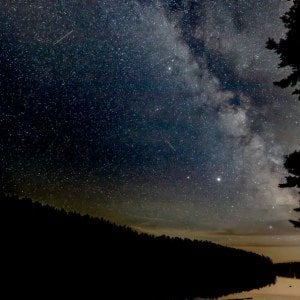
A Polar Photography Experience Short Film

- By Click
- Canon General
- 1 Replies
Awesome. A real pleasure to watch. Great job Sir.
….And welcome to CR
….And welcome to CR
Upvote
0


Rista Jukku said:jrista said:Marsu42 said:jrista said:So, sorry, but the visual evidence says otherwise...there IS an IQ improvement between the 5D II and 5D III, in many ways a significant improvement.
Thanks for doing these gifs, it's interesting and I think I can spot the 5d2's banding - but maybe I'm just looking for it.
Oh, its definitely there...I see it clearly. Same crap I have in my 7D, too.
Marsu42 said:Having said that, *significant* in a non-scientific context is very subjective, as far as I remember the context then was the horrendous price jump to $3500 that caught many people off guard and created higher expectations towards the sensor than Canon currently can (you'd probably say: wants to) deliver.
I'd say "Than Canon could have delivered"...past tense, the 5D III is only a couple months away from it's second birthday. I also believe that Canon would be incapable of producing any higher resolution sensors on their current fabrication process, and I believe in two years time, they could have improved.
Marsu42 said:What doesn't show up in the gif and what I have to admit I'm guilty of underestimating: The newer ff sensors react *much* better to postprocessing either in nr or sharpening, multiplying the seemingly moderate step up in noise pattern. Esp. with DxO's prime nr it's stunning how iso 6400 looks on the 6d, if only it wouldn't take my laptop 30 minutes to denoise a single picture...
Aye, which is in significant part due to the considerable improvement in banding. Horizontal banding was pretty much eliminated, and vertical banding occurs in these "soft" vertical stripes, rather than the harsh kind that occurred in sensors prior to the 5D III and 1D X. The more random, "natural" appearance of the noise, rather than a patterned, unnatural appearance, greatly helps in it's elimination.
As for DXO, while I admit I may be doing something wrong, I have found their software to be the worst of all the available options for editing RAW files. DXO seems to produce the noisiest results, PARTICULARLY for Canon files (they do much better with Nikon files). Compared to LR, DXO tools result in what I would call about two thirds of a stop WORSE noise performance strait out of camera. Compared to DPP, it is more like a stop worse (I do have to say, as much as I hate DPP's UI, it produces the cleanest noise output for Canon RAW files of ANYTHING, free or for pay...it's really too bad Adobe has't looked into Canon's own RAW demosaicing algorithms.)
I don't know if it is an intentional bias, or just a fundamental lack of interest in properly supporting Canon. I have given DXO's tools several dedicated tries, but in general they are lacking, they seems to be far slower than Lightroom or DPP, and specifically in Canon's case, the output is just terrible. All things being equal, that isn't surprising. Canon is not a DXO supporter, DXO has never given Canon much time or interest (it is often months or even years before DXO will test certain Canon cameras, whereas they will test Sony and Nikon cameras right out the gate, as soon as they can get their hands on a few copies.)
If you want the cleanest RAW conversions, DPP can't be beat. It's standard deviation of noise is about two thirds to half that of LR, and a full order of magnitude better than anything I've tried from DXO. (The only thing I DON'T like about it is it doesn't deal with aliasing as well as LR...edges come out of LR with this clean, crisp look, whereas you can clearly see stairstepping and in some cases moire a lot more often with DPP.)
Because they DPP have a lot of noise reduction going on for the Canon cameras, take a look at noise reduction and real resolution and you see the difference between DXO and DPP. DPP are masking off a lot of resolution in different frequencies.
And your statement that DXO doesn't handle Canon files good as Nikon are pure nonsense, it requires a clean signal from the beginning and Canons CDS are not good as Sony/Nikon due the read out.

dak723 said:If you went to a store and looked at both lenses, bought the cheaper lens, then when you got home found out that they had put the wrong lens in the box - the "L" lens - would you have kept it or returned it? The answer when purchased in person seems obvious. The "online" answer should be the same, in my opinion.
neuroanatomist said:Skulker said:Marsu42 said:Skulker said:I start with the assumption that Canon know a lot more about making cameras than I do.
That's the spirit, I'll remember to nominate you for the "Canon compliance of the year" award
You mean as my 1Dx does, as I just pointed out. ;D
I guess your 1Dx is different from my 1D X.
The issue at hand is when a Speedlite is attached, Canon cameras default to ISO 400 when they are set to Auto ISO. Are you saying your camera does something different?
Standard said:I know this may be very simple to many of you using the 5D Mark III but I can't seem to figure it out so your help is greatly appreciated. I've spent a good few hours flipping through the manual and scouring Websites but can't seem to find anything.
I find myself at a lost today trying to take some architectural/environmental shots with the Mark III and the Samyang 14mm. Try as I might, I can't get the camera to take the shot. Pushing the shutter button does nothing. I have gone through the Live View menu and tried adjusting the various settings but they haven't helped. I have the camera on a tripod using Live View, ISO at 100, aperture at f/16 and is using both manual focus magnification along with hyper focal techniques. Normally, this is a non-issue with my 5D Mark II which I have been using exclusively for landscape/environmental photography up until today.
What I believe the problem maybe is that the camera is trying to focus with AF rather than letting me manually focus BUT since the Samyang 14mm lens is a fully manual lens and do not have a manual switch, I can't change to that to let the camera know that I want to focus manually.
What am I doing wrong? Do I need to activate mirror lockup (I'd assume that Live View is a better option since it reduces/eliminates vibration)? How do I go about setting the camera to manual focus?
Any help in shedding light to this is greatly appreciated.
EDIT: I've just tried this with the Canon 24L and was able to take shots. This helps confirm that the issue lies with setting the lens to AF/manual but how does one goes about using manual lenses that do not have AF/manual switches with the Mark III?


syrcular said:I mainly shoot either street photography portraits or studio or location portraits. With my street photography, speed of autofocus is also key.
syder said:I'm not sure what competition you're referring to Marsu - the only affordable cameras that do RAW are the Blackmagics, and they're so far removed from a DSLR that they can't be compared. And if you think a BMCC is cheap because the body doesn't cost much you're wrong. Once you add all the extras you're looking at paying more than a C100 for a far less versatile camera (but which does provide higher resolution images with a lot more colour information).
Mt Spokane Photography said:If you have a 5D MK III, make your own (assuming you have another camera to photograph it with)