• The Canon Rumors Forum has officially been shut down as of July 10, 2026.

    All data will be deleted on September 16, 2026.

    the ad free experience will return by July 17, 2026.

Firmware: Canon EOS 6D v1.1.8

HTML:
Canon has updated the firmware on the EOS 6D.</p>
<p><strong>Firmware Version 1.1.8 incorporates the following fix:</strong></p>

<ol>
<li>Fixes a phenomenon in which standard exposure may not be obtained, or an irregular exposure may result, when Silent LV (Live View) shooting with the following TS-E lenses: TS-E 50mm f/2.8L MACRO, TS-E 90mm f/2.8L MACRO, or TS-E 135mm f/4L MACRO.</li>
</ol>
<p><strong><a href="https://www.usa.canon.com/internet/portal/us/home/support/details/cameras/dslr/eos-6d?subtab=downloads-firmware#Z7_MQH8HIC0L88RB0AMD0F1Q42K25">Download firmware v1.1.8 for the EOS 6D</a></strong></p>
<span id="pty_trigger"></span>

Firmware: Canon EOS 5D Mark III v1.3.5

HTML:
Canon has released new firmware for the EOS 5D Mark III.</p>
<p><strong>Firmware Version 1.3.5 incorporates the following fix:</strong></p>

<ol>
<li>Fixes a phenomenon in which standard exposure may not be obtained, or an irregular exposure may result, when Silent LV (Live View) shooting with the following TS-E lenses: TS-E 50mm f/2.8L MACRO, TS-E 90mm f/2.8L MACRO, or TS-E 135mm f/4L MACRO.</li>
</ol>
<p><strong><a href="https://www.usa.canon.com/internet/portal/us/home/support/details/cameras/dslr/eos-5d-mark-iii?subtab=downloads-firmware#Z7_MQH8HIC0L88RB0AMD0F1Q42K25">Download firmware v1.3.5 for the EOS 5D Mark III</a></strong></p>
<span id="pty_trigger"></span>

Firmware: Canon EOS-1D X Mark II v1.1.4

HTML:
Canon has released new firmware for its flagship DSLR, the EOS-1D X Mark II.</p>
<p><strong>Firmware Version 1.1.4 incorporates the following improvements and fix:</strong></p>

<ol>
<li>Support has been added for chromatic aberration correction, peripheral illumination correction, distortion correction, and Digital Lens Optimizer when using Digital Photo Professional to process RAW images captured with the following TS-E lenses: TS-E 17mm f/4L, TS-E 24mm f/3.5L II, TS-E 50mm f/2.8L MACRO, TS-E 90mm f/2.8L MACRO, or TS-E 135mm f/4L MACRO.</li>
<li>Fixes a phenomenon in which standard exposure may not be obtained, or an irregular exposure may result, when Silent LV (Live View) shooting with the following TS-E lenses: TS-E 50mm f/2.8L MACRO, TS-E 90mm f/2.8L MACRO, or TS-E 135mm f/4L MACRO.</li>
<li>Support for Exif 2.31 has been added.</li>
</ol>
<p><strong><a href="https://www.usa.canon.com/internet/portal/us/home/support/details/cameras/dslr/eos-1d-x-mark-ii?subtab=downloads-firmware#Z7_MQH8HIC0L88RB0AMD0F1Q42K25">Download firmware v1.1.4 for the EOS-1D X Mark II</a></strong></p>
<span id="pty_trigger"></span>

HDMI Forum Releases Version 2.1 of the HDMI Specification, Supports 10K

HTML:
<em>A Huge Leap Forward Supports Resolutions Up to 10K and Dynamic HDR and Introduces New Ultra High Speed HDMI Cable</em></p>
<p><strong>SAN JOSE, California – November 28, 2017</strong> – HDMI Forum, Inc. today announced the release of Version 2.1 of the HDMI® Specification which is now available to all HDMI 2.0 adopters. This latest HDMI Specification supports a range of higher video resolutions and refresh rates including 8K60 and 4K120, and resolutions up to 10K. Dynamic HDR formats are also supported, and bandwidth capability is increased up to 48Gbps.</p>
<p>Supporting the 48Gbps bandwidth is the new Ultra High Speed HDMI Cable. The cable ensures high-bandwidth dependent features are delivered including uncompressed 8K video with HDR. It features exceptionally low EMI (electro-magnetic interference) which reduces interference with nearby wireless devices. The cable is backwards compatible and can be used with the existing installed base of HDMI devices.</p>
<p>Version 2.1 of the HDMI Specification is backward compatible with earlier versions of the specification, and was developed by the HDMI Forum’s Technical Working Group whose members represent some of the world’s leading manufacturers of consumer electronics, personal computers, mobile devices, cables and components.</p>
<p>“The HDMI Forum’s mission is to develop specifications meeting market needs, growing demands for higher performance, and to enable future product opportunities,” said Robert Blanchard of Sony Electronics, president of the HDMI Forum.</p>
<p><!--more--></p>
<p><strong>HDMI Specification 2.1 Features Include:</strong></p>

<ul>
<li>Higher video resolutions support a range of high resolutions and faster refresh rates including 8K60Hz and 4K120Hz for immersive viewing and smooth fast-action detail. Resolutions up to 10K are also supported for commercial AV, and industrial and specialty usages.</li>
<li>Dynamic HDR support ensures every moment of a video is displayed at its ideal values for depth, detail, brightness, contrast and wider color gamuts—on a scene-by-scene or even a frame-by-frame basis.</li>
<li>The Ultra High Speed HDMI Cable supports the 48G bandwidth for uncompressed HDMI 2.1 feature support. The cable also features very low EMI emission and is backwards compatible with earlier versions of the HDMI Specification and can be used with existing HDMI devices.</li>
<li>eARC simplifies connectivity, provides greater ease of use, and supports the most advanced audio formats and highest audio quality. It ensures full compatibility between audio devices and upcoming HDMI 2.1 products.</li>
<li>Enhanced refresh rate features ensure an added level of smooth and seamless motion and transitions for gaming, movies and video. They include:
<ol>
<li>Variable Refresh Rate (VRR) reduces or eliminates lag, stutter and frame tearing for more fluid and better detailed gameplay.</li>
<li>Quick Media Switching (QMS) for movies and video eliminates the delay that can result in blank screens before content is displayed.</li>
<li>Quick Frame Transport (QFT) reduces latency for smoother no-lag gaming, and real-time interactive virtual reality.</li>
</ol>
</li>
<li>Auto Low Latency Mode (ALLM) allows the ideal latency setting to automatically be set allowing for smooth, lag-free and uninterrupted viewing and interactivity.</li>
</ul>
<p>The HDMI 2.1 Compliance Test Specification (CTS) will be published in stages during Q1-Q3 2018, and HDMI adopters will be notified when it is available.</p>
<span id="pty_trigger"></span>

More About the Canon MM100-WS by Cinema5D.

HTML:

<iframe width="728" height="409" src="https://www.youtube.com/embed/gfYpYT8Kkd4" frameborder="0" allowfullscreen></iframe>
The folks at Cinema5D had a chance to interview Canon’s Terunori Tajiri to learn more about Canon’s little MM100-WS modular camera. The camera may look like a GoPro and other action cameras, but that is not its purpose. It’s being targeted as a B2B product.</p>
<p><strong>From Cinema5D:</strong></p>
<blockquote><p>It should be noted that, first of all, the MM100-WS is not an action camera, but a modular device meant for the B2B market as a solution to fulfil the needs of companies. For example, it could prove useful as a body cam in the security and maintenance sectors, although it may also find a home in broadcasting, as it can be connected to external devices like recorders or encoders for wireless video transmission. <a href="https://www.cinema5d.com/canon-mm100-ws-small-modular-camera/">Read the full story</a></p>

</blockquote>
<p>Most of the technical specifications for the camera are still not known, but a few things are. We know it’ll shoot up to ISO 12800 for video and ISO 6400 for photos, and that it has a maximum video resolution of Full HD along with electronic image stabilization. The camera is quite small measuring in at just 40mm x 40mm x 21.6mm, it is also splashproof and dustproof.</p>
<span id="pty_trigger"></span>

Firmware: Canon EOS 5DS & EOS 5DS R v1.1.2

HTML:
Canon has released new firmware for the EOS 5DS and EOS 5DS R.</p>
<p><strong>Firmware Version 1.1.2 incorporates the following improvements and fix:</strong></p>

<ol>
<li>Support has been added for chromatic aberration correction, peripheral illumination correction, distortion correction, and Digital Lens Optimizer when using Digital Photo Professional to process RAW images captured with the following TS-E lenses: TS-E 17mm f/4L, TS-E 24mm f/3.5L II, TS-E 50mm f/2.8L MACRO, TS-E 90mm f/2.8L MACRO, or TS-E 135mm f/4L MACRO.</li>
<li>Fixes a phenomenon in which standard exposure may not be obtained, or an irregular exposure may result, when Silent LV (Live View) shooting with the following TS-E lenses: TS-E 50mm f/2.8L MACRO, TS-E 90mm f/2.8L MACRO, or TS-E 135mm f/4L MACRO.</li>
<li>Support for Exif 2.31 has been added.</li>
</ol>
<p><strong>Download Firmware 1.1.2: <a href="https://www.usa.canon.com/internet/portal/us/home/support/details/cameras/dslr/eos-5ds?subtab=downloads-firmware#Z7_MQH8HIC0L88RB0AMD0F1Q42K25">Canon EOS 5DS</a> | <a href="https://www.usa.canon.com/internet/portal/us/home/support/details/cameras/dslr/eos-5ds-r?subtab=downloads-firmware#Z7_MQH8HIC0L88RB0AMD0F1Q42K25">Canon EOS 5DS R</a></strong></p>
<span id="pty_trigger"></span>

Off Brand: Leica Camera Pushes Photographic Boundaries With the New Leica Noctilux-M 75 mm f/1.25 AS

HTML:
<i>True to the Noctilux legacy, the new lens boasts impeccable speed and exceptional imaging performance</i></p>
<p><b>November 29, 2017</b> – For more than 50 years, the name ‘Noctilux’ has been synonymous with exceptional speed and outstanding optical design. Today, Leica Camera announces the newest addition to their lens portfolio – the Leica Noctilux-M 75 mm f/1.25 ASPH. Coupled with exceptional imaging performance and unique bokeh, its hair-thin depth of focus isolates subjects with extreme precision, ideal for portraits with an unmistakable “Leica look”.</p>
<p><b>A legacy of excellence</b>

The first lens of the Noctilux family, the Leica Noctilux 50 mm f/1.2, was announced at photokina in 1966. While the original lens innovated with revolutionary optical properties, ongoing developments led to the launch of two additional generations of the Noctilux in 1975 and 2008. The additional lenses were developed under the premise of further pushing the envelope for imaging performance, each with a faster aperture than its predecessor. All Noctilux-M lenses to this day are special for their rendering and aesthetic when shot wide-open, yielding a three-dimensional “pop” that separates its subjects from the background like no other lenses. The out-of-focus areas behind the subject is smooth and pleasing to the eye, giving a lovely soft background even in the darkest of lighting scenarios.</p>
<p>Together with the Leica Noctilux-M 50 mm f/0.95 ASPH., the Leica Noctilux-M 75 mm f/1.25 ASPH. is the co-founder of a new family of lenses. The two current members of this family are both distinguished by their extreme maximum aperture and exceptionally high performance at all apertures, even wide open, and lend themselves to the creation of timeless images marked by a distinctive and revered Leica aesthetic.</p>
<p><b>Superior imaging performance</b>

The upgraded features of the Noctilux-M 75 mm f/1.25 ASPH. open up entirely new opportunities in portrait and close-up photography, including a shallower depth of focus than that of the Noctilux-M 50 mm f/0.95 APSH. and a close focusing distance of 0.85m, making for a reproduction ratio of 1:8.8 for even more precise isolation of subjects. Additionally, the eleven blades of its iris ensure a soft and harmonious bokeh in out-of-focus areas.</p>
<p>To guarantee this extraordinary imaging performance, the nine elements in six groups that make up its optical design are manufactured from glasses with high anomalous partial dispersion and low chromatic dispersion. Two of the elements are aspherical, and reduce other potential aberrations to a hardly detectable minimum. The use of a floating element within the complex focusing mechanism guarantees a constantly high level of imaging performance throughout the entire focusing range of the lens – from its minimum focus distance to infinity.</p>
<p>When shooting at maximum aperture, the exceptionally shallow depth of field of the Noctilux-M 75 mm f/1.25 APSH. can be easily focused in when an electronic viewfinder such as the Leica Visoflex. Additionally, the Leica M-Adapter L transforms the Noctilux-M into an excellent lens to use in conjunction with the Leica SL. When the lens is mounted on the Leica SL, the 4.4 megapixel resolution of the camera’s EyeRes® electronic viewfinder enables particularly comfortable and extremely precise focusing.</p>
<p>The Noctilux-M 75mm f/1.25 ASPH. features the convenience of an integrated lens hood, which can be extended or retracted in one simple twist. The lens is complemented by a tripod adapter for safe and secure mounting of the lens on a tripod.</p>
<p>The Leica Noctilux-M 75 mm f/1.25 ASPH will be available at Leica Stores, Boutiques and Dealers at the beginning of 2018 with a price tag of $12,795USD.</p>
<span id="pty_trigger"></span>

Anyone kept their 6d since upgrading to a 5d4?

Hi,
I just bought the 5d4 about a month ago and I'm really liking the camera. The pictures coming off this thing are beautiful. The improved dynamic range and detail it shows is what I'm liking most.
The only thing I'm surprised by is the difference in colors when compared to my original 6d are. Overall I like the 5d4 pictures better ,but In some scenarios I think I'll still want to use my 6d because I think it would look better for a certain scene. So I'm glad I kept it.
Just wondering if this is common amongst camera users, where you hold onto your older bodies because the pictures coming off of it have a certain look to them that maybe your new camera cant' reproduce? And should I expect this for every new body I buy going forward?
Thanks

Review: Canon PowerShot G1 X Mark III by Photography Blog

HTML:
Photography Blog has completed their extensive review of Canon’s brand new flagship compact camera, the PowerShot G1 X Mark III.</p>
<p><strong>From Photography Blog:</strong></p>
<blockquote><p>The Canon PowerShot G1 X Mark III is the smallest G-series camera to date, yet remarkably it has the largest image sensor of any G-series camera ever released, featuring the same APS-C sensor with Dual Pixel CMOS AF system as the EOS 80D and M5 cameras and therefore offering DSLR-like levels of image quality from what is after all a pocketable compact camera. There are a few notable drawbacks, though, with the increase in sensor size necessitating a shorter, slower lens, the puzzling continued lack of 4K video shooting, and also a significant increase in price compared to the previous model – £1149 / €1399 / $1299 is an awful lot to ask for a compact camera with a slow-ish 3x lens. Still, if you want a relatively tiny camera with a fixed lens that can deliver DSLR-like image quality, the new Canon PowerShot G1 X Mark III should certainly be on your short-list. <a href="http://www.photographyblog.com/reviews/canon_powershot_g1_x_mark_iii_review/conclusion/">Read the full review</a></p>

</blockquote>
<p>This is another review that praises this new PowerShot in a lot of ways, but seems to come back to the same caveats, the price tag and lack of 4K video.</p>
<span id="pty_trigger"></span>

Tamron 100-400mm f/4.5-6.3

I have been looking for a lightweight telephoto zoom and had previously tried and rejected four different copies of the Sigma 100-400mm because of its very poor IS, the major reason, as well as being irked by the absence of a tripod ring, which is a pity as optically it is very good. Dustin Abbott posted last week a preliminary review of the Tamron 100-400mm, and admitted the Sigma AF didn't cut it it. He thought the Tamron is as good optically as the Canon 100-400mm II based on his shots of wooden planks. I bit the bullet and ordered one on-line, which arrived last night. I tested it against charts today and a few bird shots.

Optically it's very similar to the Canon 100-400mm II. At 400mm it is a tad sharper in the centre and maybe a bit weaker at the edges.
There is strong vignetting at f/6.3, which disappears by f/11.
The IS is excellent. The image is stable in the viewfinder, unlike that of the Sigma, which jumps all over the place.
I could use it at 1/40s handheld, unlike the Sigma.
The AF seems good, but I need to do more testing.
The tripod ring is nice, substantial but light.
The weight of the lens with hood, tripod ring and filter is 1353g, compared with 1727g for the Canon 100-400mm II, i.e., 374g or 13oz lighter.
I think it will pair nicely with the M5 and adapter to give a very lightweight travel lens which will seriously outperform the Sony Cyber-shot DSC-RX10 III for telephoto shots.

This lens is a keeper. I'll report back more in the near future,
  • Like
Reactions: 1 user

Sony Completes Pro Memory Card Line-up With New CFast Range

HTML:
<p><em>Ultra-fast G Series CFast memory cards with up to 510MB/s write speed for photographers and videographers</em></p>
<p><strong>(ASIA PACIFIC, 28 November 2017)</strong> – Sony today announced the launch of a range of high performance CFast memory cards designed to meet the needs of professional photographers and videographers. The new G Series CFast responds to the ever increasing capabilities of high-end DSLR and 4K cinema-grade broadcast cameras, offering lightning-fast write speeds of up to 510MB/s and read speeds of up to 530MB/s1 . Joining an established range that includes Professional internal SSDs, XQD and SxS cards, as well as the world’s fastest SD card2 , the new CFast models strengthen Sony’s position as a leader in professional memory solutions.</p>
<p><!--more--></p>
<p><strong>Step up to industry-leading write speeds

</strong>Professional photographers demand faster speed for continuous burst shooting of higher resolution images like RAW. With up to 510MB/s write speed, far outperforming the capabilities 1 Based on Sony internal testing. Transfer speeds may vary dependent on testing conditions. 2 As of September 2017 of existing CFast cards, G Series supports high-speed burst shooting of high resolution RAW, maximizing the capability of high-end DSLR cameras like the Canon 1DX Mark 2.</p>

<p><strong>Reliable 4K video recording with VPG130 support</strong>

As well as ultra-fast write speed, the new CFast cards support VPG1303 for reliable recording of Cinema-grade or high-bitrate 4K video. A minimum sustained write speed of 130MB/s is guaranteed, making the new media ideal for stable recording of professional grade 4K video such as Cinema RAW light mode with Canon C200 video cameras.</p>
<p><strong>Super-fast read speed for ultra-effective workflow</strong>

Efficient workflow is essential for professional photographers and videographers working in challenging environments to tight deadlines. With a blazing fast read speed of 530MB/s, G Series CFast dramatically reduces the time it takes to transfer RAW files, long 4K video footage and high-resolution images to a PC. Designed for strength and reliability The new CFast cards have passed a variety of stringent drop, vibration, shock and rigidity tests, making them perfect for shooting in many different locations. They work reliably across a wide range of temperatures and are highly resistant to static. With a hard case and Sony File Rescue software4 included for recovering accidentally deleted photos such as RAW images and videos, professionals can shoot with confidence in the toughest conditions.</p>
<p>The new G Series CFast 2.0 memory cards will be available in 32GB (CAT-G32), 64GB (CATG64) and 128GB (CAT-G128) capacities in selected Asia Pacific countries in the 1 st quarter of 2018. Please check with the authorized dealers for pricing and availability.</p>
<p>For more information on Sony’s CFast card, please visit <a href="http://www.sony-asia.com/b2b">www.sony-asia.com/b2b</a></p>
<span id="pty_trigger"></span>
Sticky rubberised coating.

Hi Folks.
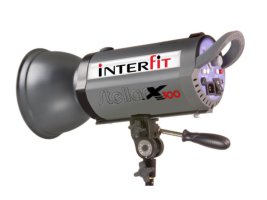
I just bought myself a pair of Interfit Stellar X150 lights, I know they are lower end older generation units but I don't think I need massively powerful lights for the primary task of lighting my workbench to make a time lapse of some work. They are in really good clean condition with a soft box and three brollies, stands etc and I got them for £165 which I feel is a reasonable price even with the one issue they do have.
These units are coated (on the handles and rear parts of the casing and the release catch for modifiers) in that rubber film similar to that on the EOS 300D grip which has gone sticky, possibly because the seller kept them (everything in the kit) in the original polyethylene bags.
On my 300D when that coating on the grip went sticky I sat for an hour or so and scraped it all off with my finger nails, this is not a feasible solution for the lights so does anyone have any thoughts on treating the sticky with something to reduce or preferably eliminate the tacky feel of the surface?
I had a fleeting thought of dusting talcum powder over the surface and then blowing the excess away with compressed air but this seems to pose the risk of getting talc inside the lights which might or might not be a problem! Also the silver reflective umbrella coating sticks to itself so this needs addressing too.
I have attached a picture of the Stellar X300 twice the power but the same series that I have so that you know which version I have.
I believe there are three 'marks' of the Stellar X150 and I have no idea if I have the earliest or latest version either!
Anyone care to offer their thoughts please?
Thanks in advance for your help.

Cheers, Graham.

Attachments

  • IMG_0284.jpg
    IMG_0284.jpg
    108.1 KB · Views: 236

Review: Canon EF 85mm f/1.4L IS USM by TDP

HTML:
<p>Bryan over at The-Digital-Picture has completed his review of the brand new Canon EF 85mm f/1.4L IS USM.</p>
<p><strong>From The-Digital-Picture:</strong></p>

<blockquote><p>While it will find use for many purposes (we will go looking for opportunities to use this lens), the Canon EF 85mm f/1.4L IS USM Lens is one of the best portrait lenses ever built. The 85mm short telephoto focal length is ideal for this use and the ultra-wide aperture combined with image stabilization permits those portraits to be captured handheld even in extreme low light situations. The fast Ring USM AF implementation ensures that the shallow plane of sharp focus lands where you direct it and the shallow depth of field diffusely blurs an even highly distracting background, making the subject stand out. The red ring indicating L-Series membership assures us that professional-grade build quality is included and that the image quality from this lens will be stellar. <a href="https://www.the-digital-picture.com/Reviews/Canon-EF-85mm-f-1.4L-IS-USM-Lens.aspx">Read the full review</a></p></blockquote>
<p>For $1599, I think you’re getting one heck of a lens from Canon.</p>
<span id="pty_trigger"></span>

Renting a lens for the Holidays -- need answer today!

I'm likely going to continue a fun tradition and rent a lens for my holiday travels.

2015: 35 Art
2016: 50L
2017: ???

(I generally live in 24-50mm on FF)

Let's riff on what to get this year. Must decide today for the 25% off at LR.

Body = 5D3

Must have AF.

Favorite stuff I shoot: walkaround, travel, life, hiking, candids, occasional macro and landscapes

Add to that list for this holiday season: family, Christmas light bokeh, informal portraiture (99% likely no flash), trips to museums, farmers' markets, etc.

Cross off that list for this holiday season: landscapes. The tripod never joins me this time of year with family.

Zero need (with this rental): sports, wildlife, long reach, huge zoom multiplier, teleconverter use, etc.

Annnnnnnnd: go! :D

- A

A question for 24-105 upgrade.

Hello all,

I would like to ask community's opinion on the following matter.

I have (among other) 24-105 4L IS which I use as a general purpose lens when I cannot carry a large selection of lenses (in the later case I would rather use 24-70 2.8L II)

I use it for landscapes and for internal building shooting (museums, churches).
I am thinking about upgrading it to 24-105 4L IS II for the better IS.

I have seen all comparisons and Canon's MTF diagrams so I understand that I do not get much of an optical upgrade.

The offer I got is a rather modest 350 euros. So forum members suggestions are more than welcome.

Do I have a risk of getting a slightly worse lens optically ?
I believe the two lenses seem more or less the same with very small differences.

Keep in mind that my copy seems just fine fully open with 5DMkIV although I did not
make specific tests, just judging from the results.

So based on the above would you upgrade it merely for the better IS for shooting museums and churches ?

Canon's New Tilt Shift Lenses Still Scheduled To Begin Shipping Next Week

HTML:
<p>We’re told by a couple of retailers that Canon’s new TS-E 50mm f/2.8L Macro, TS-E 90mm f/2.8L Macro & TS-E 135mm f/4L Macro are still scheduled to begin shipping in small quantities during the first week of December.</p>
<p>We have yet to see any in-depth hands-on previews or reviews for Canon’s latest tilt-shift lenses.</p>
<p>Anyone that has gotten their hands on any of the three lenses, please let us know what you think.</p>

<ul>
<li>Preorder: Canon TS-E 50mm f/2.8L Macro $2199: <a href="https://www.bhphotovideo.com/c/product/1354804-REG/canon_ts_e_50mm_f_2_8l_tilt_shift.html/bi/2466/kbid/3296">B&H Photo</a> | <a href="http://aax-us-east.amazon-adsystem.com/x/c/Qi85jzNe3jKs-zVQhFp8P_YAAAFf_bFXZwEAAAFKAQ5HMu4/https://assoc-redirect.amazon.com/g/r/http://www.amazon.com/Canon-2-8-2-8-Fixed-Digital-Camera/dp/B074VQ6SGK/ref=as_at/?imprToken=n0vg-r52UCBi2zMZbU2knA&slotNum=0&s=electronics&ie=UTF8&qid=1503979433&sr=1-1&keywords=2273C002&linkCode=sl1&tag=canorumo-20&linkId=cb8ec7b44c7330db08be9b92ec483ef1">Amazon</a> | <a href="https://mpex.com/canon-ts-e-50mm-f2-8l-macro-lens.html?acc=3">Midwest Photo</a></li>
<li>Preorder: Canon TS-E 90mm f/2.8L Macro $2199: <a href="https://www.bhphotovideo.com/c/product/1354805-REG/canon_ts_e_90mm_f_2_8l_tilt_shift.html/bi/2466/kbid/3296">B&H Photo</a> | <a href="http://aax-us-east.amazon-adsystem.com/x/c/Qi85jzNe3jKs-zVQhFp8P_YAAAFf_bFXZwEAAAFKAQ5HMu4/https://assoc-redirect.amazon.com/g/r/http://www.amazon.com/Canon-2-8-2-8-Fixed-Digital-Camera/dp/B074VPX4VD/ref=as_at/?imprToken=n0vg-r52UCBi2zMZbU2knA&slotNum=1&s=electronics&ie=UTF8&qid=1503979444&sr=1-1&keywords=2274C002&linkCode=sl1&tag=canorumo-20&linkId=52e439f0d8cb0184e88df0939f3732fa">Amazon</a> | <a href="https://mpex.com/canon-ts-e-90mm-f2-8l-macro-lens.html?acc=3">Midwest Photo</a></li>
<li>Preorder: Canon TS-E 135mm f/4L Macro $2199: <a href="https://www.bhphotovideo.com/c/product/1354806-REG/canon_ts_e_135mm_f_4l_tilt_shift.html/bi/2466/kbid/3296">B&H Photo</a> | <a href="http://aax-us-east.amazon-adsystem.com/x/c/Qi85jzNe3jKs-zVQhFp8P_YAAAFf_bFXZwEAAAFKAQ5HMu4/https://assoc-redirect.amazon.com/g/r/http://www.amazon.com/Canon-135mm-Fixed-Digital-Camera/dp/B074VGT17P/ref=as_at/?imprToken=n0vg-r52UCBi2zMZbU2knA&slotNum=2&s=electronics&ie=UTF8&qid=1503979419&sr=1-1&keywords=2275C002&linkCode=sl1&tag=canorumo-20&linkId=4a897711f9c7448aab3e576ec3dbb296">Amazon</a> | <a href="https://mpex.com/canon-ts-e-135mm-f4l-macro-lens.html?acc=3">Midwest Photo</a></li>
</ul>
<p> </p>
<span id="pty_trigger"></span>

SL2 / 200D: Question about battery drain / leak currents

Hi folks!

Having the 100D/SL1 I found it once again quite annoying that after about 2 or 3 weeks in the cabinet the once fully charged LP-E12 is sucked empty by some leak currents I have this question about the EOS 200D / Rebel SL2:

How well is that body behaving in this discipline (battery drain when turned off)?

Thanks in advance for sharing your experience.

Maximilian

Filter

Forum statistics

Threads
37,480
Messages
975,426
Members
24,816
Latest member
GLBDD

Gallery statistics

Categories
1
Albums
29
Uploaded media
372
Embedded media
1
Comments
25
Disk usage
1 GB