R6mkiii questions.

I just received my first mirrorless camera, and I would like to use this thread to post questions as they pop up. I do not have any SD cards at the moment, so I cannot play with the camera too much yet. I do have some micro SD cards and an adapter, but I discovered in the user manual that it was not recommended. Of course, "not recommended" is not the same as "DO NOT USE A MICRO SD", so I was curious if this is really something to not do, even if it is to just have the ability to take a few pics while I am waiting on the regular SD cards to arrive???

1764459193933.png

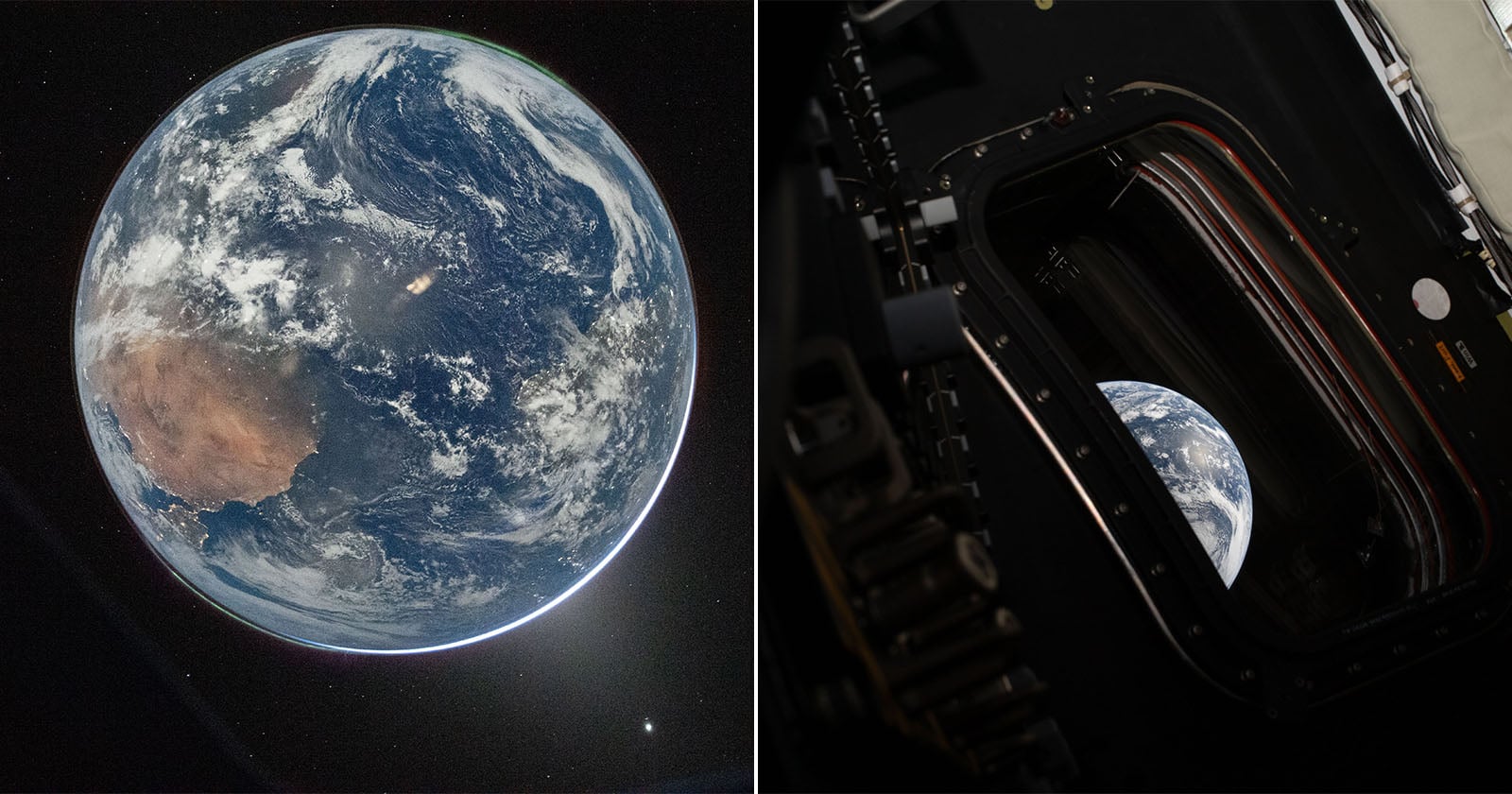
These Are Our Favourite Underwater Cameras

Underwater photography is a ton of fun. Whether you're snorkeling, SCUBA diving or surfing, it can add to the fun of whatever you're doing. While it is an extremely difficult photography discipline to get good at, it tends to keep people engaged over the long haul. You never know what you're going to see under the water. You can spend less than $500 for an action camera or go crazy and spend $10,000+ for an EOS R5 Mark II setup! I will touch on lighting a bit, but that is probably another article, there are way too many options and […]

See full article...

OMG, all possible lens choices are too good!

Isn't that the truth? I was quickly wiped out during the pandemic as far as gear goes. I haven't a single RF lens. On the positive side, I managed to hang on to my R body, Canon EF 135mm f\2L, Tamron 45mm, and dozens of very old M42 mount lenses.

I can add one new RF 'L' lens a year, starting next year. Yes, my R is old, but I haven't shot with it much and it takes wonderful still life and portrait photos. It's slow as heck, and an R6 Mark III is on the far horizon, but I want glass.

The RF 28-70mm f/2L is the obvious first choice for me. Then Canon releases that damned RF 24-105mm f/2.8L with internal focusing. #$@&!

My obvious second choice is the RF 85mm f/1.2L. Then the RF 50mm f/1.2L. Simple. Then Canon releases the VCM primes. UGH!!!!

It was far easier when there were a few known 'great' lenses for what the project required. It was easy to choose. Now, from where I'm sitting, we are very spoiled. Thank you Canon.

Canon Releases New Firmware for the EOS R1, EOS R5 Mark II, EOS R6 Mark III and more

Canon has released new firmware for the Canon EOS R1, bringing it up to version 1.2.0. The latest firmware update is more about bug and stability fixes than new features. Unfortuntaely, we still cannot bind pre-capture to a button. Why? Who knows, but we can keep wishing! I tend to wait a week or so […]

See full article...

Rumors continue to swirl around the Sony A7V

The rumormill is continuing to drip information regarding the Sony A7 V. Slowly, this is the latest camera in a long line of Sony's mid-level class full-frame mirrorless camera, which, like the R6 lineup, has grown up a lot over the years. Currently, according to SAR, the specifications include; The partially stacked sensor is a […]

See full article...

Canon Lens Acronyms and Abbreviations

Canon Lens Acronyms and Abbreviations is a long list that spans generations of lens mounts, systems, and eras. These acronyms and abbreviations identify decades of lens evolution, from the manual film era to today's hybrid mirrorless systems. This ended up being a lot longer than I thought, partly because I decided to add in Cinema.. […]

See full article...
  • Like
Reactions: 2 users

Canon EOS R5 Mark II: Firmware v1.2.0 Release

Today Canon released firmware 1.2.0 for the R5 Mark II - translated from Canon's Japanese site (https://canon.jp/support/software/os/select/eos/eosr5mark2-firm?pr=5977&os=159):

Firmware Changes
This firmware includes the following changes:
  1. The EOS Multi Remote remote shooting system for professional photographers is now supported.
    ※ For an overview of the EOS Multi Remote and instructions for use, please visit the Canon website.
  2. Fixed an issue where shooting with multiple exposures in a dark environment could cause the display image to be stretched or Err70 to occur.
  3. Fixed an issue where images could not be transferred to an FTP server and Err41 could be displayed.
  4. Changed format compatibility with some CFexpress cards.
  5. Other operational stability has been improved.
If the camera's firmware is already in version 1.2.0, you do not need to change the firmware. When changing firmware, please read this page carefully before using the download service.

Please update the firmware with only the firmware files to be updated on the memory card.

Note: In line with this functional improvement, the instructions for use have been revised. Please download and use it together with the new firmware. The latest instructions for use can be downloaded from our website.
  • Like
Reactions: 1 user

Anyone Using R7 or R8 For Pro Video?

Looking to swap out my m4/3 cameras for Canons for higher IQ and better AF performance. Are these two cameras reliable enough for paid work? Looking for an R8 for tripod use and R7 for handheld use. I've read they seem to have overheating issues, especially the R8. Has anyone experienced this in longer recordings? And will a clip-on fan solve this? Most of my jobs are indoors, but I do get occasional outdoor press conferences during spring/summer, so upper 80s on asphalt is the worst case scenario.

RF 15-35 f/2.8 L IS USM

I don't recall reading any rumors about an update for the RF 15-35 f/2.8. None, nowhere. Has anybody heard of anything about it?

The reason I ask? There is a 600$ rebate on this lens, and before letting myself be tempted by it, I'd like to know if I risk regretting this substantial purchase in the near future…

I own the old EF version of this lens, and I'm not sure if I'm still happy with it.
  • Like
Reactions: 1 user

45mm 1:1.2 just arrived

Difficult beast.

Tried a few test shots around close focus limit wide open.

Center focus only, no eye focus etc… Everything still manageable.

Eye focus enabled, pure chaos.

Once the AF misses it is a long and slow journey back to anything not blurry. Using the old 85mm 1:1.2 Mark1 is much faster and that lens was never a sprinter.


Otherwise, nice lens, feels somehow lighter that the RF 50mm 1:1.8 (which it is not)

Tiny front element compared to the backside.

I include 2 pictures for comparison

Attachments

  • 50 oq.jpg
    50 oq.jpg
    272.9 KB · Views: 23
  • 50 o.jpg
    50 o.jpg
    482.6 KB · Views: 23
  • 50.jpg
    50.jpg
    281.7 KB · Views: 23
  • Like
  • Haha
Reactions: 1 users

Sigma USB DOCK for Canon EF Discontinued

(For some reason it says I'm not logged on to post a comment under the Article but I did the requested Forum password reset and can post here...)

One thing to note about the Dock is it can be useful if you get a Sigma EF Lens to adapt to RF.

This can be a good idea as some are very reasonably priced, for example I see the EF 50mm f/1.4 Art can be had for £409 used in excellent condition (which is a larger but interesting alternative to the slightly more expensive 45/1.2 and its "classic" rendering):

However I have found (with my bought-new back-in-the-day) 50 Art that the RF IBIS doesn't work (at least on my R5ii) if the lens is set to Full Time Manual Focusing in its options, which you need a Dock to change. I should point out that when I found IBIS wasn't working I asked Sigma, and a little later they told me the answer, any connection between the two was not even vaguely obvious.

I bought my EF Dock used as it's a simple does-it-work question rather than a lens where you might want to check it a bit more... Though I notice MPB say it's out of Stock so used availability might be an issue, as people buy them if they have a suitable lens and presumably would either keep them or sell them with their last Sigma EF lens...

Katharine Burr Blodgett: Inventor of non-reflective coatings for glass?

She invented the technology that makes your glasses, cameras, and phone screens work. Her name was deliberately left out of history—until now.
In 1917, Katharine Burr Blodgett walked into the General Electric research laboratory in Schenectady, New York, and became the first woman ever hired there.
She was 18 years old.
The men in the lab didn't know what to make of her. Women weren't supposed to be in physics. They certainly weren't supposed to be brilliant at it.
Katharine was both.
But to understand how an 18-year-old woman ended up in one of America's most prestigious research labs, you need to understand what came before.
Katharine was born in 1898, just weeks after her father was murdered. George Blodgett, a patent attorney, was shot and killed in a home invasion robbery in Schenectady before his daughter was born.
Her mother, Katherine Burr Blodgett, refused to let tragedy define their lives. She was determined that her daughter would have every educational opportunity—even in a world that told women their only career was marriage.
Young Katharine was brilliant. Frighteningly brilliant. She excelled in math and science when girls were told those subjects would damage their delicate brains.
At 15, she graduated from high school. At 17, she finished Bryn Mawr College—one of the few colleges that would even admit women. She graduated with a degree in physics when most physics departments wouldn't allow women through the door.
Then she did something audacious. She applied for a job at General Electric's research laboratory.
The lab director was Irving Langmuir, who would later win the Nobel Prize for his work on surface chemistry. When he met Katharine, he saw something the rest of the world was trained to miss: genius has no gender.
He hired her on the spot.
She was the first woman ever employed in GE's research lab. The first woman to work alongside the men who were inventing the modern world.
But Langmuir knew she needed more than a job. She needed credentials that would make it impossible for the scientific community to dismiss her.
He told her to go to Cambridge University in England and get a Ph.D. in physics.
In 1926, Katharine Burr Blodgett became the first woman ever to earn a doctorate in physics from Cambridge University.
She was 28 years old. And she was just getting started.
She returned to GE and began working on a problem that had frustrated scientists for decades: reflection.
Every surface that interacts with light—glass, lenses, mirrors—reflects some of that light back. This creates glare. Distortion. Lost clarity.
For telescopes, it meant dimmer images. For cameras, it meant hazy photographs. For eyeglasses, it meant distracting reflections. For cinema projectors, it meant less vibrant films.
Katharine wondered: what if you could eliminate reflection entirely?
Working with Langmuir, she developed a revolutionary technique. She discovered that by depositing ultra-thin molecular layers onto glass—layers so thin they were only a few molecules thick—she could manipulate how light behaved on the surface.
If you layered these films precisely, the reflected light waves would cancel each other out through destructive interference.
The result? Glass that didn't reflect. Glass that appeared almost invisible.
She called it "non-reflective coating."
The world had never seen anything like it.
In 1938, when she perfected the technique, she held up a piece of coated glass and photographers couldn't capture it on film—it was so non-reflective that cameras couldn't see it properly. The images showed what looked like empty space where the glass should be.
She'd made glass invisible.
The applications were immediate and revolutionary. Eyeglasses with her coating eliminated glare, making vision clearer. Microscope lenses could magnify with unprecedented clarity. Telescope lenses could capture fainter stars. Camera lenses produced sharper photographs.
Cinema projection improved dramatically—audiences watching movies in the 1940s and 50s were seeing Katharine's invention, though almost none of them knew her name.
During World War II, her work became critical to the military. She developed improved methods for detecting submarines. She created better de-icing techniques for aircraft wings. She improved smoke screens that saved lives.
By the end of her career, she held eight patents. Her techniques became foundational to modern materials science. The Langmuir-Blodgett film deposition method—named partially for her—is still used today in nanotechnology and advanced materials research.
Your smartphone screen uses her technology. Your anti-glare glasses use her invention. Every precision optical instrument from microscopes to space telescopes builds on her work.
She revolutionized optics. And history almost forgot her name.
Because she was a woman in science, her achievements were consistently attributed to her male colleagues. Langmuir received the Nobel Prize—deservedly, for his own work—but Katharine's contributions were minimized or ignored.
When she was recognized, it was often with surprise. As if brilliance in a woman was an anomaly rather than evidence that women had always been brilliant—just systematically denied the opportunity to prove it.
Katharine never demanded the spotlight. She wasn't interested in fame. She was interested in clarity—in glass, in science, in understanding how the world worked at its most fundamental level.
She worked at GE for 44 years until her retirement in 1963. She never married, dedicating her life to research.
She died in 1979 at age 81. Her obituaries were brief. The world moved on quickly, forgetting the woman who'd made the world clearer.
But every time you put on glasses without glare, you're using her invention.
Every time you take a photograph with a clear lens, that's her legacy.
Every time you watch a movie projected crisply on a screen, you're seeing her work.
Every woman who walks into a physics lab and is told "you don't belong here" is walking through a door Katharine Burr Blodgett already opened.
She was 18 years old when she became the first woman hired at General Electric's research laboratory in a building full of men who didn't think women could do physics.
She invented technology that changed how humanity sees the world.
And for decades, history couldn't see her.
But now we do.
Now we remember that every barrier broken makes the next one easier to break.
That every woman told "you don't belong" who succeeds anyway creates possibility for the next generation.
Katharine Burr Blodgett made glass invisible.
History tried to make her invisible too.
We're bringing her back into focus.
  • Like
  • Love
Reactions: 4 users

DJI Neo 2: A Smarter, Safer Drone for Beginners

DJI has just introduced the Neo 2, a new model of its compact Neo 2 drone designed for beginners that is targeted at making aerial videography more mainstream. Weighing in at 151g, the Neo 2 is DJI's lightest model equipped with omnidirectional obstacle detection. The Neo 2 is also equipped with video features, improved wind […]

See full article...

Filter

Forum statistics

Threads
37,274
Messages
967,001
Members
24,634
Latest member
Mcsnows

Gallery statistics

Categories
1
Albums
29
Uploaded media
353
Embedded media
1
Comments
25
Disk usage
982.4 MB