• The Canon Rumors Forum has officially been shut down as of July 10, 2026.

    All data will be deleted on September 16, 2026.

    the ad free experience will return by July 17, 2026.

In praise of the 40mm f/2.8 STM

I came across a review of the Sony FE35mm f/2.8 that said it was a great lens... for the "very reasonable" price of $799. That's a lot of money for a zeiss logo. And my thoughts immediately went to my Canon 40mm f/2.8 STM. It's also a great lens with a very reasonable price. We don't even need to bring the 35mm/is into it, and that it's both faster and cheaper than the Sony.

One of the mirrorless arguments is for small form factor. And Pentax have their pancake lenses, which I used for some years with their noisy screwdrives. But I think the Canon is the best of the bunch in terms of quality, form factor and price. When I put the 40mm on my lightweight if a little bulbous 6D, I can easily put it in a waist pack, or dangle it from my hand for hours on end. Add the Voigtlander 20mm and it's pancake heaven. I think the little 40 should get more respect.

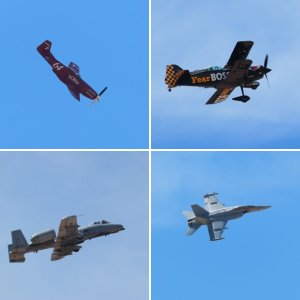
IMG_1983-L.jpg


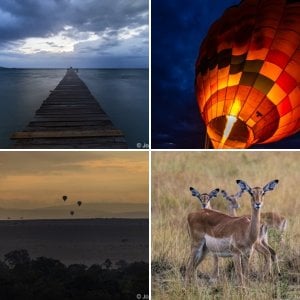
IMG_2476-L.jpg


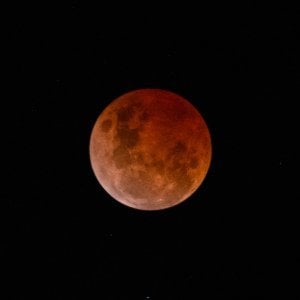
IMG_0913-L.jpg


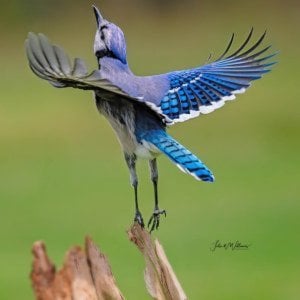
IMG_1512-L.jpg

Sony - Question of a Differing Variety

Anyone happen to have a technical answer for why there isn't an EF to FE mount smart adapter that allows for usable autofocus speed and accuracy?

The reason I ask is because I own a Zeiss Contax N mount 50/1.4 that has been modded by Conurus (one of the main players at Metabones) which autofocuses very well on all my Canon bodies. This would lead me to believe that Conurus is significantly tapped into the Canon AF protocols somehow. However, every generation of the Metabones smart adapters for EF to FE so far have not been up to par with speed and accuracy of AF.

Second question is, anyone think that it might be easier to accomplish with the A mount bodies?

Hoping someone here has an explanation for this.

If it were possible at some point to get usable performance with adapted EF lenses, I think full transitions into the Sony ecosystem would be much more painless especially with some of the new features being offered in the latest body announcements.

Studio Light Power Question?

So, I have have two Bowens 500R studio lights. They are rated at 15Ws-500Ws over 5 stops. But what exactly does that mean?

To me I'm guessing that every time a turn it up a stop, it doubles the Ws - but I might be wrong. I would think that it actually has 6 stops which go as follows:

1 - 15Ws
2 - 30Ws
3 - 60Ws
4 - 120Ws (roughly 125)
5 - 240Ws (roughly 250)
6 - 480Ws (roughly 500)

I should also note that I have two dials:

The first is for complete stops (1-5)
The second is for 1/10th stops (0-1)

It actually goes up to 6 (the full stop dial turned to 5, and the 1/10 dial turned up to +1.0), so did Bowens list that incorrectly?


THEN, that leads to my next question - how much dimmer are the 400W and 250W lights? Is the 400W less that 1 stop at full power compared to the 500W, and is the 250W exactly one stop less than the 500W at full power?

I only ask because I'm looking to get a two more lights, and I want to keep my options open. Thanks.

DPReview: EOS 7D Mark II Shooting Experience

HTML:
<p>DPReview has added their “shooting experience” to their first impression review of the Canon EOS 7D Mark II. As I have found, the camera has some ergonomic upgrades over the original EOS 7D.</p>
<p><strong>From DPReview</strong><em>

“As an owner of the original EOS 7D, I was excited to try the Mark II edition of what has, for me, been a robust and reliable tool. The original 7D was a solidly built camera; mine has suffered through more incidents of dropped packs, collisions with rocks, and general abuse than I care to admit publicly. Admittedly, as a five year old model it’s getting bit long in the tooth, but I still don’t hesitate to pull it out for the right project.</em></p>
<p><em>The Canon EOS 7D Mark II feels just as solid as the original, if not more so. The first time you pick it up you realize this is a camera that’s been designed to get used, and get used a lot. I felt no qualms about taking it anywhere, and throughout my use it endured bumps, bangs, and a few rather wet moments (courtesy of our Seattle rain) with aplomb.”

</em></p>
<p><strong><a href="http://www.dpreview.com/previews/canon-eos-7d-mark-ii/8" target="_blank">Read the full article</a></strong> | <strong><strong><strong>EOS 7D Mark II: <a href="http://www.bhphotovideo.com/c/product/1081808-REG/canon_9128b002_eos_7d_mark_ii.html/bi/2466/kbid/3296" target="_blank">B&H Photo</a> | <a href="http://www.adorama.com/ICA7DM2.html?KBID=64393" target="_blank">Adorama</a> | <a href="http://www.amazon.com/gp/product/B00NEWZDRG/ref=as_li_tl?ie=UTF8&camp=1789&creative=390957&creativeASIN=B00NEWZDRG&linkCode=as2&tag=canorumo-20&linkId=4IHYPE3ZKJN5VL4X" target="_blank">Amazon</a></strong></strong></strong></p>
<p><strong><span style="color: #ff0000;">c</span>r</strong></p>

Shoot first, focus later: Light-field photography

"Light-field photography is the future" - or is it?

Here are two reviews on the new Lytro Illum, still seem to be work in progress, but an interesting concept. And you can emulate a f1.0 lens :-)

German: http://www.spiegel.de/netzwelt/gadgets/kameras-lichtfeldkamera-lytro-illum-im-test-a-1000246.html
Foreign: http://www.theverge.com/2014/7/30/5949913/lytro-illum-review

What do you think: Is old-school single-dof photography doomed?

lytro-illum-2.jpg

Profoto B1 vs. Phottix Indra

Does anyone here own a set of Profoto B1 lights? How do you like them? How well does the built-in diffuser work? How long does the battery last? I'm debating between the B1s and the Phottix Indras. The players:

http://www.bhphotovideo.com/c/product/1009783-REG/profoto_901094_b1_500_airttl_monolight.html

http://www.bhphotovideo.com/c/product/1089949-REG/phottix_indra500_ttl_studio_light.html

I know there is a huge price difference between the two, but the convenience of having the battery packs, wireless triggers, and reflectors built into the heads on the Profoto lights is very appealing, especially for shoots that involve changing locations several times, which means setting up the lights several times. The Indras have a separate battery pack and reflectors, so that's more setup time and cords to trip over. One advantage of the Indras is that they have HSS, which the B1s do not, but I don't see that being too useful for my needs.

My primary objective is trimming down on the amount of gear I have to lug around in the field, as well as cutting down on the setup time. I'm currently using three White Lightning heads triggered by a Phottix Odin/Strato combo. Between the lights, cords, battery packs, reflectors, and triggers I need a big ass Pelican case to fit it all in. In contrast, two B1 lights will fit in a small backpack. I can see myself using the B1s in situations and locations where I would have never bothered with the White Lightnings due to their size and the hassle of setting then up, choosing instead to limp around with Speedlites. Not having to attach the battery packs, power cords, reflectors, and triggers will save me 15 minutes in setup time and 15 minutes in pack-up time each and every time.

For those who traded in their 7D for the 7Dmk2

Hello All,
I've used my 7D for five years and other than the high ISO noise issue, I've been very happy with it's performance. In particular when shooting birds with my 400 f5.6.
I see from the specifications that the mk2 is mostly an incremental increase in performance, ie more Af points, more FPS, slight improvement in high ISO IQ etc.
For those of you who have made the jump from 7D to the mk2, could you enlighten me on the areas where you have noted a major improvement and areas which have fallen short of expectation. Please comment on IQ, handling, features and durability.
I'm about to buy mine and really hope it will be a change without reservation.

Thank you.

Upcoming trip to the US Southwest -- gear and sightseeing guidance appreciated

All,

next month I'm off for a vacation road trip with my girlfriend through Arizona to Santa Fe, NM and I'd love some gear and sightseeing advice.

Note:

  • Unlike past trips where I could carve out some solo photography time and shoot some landscapes or macro work, we'll be together for almost all of the trip. So the big GuraGear bag is staying at home and I'm planning on bringing a more modest kit.

  • On vaca, I shoot a little bit of everything -- walkabout, street, hiking, landscapes and macro. 95% of the time, I'm an available light shooter.
  • The full gamut of temperature we'll see could run from 15F to 60F. So there will be plenty of large temp transitions where my gear will jump into and out of the cold.
  • We'll be staying in hotels -- no need to plan for overnights outdoors.

I have two burning questions:

1) If you've been to or live near the Flagstaff - Albuquerque - Santa Fe neck of the woods, what are the must-sees or must-dos? I don't just mean great vistas for photography -- what's fun to see, do, or experience out there? If it helps, we are in our 30s and we're into food, beer, hiking (medium level, day-hikes only), art, film, music, history, local culture, and odd places.

2) Of all my gear (listed below) -- and considering the four bullet points up top -- what would you bring and why? My gut (just off the cuff) is on bringing the bold items below.

  • 5D3
  • 28 f/2.8 IS
  • 40 f/2.8
  • 50 f/1.4
  • 100 f/2.8L IS
  • 16-35 f/4L IS
  • 24-70 f/4L IS
  • 70-200 f/2.8 IS II
  • 90EX Speedlite (tiny emergency flash if the need arises, works fine on the 5D3 with standard FLs)
  • 600EX-RT Speedlite
  • Tripod, ball head, cable release, sand bag, etc. (Small Gitzo traveler (1542T) and an Arca head (z1/dp)
  • Standard filters - UV, CPL, etc.
  • Landscape filters - Lee 100 system, ND grads, Big Stopper, 105 CPL, etc.
  • Ziplocks and desiccant for coming from the cold
  • Batteries, chargers, yadda yadda
  • Rain covers
  • Monopod

So? Thoughts?

As always, I appreciate the advice -- you folks have been gold on prior trips.

- A

REVIEW: Canon 7D2 For Events? Perhaps...

I do a lot of event photography here in Denver; pretty much anything from conventions, conferences and lectures, to music and concerts, and everything in between. I know some people have been un-thrilled with the detail the 7D2 gives them in their bird/wildlife photography, but oddly enough, I think the 7D2 is a perfect companion to a 5D3 for events.

The ISOs and the extra reach (especially when you're forced to shoot from the back of a room), are incredible. I essentially got double the megapixels from the 7D2 (compared to the 5D3).

Here's a quick review and image comparo of an event I photographed last week.

https://www.youtube.com/watch?v=3J3pS1-9fn8

PS: For those wondering why I picked 100mm as my point of comparison... I would've much preferred to compare 200mm between the 5D3 and 7D2, I just don't have two 70-200 lenses! Also, the room just wasn't big enough to justify 200mm on the 7D2, but hopefully, you get the point about cropping (images) vs. reach.

Sending my 7D2 back due to high ISO noise

I received my 7D2 last Thursday and immediately set out for wildlife to photograph. My primary interest is wildlife photography and I spend one hour in a park every day before going to work. I currently use a 5D3 with a 200-400/1.4x and a 6D as my backup body (mainly for landscapes).

Going in I expected ISO 1600 on the 7D2 to be roughly the same as ISO 3200 on my 5D3. On my 5D3 at ISO 1600 I can still count the feathers on a bird, while at ISO 3200 the feather detail begins to break down but the image is still usable for most purposes.

What I found was that on the 7D2 there was still a noticeable lack of detail at ISO 1600 compared to ISO 3200 on my 5D3. Even worse, when I went down to ISO 800 there was still noticeable noise, though the images were certainly usable. This morning I spent some time photographing identical subjects with the two, and I came to the conclusion that the 7D2 simply would not work for me.

I am glad I bought it at unique photo - who said they'll take it back as long as the box is in good condition. I had hoped this would give me a bit more extra reach, but again I found myself learning the painful lesson of cropped sensors. Instead I intend to wait and see what Canon does with the 1Dx2.

Unfortunately my sample images are not up, but you can get an idea from this one (ISO 400).
Predator by CalevPhoto, on Flickr

Hand on tested Canon EF 24-105mm f/3.5-5.6 IS STM on a 7D mark II & 6D AF lock

i've been looking for quick hand mid zoom sine moving from a eos 3 to T4i to 70D to 6D.

The 24-70mm f2.8 Tamron i got at the same time as the 6D is pretty but for a burlesque, band or belly dancer shows it's zoom ring too tight too slow. Canon EF-s 17-55mm f/2.8 IS USM was nice but it's a EF-s

Canon EF 24-105mm f/4L IS USM = better but spongy and so thin and far back to the body

Canon EF 24-70mm f/4L IS USM = better but even more so with being too thin and far back to the body

Canon EF 24-70mm f/2.8 USM II = even at $1800+ well

Canon EF 40mm f/2.8 STM = looked nice but i herd AF lock was slow so i put some hope into the Canon EF 24-105mm f/3.5-5.6 IS STM .

last 3 years Canon DXO marks stats seem nice other than the EF-S-STM lenses and all Canon lenses ive had on anything as new as T4i to 70D AF lock in the dark for me has been good

so it was crazy to find a Canon EF 24-105mm f/3.5-5.6 IS STM at the locale shop to play with last week.


i Found Canon EF 24-105mm f/3.5-5.6 IS STM over the f4 L lens's on a 6D is 2X - 3X faster (on the 7D mark II 4X -5X) to lock on to a target with AF and 40% or more to times able hit it right in focus with changing target to target and zooming in and out back and forth (on the 7D mark II too good to say). zoom ring is very good for smooth but fast finding targets And shots.

i feel if it's better than the Canon EF-s 17-55mm f/2.8 IS USM with the image IQ and dose not suck dust in as it zooms this will a good close action lens leaving my Tamron for non-flash-low-light and posed shooting.

some reason there's no real tests or reviews on the Canon EF 24-105mm f/3.5-5.6 IS STM and it being the 2nd FF STM lens and the 6D a STM body and find it having the fastest AF i've ever seen AND that i could buy it in store over a week and a half ago odd

i'll take it if

Sharpness 12P-Mpix or more
Transmission 4.3TStop or lower
Distortion 0.4% or lower
Vignetting -1.6EV or lower
Chr. aberration 10µm or lower. all.

Has anyone done ISO comparison with their 7d Mark II and the 5D Mark III ?

Just curious, I have seen that several 7D Mark II owners have stated that they also own the 5D Mark III.
Has anyone done any "higher" ISO, starting at say 1600?
If so , can you post the results?
I am at the point of making a purchase, to upgrade my 7D, and love the APS-C reach for shooting Airshows etc.

I know the argument that Full Frame is "Always Better", but really curious to compare the 5D M III with the new 7D MII as reasonably higher ISO's.
Thanks

Samyang/Rokinon 24mm f/3.5 Tilt-Shift Review (Text + Video)

Hello, all. I will be releasing a series of reviews over the next month or so. Up first is the Samyang Rokinon 24mm f/3.5 Tilt-Shift.

Text Review: http://bit.ly/1xPLbAo
Video Review: http://bit.ly/1qs5RPi
Sample Gallery: http://bit.ly/1vsNH1N

Larch Season by Thousand Word Images by Dustin Abbott, on Flickr

Reviews in the pipeline: Sigma 50mm f/1.4 ART (next week), Zeiss 50mm f/1.4 Planar T, Metz 64 AF-1 flash units, Vanguard ABEO Pro 283AT + GH-300T head, Zeiss Otus 85mm f/1.4, Canon 24-105mm f/3.5-5.6 STM, and Zeiss 50mm f/2 Makro-Planar.

Sony does it again, A7 II with 5-axis in-body stabilization

NOW we're getting somewhere! A machine like this will temp even me to try out a Sony body... with lots of lens adapters.

www.sony.jp/ichigan/products/ILCE-7M2/

translated at SAR forum:

www.sonyalpharumors.com/sony-a77i-officialy-announced-in-japan/

for those who haven't experienced IBIS in a Pentax or Olympus body, it can work very well. Makes nearly every lens you have stabilized, even classic old primes.

This is a product I wish Ricoh-Pentax would have put out... 2 years ago.

Higher-end A-9 model still rumored for early 2015, Hmmm...

70-200 or 100-400 conundrum.....

I apologize now, as this question has probably been asked many times. I am looking at getting a new zoom lens, I currently have the 5dMKIII, 24-105 kit lense and the 100mm macro

I am thinking of either the iconic 70-200 f2.8 (with either 1.4X or 2x convertor), or the new 100-400

Now, this is just a hobby for me and I take an assortment of pictures, landscapes, few portraits etc, but I would like someting with a bit more reach to start taking wildlife i.e. birds etc, the occasional BIF

I like the thought of the f2.8 on the 70-200…and also the range 70-400 (if you include the convertor) this gives me flexibility as I will not always be taking wildlife pic’s

But, the new 100-400mm has thrown something new into the mix and the thought of all that reach is tempting, but with f4.5 – f5.6 this would be make it mostly an outdoor lens

i know there is the 300, f2.8 prime, but this is only a hobby and i cannot justify the big $$$

So, If you had the option what lens would you go with, ?

Really bad GAS

The GAS is so bad today that I thought I needed to call a gastroenterologist! The pain started when I received my Canon evaluation loan today, a 300mm f/2.8L II. The attached x-rays, I mean pictures, summarize the pain. The image, in both full and cropped version, was shot right out of the shipping box on a 5d III with a 1.4x teleconverter. I have been looking hard at a 400mm f/2.8 II, but I do believe this prescription, I mean lens, may take care of my GAS for a while. A lot of money, probably more than it would cost to check out normal gas symptoms by the gastroenterologist. But, this lens will be a lot more fun than a colonoscopy, so well worth the $$.

Attachments

  • Full.jpg
    Full.jpg
    1.1 MB · Views: 270
  • Beck_20141119_JI6A6941-2.jpg
    Beck_20141119_JI6A6941-2.jpg
    474.2 KB · Views: 244

fast f-numbers

A recent article from Petapixel about the fastest f-number theoretically possible inspired me to make the following observations about the relationship between f-number and light-gathering ability.

Recall that the f-number is defined as the ratio of the distance between the image plane and the exit pupil, to the diameter of the exit pupil. For an idealized thin lens, this is equivalent to the focal length divided by the aperture diameter.

Also familiar to most of us is the idea that light-gathering ability doubles for each full stop increase in speed; i.e., f/1.4 gathers twice as much light as f/2, which in turn gathers twice as much light as f/2.8, etc.

When I read the Petapixel article and the commentary therein, it seems that this doubling/halving notion of full stop increments was overlooked and not fully understood. That is to say, while this relationship between f-number and light-gathering ability is true at relatively slow f-numbers, it is most certainly NOT true at fast f-numbers, because it is an approximation. f/0.5 is not, strictly speaking, twice as fast as f/0.7, nor is f/0.35 twice as fast as f/0.5, even though the area of the pupil is twice as large.

The true light-gathering ability of a lens is measured not by the f-number but by the square of the angle of incidence of the marginal paraxial rays to the optical axis. If we think of a light source at infinity, its rays enter the lens (which is also focused at infinity) parallel to the optical axis. Off-axis rays get refracted to form an image of the light source, and the angle of the cone of light that forms that image point determines the intensity.

In the small-angle case, the tangent of the angle is a good approximation of the angle itself: theta = tan theta for "sufficiently small" theta. But if the angle is large--as in the case of very fast lenses--this approximation breaks down, and we can no longer use the f-number as a reliable indicator of how much light is being gathered. For example, compared to f/1.0, an f-number of f/0.7 is only 1.76 times brighter; f/0.5 is only 1.63 times brighter than f/0.7; and f/0.35 is only 1.48 times brighter than f/0.5. Of course, it is extremely rare to see even the first case, and we certainly don't see the others, but in the theoretical discussion of the fastest possible lens, it is important to point out that even a theoretical f/0 lens (for which the lens diameter is infinitely large, and the marginal rays somehow manage to make a 90-degree refraction and strike the image plane with no loss), the light-gathering ability is finite. f/0.35 does not get us 32 times the light-gathering ability of f/2, but only about a 15x increase, even assuming an ideal lens and sensor. And this is even true at slower f-numbers, though to a much smaller extent: f/1.0 is really only 13.9x as bright as f/4, not 16x brighter as you would expect just by counting full stops.

70-200 f/2.8L IS II USM - Loud noise from IS

I had to send my lens in for a minor issue. After it came back, I noticed that the IS seemed surprisingly loud. I had never heard the IS system before on that lens (at all), but I've not owned it for very long, so I've considered the possibility that was never in a quiet enough environment to hear it until yesterday.

It sounds sort of like the noise your computer hard drive makes with the motor that controls the read/write head - except, it's louder than your average HDD.

I don't hear anything banging against the sides of the lens barrel, just this loud motor noise. I hear it once when I half press the shutter release, and again about a second or two after I've released the button and the shutter has closed. There is no noise aside from the AF ring motor during the period in between each of the sounds.

I did some reading on this forum and others and I've seen a split - some claim that it's abnormal and that there copy makes no noise, while others claim that their 70-200 IS II is one of the loudest lens they own and operate. I found at least one thread with somebody posting what sounded like a similar sound to mine, except they were also claiming that their copy was exhibiting a ratcheting type sound too. Mine is not.

I called Canon's repair center in Virginia, where I'd sent the lens for the repair, and they claim that this model lens does make a decent amount of noise with the IS system and that unless I hear "clunking" - I shouldn't worry... BUT... they would be happy to get me a prepaid shipping label if I wanted to be sure, so they started a case number just in case I wanted to send it in to get checked.

Before I pack the lens up and send it off again, which I'd rather not do unless I should, I wanted to ask here first and get some opinions and advice from other owners of this lens.

Filter

Forum statistics

Threads
37,480
Messages
975,426
Members
24,816
Latest member
GLBDD

Gallery statistics

Categories
1
Albums
29
Uploaded media
372
Embedded media
1
Comments
25
Disk usage
1 GB