First time SLR user looking for advice on lenses/accessories

Hi Guys,

I'm looking to pick some of your expertise with regards to what lenses and/or accessories you would recommend for a new SLR user. I recently bought a 700D, partly in anticipation of my trip to Iceland later on this month. At the moment I just have the standard 18-55mm IS Lens that came with the camera, and am looking for some tips on what can help me take some great photos while I'm away.

I've been recommended getting a UV filter and a gradient filter - although I am unsure what benefits these would bring and how the quality of the third party filters that seem to litter amazon/ebay stands up? As far as I understand it they would help 'sharpen' the image and dampen any glare (something I imagine there will be a fair amount of in Iceland).

Is there anything you would consider a vital accessory that is easy to get to grips with as a novice?

Many thanks :)

Have there been any reported issues related to the 70D ?????

I have used a 1D Mark IV since it was introduced as my primary body and have always loved it. Mid last year, I acquired a 5D Mark III and over time have turned to it more and more, to the point that it has now pretty much become my primary body. I simply love the files it produces.

I shoot primarily motocross during the spring and summer months and mostly birds and other wildlife during the off season. In addition to that, I shoot pretty much what everyone else does such as landscapes and people.

I am now contemplating selling off the 1D Mark IV and replacing it with a crop body which I would use for backup. I'm looking at the 70D as I have read good things about the camera.

Question..... is anyone aware of any particular issues reported related to that camera?

I would appreciate any input.

Funny street signs and billboards

Starting off with some Thursday humor inspired by Don Haines' post in the "let's get it on" thread here: http://www.canonrumors.com/forum/index.php?topic=19636.msg369848#msg369848.

I had some business in Austin today and on my way I always pass this billboard and it cracks me up. Nothing artistic about this, but I do find it funny that Rob Zombie could represent me in a court of law.

:)

Attachments

  • Komie.JPG
    Komie.JPG
    616.8 KB · Views: 489

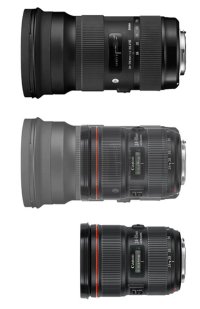
Canon EF24-70mm f/2.8 M2 vs Sony Zeiss 24-70 on Sony a7R body

I was always interested to know what is the resolution power limit of Canon EF24-70mm f/2.8 M2 combined with the high resolution body and how this compares to similar lense type from different vendors.
On Canon 1DX this is just perfect piece of glass.

Few days back I received Matabone III adaptor which gave me ability to mount Canon lenses on Sony a7R body.
With that I was finally able to test Canon EF24-70mm f/2.8 M2 on 36mpx Sony a7R body.
As result there is also comparison of image quality between Canon EF24-70mm f/2.8 M2 and Sony Zeiss 24-70 f/4 OSS.

There are two 100% crops at 24mm focal lens and two 100% crops at 70mm focal lens.
All shots are done hand held using camera autofocus.
Focus speed of Canon EF24-70mm f/2.8 M2 with Matabone III is very slow - few seconds of hunting and searching for focus peak.
Sony Zeiss 24-70 f/4 OSS focuses almost instantly.

RAW files from Sony a7R were process using Phase One Capture One with default settings, no adjustements at all

Test results demonstrate that Canon EF24-70mm f/2.8 M2 is much superior to Sony Zeiss 24-70 f/4 OSS in resolution and color reproduction and overall image quality . Especially this is noticable at 70mm focal length .
From test pictures it is obvious that even on 36mpx Sony a7R body Canon EF24-70mm f/2.8 M2 still does not reach it's limit in resolution power. This combination is perfect one when focus speed is not important.
On the other end Sony a7R with Sony Zeiss 24-70 f/4 OSS is a fairly good combination as general purpose walk-around point and shoot camera.

I also tested Canon TSE 17 on a7R and image quality , color rendering and resulution is also of top possible quality.
It seems that Canon TSE 17 the same as Canon EF24-70mm f/2.8 M2 still does not reach it's resolution power limit on a7R
Canon TSE 17 on Sony a7R looks as perfect combination for Architecture and Landscape photograpy.

Attachments

  • a7R with Canon EF24-70_FL24_Ap4_ISO100_crop100%.jpg
    a7R with Canon EF24-70_FL24_Ap4_ISO100_crop100%.jpg
    758.4 KB · Views: 2,086
  • a7R_Sony24-70_FL24_Ap4_ISO100_crop100%.jpg
    a7R_Sony24-70_FL24_Ap4_ISO100_crop100%.jpg
    705.8 KB · Views: 2,131
  • a7R_with Canon 24-70_FL70_Ap4_ISO100_crop100%.jpg
    a7R_with Canon 24-70_FL70_Ap4_ISO100_crop100%.jpg
    684 KB · Views: 1,886
  • a7R_Sony24-70_FL70_Ap4_ISO100_crop100%.jpg
    a7R_Sony24-70_FL70_Ap4_ISO100_crop100%.jpg
    635.2 KB · Views: 1,848

DXOMark: The Latest Sigma 18-200 OS is the Best Superzoom for Canon APS-C

HTML:
<div name="googleone_share_1" style="position:relative;z-index:5;float: right; /*margin: 70px 0 0 0;*/ top:70px; right:120px; width:0;"><g:plusone size="tall" count="1" href="http://www.canonrumors.com/?p=16281"></g:plusone></div><div style="float: right; margin:0 0 70px 70px;"><a href="https://twitter.com/share" class="twitter-share-button" data-count="vertical" data-url="http://www.canonrumors.com/?p=16281">Tweet</a></div>
<p>DXOMark has completed their review of the Sigma 18-200 f/3.5-6.3 DC Macro OS HSM lens for Canon. They’ve compared it to other superzooms from Canon itself as well as Tamron and found the Sigma to be the best performer. On top of it being the leader in its class, this new lens actually costs less than the lens it replaced.</p>
<p><strong>From DXOMark:

</strong><em>“Sigma’s cosmetic revamp of the exterior and revision of the optical construction has resulted in a lens that not only looks classy but also produces results superior to rivals including those from Canon.</em></p>
<p><em>A reduction in weight and size, albeit only slight makes this all the more tempting for travel, while the enhancement in sharpness and optical performance generally at the longer focal lengths is particularly valued in zoom like this. Although this has led to a certain amount of compromise with the performance at the wide-end, retaining the modest price of its predecessor the Sigma easily impresses.”</em></p>
<p><strong><a href="http://www.dxomark.com/Reviews/Sigma-18-200mm-F3.5-6.3-DC-Macro-OS-HSM-C-Canon-mount-lens-review-Worthy-upgrade" target="_blank">Read the full review</a> | <a href="http://www.bhphotovideo.com/c/product/1023565-REG/sigma_885_101_18_200mm_f_3_5_6_3_dc_macro.html/bi/2466/kbid/3296" target="_blank">Sigma 18-200 f/3.5-6.3 DC OS $399</a></strong></p>
<p><strong><span style="color: #ff0000;">c</span>r</strong></p>

Sigma 50mm f/1.4 ART tests published on slrgear

they traded a little overall sharpness for improved micro-contrast
the test-bench result here looks pretty good.

http://slrgear.com/reviews/showproduct.php/product/1677/cat/30

smooth bokeh also a goal for Sigma's 50mm f/1.4 Art lens

See about 2/3 the way down in this dpreview interview, or just search for "onion"

www.imaging-resource.com/news/2014/04/02/sigma-qa-part-i-ceo-kazuto-yamaki-explains-why-so-few-pentax-mount-lenses

I hope this makes Zeiss blush.

EOS 1D X Issue with Orientation Metadata?

I am having an odd issue with my 1D X - RAW photos shot vertically are rotating in the camera, in Windows Explorer, and Google's previews, but NOT in DxO 9 or Adobe PhotoShop CC. In camera JPEGs rotate normally in DxO and PS, but not CR2 files. It's not a big deal, but it is mildly annoying given that the last 10+ cameras I've owned all seem to tag the metadata correctly so that all applications automatically rotate portrait orientation tagged files.

Has anyone else had this issue? Did it start in the new firmware perhaps?

EF 24-70 f2.8L II Shutter Speeds

Long ago, before IS lenses, I developed good habits for holding a 35 steady. I had too, since I was always pushing the limits of ASA 400 Tri-X and using relatively slow shutter speeds for candids. But, with a DSLR, I've grown quite accustomed to using IS lenses. For the past two years, the 70-200 f2.8 II has been my most used lens, supplemented by the 24-105 f4 during the past year. Both are used on 5D3 bodies.

With last week's sales and rebate, I took the plunge and ordered the 24-70 2.8 II. It arrived today. So, the first thing that I try is comparing it with the 24-105, both at 70mm and taking shots at a wall calendar -- my makeshift test chart. To my surprise, I'm not as steady as I thought I was. With the 24-70, it was a challenge to hold the center focus point steady against intersecting lines on the calendar. It seemed clear that I've been spoiled by IS.

For hand-held, non-IS shots, I've always adopted the minimum shutter speed = inverse focal length rule of thumb. At 1/80 second (and 70mm), most test shots were sharp, but it wasn't consistent. Some shots were blurry. In contrast, the 24-105 at 70mm and 1/40 with IS on was more consistently sharp. (To be fair, a few of the sharp images from the 24-70 were sharper than any of those from the 24-105).

Shooting candids and sports with shutter speeds of 1/200 and up was a key motivation for the purchase -- plus, I'm looking forward to its renowned IQ. But, I have a question. For those who own this lens, what's your most comfortable hand-held slow shutter speed at 70mm (assuming a sufficiently stable subject)?

1ds3 autofocus inconsistenies

Hi

I bought a secondhand 1ds3 a couple of months ago and I'm struggling to get consistent results with the focus of my fast primes. I'm using it with 35 f/1.4, 50 f/1.2, 85 f/1.2, 135 f/2.

I've calibrated the lenses - they needed a lot of adjusting. The 85 (mk1) for example needed +20, it's not even close until +18. Other lenses didn't need quite so much.

When focusing it just seems a bit hit and miss - even on static high contrast subjects such as a test chart. Occasionally it is spot on but for the most part it is out.

Moving from a 5dii I feel a bit let down as I used the 1.2 lenses most often at 1.2 and had a very high keeper rate of getting the focus spot on by using the center point focused on eye and re-composing.

Is the Af tech of the 1d3 not as good as the center point of 5d2? By this I mean accuracy - not speed or anything. I'd rather have a slow accurate AF than a fast and inaccurate one. Is it likely the body just needs servicing?

Any thoughts much appreciated. I cant afford a 5diii at the moment but am wondering if I'd be better with a 6d for it's accurate center AF point ....

Regards,
AbsN

Advice for New Camera

Hi, I'm new to DSLR video and I need some advice from the pros, I'm an aspiring filmmaker and I used to own a Canon HV40 and sold it to get some money out of it. I did a little research and I'm planning on buying either a 60D, T3i or T5i. But I'm not sure because I'm aware that the T6i may be release this year. Should I wait?, or should I buy a 60D, T3i or T5i. thanks in advance. ;)

Canon U.S.A. Introduces The HJ18ex7.6B Portable HD Eng Lens, Delivering Outstanding Optical Performa

HTML:
<div name="googleone_share_1" style="position:relative;z-index:5;float: right; /*margin: 70px 0 0 0;*/ top:70px; right:120px; width:0;"><g:plusone size="tall" count="1" href="http://www.canonrumors.com/2014/04/canon-u-s-a-introduces-the-hj18ex7-6b-portable-hd-eng-lens-delivering-outstanding-optical-performance-and-operability-and-affordability-for-hdtv-news-gathering/"></g:plusone></div><div style="float: right; margin:0 0 70px 70px;"><a href="https://twitter.com/share" class="twitter-share-button" data-count="vertical" data-url="http://www.canonrumors.com/2014/04/canon-u-s-a-introduces-the-hj18ex7-6b-portable-hd-eng-lens-delivering-outstanding-optical-performance-and-operability-and-affordability-for-hdtv-news-gathering/">Tweet</a></div>
<p><i>New Compact Portable HD Lens for 2/3-Inch Imager Cameras Features High Peripheral Resolution, First-Class Magnification, Focal Length, MOD, and a New Drive Unit</i>

<b></b></p>
<p><b>MELVILLE, N.Y., April 2, 2014 </b>– With an impressive design and competitive price, the new HJ18ex7.6B portable HD zoom lens from Canon U.S.A., Inc., a leader in digital imaging solutions, delivers superb optical quality and versatile operability, improving on the performance of its widely used predecessor, the HJ17ex7.6B lens. Utilizing a generous focal length range of 7.6mm to 137mm (15.2mm to 274mm with its built-in 2X extender) and a Minimum Object Distance (MOD) of 0.56m (10mm with Macro), this new member of Canon’s family of HD portable lenses enables shots to be taken four centimeters closer than with rival lens models, an advantage for camera operators working in tight locations such as studio spaces or on-site home-improvement reality television locations.</p>
<p><a href="http://www.canonrumors.com/wp-content/uploads/2014/04/20140402_thumbL_HJ18ex76B_3q.jpg"><img class="alignnone size-medium wp-image-16273" alt="20140402_thumbL_HJ18ex76B_3q" src="http://www.canonrumors.com/wp-content/uploads/2014/04/20140402_thumbL_HJ18ex76B_3q-575x383.jpg" width="575" height="383" /></a></p>
<p>Designed with broadcast news gathering in mind, the HJ18ex7.6B portable HD zoom lens features an advanced new optical design that helps ensure high-peripheral resolution and contrast from its closest subject-focusing distance out to over 19 feet. This enables news shooters to capture “head and shoulders” shots from distances further away than previously possible with comparable ENG lenses. A new design for the Digital Drive Unit provides additional advantages including a more comfortable hand grip, simple display-based operations for improved operability, greater digital precision for integration with virtual studio systems, and reduced power consumption compared to predecessor Canon models.</p>
<p><!--more--></p>
<p>“The new Canon HJ18ex7.6B zoom lens is designed for use in diverse news and documentary situations, which can frequently involve rapid changes in subject distance and associated focal length,” noted Larry Thorpe, senior fellow, Professional Engineering & Solutions Division, Canon U.S.A., Inc. “The imaging enhancements of the HJ18ex7.6B zoom lens reflect Canon’s ongoing optical research and development, which resulted in sophisticated aberration compensation for virtually distortion-free imaging throughout the zoom range, and advanced encoders for rapid start-up and turn-on. This is a fully equipped, yet cost-effective, 2/3-inch HD ENG lens that embodies the optical and optomechanical qualities that have made Canon portable lenses one of the top choices for TV news and HD documentary productions.”</p>
<div><b>User Benefits</b></div>
<p>The Canon HJ18ex7.6B portable HD zoom lens delivers improved operability due to its compact size, lightweight 3.5 pound design, short MOD, and simplified settings menus. These menus are part of the HJ18ex7.6B’s new Digital Drive unit, which – as with most Canon portable HD lenses – enables camera operators to program repeatable zoom positions and speeds, as well as focus and iris settings if they so choose. This new Digital Drive unit also delivers new user-benefits by virtue of its integration of an absolute value encoder. This advanced technology, integrated into the Digital Drive unit, enables rapid start-up and power-on of the lens, with instant detection of lens positions and lens/camera aberration correction, as well as reduced power consumption compared to predecessor Canon models for support of long battery-powered shooting times.</p>
<p>The advanced encoders of the Canon HJ18ex7.6B’s Digital Drive unit are able to detect and generate extremely precise positional data that can be output to virtual set systems. This data is output via the unit’s three 20-pin zoom and focus servo-control connectors, allowing for optimal system support prevision. Other important changes in the Canon HJ18ex7.6B portable HD zoom lens that further enhance user convenience include the addition of magnification and wide-end markings, deletion of the glossy logo plate, and the simplification of other markings on the Digital Drive unit.</p>
<div><b>Pricing and Availability</b></div>
<p>The Canon HJ18ex7.6B portable HD zoom lens is expected to be available in July 2014 for a suggested retail price of $20,700.00 (IRSE S) and $22,600.00 (IASE S). For more information, please visit the Canon U.S.A. website at <a href="http://www.pro.usa.canon.com/Broadcast" target="_self">www.pro.usa.canon.com/Broadcast</a></p>

New Canon XF205 And XF200 Professional Camcorders Deliver Ideal Performance For Run-And-Gun, Cinéma

HTML:
<div name="googleone_share_1" style="position:relative;z-index:5;float: right; /*margin: 70px 0 0 0;*/ top:70px; right:120px; width:0;"><g:plusone size="tall" count="1" href="http://www.canonrumors.com/2014/04/new-canon-xf205-and-xf200-professional-camcorders-deliver-ideal-performance-for-run-and-gun-cinema-verite-filmmakers/"></g:plusone></div><div style="float: right; margin:0 0 70px 70px;"><a href="https://twitter.com/share" class="twitter-share-button" data-count="vertical" data-url="http://www.canonrumors.com/2014/04/new-canon-xf205-and-xf200-professional-camcorders-deliver-ideal-performance-for-run-and-gun-cinema-verite-filmmakers/">Tweet</a></div>
<p><b>MELVILLE, N.Y., April 2, 2014</b> – Canon U.S.A., Inc., a leader in digital imaging solutions, today announced the introduction of the compact Canon XF205 and XF200 Professional Camcorders, building on technologies carried over from the XA25 and XA20 Professional Camcorders and offering improved performance and enhanced operability in response to industry feedback.</p>
<p>Positioned above the XF105 and XF100 Professional Camcorder models, the new Canon XF205 and XF200 Professional Camcorders are equipped with the upgraded zoom lens, CMOS sensor and image-processing platform featured in the XA25/XA20 High Definition Camcorders. The new camcorders have a compact, lightweight body design, advanced operability and expanded network connectivity, satisfying a wide range of professional shooting demands from the production of high-definition content for news gathering, documentaries, weddings and event videography.</p>
<div id="attachment_16268" style="width: 585px" class="wp-caption alignnone"><a href="http://www.canonrumors.com/wp-content/uploads/2014/04/xf205.jpg"><img class="size-medium wp-image-16268" alt="Canon XF205" src="http://www.canonrumors.com/wp-content/uploads/2014/04/xf205-575x383.jpg" width="575" height="383" /></a><p class="wp-caption-text">Canon XF205</p></div>
<p>The XF205 and XF200 camcorders each feature a wide-angle 26.8 mm (35mm film equivalent) 20x optical zoom lens with Hi-UD (Hi Index Ultra Low Dispersion) glass lens elements for compact size and reduced chromatic aberrations compared to prior models. Additionally, the lens is equipped with an eight-bladed circular aperture that employs the same EMD (Electro Magnetic Diaphragm) technology used in Canon EF lenses and creates natural, attractive blur characteristics. Differentiating the two models are industry-standard 3G-SDI and HD-SDI output terminals in addition to genlock in/SMPTE time code (in/out) terminals available on the Canon XF205 camcorders.</p>
<p><!--more--></p>
<p>Further building upon the successful features of the XF105 and XF100 Professional Camcorders, the Canon XF205 and XF200 Professional Camcorders support two recording formats – MXF, a file format used by broadcast stations, and MP4, which offers high versatility through its compatibility with various viewing and content providers such as web browsers and television news outlets. The new camcorders each have a compact, lightweight body with approximately 58 percent of the mass and volume of the XF305/XF300 models.</p>
<p>In addition to their compact size, the XF205/XF200 camcorders include three separate lens rings for focus, zoom and iris control and are equipped with a comfortable handgrip that can rotate freely up to a 120 degree angle for outstanding operability while shooting in a variety of situations.</p>
<div id="attachment_16269" style="width: 585px" class="wp-caption alignnone"><a href="http://www.canonrumors.com/wp-content/uploads/2014/04/XF200.jpg"><img class="size-medium wp-image-16269" alt="Canon XF200" src="http://www.canonrumors.com/wp-content/uploads/2014/04/XF200-575x383.jpg" width="575" height="383" /></a><p class="wp-caption-text">Canon XF200</p></div>
<p>To help ensure a reliable network data connection is always available, the new Canon XF205 and XF200 camcorders are equipped with both an Ethernet LAN terminal and dual-band wireless LAN connectivity. With these two options, users can select the network connection method that best suits their needs.</p>
<p>The XF205 and XF200 camcorders’ enhanced network functionality provides users with improved shooting freedom and efficiency during electronic news gathering and other shooting situations in which workflow speed plays a crucial role. Canon’s CameraAccess plus app enables live viewing and remote operation using a compatible smartphone or tablet device, as well as the real-time transfer of proxy data.*</p>
<p>The Canon XF205 and XF200 Full HD Professional Camcorders will be available in mid-July for an estimated list price of $4,400.00 and $3,900.00, respectively. For more information, please visit the Canon U.S.A. website at <a href="http://www.pro.usa.canon.com/XF205%20target=">www.pro.usa.canon.com/XF205</a>.</p>

Canon Announces Free Software Upgrade for the EOS C500 Camera that Delivers Greatly Enhanced Efficie

HTML:
<div name="googleone_share_1" style="position:relative;z-index:5;float: right; /*margin: 70px 0 0 0;*/ top:70px; right:120px; width:0;"><g:plusone size="tall" count="1" href="http://www.canonrumors.com/2014/04/canon-announces-free-software-upgrade-for-the-eos-c500-camera-that-delivers-greatly-enhanced-efficiency-with-intel-iris-pro-graphics-powered-pcs/"></g:plusone></div><div style="float: right; margin:0 0 70px 70px;"><a href="https://twitter.com/share" class="twitter-share-button" data-count="vertical" data-url="http://www.canonrumors.com/2014/04/canon-announces-free-software-upgrade-for-the-eos-c500-camera-that-delivers-greatly-enhanced-efficiency-with-intel-iris-pro-graphics-powered-pcs/">Tweet</a></div>
<p><b>MELVILLE, N.Y., April 2, 2014</b> – Canon U.S.A. Inc., a leader in digital imaging solutions, shared today that its parent company, Canon Inc., announced a software upgrade for the EOS C500 digital cinema camera (launched in October 2012), part of Canon’s Cinema EOS System lineup of professional digital cinematography products, that will enable users to more efficiently on-set production workflows. The Company plans to offer the free-of-charge Cinema RAW Development software upgrade* starting in October 2014.</p>
<p>The new Cinema RAW Development 1.3 software, currently under development, will deliver enhanced shooting workflows, including the on-set playback and confirmation of 4K RAW video, when using the EOS C500 camera.</p>
<p>Through collaboration with Intel, Cinema RAW Development 1.3 will deliver improved performance using a beta version of the Intel Media SDK 2014 Professional Camera Pack, making possible faster development of 4K Cinema RAW data when using a PC equipped with Intel Iris Pro graphics. Canon’s software upgrade will support greater workflow efficiencies for 4K RAW data by enabling real-time playback with playback speeds of up to 24 frames per second (fps). To date, previewing 4K RAW video footage on a notebook PC and other compact computer devices had been difficult because of the slow fps rate and the need for tremendous processing power, which was only available with a workstation PC. Now, with a combination of upgrades to Canon’s Cinema RAW Development 1.3 software, compatible with the Intel Media SDK 2014 Professional Camera Pack, and a PC with Intel Iris Pro graphics, Canon users will be able to more quickly preview their 4K video footage while on a shoot.</p>
<div><b>Executive quote from Intel</b></div>
<p>“Through our close collaboration with Canon, Intel is excited to be able to deliver highly accelerated 4K playback performance on a mobile PC with Intel Iris Pro graphics,” said Christos Georgiopoulos, vice president, Software and Services Group general manager, Developer Relations Division, Intel Corporation.</p>
<div><b>About Cinema RAW Development</b></div>
<p>Cinema RAW Development software enables 4K Cinema RAW footage shot with the EOS C500 camera that has been exported to and recorded by an external recorder to be converted into DPX and other standard file formats and output for image previewing and editing.</p>
<div><b>Demonstration at 2014 NAB Show</b></div>
<p>Canon will demonstrate a trial version of Cinema RAW Development 1.3 using an Intel Iris Pro graphics-powered PC at the Canon NAB 2014 exhibit, Central Hall Booth No. C-4325 from Monday, April 7 through Thursday, April 10 at the Las Vegas Convention Center.</p>

New Versatile CINE-SERVO Zoom Lens from Canon Provides High-Optical Performance and Operation for EN

HTML:
<div name="googleone_share_1" style="position:relative;z-index:5;float: right; /*margin: 70px 0 0 0;*/ top:70px; right:120px; width:0;"><g:plusone size="tall" count="1" href="http://www.canonrumors.com/?p=16261"></g:plusone></div><div style="float: right; margin:0 0 70px 70px;"><a href="https://twitter.com/share" class="twitter-share-button" data-count="vertical" data-url="http://www.canonrumors.com/?p=16261">Tweet</a></div>
<p><i>New Canon CINE-SERVO 17-120mm T2.95 Zoom Lens Features 4K Optical Performance, a Dynamic 17-120mm Focal Length Range, and Removable Digital Drive Unit for Cine-Style or Shoulder-Mounted Operation</i></p>
<p><b>MELVILLE, N.Y., April 2, 2014</b> – Shallow, creative depth of field, high-resolution and optimal low-light shooting capabilities are just some of the many reasons that large, single-sensor digital cameras have been kitted and rigged for use in nearly every application involving video capture. Further enhancing the versatility and adoption of these cameras into markets such as ENG (Electronic News Gathering), documentary, narrative production and special event coverage is the new CINE-SERVO 17-120mm T2.95 zoom lens from Canon U.S.A., Inc., a leader in digital imaging solutions.</p>
<p><a href="http://www.canonrumors.com/wp-content/uploads/2014/04/20140402_thumbL_cineservo_3qleft.jpg"><img class="alignnone size-medium wp-image-16262" alt="20140402_thumbL_cineservo_3qleft" src="http://www.canonrumors.com/wp-content/uploads/2014/04/20140402_thumbL_cineservo_3qleft-575x383.jpg" width="575" height="383" /></a></p>
<p>Designed to perform in a shoulder-mounted application or as a traditional cinema lens, the Canon CINE-SERVO 17-120mm T2.95 zoom lens has an ENG-style Digital Drive handgrip with zoom rocker switch, which can also be detached to allow for manual cinema operation. The new CINE-SERVO lens features high 4K optical performance throughout the broad focal length of 17mm to 120mm within its compact and lightweight body, a three-group inner focus system to help minimize focus breathing and provide a stable angle of view, an 11-blade iris to help achieve creative depth-of-field manipulation and natural “bokeh” background, user-friendly design features, support for matte boxes, follow focus and other accessories, and rugged reliability. Designed to work with single-sensor cameras, the lens will be available in either PL- or EF-mount.</p>
<p>“Since the launch of the Cinema EOS system, Canon has been a part of the large-sensor camera movement that has taken many video markets by storm. Each day the markets that employ these dynamic tools are growing, as is the way professionals are using them in the field,” explained Yuichi Ishizuka, president and COO, Canon U.S.A. “We remain dedicated to providing the equipment and service that enables professionals to reach the full potential of their talent. With the CINE-SERVO 17-120mm T2.95 zoom lens, we sought to arm them with a lens that is equally as versatile and adaptable as they are, and just as comfortable shooting a feature documentary as it would be shooting a corporate event or an interview for the evening news.”</p>
<p><!--more--></p>
<div><b>Lens-Camera Communication</b></div>
<p>Compliance of the Canon CINE-SERVO 17-120mm T2.95 lens with industry-standard camera-to-lens communication protocols helps ensure its compatibility with multiple brands and models of 4K, 2K, and HD cameras. These standards include 12-pin serial communication (common to major broadcast camera brands), Cooke’s /i Technology, and Canon EOS technology (employed by the EOS C500, EOS C300, and EOS-1D C Cinema cameras, and the EOS C100 Digital Video Camera). Specific types of data-management functions involving focus, zoom, iris and other settings can vary, depending on camera brands and models. In the case of the Canon EOS system, precise lens data – including aperture setting – are displayed in the EOS camera’s viewfinder, as well as recorded in the video file as metadata along with the model name of the lens and focal length setting.</p>
<div><b>Dual Operability</b></div>
<p>With its Canon Digital Drive handgrip unit attached, the CINE-SERVO 17-120mm T2.95 lens is ideal for shoulder mount camera configurations commonly employed in ENG, broadcast, or cinema shooting. Attaching the Digital Drive unit does not require manual adjustment of the focus, zoom, and iris gears on the lens, and a rubber cap prevents dirt from entering the Digital Drive unit connections when it’s detached. Together with Canon’s unique LCD display equipped on the Digital Drive unit that allows the operators to easily access the various digital functions, a 16-bit high-precision microprocessor contained within the Digital Drive unit enables operators to pre-program focus and zoom position/speed, as well as iris settings if desired – allowing for precise, repeatable performance. The microprocessor also provides the capability of a very high-speed zoom of 0.5 seconds to a very slow and consistent zoom of 300 seconds, from wide-end to telephoto-end. Three 20-pin connectors on the Digital Drive unit enable the use of zoom and focus demands or the precision integration of images from the lens and its accompanying camera into a variety of virtual set systems.</p>
<p>In addition to its removable ENG-style Digital Drive unit handgrip that gives users a choice between programmable broadcast-style or fully manual cinema-style operation, the new Canon CINE-SERVO 17-120mm T2.95 zoom lens integrates strategic design features for intuitive, convenient operation by a wide range of camera operators. These features include an ergonomically designed compact and lightweight Digital Drive unit that fits into an operator’s hand and brings the palm closer to the center of the lens barrel which can contribute to lessening fatigue on the operator’s arm. The lens barrel markings are clearly engraved in both feet and meters on both sides of the lens barrel, and focus indicators on the front side of the lens are marked on an inclined surface to make them easier to see from the back of the camera, especially when mounted on an operator’s shoulder. Additionally, luminous paint is used for the scale display on one side of the barrel to help make the markings visually identifiable in the dark.</p>
<p>Combining both broadcast operability and the accuracy required by cinematographers, the lens features a 180 degree focus rotation angle. Both 0.8 type and 0.5 type gear module focus accessories can be used, with the 0.8-pitch gear positioned in front of the focus ring to preclude any interference with the Digital Drive unit or a connecting cord. Major power-driven accessories, matte boxes, and other standard options used by filmmakers can all be mounted. Lens support shafts for support rods as well as a lens hood unit are also included with the lens.</p>
<p>As a symbol of inheriting the optical technology that was developed for other Canon Cinema lenses, a red alumite identity color is used for the mount area. A structure enabling the lens’ EF mount to be replaced with the PL mount, or vice versa (electrical system included), is also incorporated. This conversion upgrade can be provided at authorized Canon service centers.</p>
<div><b>Pricing and Availability</b></div>
<p>The Canon CINE-SERVO 17-120mm T2.95 zoom lens (CN7x17 KAS S/E1 in EF mount and CN7x17 KAS S/P1 in PL mount) is expected to be available in August 2014 for a suggested list price of $33,000. For more information, please visit the Canon U.S.A. website at<a href="http://www.pro.usa.canon.com/cine-servo" target="_self">www.pro.usa.canon.com/cine-servo</a>.</p>

How To Water Proof?

I'm thinking about going on a couple of kayak excursions of the streams that cross the forested areas near where I live. A couple of them are well known kayaking destinations. Although I was quite an experienced canoer in my youth, I've never handled a kayak before and I know that even for experienced kayakers, an occasional capsize is not uncommon in some of the narrow passages where a run in with a submerged stump or overhanging tree limb can catch you up. One of my main objectives of course is to do some photography along the way.

My question is how to stow my gear when it's not in use so that in the event of a capsize, it stays perfectly dry. I would need some sort of water tight container that could hold a 5D III body, 70-200, and 24-70 lenses, but be small enough to not take up the whole boat.

Any suggestions?

What can be upgraded through firmware?

Forgive my lack of knowledge but what can be upgraded through firmware? Can the autofocus system? I assume the FPS cannot as it is limited by the shutter itself which is hardware? Can the flash sync speed? Just questions I have based on a few things people seem to dislike about the 6d.

Could canon come out with a firmware upgrade for a couple hundred bucks (I do realize they are typically free) to upgrade some of these things to be a little better but not compete with the 5dmkiii?

New DSLR and PowerShots in May [CR2]

HTML:
<div name="googleone_share_1" style="position:relative;z-index:5;float: right; /*margin: 70px 0 0 0;*/ top:70px; right:120px; width:0;"><g:plusone size="tall" count="1" href="http://www.canonrumors.com/?p=16259"></g:plusone></div><div style="float: right; margin:0 0 70px 70px;"><a href="https://twitter.com/share" class="twitter-share-button" data-count="vertical" data-url="http://www.canonrumors.com/?p=16259">Tweet</a></div>
We’re told to finally expect some significant camera announcements from Canon in May. There will be a couple of PowerShot’s announced, most notably the SX60 IS and its 100x zoom, as well as a DSLR. The assumption on the DSLR is that it will be the follow-up to the EOS 7D.</p>
<p>We should also expect at least 2 new lenses, with one possibly being EF-S.</p>
<p>There will be a bunch of announcements in August as well, as Canon gears up for Photokina 2014 in Cologne, Germany.</p>
<p><strong><span style="color: #ff0000;">c</span>r</strong></p>

iPhone as camera for recent Disney vacation

So we just spent two weeks of spring break in Orlando, Florida, with six days at Disney. It was a great time. I never once considered taking my DSLR. But I did take my Sony RX100 as a proposed compact holiday/travel camera. I was with family, and the trip was all about family and fun.

In the end, I didn't take the RX100 out of its case, and exclusively used my iPhone 5 as my camera. I just didn't feel like it. As we walked around the resorts, I saw numerous people with slr's about their necks, and a handful of people with tripods and even a 70-200/2.8 behemoth. I thought to myself, "you're not here for the same reasons as me."

Most of the time, the iPhone was just right. It was always in my pocket, but never in the way. For outdoor shots, it was decent enough, though in particular the highlights were blown out of all recognition. Indoors, without the flashlight, it was very average and noisy. With the flashlight, the shots were disturbing and grey. For fireworks or nighttime lit subjects it was actually fairly effective. The most limiting thing was the autofocus. Very challenged in many situations, and I missed some good shots.

Doing it again, I would've attached the RX100 to my belt and used it. I would probably have an album of photos I'd want to look at. With the iPhone, I do have a sufficient record of the trip, and a few that can be printed. But it's not a very photo rich record of the trip. That said, I probably still have more photos to take home than I would have back in the film days.

Either way, I still would not have taken my dslr on this trip. Never missed it. It wasn't about scenery or portraits, and I was more interested in enjoying the next ride or attraction than trying to get some scenic shot of a resort that I can probably get somewhere online. I captured my family and some of the highlights in context. And not once did my wife complain about me stopping to take photos!

Fun times.

Upgrading from 1D3 - need filming Camera

I started out with a T2i, and upgraded to a 1D3 a couple years ago. I love the tones I get with my 1D3, they are a world above the T2i.

I'm in need of a DSLR that shoots video. Options are a T3i/T4i, 60D, maybe a 5D2. 6D seems like an option; but may be out of reach cost-wise.

I'm bringing the camera to Africa this summer and need to film, as well as shoot stills. Considering selling my 1D3 actually. The 6D actually looks like it may be the route to go, Pixel Pitch being 6.5 µm compared to the 5D3 at 6.25 µm and my 1D3 which is 6.4 µm. The T series all come in at 4.3 µm.

I shoot sports for our local weekly paper, so fast autofocus a real need as well.

Looking for advise. Keep the 1D3 for sports, and pick up a cheap t3i/t4i for filming (bring both?) or will the 60D be good for stills as well as filming?

Thanks!

Eos-M2 available now in the USA!

Canon USA announces that the EOS-M2 will be available in the US starting in May.

LAKE SUCCESS, N.Y., April 1, 2014 – Canon U.S.A., Inc. has announced the availability of the EOS-M2 to the US market now that inventory has been cleared of its predecessor the EOS-M. According to Sakuichi Ishizukara, Canon’s Executive Vice President and General Manager, Imaging Technologies & Communications Group, Canon U.S.A., you are being fooled due to the nature of calendar events, known as April fools.

Canon-EOS-M-2.jpg

Ain't I a stinker?!?!

Canon USA Opens New Midwest Service Center

HTML:
<div name="googleone_share_1" style="position:relative;z-index:5;float: right; /*margin: 70px 0 0 0;*/ top:70px; right:120px; width:0;"><g:plusone size="tall" count="1" href="http://www.canonrumors.com/?p=16254"></g:plusone></div><div style="float: right; margin:0 0 70px 70px;"><a href="https://twitter.com/share" class="twitter-share-button" data-count="vertical" data-url="http://www.canonrumors.com/?p=16254">Tweet</a></div>
<p>MELVILLE, N.Y., April 1, 2014 – Canon U.S.A., Inc., a leader in digital imaging solutions, today announced the expansion of its service facilities with the opening of a new service and support center in Itasca, Ill. This facility, located just outside of Chicago, will provide comprehensive product repair and maintenance of Canon’s professional products to Cinema, Platinum, and Gold level members of Canon’s Professional Services (CPS) program, and owners of Canon professional broadcast lenses.</p>
<p>The Itasca facility features repair and maintenance operations for Canon’s extensive lineup of professional cameras, including Cinema EOS and EOS Digital SLR cameras, high-definition camcorders, and all of Canon’s lenses, including EF series photography lenses, Cinema lenses and broadcast lenses. Repair operations at the facility include four state-of-the-art camera body and lens adjustment rooms, Canon’s most advanced adjustment and calibration equipment, spare parts inventory, and experienced repair staff.</p>
<p>“The new Itasca Professional Service and Support Center is a testament to the growth and demand of Canon’s professional imaging products and the local support needed for imaging professionals working in or around Chicago,” said Yuichi Ishizuka, president and COO, Canon U.S.A. “We believe in providing industry-leading support where our professional photography, cinema, broadcast and television production customers work so that we can return their products to the original factory condition and operation as quickly as possible.”</p>
<p>The Itasca facility is Canon’s third service facility exclusively available to professional clients, joining the Canon Hollywood Professional Technology & Support Center, located in Hollywood, Calif., and the New York/New Jersey service and support center, located in Ridgefield Park, N.J. These facilities provide local support to key markets and deliver an average in-house repair process time of less than three days.</p>
<p>An advance reservation is required for all service and support requests handled by the Itasca, Hollywood, and Ridgefield Park facilities. Canon Professional Services (CPS) Cinema, Platinum and Gold level members can make a reservation via the CPS hotline by calling 1 (888) CPS-4540. Non-CPS owners of Cinema EOS, professional video cameras and broadcast lenses can also request an appointment by calling 1 (855) CINE EOS.</p>
<p>Additional camera and lens service facilities for both professional and consumer clients are located in Jamesburg, N.J., Irvine, Calif., and Newport News, Va.</p>
<p><strong><span style="color: #ff0000;">c</span>r</strong></p>

Filter

Forum statistics

Threads
37,439
Messages
973,551
Members
24,803
Latest member
Robi Naitsirhc

Gallery statistics

Categories
1
Albums
29
Uploaded media
372
Embedded media
1
Comments
25
Disk usage
1 GB