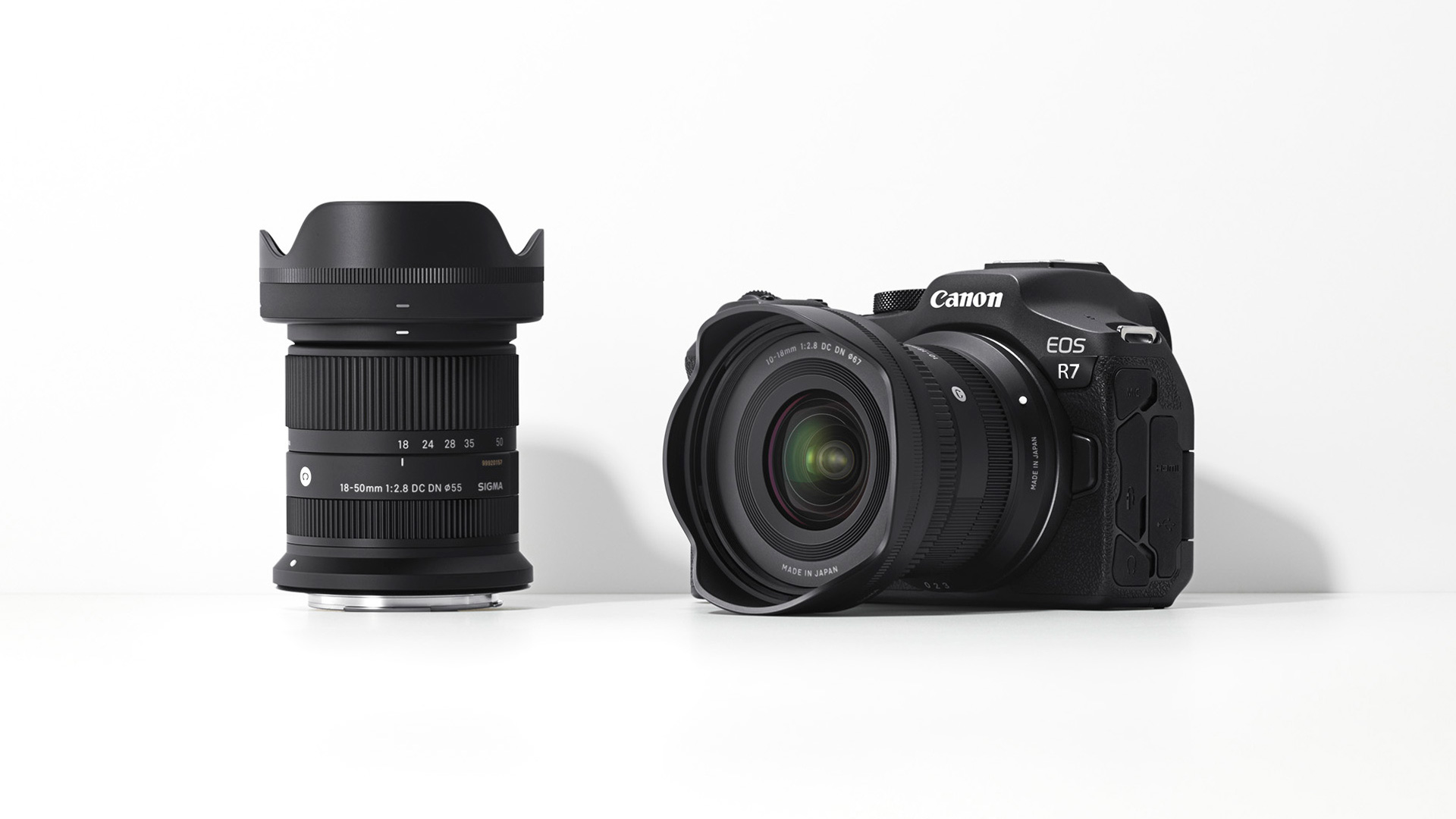
SIGMA 16mm f/1.4 and 23mm f/1.4 DC DN Shipping January 23rd

That was the date being rumored a couple months ago. Maybe Sigma has its production resources precisely scheduled. I have a 16mm lens at Sigma USA for mount conversion from EF-M. For the 30mm lens, they just sent me a new lens instead. It'll be interesting to see what they do with this lens and when.
 
  • Like
Reactions: 1 users
Upvote 0
What will be refreshing about 3rd party lenses for RF is that they won't (or at least I suspect not) be able to benefit from in-camera remapping the image as is dont wth Canon's lenses that don't fill the image circle. This potentially gives an out of the box advantage to Sigma if they do any equivalent lenses to Canon's RF-S.
 
Upvote 0
What will be refreshing about 3rd party lenses for RF is that they won't (or at least I suspect not) be able to benefit from in-camera remapping the image as is dont wth Canon's lenses that don't fill the image circle. This potentially gives an out of the box advantage to Sigma if they do any equivalent lenses to Canon's RF-S.
From Sigma:

Features of the SIGMA lenses for Canon RF Mount include:

Aberration correction supported

The lenses will be fully compatible* with in-camera aberration correction, which includes corrections for peripheral illumination, chromatic aberrations and distortion. By matching corrections to the optical characteristics of the lens, this function takes image quality to an even higher level.

* Only when the camera is compatible.


This is a big plus for JPG shooters. And we already know from reviews of these lenses in other mounts that they do not require extreme correction simply to fill the image circle.
 
  • Like
Reactions: 3 users
Upvote 0
What will be refreshing about 3rd party lenses for RF is that they won't (or at least I suspect not) be able to benefit from in-camera remapping the image as is dont wth Canon's lenses that don't fill the image circle. This potentially gives an out of the box advantage to Sigma if they do any equivalent lenses to Canon's RF-S.
Why would you think that?

Edit: as pointed out above, your reason for believing that is moot, you were wrong. I’m shocked. Not.
 
Upvote 0
Christopher Frost already reviewed some of these on the R7 and the conclusion was that they are good but not sharp enough for the R7 sensor.
I prefer RL experiences from users and other reviewers.
I don't want to disparage Mr. Frost, but in general I am always suspicious of selected reviewers who have access BEFORE delivery release.
Selected lenses could have been distributed, which I don't think is the case with Sigma.
 
  • Like
Reactions: 1 user
Upvote 0
From Sigma:

Features of the SIGMA lenses for Canon RF Mount include:

Aberration correction supported

The lenses will be fully compatible* with in-camera aberration correction, which includes corrections for peripheral illumination, chromatic aberrations and distortion. By matching corrections to the optical characteristics of the lens, this function takes image quality to an even higher level.

That's really interesting because it suggests a much deeper integration between the camera and lens is being made possible than just what we were used to with focusing and metadata (focal length and aperature.) This might be part of the source of the delay (new IP rights to negoiate and protocol to implement.)

Having that, the same basic lens is used for Sony, Nikon, and Canon EF-M/RF (my bet is there's just a difference in the lens smarts.) There's no mention on SIgma's web page about this feature being on anything except RF. Sigma only publishes one MTF graph for this lens, not one per camera maker.

What that tells me is that Sigma can't cheat like Canon does because not only are the same corrections not supported elsewhere, Sony/Nikon have a bigger APS-C sensor than Canon which means the very extremes of the picture edges should be better than an equivalent priced Canon lens. Thus I reiterate that where Canon are cutting corners with light fallout in smaller lenses, Sigma can't afford to if it wants to benefit from lens reuse.

This is a big plus for JPG shooters. And we already know from reviews of these lenses in other mounts that they do not require extreme correction simply to fill the image circle.

Yes, absolutely.

I wonder if Tamron will go a similar way.
 
Upvote 0
That's really interesting because it suggests a much deeper integration between the camera and lens is being made possible than just what we were used to with focusing and metadata (focal length and aperature.) This might be part of the source of the delay (new IP rights to negoiate and protocol to implement.)
You think this is new and that you're drawing some clever conclusion from an observation? Typical.

It's been the norm for a decade, since before EOS R bodies and RF lenses even existed. From Canon Europe:

Lens Correction data​

Initially, distortion correction data was stored on the camera for some lenses, and if you wanted to use other lenses the optical correction data for those lenses had to be downloaded via the EOS Utility software and registered to the camera. However, since the introduction of the EOS 5DS and the EF 11-24mm f/4L USM lens in 2015, this data has been stored in the lens itself. This means that the camera can access the lens data and apply it when processing JPEGs in-camera.
 
  • Like
Reactions: 1 users
Upvote 0
The goal of compatibility with cameras made by different manufacturers does not prevent the development of lens designs that require software correction. All the designer needs to know is the manufacturer's protocol for representing and communicating the required corrections. If this isn't published as an open standard, then it is obtained via license from the camera manufacturer. Perhaps it might be possible to reverse-engineer it, but so far we haven't seen any independent lens maker without a license claiming to support in-camera correction.

What does matter is differences in sensor cover glass design - thickness, microlenses. But my impression is that if this is a design criterion from the start, it's not too difficult to design lenses that can handle that variation gracefully as is, or with minor element spacing or other adjustments for the different mounts supported. If we have anyone around here with optical design experience I hope they can weigh in.
 
  • Like
Reactions: 1 user
Upvote 0
The goal of compatibility with cameras made by different manufacturers does not prevent the development of lens designs that require software correction.

Correct. But if you want to sell your lens to owners of cameras that do not support in-camera correction then you need to provide a good image without the software correction happening - or at least I'd argue that it would be necessary. Different schools of thought on that I'm sure.

Imagine you're Sigma. You want to design a lens once that produces acceptable images on as many digital cameras as possible. Do you:
(a) crimp on the oprtical design because some digital cameras will do in-camera fixes to images
(b) produce an optical design that gives maximum benefit to all digital cameras

Note that (b) doesn't mean you can't supply lens correction data when supported by the camera.

All the designer needs to know is the manufacturer's protocol for representing and communicating the required corrections. If this isn't published as an open standard, then it is obtained via license from the camera manufacturer.

If there are open standards, nobody talks about it in lens features, therefore assume proprietary
 
Upvote 0
You think this is new and that you're drawing some clever conclusion from an observation? Typical.

I'm going to say this once, so listen up (or not.)

Find a good psychologist, make an appointment, and start talking to them about your incesssent need to be hostile and insulting in public forums on the Internet where there's no requirement for either.

Stop worrying about other people and worry about yourself before you're on the 6'oclock news for all the wrong reasons.

It may be too late for this, but it's worth at least one shot.

This message will self destruct in 5... 4... 3... 2...
 
  • Like
Reactions: 1 users
Upvote 0
I prefer RL experiences from users and other reviewers.

Agreed.

I don't want to disparage Mr. Frost, but in general I am always suspicious of selected reviewers who have access BEFORE delivery release.
Selected lenses could have been distributed, which I don't think is the case with Sigma.

It would take a lot of effort by Sigma (or any other manufacturer) to deliver a better than average quality piece of equipment to a reviewer. That's not the problem. The problem for the public is do manufacturers want to go to the effort of supplying parts in advance if there's no commercial benefit in doing so.
 
Upvote 0
That's really interesting because it suggests a much deeper integration between the camera and lens is being made possible than just what we were used to with focusing and metadata (focal length and aperature.) This might be part of the source of the delay (new IP rights to negoiate and protocol to implement.) [...]
The Sigma EF-M lenses already included distortion correction data, which the M bodies happily accepted and used. So this isn't a new thing both in general and specifically for Canon. Other posters here have shown Sigma EF lenses doing the same on EF bodies, so I don't know how far back it goes.
 
  • Like
Reactions: 1 users
Upvote 0
Correct. But if you want to sell your lens to owners of cameras that do not support in-camera correction then you need to provide a good image without the software correction happening - or at least I'd argue that it would be necessary. Different schools of thought on that I'm sure.

Imagine you're Sigma. You want to design a lens once that produces acceptable images on as many digital cameras as possible. Do you:
(a) crimp on the oprtical design because some digital cameras will do in-camera fixes to images
(b) produce an optical design that gives maximum benefit to all digital cameras [...]
That's a false dilemma, since we've have the ability to correct issues in post for ages, be it with enlarger lenses in the dark room or lens profiles in Lightroom. Also, in your false dilemma you're using loaded language, 'crimp', so I strongly suspect you're not after a good faith discussion on this topic.
 
  • Like
Reactions: 1 users
Upvote 0
The Sigma EF-M lenses already included distortion correction data, which the M bodies happily accepted and used. So this isn't a new thing both in general and specifically for Canon. Other posters here have shown Sigma EF lenses doing the same on EF bodies, so I don't know how far back it goes.
I would be surprised if storing the lens distortion data in the lens instead of the body wasn't a part of the original EOS protocol from 1987. It solves/prevents a host of problems.
 
Upvote 0
I'm going to say this once, so listen up (or not.)

Find a good psychologist, make an appointment, and start talking to them about your incesssent need to be hostile and insulting in public forums on the Internet where there's no requirement for either.

Stop worrying about other people and worry about yourself before you're on the 6'oclock news for all the wrong reasons.

It may be too late for this, but it's worth at least one shot.

This message will self destruct in 5... 4... 3... 2...
Stop making ridiculous claims, and there will be no reason to ridicule you. Stop making asinine statements, and perhaps you will not be treated like an ass.

History suggests you’ll fail at that, so it will surprise no one when you do.
 
Upvote 0
I would be surprised if storing the lens distortion data in the lens instead of the body wasn't a part of the original EOS protocol from 1987. It solves/prevents a host of problems.
It really does solve a lot of problems, especially due to the segmentation Canon used being annoying: my 7D has 5 slots for lens corrections, but the M bodies only have 3. So if you're a JPEG shooter that enjoyed straight lines being straight, you could only bring 3 lenses or had to lug along a laptop so you could use EOS utility to swap out the corrections.

You can also map the progress in processing power through the corrections, at first it was just vignetting correction in stills, then vignetting and distortion in stills, followed by DLO. Around the time Digic 8 came along movie mode could do corrections and with Digic X the camera can do everything both in stills and video.

As for being part of the protocol, I suspect Canon reserved a few "ask lens for data" options in the protocol and started implementing specific functions for that much, much later. Like the ability to update the lens firmware from the body in 2012!

 
  • Like
Reactions: 1 user
Upvote 0
It really does solve a lot of problems, especially due to the segmentation Canon used being annoying: my 7D has 5 slots for lens corrections, but the M bodies only have 3. So if you're a JPEG shooter that enjoyed straight lines being straight, you could only bring 3 lenses or had to lug along a laptop so you could use EOS utility to swap out the corrections.

You can also map the progress in processing power through the corrections, at first it was just vignetting correction in stills, then vignetting and distortion in stills, followed by DLO. Around the time Digic 8 came along movie mode could do corrections and with Digic X the camera can do everything both in stills and video.

As for being part of the protocol, I suspect Canon reserved a few "ask lens for data" options in the protocol and started implementing specific functions for that much, much later. Like the ability to update the lens firmware from the body in 2012!
Slightly off-topic conjecture: Canon abandoned the EF-M system because they wanted to stop actively supporting the EOS software architecture and to standardize on the RF architecture.
 
Upvote 0