Ricoh GR IV HDF Announced

Richard CR

Canon Rumors Premium
Dec 27, 2017
2,316
3,607
17,629
Canada
www.canonnews.com
Ricoh has introduced the RICOH GR IV HDF as a new version of its premium compact camera line, which extends the recently launched standard GR IV model. The model maintains all essential features from the GR IV, which include its 25.7-megapixel APS-C sensor, 28mm-equivalent f/2.8 lens, 5-axis image stabilization, 3-inch LCD, and excellent image quality. […]

See full article...
 
Doesn't f2.8 become about f4.5 equivalent?
I would suggest avoiding this way of thinking, because it's wrong: f/2.8 refers to a physical property of the lens and Richard's text is correct.

DOF matches f/4.5 on FF, but light gathering is the same as f/2.8 FF (exposure triangle doesn't change). It's not easy to really understand this, I had to douple check multiple times with my cameras :D
 
  • Like
Reactions: 1 user
Upvote 0
I would suggest avoiding this way of thinking, because it's wrong: f/2.8 refers to a physical property of the lens and Richard's text is correct.

DOF matches f/4.5 on FF, but light gathering is the same as f/2.8 FF (exposure triangle doesn't change). It's not easy to really understand this, I had to douple check multiple times with my cameras :D

this is the way I think about it as well. it only really matters for DoF or if you are comparing the physical size / cost of a lens across different formats.
 
Upvote 0
I would suggest avoiding this way of thinking, because it's wrong: f/2.8 refers to a physical property of the lens and Richard's text is correct.

DOF matches f/4.5 on FF, but light gathering is the same as f/2.8 FF (exposure triangle doesn't change). It's not easy to really understand this, I had to douple check multiple times with my cameras :D
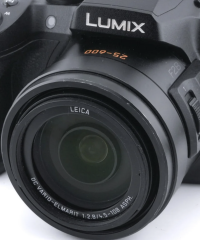
It should be noted that both aperture and focal length are intrinsic properties of a lens, having nothing to do with the size of the sensor behind it. Manufacturers have no problem printing the FF-equivalent focal length in big numbers on fixed-lens cameras, sometimes along with the aperture like Panasonic does with “25-600” and “F2.8” on the FZ300 (though Leica puts the real focal length on the lens itself).

1766410546968.png

It’s not true that ‘light gathering is the same’. Light gathering is a function of the size of the iris diaphragm, not the f/number. The lens on the Ricoh GR IV gathers the amount of light of an 18.3mm f/2.8 lens, not a 28mm f/2.8 lens. The latter would have a larger iris diaphragm and gather more total light.

Exposure is a function of the light intensity (per unit area), and that is proportional to f/number. Also, even though the exposure triangle doesn’t change, image noise at the same ISO setting is higher with a smaller sensor. There’s no free lunch.

 
  • Like
Reactions: 1 user
Upvote 0
It should be noted that both aperture and focal length are intrinsic properties of a lens, having nothing to do with the size of the sensor behind it. Manufacturers have no problem printing the FF-equivalent focal length in big numbers on fixed-lens cameras, sometimes along with the aperture like Panasonic does with “25-600” and “F2.8” on the FZ300 (though Leica puts the real focal length on the lens itself).

View attachment 227188

It’s not true that ‘light gathering is the same’. Light gathering is a function of the size of the iris diaphragm, not the f/number. The lens on the Ricoh GR IV gathers the amount of light of an 18.3mm f/2.8 lens, not a 28mm f/2.8 lens. The latter would have a larger iris diaphragm and gather more total light.

Exposure is a function of the light intensity (per unit area), and that is proportional to f/number. Also, even though the exposure triangle doesn’t change, image noise at the same ISO setting is higher with a smaller sensor. There’s no free lunch.
Thanks for pointing this out, with "light gathering" I meant photons on unit area, not total light - I wasn't clear.

For most applications it boils down to less DOF and more noise, while comparing FF-equivalent focal lengths and a certain aperture value.

I think this is the mechanism that keeps medium format in the niche it is, because while there are very bright hand-holdable FF lenses, medium format lenses are relatively slow and can't exploit the much larger sensor size Let's not start that tangent here :D
 
Upvote 0
I would suggest avoiding this way of thinking, because it's wrong: f/2.8 refers to a physical property of the lens and Richard's text is correct.

DOF matches f/4.5 on FF, but light gathering is the same as f/2.8 FF (exposure triangle doesn't change). It's not easy to really understand this, I had to douple check multiple times with my cameras :D
Don’t be silly — light gathering isn’t the issue on APS-C. No one recalculates f-numbers to full frame because of light gathering. It’s about how poor the bokeh looks on APS-C.
 
Upvote 0
Don’t be silly — light gathering isn’t the issue on APS-C. No one recalculates f-numbers to full frame because of light gathering. It’s about how poor the bokeh looks on APS-C.
I’m not sure I understand your comment (which I perceive as rude), but you’re just formulating the same concept with other words. Exposure values are calculated with physical lens aperture, resulting DOF is dependent on sensor size and as a consequence bokeh is affected. I wanted to point it out as another commenter asked about aperture equivalence.
 
  • Haha
Reactions: 1 user
Upvote 0
I’m not sure I understand your comment (which I perceive as rude), but you’re just formulating the same concept with other words. Exposure values are calculated with physical lens aperture, resulting DOF is dependent on sensor size and as a consequence bokeh is affected. I wanted to point it out as another commenter asked about aperture equivalence.
What exactly is unclear? That f/2.8 on a crop body gives you crappy bokeh similar to roughly f/4.5 on full frame?
 
  • Haha
Reactions: 1 user
Upvote 0