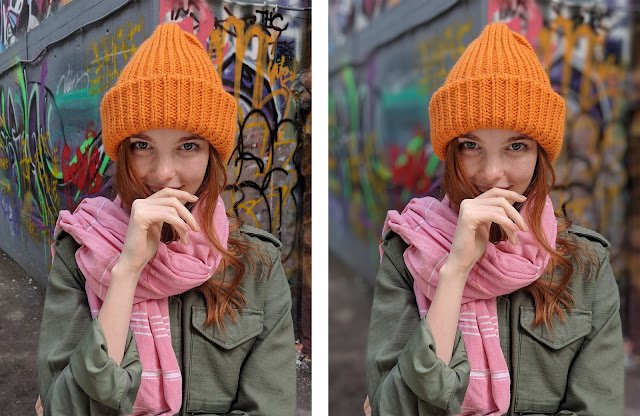
Just to add, this practice is necessary to compare different formats. It’s how DoF calculators work, it’s how dynamic range is compared, etc.It's because the Photographic DR is measured on an image enlarged to a specific standard size. For the FF, the whole image is enlarged to that size. When you crop the centre to APS-C size, you have to enlarge the crop 1.6x by 1.6x more.
Some would like to believe that larger sensors and faster lenses don’t really provide advantages. That’s silly, of course they do…at least in the technical sense. Whether or not those technical advantages benefit an individual’s photography is up to that individual (and perhaps those who view their photos).
It’s also worth noting that while it’s possible to take an equivalent image with a larger sensor compared to a smaller sensor, the converse is not necessarily true. For example (not enumerating some parameters for the sake of simplicity), if you use an f/1.2 lens on FF then you would need an f/0.75 lens on APS-C to get DoF as shallow. Good luck finding that. OTOH, you can stop a lens on FF down by 1.3 stops to match the deeper DoF of APS-C.
What that means is that larger sensors offer more capabilities and more flexibility. Those benefits come at the cost of more money and more size/weight of gear. Conversely, the higher pixel density of APS-C sensors enables putting more pixels on target for distant or macro subjects. That’s a tradeoff that can be worthwhile, provided you understand what you’re giving up to achieve it.
The bottom line is that there’s no free lunch. If smaller sensors gave ‘more reach’ with lower cost and less gear to carry and no downside, we’d all be using iPhones. Smaller sensors aren’t magical, which is why it’s so easy to distinguish the iPhone shot from the R3 + 70-200/2.8 in my earlier example.
On the flip side, in bright light with a reasonably close subject and no desire for a shallow DoF, a smaller sensor can produce results that are just as good as those from a larger sensor.

Upvote
0