Canon EOS R7 Mark II to Have Stacked 40MP Sensor?

It's because the Photographic DR is measured on an image enlarged to a specific standard size. For the FF, the whole image is enlarged to that size. When you crop the centre to APS-C size, you have to enlarge the crop 1.6x by 1.6x more.
Just to add, this practice is necessary to compare different formats. It’s how DoF calculators work, it’s how dynamic range is compared, etc.

Some would like to believe that larger sensors and faster lenses don’t really provide advantages. That’s silly, of course they do…at least in the technical sense. Whether or not those technical advantages benefit an individual’s photography is up to that individual (and perhaps those who view their photos).

It’s also worth noting that while it’s possible to take an equivalent image with a larger sensor compared to a smaller sensor, the converse is not necessarily true. For example (not enumerating some parameters for the sake of simplicity), if you use an f/1.2 lens on FF then you would need an f/0.75 lens on APS-C to get DoF as shallow. Good luck finding that. OTOH, you can stop a lens on FF down by 1.3 stops to match the deeper DoF of APS-C.

What that means is that larger sensors offer more capabilities and more flexibility. Those benefits come at the cost of more money and more size/weight of gear. Conversely, the higher pixel density of APS-C sensors enables putting more pixels on target for distant or macro subjects. That’s a tradeoff that can be worthwhile, provided you understand what you’re giving up to achieve it.

The bottom line is that there’s no free lunch. If smaller sensors gave ‘more reach’ with lower cost and less gear to carry and no downside, we’d all be using iPhones. Smaller sensors aren’t magical, which is why it’s so easy to distinguish the iPhone shot from the R3 + 70-200/2.8 in my earlier example.

On the flip side, in bright light with a reasonably close subject and no desire for a shallow DoF, a smaller sensor can produce results that are just as good as those from a larger sensor.
 
  • Like
Reactions: 6 users
Upvote 0
For example (not enumerating some parameters for the sake of simplicity), if you use an f/1.2 lens on FF then you would need an f/0.75 lens on APS-C to get DoF as shallow. Good luck finding that. OTOH, you can stop a lens on FF down by 1.3 stops to match the deeper DoF of APS-C.

I'm not sure if it's true, but I had seen people say there is no decrease in depth of field after f/1 (only more light is available). If true, it's not only difficult to acquire such a lens, but the cropped images' depth of field can never replicate anything less than f1.6 of a larger image sensor.

However, I see crop fans saying things like "I don't care about depth of field," I suppose it's a legitimate stance, but I also see complaints about canon's narrow aperture lenses.
 
Upvote 0
Not if you consider the human race to be a highly social species where social dominance matter.
The analogy is ridiculous. Most arguments by analogy are unsound as situations are rarely exactly analogous but if they are close enough they can make sense. We use analogies much of the time, but your one goes too far and you use it to ridicule @neuroanatomist and others. So, it's ridiculous on two counts.

Frankly, this whole issue seems suspiciously like some guy with a penis and XY chromosones demanding that everybody must say that he’s a she. Social dominance only goes so far.
 
  • Like
Reactions: 3 users
Upvote 0
I think a camera of this spec would probably also need a decent range of dedicated glass to be fully attractive.
came here to say this... my X-T5 is frustrating to use w/ the 40mp sensor. it requires you to be in try hard mode in terms of lens selection, technique, etc. any mistake you make on any level will show quite easily. diffraction sets in super early too which limits how far you can stop down, more so than on other cameras. i'm a perfectionist so its hard to have fun with the X-T5.

So Canon will need to offer some really high end primes for the 40mp sensor if they come out with one. pretty much no zoom would be worthy, other than likely the 70-200 2.8Z. I can't really see Canon offering any RF-S L primes to counter Fujifilm's dedicated LM primes... mostly cause Canon has never shown any interest in making any truly high spec aps-c primes... other than maybe the EF-M 32 1.4
 
Upvote 0
came here to say this... my X-T5 is frustrating to use w/ the 40mp sensor. it requires you to be in try hard mode in terms of lens selection, technique, etc. any mistake you make on any level will show quite easily. diffraction sets in super early too which limits how far you can stop down, more so than on other cameras. i'm a perfectionist so its hard to have fun with the X-T5.
Mistakes won't show more easily on higher MP sensors if you view the image at the same magnification. It's only if you insist on viewing at 100% or cropping more on the higher pixel sensor that eg diffraction or camera shake will be more clearly resolved.
 
  • Like
Reactions: 2 users
Upvote 0
Consider the number of heated arguments that occur on this web site over trivial issues. In Neuro's previous account, he had over 30,000 postings. I'd bet money that at least 10,000 included some unnecessary snipe at another poster.
I don't disagree with this, but I still fail to understand its relevance to anything that came before.
 
  • Like
Reactions: 1 users
Upvote 0
I don't disagree with this, but I still fail to understand its relevance to anything that came before.
I don't think anyone but Bob can truly understand it and that's ok along with whichever pronouns Bob wishes to be called and whatever laws of optical physics they, he, or she wants to ignore. I'm going to go pretend I can levitate because I don't want to admit gravity applies to me when using a Harryfilm camera!
 
  • Haha
Reactions: 1 users
Upvote 0
No. But, if you ever find your way out of the circle of confusion that you are clearly trapped within, perhaps then you'll understand. That highlighted bit is a hint, you may want to google that (or not, if you'd prefer to continue in your mistaken belief that you fully understand what factors determine DoF).


You can frame how you want and set the DoF based on your artistic choice (within the limits of your lens). Artistic choice matters when comparing what one likes best. It's irrelevant when discussing equivalence.


I'm sorry that you find factual information misleading. I prefer to educate people about the facts, not suggest that they ignore them...or worse, present them with misinformation. Granted, the latter is all too common these days but I choose to be part of the solution rather than part of the problem.


Sure, sure. I mean, smartphones don't even offer Portrait Mode because no one wants a blurred background.


And those are for most photographers, those of us using ILCs are a small minority of people out there taking pictures.


If you post correct information, I'd be happy to thank you and move on. But if you continue to post misinformation and make asinine statements, I will continue to set the record straight.
I'm still waiting for you to disclose what gear and settings were used for your two side-by-side pictures of violinists designed to suggest, when you click on it to enlarge it, that APS-C gear is terrible. Your silence on the subject is deafening.

UPDATE: I now see that you admitted last night (by the link in post #101 in this thread) that the terrible shot on the left in that pairing is a crop of a shot from an iPhone. Not relevant at all to this forum, much less this thread. Shame on you!

Factual information, please. Not snark. I'm not posting shots taken with a phone but with APS-C Canons. You're the one caught in a circle of confusion, insisting that nothing but a full-frame camera is worth considering - a totally out-of-bounds bit of snobbery in a thread about a hoped-for APS-C model.
 
Last edited:
  • Wow
  • Love
Reactions: 1 users
Upvote 0
Not if you consider the human race to be a highly social species where social dominance matter.
Your reply is worse than ridiculous:
1. You insult people who are transgender (+/- 1% of the population of the USA).
2. You insult @neuroanatomist.
3. As @AlanF has pointed out: your analogy is completely irrelevant to the subject.
 
  • Like
  • Love
Reactions: 4 users
Upvote 0
There are 2 aspects to light/exposure/noise that might be important to photographers. And are often confused. Your f-ratio measures the intensity of light in a given area, but his is not the total amount of light gathered. Since exposure is intensity, it does not change if sensor size is different. This is why an exposure of f/2.8 is the same regardless of sensor size. But light gathered is a different measurement and is tied into how much noise (S/N ratio). How much light is gathered depends on the size of the entrance pupil - not the f-ratio. For example:

Using a 300mm lens on your FF camera at f/4=75mm entrance pupil (300/4=75mm)
To get the same field of view on your Canon crop camera, your focal length is approx. 187.5 (300/1.6). Your 187.5 focal length divided by your f/4 f-ratio=approx. 47mm entrance pupil. Smaller entrance pupil means less light gathered by the sensor, even though your f-ratio is the same.
To get an equal amount of light on the Canon crop sensor, you need to get the same size entrance pupil, which is 75mm.
187.5mm focal length divided by 75mm entrance pupil = f/2.5 f-ratio.

If you go to the Clarkvision website, you will see there are actually a few other factors, but I think this gives you a good starting pint about exposure versus light gathering/noise. I think once you get these basics, you can make an informed decision as to what sensor size camera you might want, what lenses you will want, and how they deal with equivalence when it comes to both exposure and light gathering/noise. So this way you can steer yourself to whatever gear you want.
Total amount of light gathered is relevant to what? Exposure and signal to noise ratio both depend only on the intensity of light hitting each photosite and the exposure time. What does total amount of light gathered across the whole sensor affect? Answer: Nothing, unless you're trying to use your camera to sunbathe.
 
Last edited:
  • Haha
Reactions: 1 user
Upvote 0
You first.

Where?
The factual information I was asking for was provided, not by a reply to my request but elliptically in another post, by means of a link to that pair of photos of violinists that mentioned offhandedly that an iPhone shot was used. Thus, the pair of photos designed to prove that full frame was superior to APS-C turned out to be a fraud: a comparison of who-knows-what to an iPhone shot.

The textual insistence on full-frame came in the form of arguing about "equivalence" of lenses that insists that lenses on APS-C bodies lose a stop of exposure, turning an f/2.8 lens into an f/4 lens - the implication being that if you want to be able to take shots in low light you need a full-frame body, with the pairing of violinist shots being the coup d'grace - "See how terrible your little camera's picture is compared to my full-frame rig?"

That's why my conclusion is, as they shout on the floor of the House of Commons - "Shame!"
 
Upvote 0
Total amount of light gathered is relevant to what? Exposure and signal to noise ratio both depend only on the intensity of light hitting each photosite and the exposure time. What does total amount of light gathered across the whole sensor affect? Answer: Nothing, unless you're trying to use your camera to sunbathe.
The total amount light is relevant in this way. If you illuminate for example a FF image of 36mmx24mm or a APS-C of 22.5x15mm or a 2/3" of 8.6mmx6.6mm, with the same f-number and exposure time, you will see a S/N over each sensor proportional to the square root of the total number of photons hitting the surface area of the sensor in that exposure time. So, for those 3, the S/N will be in the ratio 1.6:1:0.4 calculated from their relative areas. Then, when you look at the image after enlarging them all to the same size, the S/N in each will have been proportional to the total amount of light gathered across the whole sensor, 1.6:1:0.4.
 
  • Like
Reactions: 1 users
Upvote 0
The factual information I was asking for was provided, not by a reply to my request but elliptically in another post, by means of a link to that pair of photos of violinists that mentioned offhandedly that an iPhone shot was used. Thus, the pair of photos designed to prove that full frame was superior to APS-C turned out to be a fraud: a comparison of who-knows-what to an iPhone shot.

The textual insistence on full-frame came in the form of arguing about "equivalence" of lenses that insists that lenses on APS-C bodies lose a stop of exposure, turning an f/2.8 lens into an f/4 lens - the implication being that if you want to be able to take shots in low light you need a full-frame body, with the pairing of violinist shots being the coup d'grace - "See how terrible your little camera's picture is compared to my full-frame rig?"

That's why my conclusion is, as they shout on the floor of the House of Commons - "Shame!"
I don't have a dog in this fight but I observe that you have been given ample evidence and explanations of the technical issues involved, with various suitable caveats, but have rejected them and been at least as rude as you perceive others to have been. Nobody has insisted - or even really insinuated - that smaller formats aren't fine for many people or uses. But you seem to want to believe that larger sensors have no objective advantages, which is contrary to the evidence presented. Quibbling over neuro's image (which was clearly meant to humorously demonstrate that larger sensors have advantages in some situations) isn't making you seem as clever as you seem to believe.
 
  • Like
Reactions: 3 users
Upvote 0
The total amount light is relevant in this way. If you illuminate for example a FF image of 36mmx24mm or a APS-C of 22.5x15mm or a 2/3" of 8.6mmx6.6mm, with the same f-number and exposure time, you will see a S/N over each sensor proportional to the square root of the total number of photons hitting the surface area of the sensor in that exposure time. So, for those 3, the S/N will be in the ratio 1.6:1:0.4 calculated from their relative areas. Then, when you look at the image after enlarging them all to the same size, the S/N in each will have been proportional to the total amount of light gathered across the whole sensor, 1.6:1:0.4.
I salute your continued technical replies, which will hopefully help bystanders, but I am put in mind of that analogy of playing chess with a pigeon.
 
  • Like
  • Haha
Reactions: 1 users
Upvote 0
I don't have a dog in this fight but I observe that you have been given ample evidence and explanations of the technical issues involved, with various suitable caveats, but have rejected them and been at least as rude as you perceive others to have been. Nobody has insisted - or even really insinuated - that smaller formats aren't fine for many people or uses. But you seem to want to believe that larger sensors have no objective advantages, which is contrary to the evidence presented. Quibbling over neuro's image (which was clearly meant to humorously demonstrate that larger sensors have advantages in some situations) isn't making you seem as clever as you seem to believe.
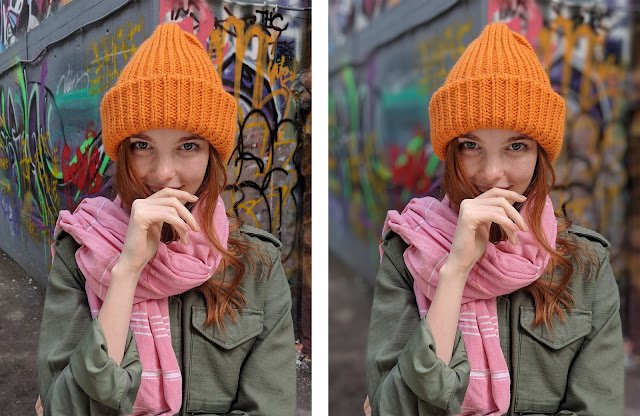
neuro's image was given with no caveats or explanation at all of what it was, in the course of a discussion of the relative merits of full frame vs. aps-c.

Neuro inserted a comparison of an iPhone picture to an R3 shot, probably at 200mm, with no disclosure of what it really was until 38 posts later in a very elliptical way:
"Smaller sensors aren’t magical, which is why it’s so easy to distinguish the iPhone shot from the R3 + 70-200/2.8 in my earlier example."
Which would only tell you it was that photo comparison if you actually followed that link.

I don't doubt that full-frame sensors with larger photosites have a one-stop advantage in signal to noise ratio, as documented by Photons-to-Photos.com, but that doesn't mean that an f/2.8 lens is magically transformed into an f/4 lens by being mounted on an APS-C body, which is what the prophets of "equivalence" insist.

My answer is to put a Sigma f/1.8 17-40mm RF-S lens on my R7, enabling me to put a stop and a third more light onto each photosite than an f/2.8 standard zoom would, for a net gain of a third of a stop of signal-to-noise ratio given the smaller photosites. But it's still an f/1.8 lens, in terms of exposure and depth of field at a constant distance.

I don't post intentionally-deceptive comparison shots and lecture the hoi-polloi that their gear is not as good as they think it is, which is what neuro has done.
 
Last edited:
Upvote 0