
You are using an out of date browser. It may not display this or other websites correctly.
You should upgrade or use an alternative browser.
You should upgrade or use an alternative browser.
Show your Bird Portraits
- Thread starter 1982chris911
- Start date









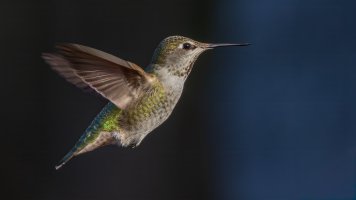
I have been shooting some hummingbirds over the last few weeks with the R7 and EF 100-400 L II with the 1.4 ex III and had good success. The upside of that lens, aside from its sharpness, is its close focus capability. The R7 works well with the 1.4 extender. Today, I tried the same lens with the 2x III extender and the R5, which results in almost identical magnification (i.e. pixels on the bird) and thus equal illumination per pixel in spite of the additional stop imposed by the 2x extender (and that lens is still very sharp with the 2x). My sense was that the R5 setup was not as quick to focus as the R7 and also did not seem to hold focus lock as well. This may just be an EF lens issue, but I think it suggests that the complaints some folks have about the R7 AF may be based on taking advantage of its reach to the point that they just don't have enough illumination per pixel for the AF to work well. That said, I thought the following shot with the R5 was kind of interesting. This is at 100% when expanded.
Upvote
0

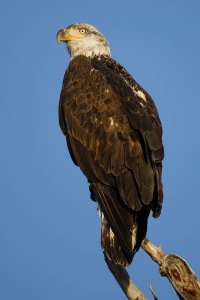
Immature Bald Eagle at sunset. R6m2, rf 800 f/11, handheld, DxO PL8. I'll have to go back when there is a bit more light.
Upvote
0

Nice shot! I did a lot of testing some years back of various extenders on the EF 100-400mm ii and RF 100-500mm ii. My experience was that the 1.4x gave a better improvement on the EF vs RF but that the 2x is better on the RF. At 1000mm, it outreseloves the RF 800mm f/11. Why don't we have hummingbirds in Europe, it's most unfair!?I have been shooting some hummingbirds over the last few weeks with the R7 and EF 100-400 L II with the 1.4 ex III and had good success. The upside of that lens, aside from its sharpness, is its close focus capability. The R7 works well with the 1.4 extender. Today, I tried the same lens with the 2x III extender and the R5, which results in almost identical magnification (i.e. pixels on the bird) and thus equal illumination per pixel in spite of the additional stop imposed by the 2x extender (and that lens is still very sharp with the 2x). My sense was that the R5 setup was not as quick to focus as the R7 and also did not seem to hold focus lock as well. This may just be an EF lens issue, but I think it suggests that the complaints some folks have about the R7 AF may be based on taking advantage of its reach to the point that they just don't have enough illumination per pixel for the AF to work well. That said, I thought the following shot with the R5 was kind of interesting. This is at 100% when expanded.
View attachment 227306
Upvote
0
I really like the little ball of feathers on the first one. So cute! Very nice series, shire guy.
Thank you Click
Upvote
0
You could always come to visit. My hummingbirds are not as exotic as the ones @foda has been snapping, but I do have an abundance, particularly in the summer, and a pretty good group chooses to winter over here in Oregon so long as I keep the smorgasbord fully stockedNice shot! I did a lot of testing some years back of various extenders on the EF 100-400mm ii and RF 100-500mm ii. My experience was that the 1.4x gave a better improvement on the EF vs RF but that the 2x is better on the RF. At 1000mm, it outreseloves the RF 800mm f/11. Why don't we have hummingbirds in Europe, it's most unfair!?
 .
.
Upvote
0

"Why don't we have hummingbirds in Europe, it's most unfair!?"Nice shot! I did a lot of testing some years back of various extenders on the EF 100-400mm ii and RF 100-500mm ii. My experience was that the 1.4x gave a better improvement on the EF vs RF but that the 2x is better on the RF. At 1000mm, it outreseloves the RF 800mm f/11. Why don't we have hummingbirds in Europe, it's most unfair!?
It's actually even more unfair than you probably think (?): the oldest fossils of hummingbirds are from Europe, much older than the fossils from Americas...
https://www.audubon.org/news/the-origins-hummingbirds-are-still-major-mystery
Upvote
0
Happy New Year Click!ISv, Dragon and dcm,
Beautiful shots, guys. Keep posting.
Happy New Year!
Upvote
0
 !
!
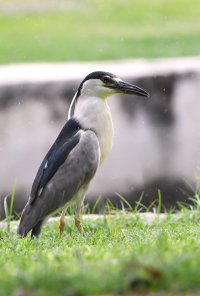
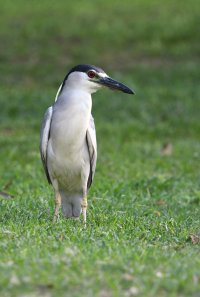
There's a recent paper presenting "A biogeographic comparison of two convergent bird families" at: https://journals.plos.org/plosone/article?id=10.1371/journal.pone.0335195 which characterizes and compares the global scale biogeography of two nectar-feeding bird families: the New World hummingbirds and the Old World sunbirds."Why don't we have hummingbirds in Europe, it's most unfair!?"
It's actually even more unfair than you probably think (?): the oldest fossils of hummingbirds are from Europe, much older than the fossils from Americas...
https://www.audubon.org/news/the-origins-hummingbirds-are-still-major-mystery
Upvote
0
Yes - convergent evolution can explain the huge time-gap between the fossils in Europe and the New World. And actually, with the fossils absent so far for that gap it seems to be kind of reasonable hypotheses.There's a recent paper presenting "A biogeographic comparison of two convergent bird families" at: https://journals.plos.org/plosone/article?id=10.1371/journal.pone.0335195 which characterizes and compares the global scale biogeography of two nectar-feeding bird families: the New World hummingbirds and the Old World sunbirds.
On other hand the similarity of the fossils of the Hummingbirds with the bones of the nova days Hummingbirds (not the Sunbirds!) is hard to ignore.
So far the Hummingbirds are considered Swivst. The Sunbirds are more close to the Crows and I would believe to the DNA/RNA evidence more than the pretty speculative "environmental" evidence.
Last edited:
Upvote
0
The paper has hummingbirds going back as far as 42 million years ago. Even 30 million years ago, the old ball looked much different than it does today and the little guys wouldn't have had that much ocean to cross to get from one continent to another as Pangea was still in the breakup stage. https://en.wikipedia.org/wiki/Panga...raphic_Map_of_Earth,_30_Ma_(Rupelian_Age).png And needless to say, the picture is only a scientific wild-assed guess of what the planet really looked like. Given how tiny and fragile hummers are, It is kind of surprising that any fossils have been found and not at all surprising that the fossil record is very incomplete.There's a recent paper presenting "A biogeographic comparison of two convergent bird families" at: https://journals.plos.org/plosone/article?id=10.1371/journal.pone.0335195 which characterizes and compares the global scale biogeography of two nectar-feeding bird families: the New World hummingbirds and the Old World sunbirds.
Last edited:
Upvote
0
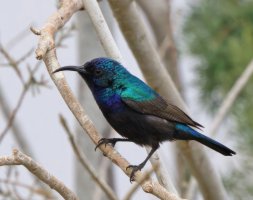
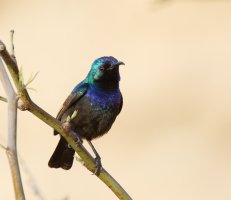

I have created an Adobe Lightroom keyword list arranged by family to reflect the 2025 eBird avian taxonomy. It is keyed on the American English common names but includes the IOC common names as synonyms where they differ. It also includes the scientific names as well as the alpha codes.
You can download the list from https://drive.google.com/file/d/15jSCG2eUGQRwQlS9auFSDbvJ01dWWdy1/view?usp=drive_link
I would like to make this available to the wider birding community but would appreciate any feedback you might have before doing so.
Once downloaded, the list can be imported into Lightroom from the Library module via the command sequence Metadata > Import Keywords.
Please let me know if you have any questions or need any additional information.
P.S. Don't forget to update your copyright information in your cameras and image-processing software.
You can download the list from https://drive.google.com/file/d/15jSCG2eUGQRwQlS9auFSDbvJ01dWWdy1/view?usp=drive_link
I would like to make this available to the wider birding community but would appreciate any feedback you might have before doing so.
Once downloaded, the list can be imported into Lightroom from the Library module via the command sequence Metadata > Import Keywords.
Please let me know if you have any questions or need any additional information.
P.S. Don't forget to update your copyright information in your cameras and image-processing software.
Upvote
0
Similar threads

- Replies
- 118
- Views
- 99K
