1Dx ISO100 high DR shadows SNR improvement

Status
Not open for further replies.
Neutral said:
I think but not 100% sure that banding is fixed specific pattern for each specific sensor .
If so it could be easily removed as well - just one calibration short with(-3EV) against dark gray surface using the same method. Save this calibration shot and then subtract this from the normal image in Photoshop - add calibration shot as a second layer above the image, invert this layer and adjust intensity, transparency and contrast for maximum banding removal.
I think all this technique could be easily incorporated in camera firmware for night shot mode.
I heard sensor heat correlates with sensor banding, so it's not that simple :)
 
Upvote 0
Neutral said:
nightbreath said:
Could you do one thing just to test another approach? Please export the RAW file to TIFF and push the shadows in the resulted file. I saw very good results someone shared here using this method.
Mathematically this should not give any difference as noise is already in the image.
You might see improvements in SNR a little bit but only if during this conversion from RAW to TIFF some small per pixel details are lost e.g due to down sampling
I didn't find the message with sample images that lacked visible noise, but here is another message about the same thing:

Astro said:
http://www.techradar.com/reviews/cameras-and-camcorders/cameras/digital-slrs-hybrids/canon-eos-5d-mark-iii-1074186/review/page:5#articleContent

the techradar test:
TIFF images (after conversion from raw) have a consistently good signal to noise ratio across the sensitivity range comparing closely to the Canon EOS 1Ds Mk III and just having the edge over the Nikon D800. It also shows a slight improvement at all sensitivities over the Canon EOS 5D Mk II.
TIFF files (after conversion from raw) have a high dynamic range with results comparing closely to the Nikon D4 and D800. Compared with the Canon EOS 5D Mk II, there is a marked improvement showing over 2EV greater range at the lower end of the sensitivity scale.
i thought techradar is a DxO certified lab? ???
http://www.techradar.com/news/photography-video-capture/cameras/noise-and-dynamic-range-results-explained-1027588
 
Upvote 0
nightbreath said:
Neutral said:
nightbreath said:
Could you do one thing just to test another approach? Please export the RAW file to TIFF and push the shadows in the resulted file. I saw very good results someone shared here using this method.
Mathematically this should not give any difference as noise is already in the image.
You might see improvements in SNR a little bit but only if during this conversion from RAW to TIFF some small per pixel details are lost e.g due to down sampling
I didn't find the message with sample images that lacked visible noise, but here is another message about the same thing:

Astro said:
http://www.techradar.com/reviews/cameras-and-camcorders/cameras/digital-slrs-hybrids/canon-eos-5d-mark-iii-1074186/review/page:5#articleContent

the techradar test:
TIFF images (after conversion from raw) have a consistently good signal to noise ratio across the sensitivity range comparing closely to the Canon EOS 1Ds Mk III and just having the edge over the Nikon D800. It also shows a slight improvement at all sensitivities over the Canon EOS 5D Mk II.
TIFF files (after conversion from raw) have a high dynamic range with results comparing closely to the Nikon D4 and D800. Compared with the Canon EOS 5D Mk II, there is a marked improvement showing over 2EV greater range at the lower end of the sensitivity scale.
i thought techradar is a DxO certified lab? ???
http://www.techradar.com/news/photography-video-capture/cameras/noise-and-dynamic-range-results-explained-1027588

I do not know if TechRadar is certified DXO lab, I think they just use some DXO equipment but how they use that and how they interpret results I do not know. Have seen that article before but did not trust much what they were publishing .
I more rely on pure Math - all the time in my professional life that was first stage in any systems development. And then implementation results were compared against initial math results to see if design was OK or something was missed or done wrong - initially or at later stage.
So as you suggested I did noise comparison for original RAW and TIFF (lossless converted from RAW, to16 bit TIFF, color space is the same Adobe RGB, no re-sampling - the same pixel count).

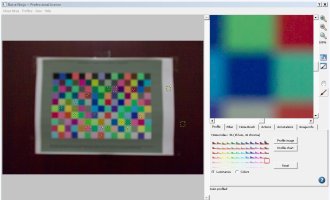
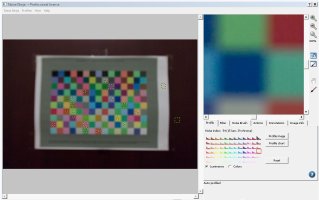
Noise measurements were done using Noise Ninja plug-in PS which gives NUMERIC noise profile of the image.
For initial RAW noise with shadows raised by +3EV index is 56 (Luminance=15, Chroma=41)
For RAW converted to TIFF and then shadows raised by +3EV noise index is 54 (Luminance=15 and Chroma=39).
As expected these are same results for lossless conversion with normal statistical distribution as Noise Ninja was selecting areas for noise profiling automatically and they a bit different.
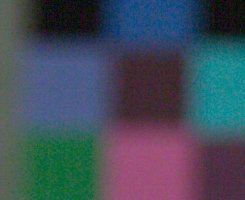
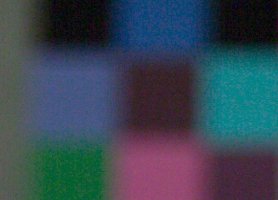
See below results two 200% crops for RAW and TIFF and that snapshots of NJ noise profiler screen
Anyone who has NJ plug-in in PS can do the same and see numeric results
 

Attachments

  • RAW noise profile.JPG
    RAW noise profile.JPG
    95.3 KB · Views: 1,143
  • Tiff noise profile.JPG
    Tiff noise profile.JPG
    90.8 KB · Views: 1,129
  • Raw_crop200_PS.JPG
    Raw_crop200_PS.JPG
    97.3 KB · Views: 1,106
  • Tiff_crop200_PS.JPG
    Tiff_crop200_PS.JPG
    68.1 KB · Views: 1,129
Upvote 0
nightbreath said:
Neutral said:
I think but not 100% sure that banding is fixed specific pattern for each specific sensor .
If so it could be easily removed as well - just one calibration short with(-3EV) against dark gray surface using the same method. Save this calibration shot and then subtract this from the normal image in Photoshop - add calibration shot as a second layer above the image, invert this layer and adjust intensity, transparency and contrast for maximum banding removal.
I think all this technique could be easily incorporated in camera firmware for night shot mode.
I heard sensor heat correlates with sensor banding, so it's not that simple :)

I am sure you are right with this and it depends on sensor heat.
So it would be not possible totally eliminate banding only to suppres it to some extent.
To improve results it would required to do calibration shot just before shooting session - similar what is done with Gray/wite/black card before session for later WB adjustement
 
Upvote 0
If anyone is interested I can publish Noise Ninja noise profile results for original 0EV image , and for shot with noise averaging in 1Dx (the same multi-exposure shot with-3EV pulled up 3EV in LR which was shown initially – there was no post processing NR applied to it at all) .
It was interesting to see and compare noise profiles numeric results for both.
Also how shot with noise averaging looks after LR NR and after Noise Ninja NR applied in PS – interesting to see the difference
 
Upvote 0
V8Beast said:
RLPhoto said:
If you nail your exposures on either camera, only good photos will result.

.....but why would you do this when it's so much fun to intentionally underexpose an image by 5 stops then crank on the sliders in Lightroom. Yeeehawww, keep pushing those sliders over to the right!

Good times :)
:)

But seriously, the best shot ever is with the lens cap on. It does not even have to focus... Or need IS. And that is not the definition of IS Neuro had a few threads back!
 
Upvote 0
V8Beast said:
RLPhoto said:
If you nail your exposures on either camera, only good photos will result.

.....but why would you do this when it's so much fun to intentionally underexpose an image by 5 stops then crank on the sliders in Lightroom. Yeeehawww, keep pushing those sliders over to the right!

Good times :)

That all above is not about the fun of making underexposed shots and pulling them up but about normal 0EV shots for high DR scenes and where it is desired to see details in deep shadows instead of noise or instead of totally black areas. And how to push 1Dx limits in this area.
If one is trying to make fun of something and this one does not fully realize what is the whole subject about then yes this making people to smile but not about the joke itself but rather about the person who tried to make such joke))
Have fun )))
 
Upvote 0
Neutral said:
V8Beast said:
RLPhoto said:
If you nail your exposures on either camera, only good photos will result.

.....but why would you do this when it's so much fun to intentionally underexpose an image by 5 stops then crank on the sliders in Lightroom. Yeeehawww, keep pushing those sliders over to the right!

Good times :)

That all above is not about the fun of making underexposed shots and pulling them up but about normal 0EV shots for high DR scenes and where it is desired to see details in deep shadows instead of noise or instead of totally black areas. And how to push 1Dx limits in this area.
If one is trying to make fun of something and this one does not fully realize what is the whole subject about then yes this making people to smile but not about the joke itself but rather about the person who tried to make such joke))
Have fun )))

I love quotes taken out of context. ::)
 
Upvote 0
Neutral said:
To improve results it would required to do calibration shot just before shooting session - similar what is done with Gray/wite/black card before session for later WB adjustement
It is not quite constant. I did some experiments merging hundreds of images (don't ask), and the areas where banding seems to occur are clustered but not constant (over periods of a few hours).

However, if your exposure is more than 1s, turn on long exposure noise reduction. On my 5DIII at least, this removes most of the banding. The downside is that the general noise level rises (which also helps hide the banding), so you will need to average several such frames to get the noise back down again.

Another thing that seems to work well with multi-exposures is for images that need contrast stretching. For example, if you have an image with very low contrast (fog), combining multiple frames (eg in PS) can give you more latitude for contrast adjustment.

In general though, if shadow noise is a problem, you are better off shooting multiple exposures, as for HDR. With a three-shot bracket, you can extend the usable dynamic range by six stops. To do the same by averaging frames you would need an awful lot more - and if the pattern noise is correlated the result will be worse.
 
Upvote 0
Neutral said:
V8Beast said:
RLPhoto said:
If you nail your exposures on either camera, only good photos will result.

.....but why would you do this when it's so much fun to intentionally underexpose an image by 5 stops then crank on the sliders in Lightroom. Yeeehawww, keep pushing those sliders over to the right!

Good times :)

That all above is not about the fun of making underexposed shots and pulling them up but about normal 0EV shots for high DR scenes and where it is desired to see details in deep shadows instead of noise or instead of totally black areas. And how to push 1Dx limits in this area.
If one is trying to make fun of something and this one does not fully realize what is the whole subject about then yes this making people to smile but not about the joke itself but rather about the person who tried to make such joke))
Have fun )))

The joke is that you can't figure out that I quoted RL Photo, not you. Therefore, my response was directed at RL Photo's, not yours.

For future reference, when a post reads "Quote from: RL Photo," unless your user name is RL Photo, the comments in it aren't something for you to get overly defensive about. Failing to understand something this simple is funny, and I didn't even have to make a joke about it :) Thanks for making my job easier :)
 
Upvote 0
MarkII said:
Neutral said:
To improve results it would required to do calibration shot just before shooting session - similar what is done with Gray/wite/black card before session for later WB adjustement
It is not quite constant. I did some experiments merging hundreds of images (don't ask), and the areas where banding seems to occur are clustered but not constant (over periods of a few hours).

However, if your exposure is more than 1s, turn on long exposure noise reduction. On my 5DIII at least, this removes most of the banding. The downside is that the general noise level rises (which also helps hide the banding), so you will need to average several such frames to get the noise back down again.

Another thing that seems to work well with multi-exposures is for images that need contrast stretching. For example, if you have an image with very low contrast (fog), combining multiple frames (eg in PS) can give you more latitude for contrast adjustment.

In general though, if shadow noise is a problem, you are better off shooting multiple exposures, as for HDR. With a three-shot bracket, you can extend the usable dynamic range by six stops. To do the same by averaging frames you would need an awful lot more - and if the pattern noise is correlated the result will be worse.
Thanks, interesting info about banding.
Also I agree, one could use HDR to increase DR.
And I was using that occasionally (in Photomatix or PS) but did not like that much for reasons listed below.
Of course if 1Dx could do in-camera HDR similar to 5DMIII than this would be very nice.
One of the problems with HDR is that this requires careful post-processing which is time consuming.
And “time is money” – very valuable thing.
Also known problem with HDR is that though it allows to increase image DR significantly it also increases image noise which becomes more visible. So one of the practices for HDR is to do NR on each image before merging them into final HDR. This also additional time in post processing
My goal was to try to get out of 1Dx cleanest image that practically does not require any post processing . Almost 2 stops SNR improvement for shadow areas (actually 4.7 dB) is sufficient for many if not most of high DR evening/night shots. And all that with just one button press ( or two if you want to have mirror lock to reduce camera vibrations to get best possible resolution).
And if a little bit of NR applied then you can get very clean image with good details and low noise level in deep shadows.
As for long exposure noise reduction – sure - this is very useful feature.
I do not know how Canon implementing this but in my first digital camera (Sony DSC-828) it was done by subtracting pure noise shot ( sensor read with shutter closed ) from image done after that.
And that was working very well.
 
Upvote 0
nightbreath said:
Neutral said:
So as you suggested I did noise comparison for original RAW and TIFF (lossless converted from RAW, to16 bit TIFF, color space is the same Adobe RGB, no re-sampling - the same pixel count).
Quick question. Did you create TIFF image via DPP as opposed by this method?
No DPP, just lossless TIFF export from LR.
I removed DPP from my PC long long time back as what I have (LR, DXO Optic Pro and Phase One Capture One) together give me all functionality and quality I need. Use one of them which is better suited for what I want to do at the moment - but with latest LR improvement use other two less and less/
Mathematically any lossless conversion from RAW to TIFF should not change any image metrics – this is why it called lossless. If it changes something then it is not lossless – it either changing something or distort something. Change in noise level only possible if high special frequencies are suppressed – e.g. with down sampling which introduce some image info losses.
I can try to export RAW to TIFF in C1 but 100% sure will have the same result.
So I do not believe that converting RAW to TIFF does any image SNR improvements –just from pure math angle of view.
 
Upvote 0
Status
Not open for further replies.