5DIII dual cards

dgatwood said:
In that case, the only plausible explanation is that they deliberately crippled the SD card slot so that the 1DX with its dual CF slots would look more valuable by comparison. Which is just sad.

I find that implausible. I can think of zero 1Dx owners who would have instead bought at 5D3 had the second slot been faster. Canon knows its market pretty well, I doubt they thought for one second that a UHS SD slot in the 5D would have eaten away any 1D sales.

Disabling things in firmware (like AFMA in entry level cameras) could be a crippling-to-drive-higher-end-sales move. But the speed of the second slot in a camera which costs half as much... I just don't see that affecting sales one bit. The 1Dx sells because of speed and build, not because its second slot is CF as opposed to slow SD.

Practical reasons could include things beyond timing. Maybe the second slot was not a priority and they decided to burn down their stock of older components. But "let's make the second slot in this camera slow so that our $7,000 model with its 14FPS mechanism, RGB metering, three processors, weather sealing, dual batteries, 1/250 flash sync, 200k ISO, etc. looks a little better" seems as unlikely as "they didn't know about UHS."
 
Upvote 0
3kramd5 said:
Practical reasons could include things beyond timing. Maybe the second slot was not a priority and they decided to burn down their stock of older components. But "let's make the second slot in this camera slow so that our $7,000 model with its 14FPS mechanism, RGB metering, three processors, weather sealing, dual batteries, 1/250 flash sync, 200k ISO, etc. looks a little better" seems as unlikely as "they didn't know about UHS."

The only logical reason to use mixed SD instead of dual CF on the 5D was to begin the inevitable transition of their high-end DSLR line away from the CF standard to the more commonly available SD standard, to make it easier to move content to modern laptops and tablets (which often come with SD slots, but never come with CF slots). This reasoning is supported by the fact that the 6D has only a single SD card slot, rather than CF.

However, including an SD card reader in the device that is more than a factor of 10 slower than the CF slot doesn't encourage use of the SD card slot, but rather discourages it, which runs contrary to the only rational reason to add an SD card slot in the first place. Based on that, there must have been a very compelling reason to make that sort of decision, and I'm not convinced that in this era of zero inventory supply chains, a pile of older components is particularly likely.

So the only plausible reason I can see is that they considered the dual-slot design of the 1DX to be a compelling enticement to choose the 1DX, and didn't want other cameras in their line to have it. It's rare for a single feature to be compelling by itself, and you're correct that this feature isn't. But that doesn't mean it isn't a differentiating feature, without which fewer people would choose the 1DX.

Either that or the engineers didn't care enough to do their job correctly, which IMO is even worse than marketing deliberately limiting the feature to avoid cannibalization of their other product lines, because it would reflect a lack of concern for the quality of their work that would no doubt show in other areas, too.
 
Upvote 0
jabbott said:
I've worked projects before that tried to implement SD card support (from scratch) and the amount and quality of documentation are bizarre at best... the official SD spec is 500+ pages of information, and yet there are various exceptions and trickery that one must play to get different cards to work. SD != SDHC != SDXC. My guess is Canon had to weigh the risk of it not working right (and potentially jeopardizing the reliability of non-UHS 1 cards).

According to other posts in this thread, though, they're reportedly using an off-the-shelf USB-based SD chipset, which would shield them from all of those implementation details.

And even if that's wrong, this was still one of the earliest Canon DSLRs to use an SD card slot, so the vast majority of their users would be coming from CF-based bodies. They wouldn't typically own or use decade-old, buggy SD cards with the 5D Mark III. Thus, supporting the latest standards should have been far more important than maintaining backwards compatibility that no one would actually use.

No, the most likely explanation is that they needed SD slots as a bullet point, to get people used to seeing SD cards in high-end cameras, so that they could eventually move to using SD cards exclusively. But putting two fast slots in the 5D Mark III would have diminished the value-add of the dual slots in the 1DX, so they crippled the SD slot because they presumably couldn't cripple the CF card slot for some reason.
 
Upvote 0
dgatwood said:
The only logical reason to use mixed SD instead of dual CF on the 5D was to begin the inevitable transition of their high-end DSLR line away from the CF standard to the more commonly available SD standard

Forgive me, but how is that the only logical reason? That's just one potential reason, about which I question the logic. Were it a UHS compatible slot I could maybe see it, but the notion people are going to go out and buy a bunch of high speed SD cards to stick in a camera that can't write at high speeds is illogical on its face. Slow SD doesn't precipitate a transition to fast SD.

In any case, I hope you're wrong; I don't want to move to SD. I hope they go to XQD.

Personally, I always assumed the second slot being SD was a packaging thing, i.e. fitting two CF within the footprint of the 5D grip wasn't viable.

dgatwood said:
so they crippled the SD slot because they presumably couldn't cripple the CF card slot for some reason.

Oh come on. You honestly think Canon said:
1) I want people to buy into SD
2) So I'll add an SD slot to the 5D
3) But the 1Dx has two slots, and that's a selling point, so I'll make one of the 5D slots slow
4) Since I want people to buy into SD, I'll make the other slot slow, but wait, I can't figure out how! Never mind, I'll deliberately hinder the the slot I want people to get used to using.
 
Upvote 0
3kramd5 said:
...
3) But the 1Dx has two slots, and that's a selling point, so I'll make one of the 5D slots slow
...
Actually this IS a viable reason.

In addition they need to ensure the way for 5Dmk4. It is always nice to have another novelty in next gen model.

Canon are well known for modestly implementing new techs. They are never in a hurry. They do it their own in-house speed.

tapanit said:
...
for i in *.cr2; do mv jpegs/${i%.cr2}.jpg .;done

(It's been too long since I've used Windows to know offhand how to do it there, but I'm sure it could be done.)...
A GIMP user?


Mt Spokane Photography said:
...
I save jpegs to SD and RAW to CF. Since both are 64GB, I seldom have to erase the SD card because jpeg files are much smaller.
Is SD so inferior in comparison to CF?

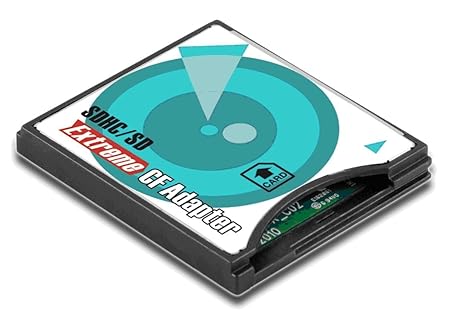
Actually, since I am missing SD slot I was planing on buying this SD to CF adapter:

61konTo430L._SX450_.jpg
 
Upvote 0
Diko said:
Is SD so inferior in comparison to CF?

Actually, since I am missing SD slot I was planing on buying this SD to CF adapter:

61konTo430L._SX450_.jpg

Good luck with that. I've used two or three adapters before when I was trying to get the Eye-Fi card to work in the 5D Classic. The CF-SD adapters are extremely buggy. You will likely experience some file corruption. My advice is to buy every one of them you can find in the hopes of getting one that you can trust. Please let everyone know what worked for you in which camera and which adapter it was. Thanks. It's always nice to have this option if it will work.
 
Upvote 0
markko said:
mikejkay said:
3kramd5 - I shoot JPEG with the various adjustments and RAW in the hope that I've got something to work with if I penis up. Also, as you are probably aware, the SD card slot is crippled and it's faster to save JPEGs to SD.

I used to have the same thought, but you might want to test if "it" is really true. With "it" I mean: is the JPEG-conversion plus writing to SD card really faster than writing a larger RAW file away to the SD card?

I did this test a long time ago, but I think writing RAW files to the SD card was faster, because the camera doesn't need to convert to JPEG.

However, I still use the SD card as the place to store the JPEGs and the CF for the RAWs. Not only for backup reasons, but also to have the JPEGs immediately available for easy sharing to others and I also really like the quality of the in-camera processing.

Cheers,

Mark.

+1

Same results for me--faster writes just with full size RAWs than with jpegs as backups to the SD.

And I can't imagine a scenario where I'd be so eager to show a picture that I'd rather have a jpg straight out of camera than a RAW processed even in DPP. JPGs as backups would be a big step down in creative possibilities for the gems from a portraits session or wedding, should that rare crash or loss of the CF card every happen.

I really see no reason to crank out both jpgs and RAWs, but that's just my workflow. A newspaper friend does everything in jpg, then quick edits in her vehicle before uploading to the paper.

Will admit I've never shot sports except for skateboarding, and in that case, short bursts were all I needed, and I had no problem with writing lag.
 
Upvote 0
3kramd5 said:
Diko said:
3kramd5 said:
...
3) But the 1Dx has two slots, and that's a selling point, so I'll make one of the 5D slots slow
...
Actually this IS a viable reason.

I can accept it's a viable reason in itself if I also accept that Canon marketing is deluded enough to think that weighs into an otherwise 1Dx buyer's decision.

If Canon didn't think it weighs into a camera buyer's decision, then they'd either put two slots on everything or nothing. The fact that it appears on some cameras and not others clearly makes it a differentiating feature of the high-end gear.

I'd be very surprised if Canon wasn't concerned that the 5D Mark III would cannibalize 1D* sales. For most users, a 5D Mark III is about 95% of a 1DX for less than half the price. They're both full-frame bodies with reasonably fast shooting speed and great focusing systems. The main differentiating features are:

  • Higher resolution on the 5D Mark III versus higher ISO on the 1DX—a tradeoff, where some users would prefer one or the other.
  • A built-in grip versus a smaller body—again, a tradeoff.
  • Faster FPS on the 1DX.
  • Dual CF slots on the 1DX versus dual CF and SD slots on the 5D Mark III.

Only the last two feature differences are clear wins for the 1DX, and the only reason the dual CF slots is a clear win for the 1DX is because the 5D Mark III's SD card is slow.

I guarantee there are a lot more photographic profesionals who think, "I need the added security of a backup flash card" than who think, "I need 12fps continuous shooting". Therefore, limiting the speed of the 5D Mark III with two cards in RAW mode would be a very effective way to encourage some of those folks to spend the extra money on the 1DX. They wouldn't want to buy the more expensive model, but some of them would do it out of perceived necessity.
 
Upvote 0
dgatwood said:
I guarantee there are a lot more photographic profesionals who think, "I need the added security of a backup flash card" than who think, "I need 12fps continuous shooting".

That's sorta the point I was making. If you need the 12fps continuous RAW shooting, pro-level weather sealing etc., there's only the one option.


dgatwood said:
Therefore, limiting the speed of the 5D Mark III with two cards in RAW mode would be a very effective way to encourage some of those folks to spend the extra money on the 1DX.

If they don't need all the other stuff the 1D bring to the table, but they need the security of the backup card, then the 5D is perfect for them. It's a selling point of the 5D versus the 6D.

I dunno, I doubt many 1Dx owners would be 5D3 owners instead had both cards been full speed, but maybe I'm wrong. Shrug.
 
Upvote 0
3kramd5 said:
dgatwood said:
I guarantee there are a lot more photographic profesionals who think, "I need the added security of a backup flash card" than who think, "I need 12fps continuous shooting".

That's sorta the point I was making. If you need the 12fps continuous RAW shooting, pro-level weather sealing etc., there's only the one option.


dgatwood said:
Therefore, limiting the speed of the 5D Mark III with two cards in RAW mode would be a very effective way to encourage some of those folks to spend the extra money on the 1DX.

If they don't need all the other stuff the 1D bring to the table, but they need the security of the backup card, then the 5D is perfect for them. It's a selling point of the 5D versus the 6D.

I dunno, I doubt many 1Dx owners would be 5D3 owners instead had both cards been full speed, but maybe I'm wrong. Shrug.
I have and love my 5DIII, but I also bought a 1D X earlier this year. When I decided to get a 1D X, the dual CF card slots play exactly no role in my decision! The things that really drove my decision were having 12 fps and the better high ISO performance. The rugged build, built-in battery grip, higher voltage battery for faster AF, exposure compensation in M mode with auto ISO, AF-pt linked spot metering, multi-spot metering, exposure adjustment when adding or changing extenders, viewfinder shutter, and customization options were all secondary but very nice to have features as well.

Also, keep in mind that unless you record the same format (RAW or JPEG) to both CF cards it will impact burst shooting performance significantly on the 1D X, so dual CF card slots aren't a silver bullet for RAW+JPEG.

All that said, it is annoying that Canon put such a slow SD card interface in the 5DIII and when I've accidentally switched to the SD card, the slow performance is really irritating.

I don't know what the reason is, but it's similar to my experience with Windows 8 over the weekend. Microsoft didn't want to pay the $2 (yes, $2) licensing fee to the Blu-ray people, so now I am forced to pay $99 for Windows 8 Pro Pack or around the same amount for a 3rd party player. I would gladly have paid 2 freaking dollars to have it built-in to the stupid OS. You wonder if Canon choose this SD card interface to save 7 cents or some crap like that.
 
Upvote 0
Hi.
In these days of just in time stock control with just enough stock of parts to cover a driver having to go around the block because he missed a turn ;D I doubt they did it to use up stock! :o

Cheers, Graham.

3kramd5 said:
That wouldn't surprise me in the slightest, especially if they had enough old SD stuff lying around to fulfill much of the production run.
 
Upvote 0
Valvebounce said:
Hi.
In these days of just in time stock control with just enough stock of parts to cover a driver having to go around the block because he missed a turn ;D I doubt they did it to use up stock! :o

Cheers, Graham.

3kramd5 said:
That wouldn't surprise me in the slightest, especially if they had enough old SD stuff lying around to fulfill much of the production run.
In past discussions on this topic, I think I had done some research on the timing of things and it looked to me like those were best SD card specs at the time the 5DIII was designed. By the time it was built & released, things had evolved, but to ramp up that kind of volume production, design and supplier decisions need to be made years beforehand.

This is one area where Sony and others who actually make some of these components have a leg up on their competition as they can sync up development & production timelines more easily.
 
Upvote 0
mackguyver said:
This is one area where Sony and others who actually make some of these components have a leg up on their competition as they can sync up development & production timelines more easily.
Agree! All-in-house production is good for hiding emerging new technology. The downside however is also obvious.

I will try the SD 2 CF adapter with wi fi SD card and will post here.

But I might try also:

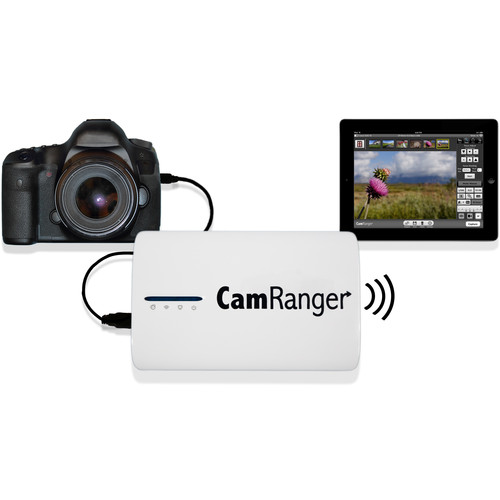
CamRanger

Any cheaper alternative suggestion is welcomed

969450.jpg
 
Upvote 0
Hi Diko.
Cheaper alternate solution, if you happen to have last years and this years phones that are android, or an android phone and android tablet you can do this using tech already in your ownership with an app (£6) called DSLR Controller.
One phone (sender) connects to camera with USB lead and acts as a wifi passthrough device, the tablet or second phone (receiver) connects via wifi to first phone.
Note sender and receiver are used to help clarify the setup, both devices are actually sending and receiving in this bi directional setup.

Cheers, Graham.

Diko said:
But I might try also:

CamRanger

Any cheaper alternative suggestion is welcomed

969450.jpg
 
Upvote 0