climber said:
Thanks to all again, expecially to "jrista" for his comprehensive and understandable explanation.
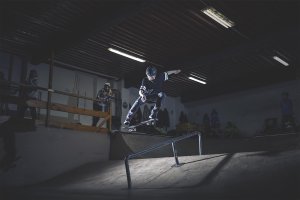
@klickflip: I really don't know these tricks, I was just shooting.

Ask me something about my hobby, if you want. (its in nickname)

And I like your corrections.
I just didn't understand why an author of the linked article in dpreview.com said that it is a "must" to shoot at the base ISO. As "jrista" said in his post, the best option is to push ISO as high to reach ETTR with required (desired) shutter speed and f-stop.
I'm not sure why he would say that, unless he really doesn't actually understand the purpose of ETTR. The only time when I think always using ISO 100 with ETTR would be valid is for landscapes. Static scenes, where shutter speed can vary at will without any adverse affect, is the only time when you would want to lock yourself into ISO 100. For everything else, you really need to CHOOSE your shutter speed (and aperture, for the DOF you need), then you "push" exposure with ISO. If your shooting skateboarders, then your an action shooter, no question. The most critical factor for you is shutter speed...choose that, then push ISO. Trust me on this.

I've been doing it for several years now with birds and wildlife.
climber said:
I want to ask you one more thing (jrista or anybody else). In what way do you make an ETTR when you have one very very bright part of image. Like sun, small window in a dark room, or anywhere there is big dynamic range. Ok, HDR is one option but let say you want to make a single shoot. Will you sacrifice that bright part of an image with purpose to put the rest of an image into the right side of histogram. Or will you shoot like an author of the previously linked article where he put that window and sun on the right edge, but the major part of image was under exposed?
The real question is, what highlights are important? When the sun is in the picture, if there are any shadows at all, you have 20+ stops of dynamic range. Plan and simple. No DSLR camera on earth can capture 20 stops in a single frame. If your scene is static, you can do HDR. If your shooting action, you have two options: Add light to the shadows (i.e. flash or other artificial lighting), or choose what highlights and shadows to preserve, and "discard" the rest. If the sun is actually IN the frame, you can't capture it in any detail. It, and most likely a certain amount of sky around it, will be blown. That's just the fact of the matter.
But...that isn't a problem, either. You don't need, and don't necessarily even WANT, the sun and the deepest shadows to all be visible and detailed. Letting the sun and surrounding sky blow out is actually more desirable...maybe even artistic. Deepening the deepest shadows, while lifting the rest, and recovering highlights, will increase the contrast of the scene. @Kickflip actually demonstrated this very well with his first sample image...he attenuated the contrast curve, which produced a very artistic image.
It isn't possible to preserve unlimited dynamic range, and you shouldn't bother trying. Preserve what you can...and preserve what is important, and don't worry about the rest. That's what photographers do. It's what they have been doing for decades upon decades. In your work, at least the kind of work with the skateboarder, the only thing that REALLY matters in the scene is the skateboarder and his board. The rest of the scene is background and periphery content...it can be darkened or lightened or whatever you want to do, but the key subject in the scene is the boarder, his board, and maybe part whatever ramp or rail he kicked his trick off of.
Expose to the right...just shift your exposure as far to the right as YOU PERSONALLY believe is acceptable given the scene, it's lighting, and how much of the highlights YOU want to preserve. And go with that. The fundamental concept is pretty simple. There are no real hard and fast rules...that's probably the only rule you should REALLY learn about your photography: YOU are the photographer, it's YOUR art, own it and make it yours! ETTR is just a technical tool that allows you to create higher quality exposures that preserve more detail with less noise...when possible. But there are no rules...it's just a tool, like your camera, like your flash.