6D autofocus capabilites: let's bust some myths about it

preben said:
Then I suggest you to write to your Canon technical advisor at Canon and ask! lets hear what Mr Chuck Westfall have to say.
Im right and keep this in mind when you return with your answer
the AF measurement angle accuracy in Canons AF is F-2,8
you will have minor variations of the focus plane below 2,8 due the AF accuracy

Apparently, you missed the fact that I already posted Mr. Westfall's answer to the question about AF accuracy with lenses faster than f/2.8.

Of course you'll have 'minor variations in the focus plane' and you'll have them at all apertures. That's the point of specifying the precision of the system. For an f/2.8 or faster lens with the center AF point (or the column of 5 points on the 5DIII/1D X), that minor variation will be within 1/3 of the depth of focus for the max aperture lens, even if that max aperture is f/1.2. With off-center points or lenses slower than f/2.8, that minor variation will be within one depth of focus.

You claim you're right, but you offer nothing to support your unsubstantiated claim. Young children and their exasperated parents frequently resort to, "Because I said so," but that argument has no merit in a technical discussion.
 
Upvote 0
CarlTN said:
Sure there's noise, but I was making a point about the low light autofocus ability of the center point, to myself (I shot this in January). The 5D3 and 1DX, would not have autofocused at all in this light.

The image was shot at 1/13 s, f/1.8, ISO 25600. That equals -2 EV, which is within the AF specification for the 5DIII and 1D X. So either you're statement highlighted above is wrong, or you are saying that Canon is lying about the specifications for the 5DIII and 1D X. Which is it?


CarlTN said:
And of course the bubble level is not razor sharp. But consider the conditions. 1/13 of a second, at a distance of 4 inches, no image stabilization. The point is, the bubble level is in the plane of focus. You can try to deny it, but I'm sorry, it is.

I don't believe that plane of focus passes through the bubble level, although I'll accept that the bubble is within the DoF. As I'm sure you know, the 'plane of focus' is an infinitely thin plane parallel to the image sensor (ignoring field curvature), and the DoF is the region in front of and behind that plane that remains acceptably sharp, defined by a set of arbitraty criteria. With your settings the DoF should be 50/50 in front of and behind the focal plane. Since the index mark behind the bubble is more in focus than the lettering in front of the bubble, the plane of focus is actually behind the bubble, and the DoF extends forward to include the bubble and backward to include the index mark. That's consistent with the backfocus caused by focus/recompose.

The other point is that the bubble level certainly doesn't appear sharp - nothing in the image really does. That supports my earlier contention - you are at -2 EV, still within the specification of the 5DIII and 1D X for low light AF, and you are struggling to get a usable image at that light level. In half as much light, the 6D could still autofocus…but you can't open up your lens another stop, you'd get more camera shake at 1/6 s, or far worse noise at ISO 51200, and basically have an unusable shot (and it's a stretch to call the existing shot usable). As I stated, the benefit of -3 EV over -2 EV for AF sensitivity is really, really limited in applicability.


CarlTN said:
In any case, you have almost no experience with the 6D, thus your contributions to this thread are less valid, than those with more experience with the camera.

What does that say about the validity of your statements regarding the 5DIII and 1D X? I think we have an answer to that already, given your inaccurate claim above.
 
Upvote 0
neuroanatomist said:
Canon delivered, even better than expected, with the 5DIII – and charged a premium for it. But they also delivered the 6D, basically a very modest update to the 5DII (already an excellent camera, AF notwithstanding) with a functionally equivalent AF system, but at a lower price. That's a win-win.

17 pages of nausea later... that pretty much sums it up.
 
Upvote 0
Skirball said:
neuroanatomist said:
Canon delivered, even better than expected, with the 5DIII – and charged a premium for it. But they also delivered the 6D, basically a very modest update to the 5DII (already an excellent camera, AF notwithstanding) with a functionally equivalent AF system, but at a lower price. That's a win-win.

17 pages of nausea later... that pretty much sums it up.
+1, though I've only read 2 of the pages. Neuro did summarize it nicely.
 
Upvote 0
neuroanatomist said:
whothafunk said:
6D's AF capabilities and focus points are just plain sad for today's standards for a camera worth that much money and a FF label. Some people defend it by saying "it can take sports photos too!". Sure it can, I did it with my 550D also.

Agreed. I took sports photos with no AF at all, and I had to advance the film by hand between each frame. But the fact is the Rebel T4i/650D has an overall better AF system than the 6D - which, as you say, is just plain sad.

THIS.
 
Upvote 0
Biggie said:
the focus plane is the same in every picture at F 1,4

Bold statement implying that the only way to focus a prime f/1.4 lens is to move it (which is demonstrably false). Again, what is the explanation for how AF f/>2.8 images were achieved using canon bodies? Did the camera stop down to focus?
 
Upvote 0
3kramd5 said:
Biggie said:
the focus plane is the same in every picture at F 1,4

Bold statement implying that the only way to focus a prime f/1.4 lens is to move it (which is demonstrably false). Again, what is the explanation for how AF f/>2.8 images were achieved using canon bodies? Did the camera stop down to focus?

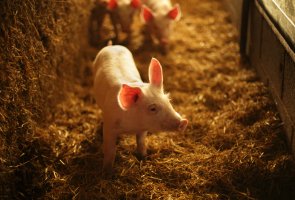
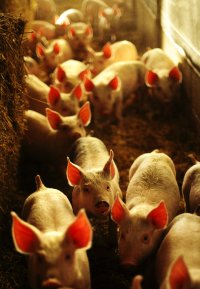
Here's some shots of rare Swedish Red Ear'd Biggies Piggies taken with the centre point of a 6D with a 50mm f1.4 @1.4. Nails the focus plane near as damn it 8 times out of ten. Cropped and recomposed, so not 'focus and recompose'.

Biggies Piggies just won't keep still for a moment !
 

Attachments

  • Swediish-Piggie.jpg
    Swediish-Piggie.jpg
    195.7 KB · Views: 1,682
  • Swedish-Piggies-2.jpg
    Swedish-Piggies-2.jpg
    269.2 KB · Views: 1,667
Upvote 0
neuroanatomist said:
What does that say about the validity of your statements regarding the 5DIII and 1D X?

I don't go into the 1DX thread and spew hatred for the 1DX. Yet you and your butt kissers feel the need to come into a 6D thread to bash it. What does that say about you?

I wasn't passing off the image as "usable", as in professional quality. It was merely an experiment. Only a fool would imply otherwise. No need to get defensive just because the experiment worked. At the very least I would have used exposure compensation and shot in RAW, if it were meant to be printed or something (and yes that would have pushed to ISO 50k or higher). When I have said in the past, that the 6D's center AF point aids tremendously in low light autofocusing, I'm using positive exposure compensation (usually a full stop, sometimes more), in order to get the RGB curve to go farther toward the right side. And in those situations, the ISO I would consider "usable" for good professional quality, is not above 10,000. "Usable" for acceptable pro quality, could be 20,000, but not 25,600. If that means the available light I'm shooting in, is brighter than -3 EV, so be it. But that alone, does not mean this center point, is not still very usable, when compared to an autofocus point that is only rated for -2 EV. It just means that for a "normal exposure" at -3 EV (as in, a very black image), the necessary ISO combined with the lack of any significant recorded signal in the entire upper half of the RGB curve...there is not significant dynamic range from the sensor, or the file's 14 bit format itself, to produce anything other than a dark noisy image. Again though, digital photographers learn early on, that you look at the RGB curve, and expose for that. I deliberately did not do that in this case, because I wanted it to look similarly dark to what my eye saw. It still looks brighter than what my eye saw, though.

The back half of the bubble level, is within the focus plane. The index mark you keep harping on, is ABOVE the plane of the plate that the bubble is mounted in. And the camera, is angled diagonally to the plane the plate exists in, both left-right and front-back axis. Stop ignoring that. That alone explains why the index mark is near the plane of focus. What about the right side of the plate? It's in the focus plane. Draw a diagonal line perpendicular to the sensor, and it runs right through the rear half of the bubble level. You can say it's not because the focus plane is "infinitely small", and thus exists between the subatomic particles that make up the atoms of the plastic of the bubble. But that just smacks of desperation. The plane of focus is effectively more than 1 pixel in width on this sensor (due to the limited resolution of the lens itself, but also the high ISO). And since there is motion blur, it's more like 4 pixels in width. That's a lot bigger than "infinitely small". I know one thing that's infinitely small though, and you keep compensating for it, lol.

Since you say your 1DX could autofocus in -2EV light (as you claim this was)...how about trying it on a similar black object with a tiny light colored object for contrast, and posting the results? Make sure to shoot only as a jpeg (with no in-camera NR), that the exposure is not faster than 1/13 second, there's no image stabilization, and that you are hand-holding it while bending over a bit, and that your subject distance is ONLY 4 inches in front of the front lens element. Also, make sure to select ONLY THE OUTERMOST side autofocus point (don't use any groupings). Your results had better be better than mine, because you won't be needing to focus recompose. Make sure the available light in the room, is equal to 3 lit candles (with no reflectors), placed 8 feet away from the camera.

 
Upvote 0
Sporgon said:
3kramd5 said:
Biggie said:
the focus plane is the same in every picture at F 1,4

Bold statement implying that the only way to focus a prime f/1.4 lens is to move it (which is demonstrably false). Again, what is the explanation for how AF f/>2.8 images were achieved using canon bodies? Did the camera stop down to focus?

Here's some shots of rare Swedish Red Ear'd Biggies Piggies taken with the centre point of a 6D with a 50mm f1.4 @1.4. Nails the focus plane near as damn it 8 times out of ten. Cropped and recomposed, so not 'focus and recompose'.

Biggies Piggies just won't keep still for a moment !

Great job!
 
Upvote 0
Sporgon said:
Here's some shots of rare Swedish Red Ear'd Biggies Piggies taken with the centre point of a 6D with a 50mm f1.4 @1.4. Nails the focus plane near as damn it 8 times out of ten. Cropped and recomposed, so not 'focus and recompose'.

Biggies Piggies just won't keep still for a moment !

We have an almost 2-year-old toddler who can move about as quickly and randomly as these piggies, and the AF with my 6D and 50 f/1.4 and 85 1.8 does just fine under f/2.0 using the center point. Overall, my hit rate for moving kid shots is in the 75-80% range, and I'm happy with that. I know a 5D3 or 1Dx would do much better, but for my overall use (kids/landscapes/portraits/macro and a little high school golf and cross country) the 6D is a great camera.

neuroanatomist said:
Exactly. Four years, many people (myself included) were clamoring for a camera that unified the image quality of the 5DII with the autofocus of the 7D. Canon delivered, even better than expected, with the 5DIII – and charged a premium for it. But they also delivered the 6D, basically a very modest update to the 5DII (already an excellent camera, AF notwithstanding) with a functionally equivalent AF system, but at a lower price. That's a win-win.

Well summarized, I agree. If you want a camera with superior AF, buy a 1Dx or 5D3. The 6D has IQ in the same ballpark as the higher end cameras, but a limited AF system. That's why its $1K+ cheaper than the 5D3. Personally, I'm glad Canon gives us price and capability options.
 
Upvote 0
CarlTN said:
neuroanatomist said:
What does that say about the validity of your statements regarding the 5DIII and 1D X?

I don't go into the 1DX thread and spew hatred for the 1DX. Yet you and your butt kissers feel the need to come into a 6D thread to bash it. What does that say about you?

I wasn't passing off the image as "usable", as in professional quality. It was merely an experiment. Only a fool would imply otherwise. No need to get defensive just because the experiment worked. At the very least I would have used exposure compensation and shot in RAW, if it were meant to be printed or something (and yes that would have pushed to ISO 50k or higher). When I have said in the past, that the 6D's center AF point aids tremendously in low light autofocusing, I'm using positive exposure compensation (usually a full stop, sometimes more), in order to get the RGB curve to go farther toward the right side. And in those situations, the ISO I would consider "usable" for good professional quality, is not above 10,000. "Usable" for acceptable pro quality, could be 20,000, but not 25,600. If that means the available light I'm shooting in, is brighter than -3 EV, so be it. But that alone, does not mean this center point, is not still very usable, when compared to an autofocus point that is only rated for -2 EV. It just means that for a "normal exposure" at -3 EV (as in, a very black image), the necessary ISO combined with the lack of any significant recorded signal in the entire upper half of the RGB curve...there is not significant dynamic range from the sensor, or the file's 14 bit format itself, to produce anything other than a dark noisy image. Again though, digital photographers learn early on, that you look at the RGB curve, and expose for that. I deliberately did not do that in this case, because I wanted it to look similarly dark to what my eye saw. It still looks brighter than what my eye saw, though.

The back half of the bubble level, is within the focus plane. The index mark you keep harping on, is ABOVE the plane of the plate that the bubble is mounted in. And the camera, is angled diagonally to the plane the plate exists in, both left-right and front-back axis. Stop ignoring that. That alone explains why the index mark is near the plane of focus. What about the right side of the plate? It's in the focus plane. Draw a diagonal line perpendicular to the sensor, and it runs right through the rear half of the bubble level. You can say it's not because the focus plane is "infinitely small", and thus exists between the subatomic particles that make up the atoms of the plastic of the bubble. But that just smacks of desperation. The plane of focus is effectively more than 1 pixel in width on this sensor (due to the limited resolution of the lens itself, but also the high ISO). And since there is motion blur, it's more like 4 pixels in width. That's a lot bigger than "infinitely small". I know one thing that's infinitely small though, and you keep compensating for it, lol.

Since you say your 1DX could autofocus in -2EV light (as you claim this was)...how about trying it on a similar black object with a tiny light colored object for contrast, and posting the results? Make sure to shoot only as a jpeg (with no in-camera NR), that the exposure is not faster than 1/13 second, there's no image stabilization, and that you are hand-holding it while bending over a bit, and that your subject distance is ONLY 4 inches in front of the front lens element. Also, make sure to select ONLY THE OUTERMOST side autofocus point (don't use any groupings). Your results had better be better than mine, because you won't be needing to focus recompose. Make sure the available light in the room, is equal to 3 lit candles (with no reflectors), placed 8 feet away from the camera.

You're suggesting that I post an image? I'm still waiting for you to post even a single image, of the hundreds you must have if you're correct in your claim that the -3 EV AF sensitivity of the 6D is, "...very useful in the majority of situations where you are shooting wildlife (or people) around, before, or after sunset." Instead, you provide an image of a ballhead in a dark room, and even that was at -2 EV, not -3 EV.

Thanks for your reply above, which demonstrates the following:

[list type=decimal]
[*]You don't understand the concept of a focal plane.
[*]You are unable to admit your mistakes.
[*]You have the emotional maturity of a preadolescent boy.
[/list]
 
Upvote 0
bholliman said:
We have an almost 2-year-old toddler who can move about as quickly and randomly as these piggies, and the AF with my 6D and 50 f/1.4 and 85 1.8 does just fine under f/2.0 using the center point. Overall, my hit rate for moving kid shots is in the 75-80% range, and I'm happy with that. I know a 5D3 or 1Dx would do much better, but for my overall use (kids/landscapes/portraits/macro and a little high school golf and cross country) the 6D is a great camera.

That's very similar to my experience the 5DII, although the hit rate dropped noticeably when the subject was moving toward/away from the camera, or when trying to track moving subjects in lower light. For example, kids coming down a slide at an indoor 'bouncy house' (4-6 EV lighting), the 6D I had borrowed locked on initially at the top, but couldn't keep up with tracking. My 1D X tracks the whole way down, either following the kid with the center point, or using auto point selection and letting the system hand off focus from one AF point to the next. The 7D's AF system would do a decent job, but the need for a fast shutter speed in low light pushes the ISO beyond the 7D's usable range (in some cases, even beyond the highest available setting!).
 
Upvote 0
"many of us know that focus/recompose causes problems with fast lenses shot wide open. If you're using a slower lens, stopping down your fast lens, or aren't a stickler for critical focus on your intended subject, focus/recompose can work."

One learns this within months of starting to learn photography.
 
Upvote 0
Ruined said:
J.R. said:
I have both the 6D as well as the 5D3. I've tried and did not like using the 50L or the 85L II on the 6D except when I was shooting with a tripod and LV. The positioning of the AF points on the 6D is such that lots of focus-recompose is needed and with the 50L and 85L II, it's just asking for trouble.

While it is true you are more limited with your AF points on the 6D, keep in mind you can focus and crop instead of recompose.

More importantly, the 6D allows for easy switch to Eg-S focus screen unlike the 5D3 - so IMO 6D actually has a significant advantage for manually focusing the f/1.2 lenses and seeing their true DOF in the viewfinder. One could argue you are looking for trouble in general if you try to autofocus at f/1.2 all the time no matter what camera you use.

Does not sound like a great idea to me.
 
Upvote 0
bdunbar79 said:
Which is the whole point. With the 5D3/1Dx/1D4/1Ds3 etc., you don't have to use focus/recompose. Focus/recompose sucks hardcore.

Unless you're the mythical SuperCarl, who's X-ray vision allows him to see through facts as if they aren't even there, and who's powerful lungs can blow hot air all day long. SuperCarl, who can bend felt with his bare hands, leap tall golfballs in a single bound, and has a 6D that defies the principles of geometry and optical physics.
 
Upvote 0
neuroanatomist said:
bdunbar79 said:
Which is the whole point. With the 5D3/1Dx/1D4/1Ds3 etc., you don't have to use focus/recompose. Focus/recompose sucks hardcore.

Unless you're the mythical SuperCarl, who's X-ray vision allows him to see through facts as if they aren't even there, and who's powerful lungs can blow hot air all day long. SuperCarl, who can bend felt with his bare hands, leap tall golfballs in a single bound, and has a 6D that defies the principles of geometry and optical physics.

Neuro, have you come up the title for this poem yet? I'm guessing "SuperCarl" ;D
 
Upvote 0