
You are using an out of date browser. It may not display this or other websites correctly.
You should upgrade or use an alternative browser.
You should upgrade or use an alternative browser.
7d noise question is it normal?
- Thread starter applecider
- Start date
- Status
- Not open for further replies.
 It is shown here at 200%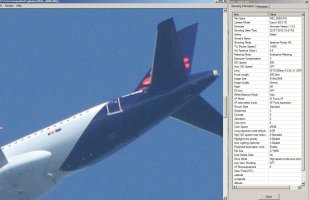
I consider 7D noisy at every iso, my previous 30D was better in term of noise when viewing 100% raw files shot at lower iso. But noise is just one parameter of IQ, what about color, contrast, details...
But you can use SW to reduce noise and I consider noise of 7D images easily reducable, so I use iso1600 without any restriction, only when I shot at iso3200 I have to control exposition precisely. Adobe Lightroom is enough for me.
Do not look at images at 100% zoom, just print some photos on paper and feel it by hearth.
But you can use SW to reduce noise and I consider noise of 7D images easily reducable, so I use iso1600 without any restriction, only when I shot at iso3200 I have to control exposition precisely. Adobe Lightroom is enough for me.
Do not look at images at 100% zoom, just print some photos on paper and feel it by hearth.
Upvote
0

applecider said:Here are some examples:
I've been shooting a variety of photos with 7d 5dii and iii and the 7d while a good tracking and focusing camera, has not lived up to my expectations of improving reach because the files don't stand up to any cropping because of high noise and what I think is just poor iso performance. Even uncropped files look fuzzy. I've included files from DPP of clouds (since they are at infinity focus to take poor focusing out of equation), but virtually all the photos show the same graininess and I think that is keeping them from attaining sharpness, really at any iso. The metadata should be right nest to the photos to show the iso and other information.
So is this normal or outside of normal for a 7d, and what should I do bought the camera about 6 months ago.
A couple things I see in your samples. For one, your shooting at a VERY narrow aperture of f/13. That is not only beyond the sensor DLA of f/6.9, but its well beyond what you could possibly need to get enough DOF to encompass a bird, especially at such distances. You could probably open the aperture up to f/7.1 or f/6.3, which would be some two stops faster, allowing you to reduce your ISO setting to ISO 200 or less (barring a couple caveats.)
One thing to be aware of with the 7D (and Canon sensors in general) is that, unlike Sony Exmor sensors which have a constant and very low noise floor, electronic (read) noise increases at the fastest few ISO settings. At ISO 200 its about double the average at higher settings, and at ISO 100 its about quadruple the average at higher settings. That means that using an ISO setting lower than ISO 320 isn't really going to do as much as you might think from a noise standpoint.
Another key factor in your samples is the fact that the sky is primarily blue. Only 1/4 of the pixels in the 7D sensor are blue, or 50% relative to green. That means blue pixels (and red pixels) need to be amplified more than green pixels to produce the same average luminance...and that has the side effect of increasing noise. Silicon is also naturally less sensitive to blue light than it is to green, both of which it is less sensitive to than red. As such, blue needs the most amplification of all three colors, so its generally the noisiest channel. (Intriguingly, our biological eyes have a similar issue, which is partly why we have blue cones spread over a 10° area of our fovea, where as red and green cones are clustered in a 2° area.) Sky tends to be noisy on all sensors, especially at higher ISO settings (in Canon cameras, ISO 640 is really ISO 800 with what is effectively a -1/3rd stop pull).
Finally, the 7D has a very high density sensor with a moderate pixel pitch, which means it is more susceptible to the random nature of light than larger sensor with a large pixel pitch. The Canon 30D had a 6.4 micron pixel pitch, almost as large as the 5D III, which means each pixel is capable of capturing 50% more light than the 4.3 micron pixels in the 7D. That has the effect of normalizing photon shot noise in the 30D.
All of these factors add up to more visible noise in the 7D, particularly in the blue channel...so a blue sky is going to be particularly affected (which is nothing special...that happens to all cameras, just to a slightly greater degree in the 7D). On the flip side, the 7D has over a 2x resolution advantage over the 30D. If you downscale a 7D image to 30D size with an effective scaling algorithm, the 7D image should actually look better than the 30D image. Additionally, since the 7D produces images more than twice the size of the 30D, you should be resolving considerably more fine detail. On a normalized scale the 7D actually has a noise advantage, and on a native scale the 7D has a resolution advantage, despite the noise handicap. You could scale down the 7D images to 16.4mp (twice the size of a 30D image), and still produce better results than the 30D. You won't eliminate all of the additional noise, but you can certainly improve things...and a little bit of extra NR in post with RAW can produce far superior results to anything the 30D could produce even with considerable post processing.
One thing to be aware of when it comes to Canon sensors is that once you get above ISO 1600 (possibly excepting the 5D III and the 1D X, as they have much greater ISO leeway than any previous Canon sensor), the amplification algorithm becomes fairly complex. ISO 3200+ involves analog amplification to ISO 1600, as well as several other analog and digital forms of amplification to get to the selected ISO setting. The top two ISO settings on Canon cameras tend to be considerably noisy, more so than one would expect if each ISO setting was amplified on a simple linear curve. I use ISO 3200 far more often than I would prefer on my 7D, however I prefer to stay at ISO 1600 or lower, as the results are far better. Unless you are working with extremely low light and need a high shutter speed, I recommend avoiding ISO 2000 and ISO 3200+.
Upvote
0
Thanks for description, I already found out iso 400 or iso 800 is the best. Last year I used iso 800 on my 30D every time when possible to get visually sharper images. I don't know how it worked, mayb similar to analog film, I love HP5+ film, it's grain made my photos visually sharper regardless fact resolution was lower than on FP4.
Iso 400 is used by 7D when shot with speedlite in auto mode, maybe the reason is because iso 400 is "native" value.
Iso 400 is used by 7D when shot with speedlite in auto mode, maybe the reason is because iso 400 is "native" value.
Upvote
0
marek.sykora said:Thanks for description, I already found out iso 400 or iso 800 is the best. Last year I used iso 800 on my 30D every time when possible to get visually sharper images. I don't know how it worked, mayb similar to analog film, I love HP5+ film, it's grain made my photos visually sharper regardless fact resolution was lower than on FP4.
Iso 400 is used by 7D when shot with speedlite in auto mode, maybe the reason is because iso 400 is "native" value.
ISO 100 is most definitely the "native" or base ISO on Canon DSLR's. Some people mistakenly think that ISO 160 is the native ISO as it exhibits less noise, however that is simply a byproduct of Canon's inane way of achieving third-stop ISO settings (ISO 125 is a +1/3rd stop push above ISO 100, costing you 1/3rd stop DR and increasing noise...ISO 160 is a -1/3rd stop pull below ISO 200, also costing you 1/3rd stop DR and reducing noise.) ISO 400 is simply "not worse" than ISO 100 or 200, as it has lower read noise...but it will exhibit more photon shot noise. Overall noise levels should be roughly the same, however ISO 400 has less electronic noise, and its electronic noise that exhibits undesirable, patterned characteristics.
Upvote
0
May I play the Devail's avocate??? Everybody is hammering on the nise of 7D here. But the DXO mmark proclaims that 7D has got better noise than 50D and 40D. Whats is going on??? P.S. I have no intension of taking side. I just want some explanation.
Upvote
0
scrappydog said:This is odd. I thought ISO 200 provided slightly more DR than ISO 100 and, accordingly, ISO 160 would provide slightly more DR than ISO 100 (as it is based off ISO 200). Is my understanding wrong?jrista said:ISO 100 is most definitely the "native" or base ISO on Canon DSLR's. Some people mistakenly think that ISO 160 is the native ISO as it exhibits less noise, however that is simply a byproduct of Canon's inane way of achieving third-stop ISO settings (ISO 125 is a +1/3rd stop push above ISO 100, costing you 1/3rd stop DR and increasing noise...ISO 160 is a -1/3rd stop pull below ISO 200, also costing you 1/3rd stop DR and reducing noise.)
Yes, that would be incorrect. Every "real" stop...ISO 100, 200, 400, etc., costs approximately 1 stop of DR. Think about the problem for a moment. At ISO 100, your native "base" ISO, there is zero amplification. If we take a hypothetical exposure that takes 1s at f/8 at ISO 100, and want to maintain the exposure value as we increase ISO. Jumping to ISO 200 (more sensitive) would require reduction in exposure time at the same aperture, to 1/2s. Same exposure, half as much time, so the signal has to be amplified 2x. Same adjustment again, to ISO 400, requires an exposure time of 1/4s, signal now has to be amplified 4x over the original ISO 100 exposure. ISO 800, 1/8s, 8x amplification. ISO 1600, 1/16s, 16x amplification.
At every full stop of ISO, your exposure time reduces by 1 stop, meaning half as much light actually strikes the sensor as the previous ISO setting. If our theoretical sensor can say absorb 16384 photons and turn them into 16384 electrons with a gain of 1 (that would be 100% Q.E., impossible, but lets assume for simplicity sake)...then at ISO 100 a fully saturated "white" pixel would have exactly 16384 electrons, and when converted into a digital signal it would be exactly enough bits to support "perfect" 14-bit output (assuming zero overhead, again impossible, but for simplicity sake), with a full 14 stops of native DR at ISO 100. Our base exposure of ISO 100, 1s, f/8 demonstrates that our hypothetical sensor takes 1 second at f/8 to fully saturate, and 1/16384th of a second to capture 1 photon and generate 1 level of luminance of digital output. At ISO 200, we have twice the sensitivity and half the time to produce exactly the same exposure. Our sensor behaves the same from an analog standpoint, it still takes 1/16384th of a second to capture 1 photon, so our maximum saturation has to drop by half for half the exposure time...saturation is reached at 8192 photons, but each additional photon received results in roughly twice the exposure over every previous photon as in the ISO 100 exposure due to the amplification applied when those electrons are converted into a digital luminance levels. We now have 13 stops of DR, the ability to capture 1/2 as much light as we did at ISO 100. At ISO 400, the trend continues. Our saturation level is now 4096 photons, 1/2 as much light as ISO 200 and 1/4 as much light as ISO 100. At ISO 800, our saturation level is now 2048 photons, 1/2 as much light as ISO 400 and 1/8th as much light as ISO 100. At ISO 1600 our saturation level is 1024 photons, 1/2 as much light as ISO 800 and 1/16th as much light as ISO 100. We could, theoretically continue this until we had at least 2 photons left: 3200/512, 6400/256, 12800/128, 25600/64, 51200/32, 102400/16, 204800/8, 409600/4, 819200/2. Thats 14 full stops of ISO settings, right in line with our 14 stops of DR. Hypothetically speaking...of course.
In reality, sensors are not ideal systems, and they have a certain amount of overhead. In the most near-ideal circumstances we can create...which are usually supercooled CCD's that operate at -80C, there is nearly zero electronic noise, and quantum efficiency can surpass 80%, sometimes even surpassing 90% in the best devices. Read noise at these levels is often a fraction of an electron, meaning noise produced by the electric current passing through the sensor affects the signal read only a small fraction of the time. For consumer-grade devices, sensors have much greater inefficiencies. Quantum efficiency has only recently reached around 50% levels, which means we lose half the light that actually reaches the sensor...50% of photons are either reflected or absorbed as heat rather than converted to charge (to an electron). Additionally, consumer-grade sensors have considerably greater amounts of electronic noise as they have to operate at room temperature or higher. This noise constitutes a certain amount of overhead that limits what is theoretically possible. Most sensors introduce anywhere from 4 to more than 30 electrons of "nonsense" into the signal read out at ISO 100, which drops to around 3 electrons on average for ISO settings above 400. Sony Exmor sensors utilize multiple methods of hardware-level electronic noise compensation or mitigation, and their electronic noise is about 3 electrons on average for every ISO setting. Sensors also usually have a gain larger than 1 at base ISO, although sometimes its only fractional (I believe the 7D has a gain of around 2 at ISO 100, where as the 5D III has a gain of around 5). That generally means sensors are working with more electrons than 16384 (which is 2^14, or 14 bits worth of digital information)...the 7D has a maximum saturation of 20187 electrons, while the 5D III has a maximum saturation of 67531 electrons. Some additional overhead is added by A/D conversion, although again its fractional. In the case of the 7D, ISO 100 read noise is 8.6 electrons and ISO 200 read noise is 4.7 electrons. At ISO 100, that eats away at over two stops worth of DR, and at ISO 200 eating away at nearly two, on top of the initial stop lost due to the increased amplification/lower saturation point of ISO 200. So ISO 100 and ISO 200 on a 7D both result in roughly the same amount of dynamic range. ISO 400 has about 3.3 electrons worth of read noise, or just over a stop. Finally, the "real" ISO values are often not exactly the number you choose, and in most cases the ISO scale is somewhat compressed (i.e. in the 7D, ISO 1600 is actually measured as ISO 1223, and ISO 3200 is actually measured as ISO 2278), so we don't actually lose a full stop of DR every time we jack up ISO...we lose a little bit less.
Due to quantum efficiency, the exact nature of gain (rate of conversion of electrons to digital bits), the amount of electronic overhead, the amount of loss in A/D conversion, and the specific nuances of ISO as implemented by each camera brand and model, dynamic range at each ISO setting tends to drop by a little less than 1 stop for every full stop increase in sensitivity on most cameras. If we could actually build a near-perfect sensor where error/overhead introduced by the readout process was barely measurable, we could effectively ignore it, and that perfect sensor would lose exactly 1 stop for every increase of ISO...and it would also produce exactly 14 stops at ISO 100 (for a 14-bit sensor).
Upvote
0
Rocky said:May I play the Devail's avocate??? Everybody is hammering on the nise of 7D here. But the DXO mmark proclaims that 7D has got better noise than 50D and 40D. Whats is going on??? P.S. I have no intension of taking side. I just want some explanation.
The 40D has 33% Q.E., the 50D has 38% Q.E., and the 7D has 41% Q.E. The improved quantum efficiency, on top of an improved A/D converter and who knows what other digital improvements, helps the 7D produce images that are on-par with older designs with larger pixels. The efficiency of a pixel to convert photons to electrons is really key to IQ at higher ISO settings in particular, as it improves SNR, and a larger SNR (particularly for low-light signal) improves noise in the shadows and black quality.
One thing is for sure, though...the 7D is at a disadvantage with noise when it comes to large areas of constant tone or smoothly graded tone. Cameras with larger pixels tend to do significantly better than the 7D in this area. The 7D suffers at low ISO due to read noise and at higher ISO more than others due to the random nature of light, so bokeh, blue sky, or an medium-toned solid color surface or smooth gradient will look noisier on the 7D than on other cameras. Wherever you have useful detail, particularly with a higher signal (40-50% saturation or more), the 7D's IQ is great. The noisy nature of the 7D's bokeh, however, can have a significant impact on IQ. Canon really needs to boost the quantum efficiency of the 7D's successor to around 60% or more...either with some form of improved microlens or maybe a layered microlens structure, a backilluminated design, or some form of efficient thermal cooling (or all of the above!) A higher Q.E. will greatly help SNR, which should produce cleaner results in the midtones, resulting in much improved IQ at ISO 400+.
I love my 7D, but I've resorted to using Lightroom 4.1's brush tool with -20 sharpness/+80 NR to paint my boke (blurry backgrounds) to completely eliminate noise. My subjects tend to have plenty of detail and sharp quality, but when paired with noisy boke in a print, or when I need to do significant cropping...the results are rather unsatisfactory.
Upvote
0

Blue is the most difficult color, it requires more gain.
My 7D definitely will have visible noise at IS) 800 and a light blue area. However, it takes NR very well.
Same for all of my DSLR's, including 1D MK IV, 5D MK III and D800.
There is no such thing as noise free, you must use NR if you want to view at 100%.
My 7D definitely will have visible noise at IS) 800 and a light blue area. However, it takes NR very well.
Same for all of my DSLR's, including 1D MK IV, 5D MK III and D800.
There is no such thing as noise free, you must use NR if you want to view at 100%.
Upvote
0


jrista said:..
One thing is for sure, though...the 7D is at a disadvantage with noise when it comes to large areas of constant tone or smoothly graded tone. Cameras with larger pixels tend to do significantly better than the 7D in this area. The 7D suffers at low ISO due to read noise and at higher ISO more than others due to the random nature of light, so bokeh, blue sky, or an medium-toned solid color surface or smooth gradient will look noisier on the 7D than on other cameras. Wherever you have useful detail, particularly with a higher signal (40-50% saturation or more), the 7D's IQ is great. The noisy nature of the 7D's bokeh, however, can have a significant impact on IQ. Canon really needs to boost the quantum efficiency of the 7D's successor to around 60% or more...either with some form of improved microlens or maybe a layered microlens structure, a backilluminated design, or some form of efficient thermal cooling (or all of the above!) A higher Q.E. will greatly help SNR, which should produce cleaner results in the midtones, resulting in much improved IQ at ISO 400+.
..
Yes, the 7D is a terrific camera, handicapped by noise at times, but still does a mostly good job when you play on its strengths.
Some of us have 7D bodies with more annoying pattern noise than others.
At times the dual-readout circuitry, responsible for the 7D attaining its high fps, contributes to a particularly annoying vertical banding effect where lines form in groups 8 pixels wide. This is usually only noticeable in low signal, or shadow, areas. It's very difficult to minimize the appearance of this kind of banding noise and it can become an obvious detrimental artifact in a large print.
Using the ETTR (expose to the right) method you can help reduce the effect of the banding if your camera is prone to it. It also seems the 7D may be slightly more tolerant of a bit of over exposure than some other bodies I've used.
And, since its noise characteristic becomes less apparently patterned at higher ISOs, you can push the ISO up a stop, ETTR a bit, then bring it back down in post.. IF you have enough light/fast enough lens to work with.
Some experimentation with shooting conditions will help you learn how to get the best results from it.
Years ago I read about a technology known as "black silicon." I've been hoping it would get put to use in camera sensors. When you look at the sensor, it's obviously reflecting a considerably amount of mostly green light. Those reflected photons could be better utilized if they stayed in the sensor to generate electrons of signal instead. Apparently we don't quite need to push the tech to this point yet as Sony's Exmor is doing a pretty impressive job already and any improvements on that are going to be incremental and possibly diminishing returns on R&D.
Upvote
0

Aglet said:Yes, the 7D is a terrific camera, handicapped by noise at times, but still does a mostly good job when you play on its strengths.
Except for the higher banding on the 7d, it shares the 18mp sensor with 550d and up - so here's my 2 cents from 60d:
* everything above iso 800 is crap @100%, and only if you don't need to raise shadows too much. And with everything above iso 400 you might run into problems in some areas as you've just found out :-o
* your best bet is to ettr if you can, i.e. your shutter speed is still high enough. Then use recovery in lr4, I use it nearly all the time, in contrast to lr3's pv2010 there's now drawback in the new 2012 process.
* use local denoising with lr4 or noise ninja
* only denoise just enough that the *target* export size shows just the grain with you can live with
* the one advantage of the crop sensor is the 1.6x magnifciation = less cropping if your lens focal length was too short = less noise, more resolution and more sharpness in comparison to ff. This is esp. valid for close-up macro shots since the usable aperture is higher when staying as far away from 1:1 as possible.
Upvote
0
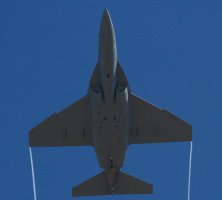

I've seen this kind of noise in the 7D photos.biosdi said:Hi everyone. I use this discussion to ask you if this noise is normal at ISO 250 (file attached).
Shot condition: full sun, no clouds, High temp:35 C, very fast military jet
Thanks for your precious help
Remember, the ISO250 is actually digitally pushed ISO200, which increases the noise. Moreover, ISO160 is actually ISO200 pulled down which hide the noise (but may cut highlights).
In short:
You'll make far more visible noise in ISO 125, 250, 500, 1000, etc.
You can see highlights cut in ISO 160, 320, 640, 1280, etc.
Upvote
0

applecider said:As I said I was shouting clouds in this image, so I don't think that it is a focus or metering issue, these photo are typical not exceptional. If the 7d is limited to iso 400, then it really is a poor wildlife platform.
Here is another sample at %200 that shows the noise that I'm getting that seems to be preventing sharpness. I'll try to find a low iso example with different metering
time 4 u too get rid of that old 7D
Upvote
0
- Status
- Not open for further replies.
Similar threads
D
- Replies
- 32
- Views
- 5K

- Replies
- 1
- Views
- 3K

- Replies
- 38
- Views
- 34K