Advice Needed for shooting SuperMoon tonight...

Status
Not open for further replies.

cayenne

Canon Rumors Premium
Mar 28, 2012
2,907
800
24,496
Hello all,

I just heard on the news that tonight there is going to be a 'super moon' with the moon coming very close to earth and will be larger and brighter than usual.

Can someone give me advice on ways to shoot this tonight? I have a 5D3.

Lenses I have:

70-200L f/2/8 II
85mm f/1.8
24-105L f/4
17-40mm L f/4

Robikon 14mm

Would HDR be a way to go? I've not taken long 'bulb' type exposures...I'm not sure how long to keep it open, and what settings to use...

So, I'd very much appreciate some suggestions for my first try at some astral photography tonight!!

Thanks in advance,

cayenne
 
Yes, use a tripod for the steadiest shot. But, if it's a clear night, it will be a relatively short exposure!
A good start for the full moon is the normal daylight, "sunny sixteen", rule. After all, the same sun that lights the earth from about 93 million miles away is doing the same to our moon!

Since your longest focal length is only 200mm, you might want to combine images for a sequence of the moon as it moves across the sky. If you take an exposure every ten minutes, it will have moved about four or five diameters. Include some recognizable feature on the ground, make sure your tripod is locked in place and you should have a great souvenir of your night with the Supermoon.
 
Upvote 0
jhpeterson said:
Yes, use a tripod for the steadiest shot. But, if it's a clear night, it will be a relatively short exposure!
A good start for the full moon is the normal daylight, "sunny sixteen", rule. After all, the same sun that lights the earth from about 93 million miles away is doing the same to our moon!

Since your longest focal length is only 200mm, you might want to combine images for a sequence of the moon as it moves across the sky. If you take an exposure every ten minutes, it will have moved about four or five diameters. Include some recognizable feature on the ground, make sure your tripod is locked in place and you should have a great souvenir of your night with the Supermoon.

Thank you!!

I'll give this a try!!


Any other suggestions out there?

Thanx!

C
 
Upvote 0
Cloudy over Philadeplhia area, so I am out of luck tonight.


Recommend longest lens you have and at least f16. Experiment from there with exposure length. Use remote trigger and solid tripod setup. Live view will allow you to frame shot better.


Good luck!
 
Upvote 0
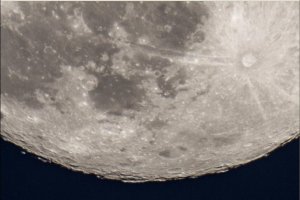
Unfortunately I was not able to get it behind an ancient temple. So I took a few shots of it.

This is a 100% crop (5D3, 500mm f/4L II, EF2XII).
 

Attachments

  • supermoon1-b.JPG
    supermoon1-b.JPG
    54.4 KB · Views: 1,017
Upvote 0
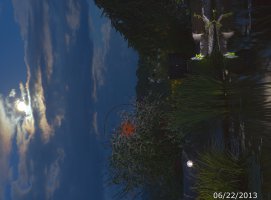
My first try at HDR. My apologies to the purist!
5 shots, 1 step each, 1 second exposure, f/8, ISO 3200, on a 5D3, with 24-70(1). Done with the aid of CamRanger.
The clouds were coming in just as the moon rose, and so it was fairly high before the moon peek out of the clouds. HDR can't match the movement of the clouds, thus the terrible outlines on the moving clouds.
 

Attachments

  • image.jpg
    image.jpg
    692.2 KB · Views: 966
Upvote 0
From last night. Think of a moon pic as a landscape pic, just a little further away :)
1/250 sec, f9 ISO 100
5D3 with 300mm f4 + 1.4x TC

378A4974_Full_moon.jpg
 
Upvote 0
Tabor Warren Photography said:
index.php

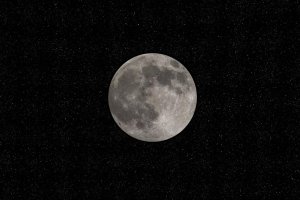
Here's my go at it. I used the 60D for this one and cropped the heck out of it.

60D
70-200mm f/2.8ii @200mm
f/2.8
1/3200
ISO 3200

Cheers,
-Tabor
What are all those white specks around the Moon?

Don't tell me they're stars; they can't be at that exposure.

Is your camera suffering from a very noisy sensor? Or did you add them manually in Photoshop? Or let Jackson Pollock loose on your image?
 
Upvote 0
If you bump clarity way up in Lightroom those fake star/specks show up.
Fleetie said:
Tabor Warren Photography said:
index.php

Here's my go at it. I used the 60D for this one and cropped the heck out of it.

60D
70-200mm f/2.8ii @200mm
f/2.8
1/3200
ISO 3200

Cheers,
-Tabor
What are all those white specks around the Moon?

Don't tell me they're stars; they can't be at that exposure.

Is your camera suffering from a very noisy sensor? Or did you add them manually in Photoshop? Or let Jackson Pollock loose on your image?
 
Upvote 0
IMO
+If there is windy, leave IS on even on tripod.
+Use spot metering.
+Auto focus on the moon once then switch that auto focus off.
+Remove any lens filter
+Try boosting ISO to see stars if you could.

The moon is relatively slow, so as long as you faster than 1/10 you are safe.
 
Upvote 0
Status
Not open for further replies.