Analysis of RAW samples at Fred Miranda show weak DR

SecureGSM said:
No, nigth skies not supposed to be blue. Do not get sarcastic. The "yellow light" can and needs to be dealt with. This is typical sodium Vapour street lighting that kills everything. It is easy to correct in post. You need to pay attention though.
Well, I mean a dark, dark blue instead of the current muddy grey / orange tint it has now. I wasn't trying to be sarcastic, apologies if I come accros that way. Or would your preference be black? I was experimenting with some astro stuff lately and in those long exposures, the night sky does get blue, so that seems to me the most natural choice. After all, when cleaning up this stuff in post, it is altering reality anyway. To my eye at least, the sky there really looks pretty dirty.

What would you recommend to clean it up? Masking and adjusting tint and saturation until it feels right or is there a proper method?

On a side note, a totally different question: Does the amount of thermal noise you gather when exposing for longer periods of time vary from camera to camera? With the T3i, I find that to be a deal more distracting than the fixed pattern Noise once I expose for more than 30 seconds. From 60 seconds up, it doesn't even require any shadow pushed or sharpening to ruin the image. Is that something that a 80D or 6DII would handle better? Is it something where the larger Pixels of a full frame body help?

Not something I need to often, its more a question out of curiosity. It's hardly something that's affected by the lack of on chip ADC, so is it something where the newer 6DII sensor might still have improved?
 
Upvote 0
Aglet said:
scyrene said:
You've missed my point (but of course) - in many situations, an output image can be produced with a Canon camera that's the same as a Nikon, Sony, etc, but the technique differs - so instead of, e.g. shooting at ISO 100 and raising shadows five stops, you shoot at ISO 400 and pull the exposure down and maybe shadow lift 1-2 stops (ETTR). In many situations, you have highlight headroom* and ETTR means the shadows are cleaner. Neither technique is perfect; the Sony sensor allows for a bit more flexibility in some ways, I don't think that's in dispute. But it's possible to produce images that are equivalent with modern cameras from every manufacturer, if you know what you're doing (*and as an aside, as many here have pointed out, in most situations where there's too much DR for a single Canon exposure, there's likely to be too much for a Sony sensor too - the difference is only a stop and a bit at most either way isn't it?).

Or to put it another way, people like you only love shadow lifting and go on about it so much because it's what Canon is least good at, and you like to stir the pot. Most people just want to produce the best images they can, and that means learning how best to use their gear, whoever it's made by.

much of what you say is correct, I'm not going to argue that.

My point is that someone who's looking to push some creative boundaries with Canon files has to learn the technique to compensate for the particular shortcomings of that system.. Both in shooting and in post.
And, in a few situations, no matter what techniques you use, ABC will still deliver much better data to work with. i.e. no pattern noise.

DR is less limiting than the pattern noise problems inherent in so many Canon cameras.
The fact that these 2 are related does not put me on the DR bandwagon.
I'm blowing the horn on the anti-FPN float. :)

Fair enough, and I appreciate some people want to spend as little time postprocessing as possible. Fixed pattern noise is indeed objectionable - I do some astrophotography where it really is annoying - but I'm not sure how much of an issue it is with the latest Canon sensors (I genuinely don't know as I've not used them, but it seems that people complain about it less than they used to).
 
Upvote 0
Joules said:
mb66energy said:
While artificial light sources can have a brightness close to the sun's brightness the night sky and the shadows of buildings are nearly without any light.
Here something about 20 stops of DR would be convenient to simulate our eyes which can handle this DR
So, in that case it's probably too much for any camera and it would be acceptable to want more DR if scenes like that were something I shot often. It's a shame then, that the boats are so strongly illuminated. The building with the colored lighting is Hamburg's Elbphilharmonie, the thing was so insanely expensive to build I had hoped it would get illuminated properly too. Why doesn't anybody think about the poor photographers :D

Good idea with the color channels as well. Sadly, I'm not quite as advanced with Photoshop yet, but it might be something that's worth playing around with. Thanks.

BTW, should someone think the image is fine, I generally agree. But when I showed a friend of mine a similar picture of the boats and building, just taken from a different angle and on another day, he asked me if the picture was "Photoshopped". When I asked him why he thought that, he pointed out that the blues looked so unnaturally solid, not like water should look like in his opinion. And he does have a point there, I think.

tcmatthews, good call with the magic lantern Dual ISO feature. I use ML on the T3i, but I only tried Dual ISO when it first came out and the processing wasn't fully developed. I had some artifacts back than, but I know it was improved later. I'll try that at times. Sadly, it's not an option for the 80D or 6DII I guess (i'm saving to upgrade to one of those, most likely), and the T3i falls apart above ISO 800 so that's what, 3 Stops extra DR?

I'd try blending too, as others have suggested.

I suppose in theory you could try to find a coloured filter that reduces the amount of blue light, so the blues don't saturate so fast, but essentially these sorts of shots are beyond any current camera (in a single exposure) as far as I can tell. Or even try using a graduated ND filter, upside-down (dark bit at the bottom)?

Joules said:
SecureGSM said:
No, nigth skies not supposed to be blue. Do not get sarcastic. The "yellow light" can and needs to be dealt with. This is typical sodium Vapour street lighting that kills everything. It is easy to correct in post. You need to pay attention though.
Well, I mean a dark, dark blue instead of the current muddy grey / orange tint it has now. I wasn't trying to be sarcastic, apologies if I come accros that way. Or would your preference be black? I was experimenting with some astro stuff lately and in those long exposures, the night sky does get blue, so that seems to me the most natural choice. After all, when cleaning up this stuff in post, it is altering reality anyway. To my eye at least, the sky there really looks pretty dirty.

The night sky is not blue, although many photographers try to make it look that way - this is an excellent rundown: http://www.clarkvision.com/articles/color.of.the.night.sky/ (although this mostly about astrophotography, it has some relevance to night landscape work, I reckon). Of course, you can tint it however looks best to you - none of these photos will match what the eye would see anyhow.
 
Upvote 0
scyrene said:
The night sky is not blue, although many photographers try to make it look that way - this is an excellent rundown: http://www.clarkvision.com/articles/color.of.the.night.sky/ (although this mostly about astrophotography, it has some relevance to night landscape work, I reckon). Of course, you can tint it however looks best to you - none of these photos will match what the eye would see anyhow.
Okay, good point. In that case, it was the Twilight Blue I was seeing in my long exposure wannabe astro shots. I didn't get much of the milkyway because of cloud cover and too much brightness from the low hanging sun (Was one week after the longest day this year had) ... probably why it was still so blue in the sky. Although it doesn't really matter anyway, my monitor isn't calibrated and I don't go for natural pictures, so blue or black, it would both be nicer than orange, I agree with that.

I'll see what i can get with blending, I'll have the time for that towards the end of this week. Thanks for all the input, I'll try to make use of it.
 
Upvote 0
scyrene said:
The night sky is not blue, although many photographers try to make it look that way

The night sky, no. The evening sky...yes. Many people generally find 'blue hour' photos much more appealing than the nighttime equivalent. Having said that, I do understand that it's often not possibly to be where you want when you want, and never possible to be two places at once...

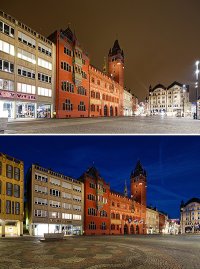
The shots below were both taken at the same time of day (~9:15pm, after business and dinner were done), but one was in February and the other in June. Late sunsets are convenient for combining photograhy with business travel. ;)
 

Attachments

  • BlueHour.jpg
    BlueHour.jpg
    604.4 KB · Views: 348
Upvote 0
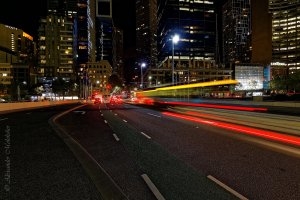
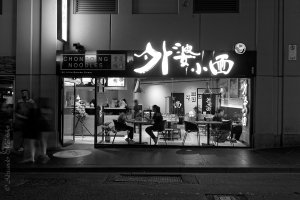
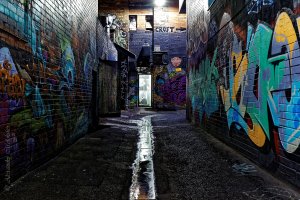
see how you go. Attached is a few of my night shots. Not the best, but likely shows what I was talking about. overblown lights were not corrected as really did not have time back then for setting up proper blending exposures. I do try my best to correct for the evil sodium vapour light as much as I can usually, but not always possible due to mix of light sources in the scene. but I am sure that you can see where I was going with this. note the night sky colour in the img 3037. I chose to crush blacks at the time as otherwise skies looked unacceptable.


Joules said:
scyrene said:
The night sky is not blue, although many photographers try to make it look that way - this is an excellent rundown: http://www.clarkvision.com/articles/color.of.the.night.sky/ (although this mostly about astrophotography, it has some relevance to night landscape work, I reckon). Of course, you can tint it however looks best to you - none of these photos will match what the eye would see anyhow.
Okay, good point. In that case, it was the Twilight Blue I was seeing in my long exposure wannabe astro shots. I didn't get much of the milkyway because of cloud cover and too much brightness from the low hanging sun (Was one week after the longest day this year had) ... probably why it was still so blue in the sky. Although it doesn't really matter anyway, my monitor isn't calibrated and I don't go for natural pictures, so blue or black, it would both be nicer than orange, I agree with that.

I'll see what i can get with blending, I'll have the time for that towards the end of this week. Thanks for all the input, I'll try to make use of it.
 

Attachments

  • IMG_3037_DxO.jpg
    IMG_3037_DxO.jpg
    682.5 KB · Views: 152
  • IMG_3045_DxO-1.jpg
    IMG_3045_DxO-1.jpg
    1.1 MB · Views: 157
  • IMG_3050_DxO (1).jpg
    IMG_3050_DxO (1).jpg
    2 MB · Views: 169
  • IMG_3055_DxO.jpg
    IMG_3055_DxO.jpg
    751.8 KB · Views: 161
Upvote 0
Isn't the reason that the moonless night sky without light pollution looks black is that in low light we see with the rods and not with the cones in our eyes at low light level?

In other words, whatever the measurable hue might actually be, we are going to see it in black and white.

So if your goal is to make the scene look somewhat like we see it, then the background sky should be black except where we have some visible coloration. Right?
 
Upvote 0
stevelee said:
Isn't the reason that the moonless night sky without light pollution looks black is that in low light we see with the rods and not with the cones in our eyes at low light level?

In other words, whatever the measurable hue might actually be, we are going to see it in black and white.

So if your goal is to make the scene look somewhat like we see it, then the background sky should be black except where we have some visible coloration. Right?

I'd agree your perception of the topic is correct as when I am away from most light pullution the sky appears black unless there's airglow as described in the clarkvision link posted earlier.
When it's significant there can be a slight greenish- tinge that I've seen by eye which looks more blue-green to me actually. Along the horizon it can pick up other hues depending on various factors but the astro guys should be able to provide the best answers on that topic. Can vary with location and latitude and sun activity as well as human made light, etc.
 
Upvote 0
Adelino said:
And now a very weak review of the autofocus from DPR it really seems as if the upgrade is just the flippy touch screen. Here's to hoping for a new camera between the 6 and 5 series. Price wise it makes sense.

DPR have never done well testing Canon AF. I would take their results with a big pinch of salt.

There is not enough room between the models for a meaningful intermediary. Unless you can suggest what functions would be in each model.
 
Upvote 0
Adelino said:
And now a very weak review of the autofocus from DPR it really seems as if the upgrade is just the flippy touch screen.

When DPR 'tested' the 1D X II AF system, they criticized it for performing exactly as Canon states it should (e.g., automatic point selection initially selecting the closest subject), and used settings which Canon explicitly recommends against (e.g., Spot AF with moving subjects). Too hard for them to RTFM, I guess. DPR is already biased against Canon, and when you factor in their incompetence at using Canon's AF systems, I'd take anything they say about Canon AF performance with a few grains of salt. About this many should do the trick.

334udqc.jpg
 
Upvote 0
neuroanatomist said:
Adelino said:
And now a very weak review of the autofocus from DPR it really seems as if the upgrade is just the flippy touch screen.

When DPR 'tested' the 1D X II AF system, they criticized it for performing exactly as Canon states it should (e.g., automatic point selection initially selecting the closest subject), and used settings which Canon explicitly recommends against (e.g., Spot AF with moving subjects). Too hard for them to RTFM, I guess. DPR is already biased against Canon, and when you factor in their incompetence at using Canon's AF systems, I'd take anything they say about Canon AF performance with a few grains of salt. About this many should do the trick.

334udqc.jpg

I love how they complain Canon's af system has too many options and is too confusing to be usable, but when Sony copied it was amazing and perfect.
 
Upvote 0
scyrene said:
The night sky is not blue, although many photographers try to make it look that way - this is an excellent rundown: http://www.clarkvision.com/articles/color.of.the.night.sky/ (although this mostly about astrophotography, it has some relevance to night landscape work, I reckon). Of course, you can tint it however looks best to you - none of these photos will match what the eye would see anyhow.

In addition to what others have said on the topic, I remember watching a documentary on the development of the F-117 Nighthawk ("Secrets of the Stealth"), which said that the correct color for a night-time stealth plane would be a very deep blue or purple (which would disappear into the sky better), but it was black because the brass demanded it no matter the science. I make no claims to the accuracy of that, mind.
 
Upvote 0
neuroanatomist said:
EdB said:
bdunbar79 said:
EdB said:
neuroanatomist said:
Exactly. Canon evidently feels the trade off will not adversely impact their bottom line.

How much Canon stock do you own?

Seriously, are you people dumb? He has never said he agreed with the off-die ADC's on the sensor. He's just telling you WHY they did. Can you not grasp that? What difference in the universe would it make if he owned stock in Canon or not? It won't change any facts. Do you seriously think that if Canon believed the trade-off WOULD impact bottom line, they would have made that trade-off?

What the heck is wrong with people?

He defends Canon no matter what they do and it's annoying. Whenever someone criticizes Canon he always there with his market arguments that Canon must be doing something right since they have market share. Justin Beiber has market share, doesn't mean it's good.

No, I don't. If you're annoyed, that's your problem, not mine. Feel free to ignore my posts.

If someone criticizes Canon, that's fine. If someone concludes that their criticism has any consequence for Canon, they are being ridiculous and thus inviting ridicule.

A few of Bieber's >30 million twitter followers might disagree with you. But I'm sure you're a better judge of 'good' than they are, right? A smart guy like you, I guess you get to pick the best camera for everyone, the best music for everyone, probably the best car, food, and their favorite color, too. Gee, you're a pretty special guy, aren't ya? ::)

Not really, nothing special here. I'm not shill like you either.
 
Upvote 0
Please, let's not mimic FM here. That place has become absolutely unbearable with the trite comments. Everyone over there knowing more than everyone else to the point that the bantering back and forth becomes a useless place to gain any useful information. They could write a book the size of War And Peace and after reading it, one would come out more confused, and bored, among other things. The reader certaintly wouldn't have gained any knowledge of information about photography, that's for sure.

Sorry FM, you guys have let your focus get onto trivial things and no longer have any real value among us photographers. IT's like Romper Room over there as of late.
 
Upvote 0
neuroanatomist said:
Adelino said:
And now a very weak review of the autofocus from DPR it really seems as if the upgrade is just the flippy touch screen.

When DPR 'tested' the 1D X II AF system, they criticized it for performing exactly as Canon states it should (e.g., automatic point selection initially selecting the closest subject), and used settings which Canon explicitly recommends against (e.g., Spot AF with moving subjects). Too hard for them to RTFM, I guess. DPR is already biased against Canon, and when you factor in their incompetence at using Canon's AF systems, I'd take anything they say about Canon AF performance with a few grains of salt. About this many should do the trick.

Are there any reasons the focusing wouldn't have the same performance wise as in the 80d? Obvious the spread is smaller than on the crop, but other than that, I was under the impression it was borrowed directly, so would have essentially the same performance?
 
Upvote 0