APS-C lens mm are correct

Status
Not open for further replies.
Tristan944 said:
If I'm wrong I'll be the first to admit it, I'm not a proud person. I will check it again right now and see if I had done it incorrectly.

But why doesn't Canon print on the lens itself 29-216mm? The 18-135mm printing is misleading then.

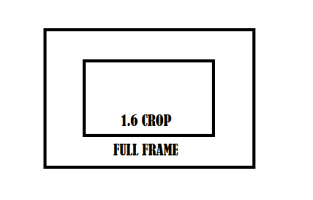
The reason why Canon doesn't do that is that the lens really is an 18-135 lens, i.e. when you are shooting the lens at 18mm, the lens is actually at 18mm. It is only that the "field of view" is "cropped". This field of view on a FF sensor would be achieved at an equivalent focal length of 29mm. That's why the APS-C are called cropped sensors.

Hope this helps!
 

Attachments

  • Untitled1.png
    Untitled1.png
    6.1 KB · Views: 1,402
Upvote 0
Well brethren, the results are in, and I am humbled.

Test configuration:
Canon 7D with EF-S 18-135mm at 35mm (I looked at file data and confirmed it was at exactly 35mm)
Canon film Rebel with EF 35-80mm (just turned the lens to 35mm and looked through the viewfinder. Didn't need to take a picture)

Results: I was wrong. The Canon film Rebel was wider at 35mm with the EF lens than the 7D was at 35mm with the EF-S lens. How embarrassing. At least I learned something.
 
Upvote 0
PackLight said:
Tristan944 said:
If I'm wrong I'll be the first to admit it, I'm not a proud person. I will check it again right now and see if I had done it incorrectly.

But why doesn't Canon print on the lens itself 29-216mm? The 18-135mm printing is misleading then.

Because it is only a relationship that they are showing. It is salesmanship to make you think you are getting 1.6 times as much of something.

+1

The focal length doesn't change at all. You only appear to have an increased focal length because of tighter framing.
 
Upvote 0
Tristan944 said:
APS-C lens mm are correct

Well, at least your thread title was correct. ;)

Like I stated, focal length is an intrinsic property of the lens. They don't print 29-216mm on the 18-135mm lens because that would be a lie. The fact that the FF equivalent figures are used in marketing is partly because bigger sounds better (as pointed out above) and partly historical, when everyone was new to digital and coming from the original FF 'sensor' aka 35mm film.

Here's one more for you to wrap your head around, Tristan944: the 'crop factor' applies to aperture, too, in terms of depth of field for the same framing. Because of the narrower AoV with APS-C, to take the 'same shot' (e.g. fill the frame with a 6' tall subject), at any given focal length you must be further from that subject with an APS-C camera compared to FF. That increased distance means deeper DoF, by a factor of 1.6x (which is a linear measure, when converted to a base-2 log it's 1.3-stops). So...the real FF equivalent of your 18-135mm f/3.5-5.6 lens would be a hypothetical 29-216mm f/5.6-9 lens (in terms of DoF; sensor size doesn't affect exposure, since that's determined by light per unit area of sensor, independent of sensor size).
 
Upvote 0
neuroanatomist said:
Not exactly. They are better if you are talking about using all of them on the same APS-C body. But if you compare the EF-S lens on APS-C to the L lens on FF, the latter will deliver better overall IQ (although worse in some measures, especially distortion).

Neuro, just out of interest, I realise that this is only one example so not applicable in general, but from what I have seen and read, my understanding is that the EF-S 10-22 does a better job at the wide end than the 17-40L does, with regards to resolution (specifically wide open corner resolution) and distortion.
 
Upvote 0
insanitybeard said:
neuroanatomist said:
Not exactly. They are better if you are talking about using all of them on the same APS-C body. But if you compare the EF-S lens on APS-C to the L lens on FF, the latter will deliver better overall IQ (although worse in some measures, especially distortion).

Neuro, just out of interest, I realise that this is only one example so not applicable in general, but from what I have seen and read, my understanding is that the EF-S 10-22 does a better job at the wide end than the 17-40L does, with regards to resolution (specifically wide open corner resolution) and distortion.

That's actually why I emphasized 'overall'. A current FF sensor will deliver more spatial resolution (measured in LW/PH) than a current APS-C sensor. The extreme corners of the 17-40L at 17mm are an exception, but even at the borders (well away from the center, but not at the extreme corner), the 17-40 at 17mm f/4 delivers higher resolution than the 10-22mm does anywhere in the frame at any focal length and aperture.
 
Upvote 0
neuroanatomist said:
at the borders (well away from the center, but not at the extreme corner), the 17-40 at 17mm f/4 delivers higher resolution than the 10-22mm does anywhere in the frame at any focal length and aperture.

I am probably being simplistic here, but the slrgear tests of those 2 lenses completely refute that claim. But they use 'blur index' which may differ from your strict term 'resolution'. My summary statement would be the 17-40 is a little less blurred in the border and corners than the 10-22's borders and corners at similar equivalent focal lengths and apertures.

They also show the 10-22 having the lower distortion in the 10-17mm range than the 17-40 has in the 17-30 range.

The 10-22 is a good lens, you paint it too shabby IMHO.
 
Upvote 0
tnargs said:
The 10-212 is a good lens, you paint it too shabby IMHO.

Not my intent, sorry...the 10-22mm is a great lens, IMO. Do note that I called out distortion specifically, that's notoriously difficult to control in a FF ultrawide lens, and much easier to control with the smaller elements used in an EF-S lens.

The EF-S 17-55mm, 15-85mm, and 10-22mm lenses all deliver optical performance that is on par with many L-series lenses, and in fact, those lenses all outperform 'sort of equivalent' L-series lenses when comparing both on the same APS-C camera (e.g. the 17-55mm is better than the 16-35L II and 24-105L when comparing all of them on a 7D - and I know this from both test charts and personal experience). But when you put a different camera into the equation, and compare an EF-S lens on APS-C to an L-series lens on a recent FF/APS-H body, the larger sensor confers some IQ advantages. So, for example, the 16-35L II on a 5DII will deliver better overall performance (although barrel distortion is definitely worse) than the equivalent framing of the 10-22 on a 7D (again, from both charts and my own real-world experience having used both combos). The IQ of the 10-22mm in the 7D is already very good, it's just that the 16-35 + FF is slightly better.

You can see an aspect of that in the real world (sort of) with people who've popped off the rubber piece on the 10-22's lens mount and used it on a 1DIV - the 10-22 delivers images on the APS-H that are better than those from an APS-C body.

 
Upvote 0
Tristan944 said:
Results: I was wrong. The Canon film Rebel was wider at 35mm with the EF lens than the 7D was at 35mm with the EF-S lens. How embarrassing. At least I learned something.

Darn - Was just about to pipe in with a possible explanation. The 7D has 100% viewfinder coverage and magnification. A lot of cheaper film cameras had less - generally around 90% with only 70% magnification. This might have explained why they might have been perceived as similar.

But on thinking about it further, the 7D magnification would be based on the cropped image size, not a 35mm image size. Maybe they wouldn't be similar at all. I can understand why people find it confusing.
 
Upvote 0
neuroanatomist said:
Not my intent, sorry...the 10-22mm is a great lens, IMO. Do note that I called out distortion specifically, that's notoriously difficult to control in a FF ultrawide lens, and much easier to control with the smaller elements used in an EF-S lens.

The EF-S 17-55mm, 15-85mm, and 10-22mm lenses all deliver optical performance that is on par with many L-series lenses, and in fact, those lenses all outperform 'sort of equivalent' L-series lenses when comparing both on the same APS-C camera (e.g. the 17-55mm is better than the 16-35L II and 24-105L when comparing all of them on a 7D - and I know this from both test charts and personal experience). But when you put a different camera into the equation, and compare an EF-S lens on APS-C to an L-series lens on a recent FF/APS-H body, the larger sensor confers some IQ advantages. So, for example, the 16-35L II on a 5DII will deliver better overall performance (although barrel distortion is definitely worse) than the equivalent framing of the 10-22 on a 7D (again, from both charts and my own real-world experience having used both combos). The IQ of the 10-22mm in the 7D is already very good, it's just that the 16-35 + FF is slightly better.

You can see an aspect of that in the real world (sort of) with people who've popped off the rubber piece on the 10-22's lens mount and used it on a 1DIV - the 10-22 delivers images on the APS-H that are better than those from an APS-C body.

This interests me- does the FF sensor (or APS-H for that matter)- without getting too technical- deliver better IQ due to its larger area and greater light gathering ability (and presumably larger pixels) or does it also have something to do with the FF sensor utilising more of the surface area of the optics in the lens- hence APS-C sensors being more demanding on lenses because they focus the light through a smaller area of glass?
 
Upvote 0
insanitybeard said:
This interests me- does the FF sensor (or APS-H for that matter)- without getting too technical- deliver better IQ due to its larger area and greater light gathering ability (and presumably larger pixels) or does it also have something to do with the FF sensor utilising more of the surface area of the optics in the lens- hence APS-C sensors being more demanding on lenses because they focus the light through a smaller area of glass?

The light gathering ability of the larger sensor helps especially with low light but the larger enlarging ratios associated with displaying pictures of the same size (screen or prints) is also a factor. For lenses of the same generation and made from the same manufacturing technology, FF will win automatically because of its larger area (resolution based on line pairs/length). APS-C will require sharper lenses to compete with FF to offset FF's larger area and smaller enlarging ratio.
 
Upvote 0
insanitybeard said:
This interests me- does the FF sensor (or APS-H for that matter)- without getting too technical- deliver better IQ due to its larger area and greater light gathering ability (and presumably larger pixels) or does it also have something to do with the FF sensor utilising more of the surface area of the optics in the lens- hence APS-C sensors being more demanding on lenses because they focus the light through a smaller area of glass?

Mostly the former, And mostly due to the larger total area of the sensor, which gathers more total light. Actually, performance at the edges of the image circle is worse on all lenses. There is no differential advantage when comparing an EF lens on full frame to an EF-S lens on APS-C, but an APS-C sensor uses 'sweet spot' of an EF lens.
 
Upvote 0
neuroanatomist said:
Mostly the former, And mostly due to the larger total area of the sensor, which gathers more total light. Actually, performance at the edges of the image circle is worse on all lenses. There is no differential advantage when comparing an EF lens on full frame to an EF-S lens on APS-C, but an APS-C sensor uses 'sweet spot' of an EF lens.

I may have explained the point I was trying to make badly.... I know corner performance will always be worse towards the edge of the image circle and that using EF lenses on crop uses the centre portion of the image circle hence the sweet spot effect, what I was trying to say was:

Is ultimate performance and resolution of APS-C going to be more limited than FF because the light is focused/concentrated through a smaller area of glass in the lens on APS-C than FF- ie, APS-C will start to show up limitations of the optics themselves before FF? (disregarding issues such as CA and drop in resolution away from the centre of the image circle which may be more pronounced on FF due to the larger image circle)

Even now I don't think I've explained myself well enough. Put another way, I guess I am trying to say that the optical glass has it's limitations and that if you are trying to focus light through a smaller area of that glass (as in APS-C) those limitations will become evident sooner?
 
Upvote 0
Random Orbits said:
insanitybeard said:
This interests me- does the FF sensor (or APS-H for that matter)- without getting too technical- deliver better IQ due to its larger area and greater light gathering ability (and presumably larger pixels) or does it also have something to do with the FF sensor utilising more of the surface area of the optics in the lens- hence APS-C sensors being more demanding on lenses because they focus the light through a smaller area of glass?

The light gathering ability of the larger sensor helps especially with low light but the larger enlarging ratios associated with displaying pictures of the same size (screen or prints) is also a factor. For lenses of the same generation and made from the same manufacturing technology, FF will win automatically because of its larger area (resolution based on line pairs/length). APS-C will require sharper lenses to compete with FF to offset FF's larger area and smaller enlarging ratio.
If I am reading this correctly you are saying FF is better because it is larger than APS, therefor has less enlarging to reach a given size like 35mm against 6X7 ?

That's not the case, pixels are pixels. An 18MP FF image has just the same "enlargement" as a 18MP APS-C or DX or whatever. The advantage ( at least in theory) is that in the FF the pixels are larger and therefor should be able to record better information. However this advantage is being eroded with new technology. ( I know there are many other advantages, but "size" wise MP is MP.)
 
Upvote 0
The new direction of this thread started with the comparison of the 10-22 to the 16-35 and the performance of a crop sensor wide.

The thing to keep in mind, for landscape and things wide the best performance is going to come out of the primes. The TSE 17's and 24 and the 24mm f/1.4L. Since there are no Canon primes made to mimic these primes range for a crop sensor, the FF will always be in the lead on the wide end if for no other reason (despite sensor quailty) being available glass.

It seems this thread is moving toward the high density 7D sensor vs the low density 5D II or III sensor debate.
 
Upvote 0
Sporgon said:
If I am reading this correctly you are saying FF is better because it is larger than APS, therefor has less enlarging to reach a given size like 35mm against 6X7 ?

That's not the case, pixels are pixels. An 18MP FF image has just the same "enlargement" as a 18MP APS-C or DX or whatever. The advantage ( at least in theory) is that in the FF the pixels are larger and therefor should be able to record better information. However this advantage is being eroded with new technology. ( I know there are many other advantages, but "size" wise MP is MP.)

So, if you have a 18 MP iphone camera (assuming it existed), that will give you the same enlargement ratio as a 18MP APS-C? The enlargement ratio is based on final print size/sensor size. To cope with the higher enlargement ratio, the smaller sensor needs to have a higher resolution/precision lens to compensate for the smaller sensor.
 
Upvote 0
tristan, it's possible that you had an amazing and lifelike dream where APS-C focal length indicators became not only true but also equivalent focal lengths. I know I've had dreams where exceptionally awesome (but unfortunately unrealistic) things would happen, and I woke up really believing in them.

it would be great to have all the APS-C standard zooms start at 18mm equivalent, rather than the current 29mm equivalent. let's be honest, 29mm is only wide angle if you're a portrait shooter. to a generalist, which most APS-C owners are, lenses should really be at least 25mm equivalent (16mm or wider focal length). a 16-120 would be the same zoom ratio as an 18-135, and way, way more useful.
 
Upvote 0
insanitybeard said:
Is ultimate performance and resolution of APS-C going to be more limited than FF because the light is focused/concentrated through a smaller area of glass in the lens on APS-C than FF- ie, APS-C will start to show up limitations of the optics themselves before FF? (disregarding issues such as CA and drop in resolution away from the centre of the image circle which may be more pronounced on FF due to the larger image circle)

No - what you're describing is purely an effect of pixel density, independent of sensor size (although it's generally true that comparing sensors of a similar generation, the APS-C sensor will have a higher pixel density). From a resolution standpoint, a larger sensor will deliver higher resolution (in terms of line width/picture height) simply because the height of the picture is greater.

PackLight said:
It seems this thread is moving toward the high density 7D sensor vs the low density 5D II or III sensor debate.

Agreed - let's not go there. :-X
 
Upvote 0
Status
Not open for further replies.