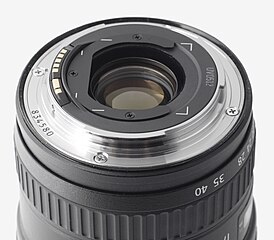
Are Metal Mounts Better Than Plastic?

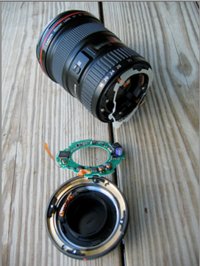
When I snapped my 16-35 f2.8 in two I was told by a tech at CPS that the plastic cage that the metal mount screwed to was a designed breaking point. He said that if camera and lens were dropped it was supposed to break away before too much impact was transferred to the glass.

My 16-35 was mounted to a 1VHS and fell onto a concrete floor. The four screws snapped tabs off the plastic cage, the mount stayed on the camera, the lens rolled away with no damage to the glass, barrel, or filter threads, all the ribbon cables snapped and it cost $150 to fix. They replaced the plastic cage (they actually offered to sell me one so I could repair it myself as I was in a fairly remote spot), and the ribbon cables, no damage to the glass.

I am very happy with the design, I think it worked as intended and prevented my lens being damaged more severely.
 

Attachments
  • 4.jpg
    4.jpg
    122.5 KB · Views: 637
Upvote 0
neuroanatomist said:
However, for the bayonet 'teeth' of the mount, plastic wears down more easily than metal (vs. the screw-holes, which aren't subjected to routine 'wear'). That means a lens with a plastic mount (as I'd say is the common definition pictured above, not Rogers's use of the term), would be able to tolerate fewer mount/unmount cycles than a lens with metal bayonet teeth.

While it is true that plastic mounts (our definition, not Roger's) are far easy to break that metal ones, it might be better to have an easily replaceable breaking point in case the camera with the lens mounted falls at a weird angle. In fact, as far as I have seen from images of dropped cameras, the lens mount is what breaks off most often (even including metal ones) and I think that is for a very good reason. The plastic flanges in the 50 II and 18-55 definitely feel dodgy but I suspect they are much stronger than they look. I even feel that the elasticity of the plastic barrels (pun not intended) might be better at absorbing shock inside than the rigid metal barrels. This is engineered plastic, not the same thing cheap toys are made out of.

privatebydesign said:
When I snapped my 16-35 f2.8 in two I was told by a tech at CPS that the plastic cage that the metal mount screwed to was a designed breaking point. He said that if camera and lens were dropped it was supposed to break away before too much impact was transferred to the glass.

+1. Exactly my thoughts.
 
Upvote 0
LetTheRightLensIn said:
Random Orbits said:
And this is one reason why I don't like how most reviewers evaluate "build quality." They evaluate the feel of the materials of the parts they can see, which is a mistake. Think of cheap faucets with nice finishes but plastic gears. The same thing happens with lenses. Having a metal outer barrel is not indicative of the materials used for the inner assemblies that often matter more...

OTOH, you seem to have missed the part where the materials for the inner anchors being metal actually might be worse than from plastic.

Umm... no. I said NOTHING about whether or not lenses should be made with metal or plastic. My point is that you cannot tell build quality by just evaluating just how it feels on the outside. One can't evaluate quality without understanding the design and the design tradeoffs, and that is impossible by just feeling the outside of a lens.
 
Upvote 0
neuroanatomist said:
I think Rogers's definition of a plastic vs. a metal mount differs from how most people think about those terms. For most of us, we're talking about the bayonet parts - the 'teeth' that lock into the mount on the camera.

281px-Canon_EF-S_lens_mount.jpg
274px-Canon_EF_17-40mm_f4L_USM_lens_mount.jpg


The EF-S 18-55 on the left has a 'plastic mount', the EF 17-40L on the right has a 'metal mount'. Very few of us disassemble lenses, so we have no idea what's behind that mount surface. Roger is talking about how the screws that that attach that visible surface piece to the lens are connected - do those screws go into metal screw-holes that are attached to the frame of the lens, or are the screw-holes plastic?

'Plastic' can be quite strong, so for a 'light' lens (most lenses under 100mm, with the exception of the 'magic cannonball' 85L), I agree with Roger that I wouldn't expect any issues, and 'professional' could apply. However, for the bayonet 'teeth' of the mount, plastic wears down more easily than metal (vs. the screw-holes, which aren't subjected to routine 'wear'). That means a lens with a plastic mount (as I'd say is the common definition pictured above, not Rogers's use of the term), would be able to tolerate fewer mount/unmount cycles than a lens with metal bayonet teeth. Since a professional lens would be expected to last years and most 'pros' own several lenses and change them frequently, it makes sense to associate a metal mount (as pictured above, regardless of how it's screwed in) with 'professional' build.

I understand that, and even make the same (in my case unfounded) assumption about the plastic teeth wearing down more quickly, but would not Roger have noticed it so far if it did happen to be true?
 
Upvote 0
Achim said:
...

And the brakes of some super sport cars are also made of "plastics" - or isn't carbon fibre not a kind of "plastic"???? :) :)

May be not that helpful but carbon brakes are not carbon fibres reinforced polymers. They are carbon disks and pads, more like ceramics. Regular brakes are steel disks and polymermatrix with mineral fibres for pads. However, those can't cope with the heat from stopping from high speeds.
 
Upvote 0
May be another less than helpful post but reading all these posts about carbon fibers, I had to make it. Carbon fibres as most people understand actually refer to a layered material consisting of several plies of light and strong continuous carbon fibres, all aligned or as a fabric, and held together by a matrix, often a polymer. These are very strong in the direction of fibres, but may be very weak in other directions, such as in the thickness direction. Even weaker than unrreinforced polymers. Therefore, they would be very poor candidate materials for screwing things to like in lens mounts.

Micro-beads, flakes or short fibres filled polymers are much more likely, but carbon is less attractive there.
 
Upvote 0
IMG_0001 said:
Achim said:
...

And the brakes of some super sport cars are also made of "plastics" - or isn't carbon fibre not a kind of "plastic"???? :) :)

May be not that helpful but carbon brakes are not carbon fibres reinforced polymers. They are carbon disks and pads, more like ceramics. Regular brakes are steel disks and polymermatrix with mineral fibres for pads. However, those can't cope with the heat from stopping from high speeds.

Thanks for the addendum ;)
 
Upvote 0
I've been preaching forever that weather sealing is a marketing gimmick. A spec without benchmarks, a claim not backed up by any warranty or whatever.

I agree with Roger than some sealing is arguably better than no sealing, but hopefully all those people swearing that weather sealing saved their gear back in that difficult situation will now reconsider. The thing is, without specific benchmarks is impossible to attribute the merit of any gear survival event to weather sealing. Roger's statistics also seem to imply that the weather damage events are not less frequent on weather sealed lenses.
 
Upvote 0
IMG_0001 said:
May be another less than helpful post but reading all these posts about carbon fibers, I had to make it. Carbon fibres as most people understand actually refer to a layered material consisting of several plies of light and strong continuous carbon fibres, all aligned or as a fabric, and held together by a matrix, often a polymer. These are very strong in the direction of fibres, but may be very weak in other directions, such as in the thickness direction. Even weaker than unrreinforced polymers. Therefore, they would be very poor candidate materials for screwing things to like in lens mounts.

Micro-beads, flakes or short fibres filled polymers are much more likely, but carbon is less attractive there.
+1

When used in certain applications (usually with a different structural design than a metal construction equivalent due to differences in the properties of the two materials), composites can be much better. For instance carbon fibre is used very successfully to make certain components of tripods, race cars, airplanes, boats and even lens hoods for Canon super telephotos. I remember hearing about such materials being used inside the latest generation of Canon super telephoto lenses, but I can't dig up any info on that.

It's less successfully used as a veneer in road cars... You should feel the weight of some bits of carbon fibre veneered trim in "sports" versions of luxury cars :o

It's typical for a metal thread to be glued into carbon fibre where anything needs to be bolted into place. Therefore, lugs to attach a lens mount are far from a suitable use for this material.
 
Upvote 0
IMG_0001 said:
Therefore, they would be very poor candidate materials for screwing things to like in lens mounts.

Micro-beads, flakes or short fibres filled polymers are much more likely, but carbon is less attractive there.

I absolutely agree on that. I introduced the carbon fiber argument only as a camera external body material candidate. Screws and carbon or kevlar fiber are not compatible. For that reason in automotive and motorcycling componentss, you need metal inserts for screwing things.
 
Upvote 0
Albi86 said:
I've been preaching forever that weather sealing is a marketing gimmick. A spec without benchmarks, a claim not backed up by any warranty or whatever.

I agree with Roger than some sealing is arguably better than no sealing, but hopefully all those people swearing that weather sealing saved their gear back in that difficult situation will now reconsider. The thing is, without specific benchmarks is impossible to attribute the merit of any gear survival event to weather sealing. Roger's statistics also seem to imply that the weather damage events are not less frequent on weather sealed lenses.
The effectiveness of stabilisation systems and battery life are both independently tested.

The ingress protection rating system already exists, and some camera manufacturers use it for their waterproof cameras:

Canon D20, IP68: http://www.canon.co.uk/For_Home/Product_Finder/Cameras/Digital_Camera/PowerShot/PowerShot_D20/index.aspx
Olympus TG2, IPX8:
http://www.olympus.co.uk/site/en/c/cameras/digital_cameras/tough/tg_2/tg_2_specifications.html
Nikon AW1, IP68:
http://imaging.nikon.com/lineup/acil/bodies/aw1/spec.htm

Why not use the same system for lenses and bodies? I know they're each only half the system, but it would easy enough to test each independently, and the consumer will then be aware of the limits of their system (the lower score of the lens and body). I wouldn't expect even the best DSLR/lens to get IPX5 rating, but a weather sealed product could be as low as IPX1 or as high as IPX4. Quantifying this would really help the consumer.
 
Upvote 0
rs said:
Albi86 said:
I've been preaching forever that weather sealing is a marketing gimmick. A spec without benchmarks, a claim not backed up by any warranty or whatever.

I agree with Roger than some sealing is arguably better than no sealing, but hopefully all those people swearing that weather sealing saved their gear back in that difficult situation will now reconsider. The thing is, without specific benchmarks is impossible to attribute the merit of any gear survival event to weather sealing. Roger's statistics also seem to imply that the weather damage events are not less frequent on weather sealed lenses.
The effectiveness of stabilisation systems and battery life are both independently tested.

The ingress protection rating system already exists, and some camera manufacturers use it for their waterproof cameras:

Canon D20, IP68: http://www.canon.co.uk/For_Home/Product_Finder/Cameras/Digital_Camera/PowerShot/PowerShot_D20/index.aspx
Olympus TG2, IPX8:
http://www.olympus.co.uk/site/en/c/cameras/digital_cameras/tough/tg_2/tg_2_specifications.html
Nikon AW1, IP68:
http://imaging.nikon.com/lineup/acil/bodies/aw1/spec.htm

Why not use the same system for lenses and bodies? I know they're each only half the system, but it would easy enough to test each independently, and the consumer will then be aware of the limits of their system (the lower score of the lens and body). I wouldn't expect even the best DSLR/lens to get IPX5 rating, but a weather sealed product could be as low as IPX1 or as high as IPX4. Quantifying this would really help the consumer.

Exactly. The waterproof designation comes with a pressure/depth value that clarifies to which extent it works. Weather sealing hints at something but declares nothing; it sort of invites the buyer to wishfully think of a degree of resistance that is not there.
 
Upvote 0
lescrane said:
My "weather sealed" Canon Rebel.

A couple years ago I slipped on some rocks and fell into a river with my Rebel Xsi and canon 10-22mm lens. The water was neck high, so lucky I'm still here to post things, but my camera was dead, and my lens was full of water inside and out. I took the lens off, the mirror was wet, so I wrote it off. A couple weeks later, I went to toss the equipment. just for the hell of it, I put a battery in the Rebel, turned it on, and it worked perfectly. I paid about 50.00 to replace the focus screen and clean the sensor/mirror. 5 years later, the Rebel is still my backup.

I would not recommend "trying this at home"...but it shows that sometimes even the low end of the equipment line can be like a Timex(for those who don't remember...''takes a licking and keeps on ticking")

most equipment can be submerged in water and then dried out. Heck I used to pit boards in an ultrasonic water batch to clean them myself.

this issue is power, there cannot be any power to the board or shorts happen but if there is not power in the caps, batteries removed its usually on.

also if you remove power asap and let equipment dry out sometimes it will power back up again, the duration is ip to who knows what as water may get into caps etc and cause havoc for months.
 
Upvote 0
rs said:
Albi86 said:
I've been preaching forever that weather sealing is a marketing gimmick. A spec without benchmarks, a claim not backed up by any warranty or whatever.

I agree with Roger than some sealing is arguably better than no sealing, but hopefully all those people swearing that weather sealing saved their gear back in that difficult situation will now reconsider. The thing is, without specific benchmarks is impossible to attribute the merit of any gear survival event to weather sealing. Roger's statistics also seem to imply that the weather damage events are not less frequent on weather sealed lenses.
The effectiveness of stabilisation systems and battery life are both independently tested.

The ingress protection rating system already exists, and some camera manufacturers use it for their waterproof cameras:

Canon D20, IP68: http://www.canon.co.uk/For_Home/Product_Finder/Cameras/Digital_Camera/PowerShot/PowerShot_D20/index.aspx
Olympus TG2, IPX8:
http://www.olympus.co.uk/site/en/c/cameras/digital_cameras/tough/tg_2/tg_2_specifications.html
Nikon AW1, IP68:
http://imaging.nikon.com/lineup/acil/bodies/aw1/spec.htm

Why not use the same system for lenses and bodies? I know they're each only half the system, but it would easy enough to test each independently, and the consumer will then be aware of the limits of their system (the lower score of the lens and body). I wouldn't expect even the best DSLR/lens to get IPX5 rating, but a weather sealed product could be as low as IPX1 or as high as IPX4. Quantifying this would really help the consumer.

I was at a camera show several years ago, and the Olympus booth had one of their tough series p/s cameras in a goldfish bowl, complete with goldfish swimming around. They would let you plunge your hand into the water and use the camera to take pictures of the fish..... That's what waterproof means! I asked if they would let me try with an E-5 and they laughed, saying it was "splashproof" and wouldn't last a second in the tank.....

That pretty well sums up DSLR "weather-sealing". It will survive being in the rain, but as soon as there is any pressure, the game is up. Splashproof is a much better word....
 
Upvote 0
Have look at CR's text of the 300 II, that picture tells you how much Canon weather sealing can take, and it's pretty substantial and good enough for me. If it rains like that, I'm staying inside.
 
Upvote 0
Don Haines said:
rs said:
Albi86 said:
I've been preaching forever that weather sealing is a marketing gimmick. A spec without benchmarks, a claim not backed up by any warranty or whatever.

I agree with Roger than some sealing is arguably better than no sealing, but hopefully all those people swearing that weather sealing saved their gear back in that difficult situation will now reconsider. The thing is, without specific benchmarks is impossible to attribute the merit of any gear survival event to weather sealing. Roger's statistics also seem to imply that the weather damage events are not less frequent on weather sealed lenses.
The effectiveness of stabilisation systems and battery life are both independently tested.

The ingress protection rating system already exists, and some camera manufacturers use it for their waterproof cameras:

Canon D20, IP68: http://www.canon.co.uk/For_Home/Product_Finder/Cameras/Digital_Camera/PowerShot/PowerShot_D20/index.aspx
Olympus TG2, IPX8:
http://www.olympus.co.uk/site/en/c/cameras/digital_cameras/tough/tg_2/tg_2_specifications.html
Nikon AW1, IP68:
http://imaging.nikon.com/lineup/acil/bodies/aw1/spec.htm

Why not use the same system for lenses and bodies? I know they're each only half the system, but it would easy enough to test each independently, and the consumer will then be aware of the limits of their system (the lower score of the lens and body). I wouldn't expect even the best DSLR/lens to get IPX5 rating, but a weather sealed product could be as low as IPX1 or as high as IPX4. Quantifying this would really help the consumer.

I was at a camera show several years ago, and the Olympus booth had one of their tough series p/s cameras in a goldfish bowl, complete with goldfish swimming around. They would let you plunge your hand into the water and use the camera to take pictures of the fish..... That's what waterproof means! I asked if they would let me try with an E-5 and they laughed, saying it was "splashproof" and wouldn't last a second in the tank.....

That pretty well sums up DSLR "weather-sealing". It will survive being in the rain, but as soon as there is any pressure, the game is up. Splashproof is a much better word....

try on the pressure however being an scuba diver, the first 33' if water has the same pressure as the first 33 above the ground to sum it up so the fish bowl would have no more extra pressure than that above ground.
 
Upvote 0
WPJ said:
Don Haines said:
I was at a camera show several years ago, and the Olympus booth had one of their tough series p/s cameras in a goldfish bowl, complete with goldfish swimming around. They would let you plunge your hand into the water and use the camera to take pictures of the fish..... That's what waterproof means! I asked if they would let me try with an E-5 and they laughed, saying it was "splashproof" and wouldn't last a second in the tank.....

That pretty well sums up DSLR "weather-sealing". It will survive being in the rain, but as soon as there is any pressure, the game is up. Splashproof is a much better word....

try on the pressure however being an scuba diver, the first 33' if water has the same pressure as the first 33 above the ground to sum it up so the fish bowl would have no more extra pressure than that above ground.

I'm not sure I understand what you are saying..... could you elaborate?
 
Upvote 0
The theme of this thread seems to be about marketing perceptions, not technical standards.

All-metal sounds sturdier than plastic.... the relative merits of the materials and the choice of the right material for the application take second seat behind perceptions.... Very often a break-point will be designed into a system to prevent catastrophic damage. This is why your flash is designed to have the mount break off if there is too much stress.... they could design the flash to be stronger, but the big worry is ripping the hot-shoe off of the camera... Look through the 600EX-RT manual and see if it says that it was designed to break in two.... I don't think you will find that the marketing people would let that into the manual :)

Weatherproof is used because it sounds a lot like waterproof. A great many people will not understand the difference and they will buy... Waterproof has meaning and standards to be met... weatherproof is a meaningless word. The chickadees in my yard are "weatherproof"... it does not mean they will survive 15 minutes underwater.....
 
Upvote 0
Don the pressure in water or atmospheric pressure is additive every 33' under water.

so 0-33 feet below the water line is the same pressure which is the same we have in land
at 34-66feet it doubles the pressure at land or sea level.
 
Upvote 0