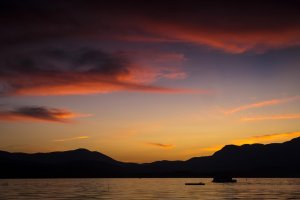
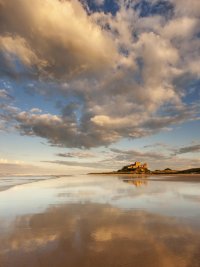
Beautiful sunsets

Cory said:
Would anyone mind presenting their "sunset" techniques/settings while I put my jaw back into its joints.
Thanks much.

Hi, I wouldn't go so far as to say there are any specific "sunset techniques" as much as there are general photographic techniques. It's basically the same as photographing a lot of other landscape stuff; decide on how much DOF you want, what to expose for, composition and mood, then press the trigger..
Now that's simplifying it a lot.
Especially in shooting things like sunset, sunrises etc. one of the more difficult things to deal with is contrast.
Compromises would often have to be made, but there are things that can help.
ISO, shutter speed, f-stop. These basically decide the exposure, based on what the camera typically wants to expose for; a medium gray exposure. especially when shooting handheld, or if you don't want motion artifacts in your shots then compromises in either would have to be made.
As I said dealing with contrasts in these types of shots is often essential.
Typically the sky will be blindingly hot and burnt out if you want to preserve details of the scenery.
Multiple exposures and a lot of fiddling in PS, the Gimp or LR can bring those back under control, but not always.
ND grad filters, of various densities (loss of stops) are in my opinion essential tools to bring the contrast between sky and land under control.
There are various makes and densities of ND grads, Lee, Hitec, Cookin are a few of the makers.
Cokin, which I've stuck to most (price and availability in Norway) are cheap and does the job well. But as far as I can see they offer just grads that are linear, where the slope of the density increase (loss of light) is linear across the filter. The other makers offer reverse grads (I've just received a Hitec one I'm looking forward to try. These are darker around the middle of the frame, perfect to bring the horizon under control before gradually sloping off towards the "top"
Also the other makers offer ND grads that have a more defined edge (steeper slope) in the middle. (hard edge they are referred to)
Anyway, meter the sky and landscape to settle on how many stops difference there are, then settle for one that evens out the contrast as you want it. (though don't overdo it, naturally our eyes expect the sky in such situations to be brighter than the landscape.)
In use, either get a filter holder or just hold it in front of the lens, then slide it up and down to get the right effect. (remove the lens hood)
If you are shooting with a tripod I often tend to use manual exposure in combination with my 7D's live view and exp. simulation modes. This will give you the effect immediately. Slide up or down, pick a different filter, or filters to stack until you are satisfied.
If you overdo stacking of the filters, at least with my Cokins, an often undesired color cast can be introduced where the filtering effect is the strongest.
One problem with ND grads is if you are shooting a landscape with lots of detail on the sides of the frame, like trees, mountains as seen from a valley etc. (I'm from Norway, mountains and valleys are very prominent here..) These features will then shot a distinct linear darkening that reveals the use of an ND grad, but this can be fixed either by multiple exposures, flash (think trees, not mountain sides) or some selective dodging or burning.

If you look in my flick stream, I've added comments to a lot of my recent images on filter usage. http://www.flickr.com/photos/trondstromme/
 
Upvote 0
Nice trstromme! I miss being somewhere where the golden hour's clock gets stuck.

One from Sunday from the south side of Mt Palomar.
C5607-X2.jpg


Sunset Cliffs, Monday. About 15 minutes apart with the fun factor being to dodge tourists using their P&S camera flashes to 'brighten' the distant clouds.
SC2502-X2.jpg


SC2501-X2.jpg


5D III w/ 16-35mm II and CPL.
 
Upvote 0
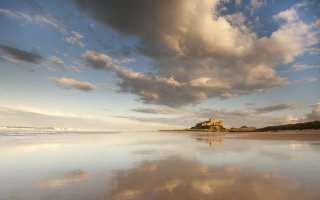
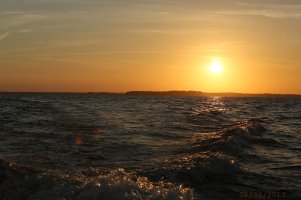
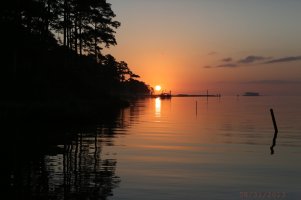
Spending a few days near Pamlico River, NC., for Labor Day.
Took the first one the arrival evening with 5D3, 70-200 II of the sunset on a boat ride.
Took the second one the next morning (today) of the sun rise using 24-70 IS ( sigh, only the first version ).
 

Attachments

  • image.jpg
    image.jpg
    613.6 KB · Views: 1,317
  • image.jpg
    image.jpg
    503.8 KB · Views: 1,314
Upvote 0
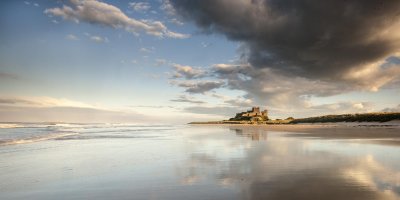
Here are a couple from my vacation on Cape Cod this summer. Both on the t3i/600d with tokina 11-16 2.8


Cape Cod - 6015 by silvestography, on Flickr


Cape Cod - 5997 by silvestography, on Flickr

Before you tell me the horizon isn't straight on the second one, simply understand that every time I try to fix it, it ends up making the stairs not look straight, and given they're the main focus of the image, I'd rather have the horizon slightly off than the stairs. Otherwise, C&C welcome!
 
Upvote 0
I was finally able to get a new Singh-Ray reverse grad filter. It was the one filter I missed after upgrading to the Lee system from the Cokin P. It arrived in the week (very quickly and it avoided import duty, unlike the last time, where it added about 40% to the cost). I got to try it out on some shots last night. The tide was further in than I expected, so I couldn't get the compositions I wanted though.


Last Rays at Kilve by Kernuak (avalonlightphotoart.co.uk), on Flickr

Stone Table at Kilve by Kernuak (avalonlightphotoart.co.uk), on Flickr
 
Upvote 0
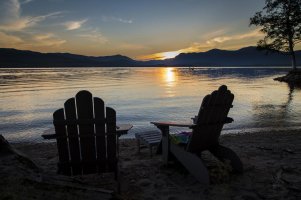
Here are two from Weld, Maine - looking west across Webb Lake. Canon 6D w/ 24-105L; ISO 100 - first one: @24mm, 1/40 & f/8; second one: @58mm, 1/3 & f/22.
 

Attachments

  • IMG_1744-1 rs.jpg
    IMG_1744-1 rs.jpg
    84.4 KB · Views: 937
  • IMG_2070-1 rs.jpg
    IMG_2070-1 rs.jpg
    73.7 KB · Views: 936
Upvote 0
trstromme said:
Cory said:
Would anyone mind presenting their "sunset" techniques/settings while I put my jaw back into its joints.
Thanks much.

Hi, I wouldn't go so far as to say there are any specific "sunset techniques" as much as there are general photographic techniques. It's basically the same as photographing a lot of other landscape stuff; decide on how much DOF you want, what to expose for, composition and mood, then press the trigger..
Now that's simplifying it a lot.
Especially in shooting things like sunset, sunrises etc. one of the more difficult things to deal with is contrast.
Compromises would often have to be made, but there are things that can help.
ISO, shutter speed, f-stop. These basically decide the exposure, based on what the camera typically wants to expose for; a medium gray exposure. especially when shooting handheld, or if you don't want motion artifacts in your shots then compromises in either would have to be made.
As I said dealing with contrasts in these types of shots is often essential.
Typically the sky will be blindingly hot and burnt out if you want to preserve details of the scenery.
Multiple exposures and a lot of fiddling in PS, the Gimp or LR can bring those back under control, but not always.
ND grad filters, of various densities (loss of stops) are in my opinion essential tools to bring the contrast between sky and land under control.
There are various makes and densities of ND grads, Lee, Hitec, Cookin are a few of the makers.
Cokin, which I've stuck to most (price and availability in Norway) are cheap and does the job well. But as far as I can see they offer just grads that are linear, where the slope of the density increase (loss of light) is linear across the filter. The other makers offer reverse grads (I've just received a Hitec one I'm looking forward to try. These are darker around the middle of the frame, perfect to bring the horizon under control before gradually sloping off towards the "top"
Also the other makers offer ND grads that have a more defined edge (steeper slope) in the middle. (hard edge they are referred to)
Anyway, meter the sky and landscape to settle on how many stops difference there are, then settle for one that evens out the contrast as you want it. (though don't overdo it, naturally our eyes expect the sky in such situations to be brighter than the landscape.)
In use, either get a filter holder or just hold it in front of the lens, then slide it up and down to get the right effect. (remove the lens hood)
If you are shooting with a tripod I often tend to use manual exposure in combination with my 7D's live view and exp. simulation modes. This will give you the effect immediately. Slide up or down, pick a different filter, or filters to stack until you are satisfied.
If you overdo stacking of the filters, at least with my Cokins, an often undesired color cast can be introduced where the filtering effect is the strongest.
One problem with ND grads is if you are shooting a landscape with lots of detail on the sides of the frame, like trees, mountains as seen from a valley etc. (I'm from Norway, mountains and valleys are very prominent here..) These features will then shot a distinct linear darkening that reveals the use of an ND grad, but this can be fixed either by multiple exposures, flash (think trees, not mountain sides) or some selective dodging or burning.

If you look in my flick stream, I've added comments to a lot of my recent images on filter usage. http://www.flickr.com/photos/trondstromme/
Thanks and your pictures are AMAZING. Also, I spent 6 weeks between Narvik and Harstad.
 
Upvote 0
Cory said:
trstromme said:
Cory said:
Would anyone mind presenting their "sunset" techniques/settings while I put my jaw back into its joints.
Thanks much.

Hi, I wouldn't go so far as to say there are any specific "sunset techniques" as much as there are general photographic techniques. It's basically the same as photographing a lot of other landscape stuff; decide on how much DOF you want, what to expose for, composition and mood, then press the trigger..
Now that's simplifying it a lot.
Especially in shooting things like sunset, sunrises etc. one of the more difficult things to deal with is contrast.
Compromises would often have to be made, but there are things that can help.
ISO, shutter speed, f-stop. These basically decide the exposure, based on what the camera typically wants to expose for; a medium gray exposure. especially when shooting handheld, or if you don't want motion artifacts in your shots then compromises in either would have to be made.
As I said dealing with contrasts in these types of shots is often essential.
Typically the sky will be blindingly hot and burnt out if you want to preserve details of the scenery.
Multiple exposures and a lot of fiddling in PS, the Gimp or LR can bring those back under control, but not always.
ND grad filters, of various densities (loss of stops) are in my opinion essential tools to bring the contrast between sky and land under control.
There are various makes and densities of ND grads, Lee, Hitec, Cookin are a few of the makers.
Cokin, which I've stuck to most (price and availability in Norway) are cheap and does the job well. But as far as I can see they offer just grads that are linear, where the slope of the density increase (loss of light) is linear across the filter. The other makers offer reverse grads (I've just received a Hitec one I'm looking forward to try. These are darker around the middle of the frame, perfect to bring the horizon under control before gradually sloping off towards the "top"
Also the other makers offer ND grads that have a more defined edge (steeper slope) in the middle. (hard edge they are referred to)
Anyway, meter the sky and landscape to settle on how many stops difference there are, then settle for one that evens out the contrast as you want it. (though don't overdo it, naturally our eyes expect the sky in such situations to be brighter than the landscape.)
In use, either get a filter holder or just hold it in front of the lens, then slide it up and down to get the right effect. (remove the lens hood)
If you are shooting with a tripod I often tend to use manual exposure in combination with my 7D's live view and exp. simulation modes. This will give you the effect immediately. Slide up or down, pick a different filter, or filters to stack until you are satisfied.
If you overdo stacking of the filters, at least with my Cokins, an often undesired color cast can be introduced where the filtering effect is the strongest.
One problem with ND grads is if you are shooting a landscape with lots of detail on the sides of the frame, like trees, mountains as seen from a valley etc. (I'm from Norway, mountains and valleys are very prominent here..) These features will then shot a distinct linear darkening that reveals the use of an ND grad, but this can be fixed either by multiple exposures, flash (think trees, not mountain sides) or some selective dodging or burning.

If you look in my flick stream, I've added comments to a lot of my recent images on filter usage. http://www.flickr.com/photos/trondstromme/
Thanks and your pictures are AMAZING. Also, I spent 6 weeks between Narvik and Harstad.
Just to add, there are basically two types of ND grads, soft and hard. As the names suggest, soft grads have a gradual change from light to dark and are best used for uneven horizons, such as mountains. They are harder to see in the viewfinder and therefore take a bit more practice to use effectively. Hard grads have a definite edge between the filtered and unfiltered section and are obvious in the viewfinder (and also in the final image if not positioned correctly). They are used for straight horizons or against the edge of a mountain. Reverse grads are hard grads where the gradation is opposite to normal and are usually the best filters for sunset/sunrise. Until recently, only Singh-Ray made them, but in the past 12 months or so, Hi-Tech have also produced them, although there have been reports of quality assurance issues, with some filters not being straight.
I used Hi-Tech filters with my Cokin P system for a couple of years, they are more neutral than the Cokin ones. I now use the Lee system, since using full frame for landscapes, with Lee filters, except for the recent Singh-Ray reverse grad.
 
Upvote 0