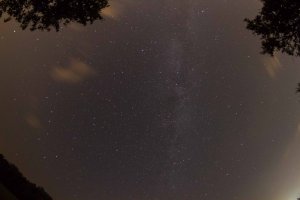
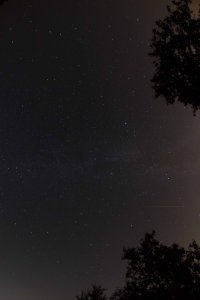
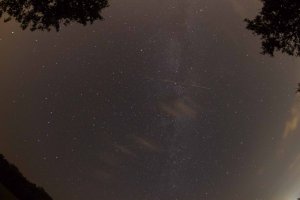
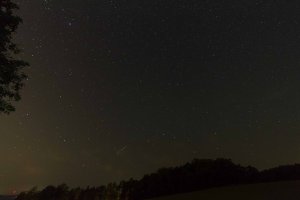
Best setup for falling stars

Status
Not open for further replies.
lintoni said:
Best set up for falling starts?

You could try the Betty Ford Clinic?

Ha, Ha, Ha---At that Place--Thanks Dear Lintoni, , I can use my 70-200 or 100-400, and my 600 mm too, I do not want to use 24-70 mm, because of the Security guards of the falling stars , might beat me up.
Thanks for your suggestion, and I can sell these photos to the newspaper too.
Surapon
 
Upvote 0
CarlTN said:
surapon said:
Dear Friends.
I do not know how to shoot the stars with Wide Angle Lens yet, But I use my EF 600 mm. shoot the Moon and the Comet ( First time in my life) = The Comet Panstars - 3/12/2013. I have Learn From the PRO that when we use the Long Tel. Lens, We must set the Super Fast Shutter Speed such as 1/500 Sec. to not let the moon Movement Blur.
Yes, I set My Canon 5D MK II at the TV.( shutter Speed Priority) at 1/ 500 sec, Set ISO = 2500 and the Camera will auto set F = 4.0.
It's works.
Enjoy
Surapon

You let too much blue in, and the moon shots should have been sharper, it seems to me. But they're interesting pictures nonetheless.


Thousand Thanks, Dear CarlTN for your Comments, Yes, That Blue Moon is late After Noon, in Blue Sky---Yes, I should get the Moon Photos sharper----Yes, I forget the Insect spray, And The Mosquitoes in My home town , in North Carolina are big as the Bees-------Just Fast Shot and Go back Home.
Thanks again
Surapon.
 
Upvote 0
LewisShermer said:
I tried this for the first time last night in my garden. I was pointing the wrong way for the milky way (as that'd be pointing towards my flat) and failed to catch any significant asteroids (as I was only out there for 10 mins just playing about)

I'm pretty sure that if I recreated these settings in the proper settings and persevered for a good amount of time these would serve me well:

canon 5Diii, 24-105L @ 24mm, f8, 1600iso, 30 sec, around 2900k for white balance (or shoot auto in raw and sort it out after)

I did do a bit of noise reduction in post.

you might want to pop the odd flash off at f8 if there are any points of interest within the frame when shooting...

it's not a great shot as it was just messing about, but the theory is sound...

Just to help the OP - I would not recommend these settings. They will work good for normal stars since they get to let their light bleed into the photo for 30 seconds. However, a shooting star will only last for about 1 second or less, and at F/8 Iso 1600 I really don't think it will register on the sensor. Wider aperture, and shorter shutter speed is likely to work better, at least in my limited experience.
 
Upvote 0
To get the same amount of light captured at ISO 1600:

30s @ f/8
15s @ f/5.6
8s @ f/4
4s @ f/2.8
2s @ f/2
1s @ f/1.4

For a 1s exposure, if you have:
f/4 lens, you have to shoot at ISO 12800
f/2.8 lens, ISO 6400
f/2 lens, ISO 3200

I hope my math is right. Get a remote shutter release that stays locked and keep the camera in continuous shooting mode and you just may capture some shooting stars.
 
Upvote 0
I find that you can use relative low ISO, max 800, with short exposures of 10-15 seconds using a wide angle lens as the Canon 10-22. At 10 mm, remember that longer exposures will cause star trailing in the corners. When I shot the Perseids last year, I made 10 second exposures at F/2.8 and ISO 800. At 15 seconds exposure, star trails were getting significant and at 30 seconds, most star were just blurs.

As suggested earlier, stacking as a pleasant alternative
 
Upvote 0
lintoni said:
Best set up for falling starts?

You could try the Betty Ford Clinic?


ha ha you beat me to it

FIRST OFF people here have great ideas and pics... wonderful...

on a less serious note
I usually use a 35 f1.4 sigma ..... on Lindsy Lohan...in the clubs....

sorry ......when I saw your post I had to un-restrain myself....

again........... I love the REAL work here

TOM
 
Upvote 0
Last week I did two night sessions with the 600D and the tokina 11-16. I chose ISO 1600 (too much color noise in the area where some light pollution slightly brightens the sky, next time i'll set 800), f/2.8 and 30sec. With some PP i got nice time lapse movies. I caught some falling stars, and the second night when pointing south, there was some kind of satellite tumbling around ;)

After the exams i will edit these movies.

I need to get that money to buy me the new sigma lens - with f/1.8 10s exposures should work fine!
Oh, and a battery grip for 900 instead of 450 images ;)
 
Upvote 0
Hi guys,

just wanted to follow up with the results of my nightly session:

I shot around 520 frames, about half on 5DIII and 7D each.
I ended up with around 30 frames with something in it other than trees and ordinary stars.
I found three frames where I am quite sure they have a falling star in them (all three of them included below)
I got several frames with more than one moving thingie in them which are most probably satellites, non-blinking planes, the ISS or the latest Alien shaceship :-)

Next time I'll probably take the advice with the shorter exposure time (and a timer remote), as it is indeed kinda difficult to see the faint traces in the long exposure frames.

Some time during the time I realized that the lenses started to fog up, due to the cool night, and had to periodically wipe them off; this is also one thing I will have to improve upon next time.

But it was fun, and I'll be doing the same thing next year for sure :)
 

Attachments

Upvote 0
Congratulations on your catches! Though in the images you posted only 20130813-0132 and 20130812-0129 look like meteors. All of your second set are definitely satellites. Meteors can be tricky to capture, but I have a good recipe and I'm sorry I wasn't able to share it with you before this year's Perseids. Well, there are other showers (e.g. the Leonids) , and perhaps you will have the opportunity for a repeat with good weather next year, or for the moonless 2015 Perseids.

A few relevant things about meteors:

[list type=decimal]
[*]There are more fainter meteors than brighter
[*]They flash in a fraction of a second (longer for brighter ones)
[*]Showers appear to originate from a point, called the radiant
[*]Meteors (even for showers) are as likely to happen anywhere in the sky, and are unpredictable
[/list]

1 & 2 implies that in order to catch as many meteors as possible, you should aim for maximum practical sensitivity while limiting the background as much as possible for the best contrast.

[list type=decimal]
[*]Maximum aperture for your lens
[*]As high ISO as you find acceptable
[*]The shorter the exposure (longer than the expected duration of the meteor), the better the contrast, i.e. the brighter the meteor looks like relative to the background/foreground. There is a trade-off to be made, of course. In practice, using the longest exposure that maintain dark skies does not significantly worsen the contrast, so go with that. This is where you realise you need dark skies, as city skies easily can saturate in less than a second, while you can go on for minutes before that happens in truly dark locations.
[*]Keep shooting repeatedly for as long as you can.
[*]With dropping temperatures, watch out for dew on the front lens. Lens hoods help a bit, but for wide-angle lenses they are not very constraining.
[*]Watch your focus, use live view on a bright star. For a slow lens (as the EF-S 10-22), use some other, bright faraway light, or focus during daytime and lock it.
[/list]


What about focal length? With a wider lens, you cover more sky, so are more likely to get a meteor in the field. On the other hand, its image will be smaller and less impressive than if you were lucky to catch it at a longer focal length. Again, it's a trade-off.

For your alternative, I think the lens choices you made are the best given your selection, but as you've already concluded, it would be better to reduce the exposure time of the 5D3, perhaps using 10s with ISO 1600 or 3200. That would improve your contrast by a factor of 3. For the 7D. it's hard to improve your strategy, since going beyond ISO 1600 gives pretty noisy results.

I also photographed the Perseids this year, but I did it in a very lazy way. I happened to visit my parents-in-law house on the countryside, where they have dark skies, so I just went out at midnight and set up the camera to shoot repeatedly (using a remote and locking the shutter button). Went to bed, and came back to empty the net after two hours. My settings:
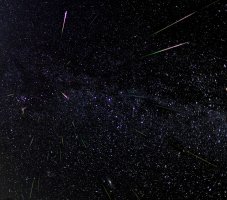
5D3+24/1.4L @ 1.4, 15s, ISO 1600. Since I wanted to capture the perspective effect of the radiant, I included Perseus in the field (but no interesting foreground object... I save that for 2015!). In ~500 frames, I identified ~50 meteors, out of which I produced a mosaic from the brightest half (seen below). The mosaic took some time to produce in photoshop, since I had to match the rotating background of stars. Next time I'll perhaps use a mount with drive, to simplify the process.

I think 24/1.4 is pretty much ideal for meteors. Unfortunately the 24/1.4L has awful coma, so next time I will probably try the Samyang 24/1.4, which is supposed to show less (see this thread)

I also found hundreds of satellite tracks in my images. The easy way to identify them is:

[list type=decimal]
[*]hey are generally white (reflected sunlight). Meteors are colourful!
[*]They last for more than a fraction of a second (typically minutes and can almost always be seen in consecutive frames)
[*]Their streak don't generally show the same light distribution as meteors (though a few do).
[/list]

 

Attachments

  • PerseidCollage.jpg
    PerseidCollage.jpg
    1.2 MB · Views: 792
Upvote 0
Hi, wow you got that "the lazy way"' your collage makes it look like it was raining meteors on you! That is so good thanks for showing us. One day I might have a picture good enough to show on here.

Cheers Graham.

epsiloneri said:
Congratulations on your catches! Though in the images you posted only 20130813-0132 and 20130812-0129 look like meteors. All of your second set are definitely satellites. Meteors can be tricky to capture, but I have a good recipe and I'm sorry I wasn't able to share it with you before this year's Perseids. Well, there are other showers (e.g. the Leonids) , and perhaps you will have the opportunity for a repeat with good weather next year, or for the moonless 2015 Perseids.

I also photographed the Perseids this year, but I did it in a very lazy way. I happened to visit my parents-in-law house on the countryside, where they have dark skies, so I just went out at midnight and set up the camera to shoot repeatedly (using a remote and locking the shutter button). Went to bed, and came back to empty the net after two hours.
 
Upvote 0
You need not fear Graham, just look at the photos I attached in my posts. Not a single one is really good enough by CR-standards and still nobody told me that I was a lousy photographer - well, or maybe nobody bothered to read this thread ;) Still, I feel that as far as learning is concerned you might learn as much from a bad photo as from a good one - congrats, epsiloneri, that's really a stunning image!

Just steer clear of the dangerous topics like DxO-marks and whether Nikon or Canon has more DR, and everything will be just fine 8)
 
Upvote 0
Dude you need to crank up the ISO on the 5D3, I shoot stars between 1600-6400, 400 is waaaayyy too low. And 51 seconds is too long of an exposure for 24mm. To find out the maximum exposure time you can use divide 600 by the focal length, so 600/24 = 25, so you can go 25 seconds at 24mm before the stars start to turn into pill shapes. Use the 14mm on the 5D3, you can go for like 43 seconds with that.

Also do the following:
•Turn off all forms of noise reduction, do that in post
•Turn on mirror lockup and shoot in single silent mode
•Remove the strap, wind can blow on it and cause vibrations
•Cover the viewfinder with tape so no light leaks in
•Use a remote to trigger the camera, if you don't have one use the 2 second delay.

And the most important thing:
I'm guessing you took those pics not long before the night of the 25th, which was pretty close to a full moon. Those same shots on the night of a new moon would look completely different. ALWAYS try and shoot close to a new moon if possible, it makes absolutely all the difference in the world.
 
Upvote 0
epsiloneri said:
Congratulations on your catches! Though in the images you posted only 20130813-0132 and 20130812-0129 look like meteors. All of your second set are definitely satellites. Meteors can be tricky to capture, but I have a good recipe and I'm sorry I wasn't able to share it with you before this year's Perseids. Well, there are other showers (e.g. the Leonids) , and perhaps you will have the opportunity for a repeat with good weather next year, or for the moonless 2015 Perseids.

A few relevant things about meteors:

[list type=decimal]
[*]There are more fainter meteors than brighter
[*]They flash in a fraction of a second (longer for brighter ones)
[*]Showers appear to originate from a point, called the radiant
[*]Meteors (even for showers) are as likely to happen anywhere in the sky, and are unpredictable
[/list]

1 & 2 implies that in order to catch as many meteors as possible, you should aim for maximum practical sensitivity while limiting the background as much as possible for the best contrast.

[list type=decimal]
[*]Maximum aperture for your lens
[*]As high ISO as you find acceptable
[*]The shorter the exposure (longer than the expected duration of the meteor), the better the contrast, i.e. the brighter the meteor looks like relative to the background/foreground. There is a trade-off to be made, of course. In practice, using the longest exposure that maintain dark skies does not significantly worsen the contrast, so go with that. This is where you realise you need dark skies, as city skies easily can saturate in less than a second, while you can go on for minutes before that happens in truly dark locations.
[*]Keep shooting repeatedly for as long as you can.
[*]With dropping temperatures, watch out for dew on the front lens. Lens hoods help a bit, but for wide-angle lenses they are not very constraining.
[*]Watch your focus, use live view on a bright star. For a slow lens (as the EF-S 10-22), use some other, bright faraway light, or focus during daytime and lock it.
[/list]


What about focal length? With a wider lens, you cover more sky, so are more likely to get a meteor in the field. On the other hand, its image will be smaller and less impressive than if you were lucky to catch it at a longer focal length. Again, it's a trade-off.

For your alternative, I think the lens choices you made are the best given your selection, but as you've already concluded, it would be better to reduce the exposure time of the 5D3, perhaps using 10s with ISO 1600 or 3200. That would improve your contrast by a factor of 3. For the 7D. it's hard to improve your strategy, since going beyond ISO 1600 gives pretty noisy results.

I also photographed the Perseids this year, but I did it in a very lazy way. I happened to visit my parents-in-law house on the countryside, where they have dark skies, so I just went out at midnight and set up the camera to shoot repeatedly (using a remote and locking the shutter button). Went to bed, and came back to empty the net after two hours. My settings:
5D3+24/1.4L @ 1.4, 15s, ISO 1600. Since I wanted to capture the perspective effect of the radiant, I included Perseus in the field (but no interesting foreground object... I save that for 2015!). In ~500 frames, I identified ~50 meteors, out of which I produced a mosaic from the brightest half (seen below). The mosaic took some time to produce in photoshop, since I had to match the rotating background of stars. Next time I'll perhaps use a mount with drive, to simplify the process.

I think 24/1.4 is pretty much ideal for meteors. Unfortunately the 24/1.4L has awful coma, so next time I will probably try the Samyang 24/1.4, which is supposed to show less (see this thread)

I also found hundreds of satellite tracks in my images. The easy way to identify them is:

[list type=decimal]
[*]hey are generally white (reflected sunlight). Meteors are colourful!
[*]They last for more than a fraction of a second (typically minutes and can almost always be seen in consecutive frames)
[*]Their streak don't generally show the same light distribution as meteors (though a few do).
[/list]

Nice image and very good advice. Recently I have looked over the lens offerings, and tests...decided to go two routes for the object of my own night time pursuit, the upcoming comet ISON. Assuming it looks like it will be worth going to the trouble, I will buy a Sigma 35mm f/1.4, and do (perhaps 5-shot-overlapped) stitched panoramas of the comet. There simply is no other wide or medium wide lens that compares to its resolution...even the Zeiss 21 or 25mm offerings...let alone any of the 24 f/1.4's. I also have decided the very best, sharpest wide angle lens, is also the least expensive, the Samyang 14mm f/2.8. So that one is kind of a no-brainer (obviously it would be best for single shots). It might be interesting to try a motorized mount as well...but would not help for the terrestrial aspect of the shot. Of course if the shot is stitched, it would work...but the mount might hamper the ability to pan while doing the shots in succession...don't know.
 
Upvote 0
CarlTN said:
Nice image and very good advice. Recently I have looked over the lens offerings, and tests...decided to go two routes for the object of my own night time pursuit, the upcoming comet ISON. Assuming it looks like it will be worth going to the trouble, I will buy a Sigma 35mm f/1.4, and do (perhaps 5-shot-overlapped) stitched panoramas of the comet. There simply is no other wide or medium wide lens that compares to its resolution...even the Zeiss 21 or 25mm offerings...let alone any of the 24 f/1.4's. I also have decided the very best, sharpest wide angle lens, is also the least expensive, the Samyang 14mm f/2.8. So that one is kind of a no-brainer (obviously it would be best for single shots). It might be interesting to try a motorized mount as well...but would not help for the terrestrial aspect of the shot. Of course if the shot is stitched, it would work...but the mount might hamper the ability to pan while doing the shots in succession...don't know.

Thanks! I would love for comet ISON to require stitching when using a 35mm lens, but I wouldn't count on it. Predicting the tail size is near impossible, and it may very well be only a few degrees in size, e.g. more suitable for a 300mm lens (on full frame). See image of Pan-STARRS by surapon earlier in this thread, compared to the size of the moon. We will know when the time comes (December). The Sigma 35/1.4 could be nice to acquire for other reasons, of course. Most important advice is to seek out a dark location. It makes a HUGE difference, since comet tails (unlike stars and meteors) are extended of faint surface brightness.

Some motorized mounts can drive on half the celestial rate, effectively increasing your exposure time 2x without introducing motion blur (e.g., the Vixen Polarie) for stars/foreground.
 
Upvote 0
epsiloneri said:
CarlTN said:
Nice image and very good advice. Recently I have looked over the lens offerings, and tests...decided to go two routes for the object of my own night time pursuit, the upcoming comet ISON. Assuming it looks like it will be worth going to the trouble, I will buy a Sigma 35mm f/1.4, and do (perhaps 5-shot-overlapped) stitched panoramas of the comet. There simply is no other wide or medium wide lens that compares to its resolution...even the Zeiss 21 or 25mm offerings...let alone any of the 24 f/1.4's. I also have decided the very best, sharpest wide angle lens, is also the least expensive, the Samyang 14mm f/2.8. So that one is kind of a no-brainer (obviously it would be best for single shots). It might be interesting to try a motorized mount as well...but would not help for the terrestrial aspect of the shot. Of course if the shot is stitched, it would work...but the mount might hamper the ability to pan while doing the shots in succession...don't know.

Thanks! I would love for comet ISON to require stitching when using a 35mm lens, but I wouldn't count on it. Predicting the tail size is near impossible, and it may very well be only a few degrees in size, e.g. more suitable for a 300mm lens (on full frame). See image of Pan-STARRS by surapon earlier in this thread, compared to the size of the moon. We will know when the time comes (December). The Sigma 35/1.4 could be nice to acquire for other reasons, of course. Most important advice is to seek out a dark location. It makes a HUGE difference, since comet tails (unlike stars and meteors) are extended of faint surface brightness.

Some motorized mounts can drive on half the celestial rate, effectively increasing your exposure time 2x without introducing motion blur (e.g., the Vixen Polarie) for stars/foreground.

Good advice and excellent info! However, I wasn't implying the comet was going to appear that large!! I meant I wanted to shoot the whole sky with the comet in it, and feature part of the terrestrial view as well. That would be difficult to do with a 300mm lens. The initial reports had said it could appear larger and brighter than the full moon...I knew that was unlikely, but if it's able to be seen with the naked eye at all, then shooting wider angle shots of it in the sky seems like a valid take on it to me. If it winds up being not very visible to the naked eye, then it probably won't be suitable for anything shorter than 1000mm...let alone 300.

Incidentally, how well would a 300mm lens work on the Vixen Polarie?
 
Upvote 0
CarlTN said:
I meant I wanted to shoot the whole sky with the comet in it, and feature part of the terrestrial view as well.
I see, well, then perhaps a fish-eye would serve you good. But generally, if you choose a very short focal length, the comet will not look as impressive (unless it is very impressive). If you want terrestrial features in the foreground, another strategy is to choose a time when the comet is nearer the horizon, and use a focal length more appropriate for the comet.

CarlTN said:
Incidentally, how well would a 300mm lens work on the Vixen Polarie?
I have no personal experience with it. The Polarie is intended for more wide-angle work, but is rated for 7 Ibs. of load, so it could potentially take a 300/4 for some 30s, if properly polar aligned. A 300/2.8 would probably be too much, including mount head and camera. An Astro-Trac could be the better mobile option, or a dedicated "light" tracking mount like the iOptron ZEQ25GT if mobility was not essential (i.e. no hiking with equipment unless you have plenty of assistents).

At 300mm it would be difficult to get foreground (but could yield spectacular results if you did; compare with full moon pictures showing foreground). You would ideally have the foreground high above you (a mountain or hill) to avoid seeing the comet through too much atmosphere. For a foreground project, I think 35-100mm would be a better trade-off between seeing both the comet and the foreground well enough. But as you say, it depends a lot on the comet.

If you haven't already, I would recommend you to look at other's comet pictures from past great comets, to probe the possibilities and get inspiration. Just remember that the last really great comet, comet Hale-Bopp, was in the pre-digital era (1997), so options were more limited then.
 
Upvote 0
Status
Not open for further replies.