
You are using an out of date browser. It may not display this or other websites correctly.
You should upgrade or use an alternative browser.
You should upgrade or use an alternative browser.
BIRD IN FLIGHT ONLY -- share your BIF photos here
- Thread starter Dylan777
- Start date

Jack Douglas said:Talys, last winter or maybe the one before I spent a lot of time trying to get shots such as your chickadees.
It is indeed challenging and luck plays maybe too big of a part in it but it's fun to try. Your shots are good but it seems we have quite a bit working against us.
The focus needs to be perfect (totally luck, pre-focused), the shutter speed needs to be very high for maximum sharpness (now where does that needed extra light come from) and who's to say when the antics are going to occur (sometimes we do find birds preoccupied in their own world for quite long). High fps might help but no guarantee and there is no flash capability that can couple with high fps so that leads back to just a single shot or maybe two low power bursts. Then there is the trade off of using a wider lens and having to crop just to insure that the birds are in the frame and that leads to noise at typical ISOs.
I'd be interested in tips or ideas on how to best overcome all these challenges!
Recently with my visiting Cedar waxwings I tried shooting 60 fps 4K video and that has promise but lots of challenges too.
Jack

Hi Jack,
Yup, you've hit all the things that are problematic. Of them, I think that focus is the biggest issue.
The main reason that I set out on the challenge to myself is that I've fallen in love with the MF ring on the 100-400II. It's just so accurate and predictable; I wanted to see if I could make that work on the little birdies, because next spring, when they're plentiful, I'd like to catch some dragonflies in flight, and those are devilishly hard. Forget AF altogether, there.
I practiced some MF first -- I would AF on a branch (simulating prefocus), hit the AF/MF switch, and then MF on a part of the tree that just a foot or so back. I spent maybe half a day tethered to a laptop (I just used JPEG to make the transfers fast), and I'd look at my practice shots to see how far I was off focus, and fined tuned that muscle memory until I felt good about it.
When actually photographing the chickadees, waiting for the shot, every time the birds came kind of near, I'd look the viewfinder with one eye and keep an eye on the environment on the other -- you kind of have to, because they will move in and out of frame too quickly. I close my left eye to MF only when I know they're going to be in-frame in a half-second.
Then I start slightly front-focused, and as soon as the drive motor kicks in, gently adjust focus until it's slightly back-focused. Out of 6 photos in that sequence, 4 were actually pretty good in terms of focus, I think. These are the other two I kept out of the set:

Full resolution image: http://talys.icxi.com/cr/20170921/Chickadee-bif-08_CFW.jpg
The second one, unfortunately, the top chickadee is too close to the top edge of the frame for a nice crop. I guess I could just extend the background with Photoshop, but it's more satisfying to spend my time grabbing new photos
 Here it is as it was shot, though:
Full resolution image: http://talys.icxi.com/cr/20170921/Chickadee-bif-07_FW.jpg
Another rough patch... It is hard being patient and waiting for chickadees to do something interesting, LOL.
For lighting -- I have been desperate in the past, before, and supplemented lighting either with HSS strobes or LED panels. The birds don't seem to care, and it does allow you to increase your shutter speed and aperture. These ones, though, are just natural sunlight, taken at 1/2000 f/5.6.
If you have any tips that might be helpful, I'd love to hear them too!
Click said:Very nice series, Talys. I especially like the 3rd picture. 8)
Thank you!
Upvote
0

Phil, thanks for the feedback.
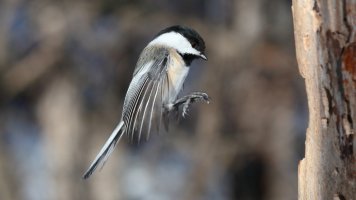
In my case the process would not be too good for competing birds since it involves a perch strategically placed and a food source. A temporary wire strung between to pre-focus on and then watch for the bird to leave the perch and fire. I did also set up a couple flashes sometimes with HSS. Focus button on the big white helps too since sometimes I'd be shooting other things and want to return to that pre-focus. Here's one sample.
Jack
In my case the process would not be too good for competing birds since it involves a perch strategically placed and a food source. A temporary wire strung between to pre-focus on and then watch for the bird to leave the perch and fire. I did also set up a couple flashes sometimes with HSS. Focus button on the big white helps too since sometimes I'd be shooting other things and want to return to that pre-focus. Here's one sample.
Jack
Attachments
Upvote
0
Click said:I really like your picture, Jack.
Thanks click. At the time I was all enthralled with that activity but now after having gotten a few shots it doesn't seem so exciting. Kind of the same thing when I went to Haida Gwaii to shoot eagles. I had scarcely shot any before and it was a big deal. I wish I had access to the big water birds that get posted right here! Guess the grass is always greener across the fence.
Jack
Upvote
0
@Jack - that's a fantastic shot of a chickadee 8)
You are absolutely right; with every bird, the first few are super exciting, and they get less so as you accumulate many of them
All the big birds of prey and waterfowl though, I always get really excited about if the sun's right. I wish I could catch some photos of owls, no such luck yet -- mostly because the places to go are very out of the way for me.
The only owl photo I have is a night security camera at the house.. one came right onto one of our balconies
You are absolutely right; with every bird, the first few are super exciting, and they get less so as you accumulate many of them
All the big birds of prey and waterfowl though, I always get really excited about if the sun's right. I wish I could catch some photos of owls, no such luck yet -- mostly because the places to go are very out of the way for me.
The only owl photo I have is a night security camera at the house.. one came right onto one of our balconies
Upvote
0
Talys said:@Jack - that's a fantastic shot of a chickadee 8)
You are absolutely right; with every bird, the first few are super exciting, and they get less so as you accumulate many of them
All the big birds of prey and waterfowl though, I always get really excited about if the sun's right. I wish I could catch some photos of owls, no such luck yet -- mostly because the places to go are very out of the way for me.
The only owl photo I have is a night security camera at the house.. one came right onto one of our balconies
What I, maybe we, need to do is keep aiming for the perfect pose or situation that is not the same old ho hum. Could be common old chickadees or whatever we have relatively easy access to, but keep watching for a special activity. That's why I'd prefer your shots over mine. Never the less, any decent flight shot of a small bird is not exactly everyday common.
I also have only DSLR shot one owl - a Great-horned in BC, Canada
Jack
Upvote
0
Jack Douglas said:What I, maybe we, need to do is keep aiming for the perfect pose or situation that is not the same old ho hum. Could be common old chickadees or whatever we have relatively easy access to, but keep watching for a special activity. That's why I'd prefer your shots over mine. Never the less, any decent flight shot of a small bird is not exactly everyday common.
I also have only DSLR shot one owl - a Great-horned in BC, Canada
Jack
For sure! I couldn't agree more.
I live in BC, Canada; have trekked east-west from Vancouver Island to Alberta, and north as far as Williams Lake and Bella Coola... what I would do for a chance to photograph great horned owls or snowy whites
Upvote
0
Talys said:Jack Douglas said:What I, maybe we, need to do is keep aiming for the perfect pose or situation that is not the same old ho hum. Could be common old chickadees or whatever we have relatively easy access to, but keep watching for a special activity. That's why I'd prefer your shots over mine. Never the less, any decent flight shot of a small bird is not exactly everyday common.
I also have only DSLR shot one owl - a Great-horned in BC, Canada
Jack
For sure! I couldn't agree more.
I live in BC, Canada; have trekked east-west from Vancouver Island to Alberta, and north as far as Williams Lake and Bella Coola... what I would do for a chance to photograph great horned owls or snowy whites
There's Horned owls in Ellison Park at Vernon. I might have to PM you about Bella Coola since we want to drive that highway that's got the reputation and I guess the country is pretty wild with Grizzlies etc. Maybe this next spring. I tried really hard to find Spirit bears around Rosswood when we headed to Prince Rupert but no luck in spite of the folk describing sightings. BC is quite the province.
Jack
Upvote
0

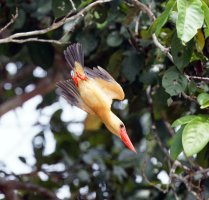

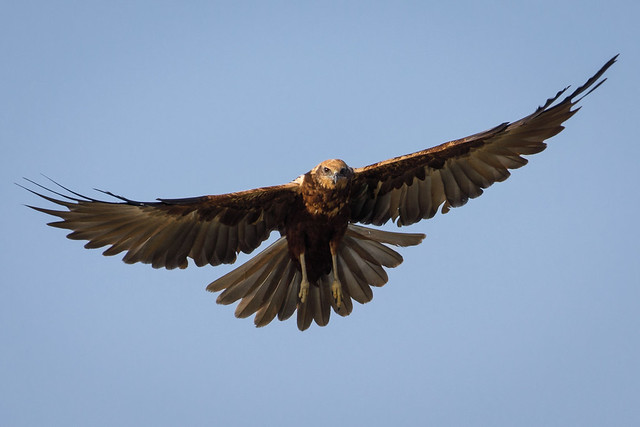
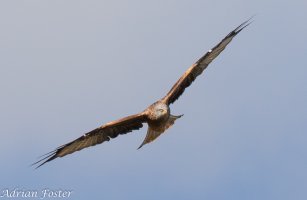
Click said:Cog said:Another pose of a marsh harrier:
Great shot, Cog.
+1
Upvote
0

Upvote
0

Hi Folks.
Alan, Cog, Adrian and others, great shots recently guys thanks for keeping the bar high : just makes it harder to justify posting my mediocre offerings. ;D
Cheers, Graham.
Alan, Cog, Adrian and others, great shots recently guys thanks for keeping the bar high :
just makes it harder to justify posting my mediocre offerings. ;DCheers, Graham.
Upvote
0
This is about the birds, literally and I'd say there isn't a mediocre bird on the planet although somehow some of them aren't exactly beauties. IOW Graham, post away.
Jack
Jack
Upvote
0


