Buying my first MACRO lens

Hey everyone. So I'm planning on buying my first MACRO lens for my canon 600D/T3i.
Which one should I get?
Sigma 105mm F2.8 EX DG OS HSM Macro Lens
Sigma 150mm f/2.8 AF APO EX DG OS HSM Macro Lens
Canon EF 100mm f/2.8L IS USM Macro Lens
Canon EF 100mm f/2.8 Macro USM Fixed Lens
Tamron AFF017C700 SP 90mm F/2.8 Di VC USD 1:1 Macro Lens

I've only tried the Canon 100mm f/2.8L and fell in love with it. Budget won't be a problem. Then again I'm not gonna change my camera any time soon. I'd like to photograph insects and flowers mostly.
 
neuroanatomist said:
I'd go with the Canon 100L.

+1, though see if you can have a play with the Sigma 150mm - if you want to shoot insects, the extra distance between you and an insect that the 150mm focal length allows means you're less likely to scare the insect away.

But the 100L is a fantastic lens for the money, and would be my first pick.

d.
 
Upvote 0
Consider Zeiss 100 MP. The biggest drawback is that it only goes to 1:2, but extension rings will solve that. AF is useless in macro anyway, so that won't be an issue. The biggest plus is IQ. Second advantage is f/2.0 so brighter viewfinder.
If you do insects, consider the Canon 180M, because insects are often skittish. It has lateral color problems, but for longer WD it may be a consideration, and you can fix some of the color issue in RAW conversion (DPP, DxO).
Many insects are VERY small, so the MPE 65 may be on your wishlist as well.

I assume you have tripod and/or flash.
 
Upvote 0
I agree, the 100L is the best all rounder. It's very good for many subjects and situations. A longer lens like the Sigma 180 f/2.8 OS can be great for flowers and skittish insects but is less versatile and has a steeper learning curve.

Zeidora said:
AF is useless in macro anyway, so that won't be an issue.

I must strongly disagree. I've shot thousands of macro images with AF. It is very useful in the wild.
 
Upvote 0
Zeidora said:
Consider Zeiss 100 MP. The biggest drawback is that it only goes to 1:2, but extension rings will solve that. AF is useless in macro anyway, so that won't be an issue. The biggest plus is IQ. Second advantage is f/2.0 so brighter viewfinder.
If you do insects, consider the Canon 180M, because insects are often skittish. It has lateral color problems, but for longer WD it may be a consideration, and you can fix some of the color issue in RAW conversion (DPP, DxO).
Many insects are VERY small, so the MPE 65 may be on your wishlist as well.

I assume you have tripod and/or flash.

Why is AF in a macro lens useless for you? Many other photographers put it to good use often.
 
Upvote 0
YuengLinger said:
Zeidora said:
Consider Zeiss 100 MP. The biggest drawback is that it only goes to 1:2, but extension rings will solve that. AF is useless in macro anyway, so that won't be an issue. The biggest plus is IQ. Second advantage is f/2.0 so brighter viewfinder.
If you do insects, consider the Canon 180M, because insects are often skittish. It has lateral color problems, but for longer WD it may be a consideration, and you can fix some of the color issue in RAW conversion (DPP, DxO).
Many insects are VERY small, so the MPE 65 may be on your wishlist as well.

I assume you have tripod and/or flash.


Why is AF in a macro lens useless for you? Many other photographers put it to good use often.
I haven't used AF on a macro lens for a long long time...... almost 8 hours now!
 
Upvote 0
even if its expensive get Canon 100mm L, you cannot go wrong with that lens. Once you start shooting macro depending on how you develop interest for macro in future you can upgrade to Mp-e 65 (for high mag macro) or go for 180/150mm macro in case you start shooting butterflies and other shy insects.

scyrene said:
I agree, the 100L is the best all rounder. It's very good for many subjects and situations. A longer lens like the Sigma 180 f/2.8 OS can be great for flowers and skittish insects but is less versatile and has a steeper learning curve.

Zeidora said:
AF is useless in macro anyway, so that won't be an issue.

I must strongly disagree. I've shot thousands of macro images with AF. It is very useful in the wild.
for studio work sure MF works great but outdoors with shy bugs and other critters AF works like a charm.
 
Upvote 0
Re AF, for 1:10 ratio or so, maybe, because you get decent depth of field. Once you go into 1:2 - 1:1 range, DOF gets very small, and you have to decide where you want the focal plane. Spoiler alert: it's rarely near the center.

You have three options: either make the object sufficiently small in frame to have the area where focal plane should go through in the central area, or use the sports approach of "spray and pray". Third, you can crank down f-stop and invite diffraction. Don't know details of pixels size for the 600D, but crop cameras generally have smaller pixels, so are more strongly affected by diffraction at same MP count. On my 5DsR with ~4 µm pixels, the limit is at effective f-stop f/11, which is f/5.6 set on lens at 1:1. And yes, I have experimentally verified that. Accordingly, you want to shoot as open as possible to get DOF you need but limit blurring of image due to diffraction, and that requires precise and intentional placement of focal plane.

You can also fiddle with AF points, select AF point in image area depending on composition, then shoot in AF, but you are faster with MF. It may take a little time to get comfortable with MF. I grew up doing macro when there was no AF, so it is second nature.
The C 180M is well-known to be VERY slow and erratic with AF. Know that from personal experience when using it as a short tele at longer distances. I keep AF off with the 180M, despite the fact that MF is not as easy as on a lens designed for MF, like the Zeiss (greater angular movement for same change in focus = more precise focus; and build-quality, of course).

One problem with a 600D and MF may be matt focusing screen. Not sure you can switch it out.
 
Upvote 0
Zeidora said:
Re AF, for 1:10 ratio or so, maybe, because you get decent depth of field.

'Decent depth of field' is not the same as 'having the focus noticeably in the right place' (DOF is about 'acceptable sharpness' not 'it is sharp' and is affected by reproduction size and viewing distance.
And there are plenty of things you can shoot between the 1:10 and 1:2 ranges you quote.
 
Upvote 0
Saloooh91 said:
Hey everyone. So I'm planning on buying my first MACRO lens for my canon 600D/T3i.
Which one should I get?
Sigma 105mm F2.8 EX DG OS HSM Macro Lens
Sigma 150mm f/2.8 AF APO EX DG OS HSM Macro Lens
Canon EF 100mm f/2.8L IS USM Macro Lens
Canon EF 100mm f/2.8 Macro USM Fixed Lens
Tamron AFF017C700 SP 90mm F/2.8 Di VC USD 1:1 Macro Lens

I've only tried the Canon 100mm f/2.8L and fell in love with it. Budget won't be a problem. Then again I'm not gonna change my camera any time soon. I'd like to photograph insects and flowers mostly.

There is a pretty significant weight difference between the Canon 100/100L and the Sigma 150mm.

The Sigma is nice, but it also isn't of the latest "A" or "C" designations, so it isn't compatible with the USB dock.

The Canon lens will AF consistently unlike almost any other 3rd party lens with AF for Canon cameras. The key word there is "consistently".

AF is NOT useless for macro, however, as the AF changes, so does your magnification. If you want to stay at 1:1 (or any other ratio), you will have to set the lens to 1:1 and turn off the AF, then move the camera to attain the desired focus. Focus stacking while using AF will result in a bunch of differently sized (magnified) subject images.

You may find 100mm to be short for active insects. Only way to know for sure is to try something like the Sigma 150 or Canon 180. Sigma also makes a 180mm macro.

The Canon 300mm f/4 has a very short MFD and a macro range, and it delivers nice bokeh. The Canon 100-400 also has a very short MFD.
 
Upvote 0
Zeidora said:
Re AF, for 1:10 ratio or so, maybe, because you get decent depth of field. Once you go into 1:2 - 1:1 range, DOF gets very small, and you have to decide where you want the focal plane. Spoiler alert: it's rarely near the center.

You have three options: either make the object sufficiently small in frame to have the area where focal plane should go through in the central area, or use the sports approach of "spray and pray". Third, you can crank down f-stop and invite diffraction. Don't know details of pixels size for the 600D, but crop cameras generally have smaller pixels, so are more strongly affected by diffraction at same MP count. On my 5DsR with ~4 µm pixels, the limit is at effective f-stop f/11, which is f/5.6 set on lens at 1:1. And yes, I have experimentally verified that. Accordingly, you want to shoot as open as possible to get DOF you need but limit blurring of image due to diffraction, and that requires precise and intentional placement of focal plane.

You can also fiddle with AF points, select AF point in image area depending on composition, then shoot in AF, but you are faster with MF. It may take a little time to get comfortable with MF. I grew up doing macro when there was no AF, so it is second nature.
The C 180M is well-known to be VERY slow and erratic with AF. Know that from personal experience when using it as a short tele at longer distances. I keep AF off with the 180M, despite the fact that MF is not as easy as on a lens designed for MF, like the Zeiss (greater angular movement for same change in focus = more precise focus; and build-quality, of course).

One problem with a 600D and MF may be matt focusing screen. Not sure you can switch it out.

It does get less useful at closer distances (ditto IS), but I generally trust AF better than my eyesight for the finest details. Depends on the situation, but I've shot focus stacks with AF to overcome some of the problems you note. If a subject is still enough, you can select an AF point for each major feature (eye, wing, legs, etc) and shoot each. It's just an alternative to, say, turning the focus ring manually while shooting a burst. Both have advantages and drawbacks. For instance, I find the AF method makes it easier for me to hold still on the shot, whereas turning the focus ring introduces more camera movement, but everyone will be different.
 
Upvote 0
Another vote for the 100L simply based on ownership and experience with this lens. Remember to factor in tour crop sensor as you'll be shooting with a 100mm cropped into a 160mm equivalent. This should be more than enough to create you image containing bugs and critters...just remain patient.

To touch on the AF subject, I use AF all the time. It also makes your macro lens a useful portrait lens too.
 
Upvote 0
I first bought the Canon 100L. It is pretty sharp, but not compared to the Zeiss Milvus 100. After the 100L, I bought the Sigma 180 2.8. It is sharper than the Canon. I use it now when I want 1:1 or higher with ET’s and/or TC’s. Then I bought the Zeiss Milvus 100. I use it mostly now; it suits me and is easy to use. The Canon I use for portraits.

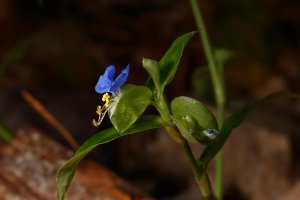
I mostly photo insects, minerals and wildflowers, so usually close-ups better describes my photos. Attached is an example taken with the Zeiss. The bloom is 0.5”.

I only manual focus and do take the time to focus stack. I prefer to take photos and minimally post process. Sitting in front of a computer is not as much fun as taking photos.

My advice is to rent and then decide.

John
 

Attachments

  • Asiatic Dayflower (Commelina communis) 2.JPG
    Asiatic Dayflower (Commelina communis) 2.JPG
    293.4 KB · Views: 266
Upvote 0