Canon 135L F2.0 - Am I expecting too much

Sep 2, 2013
468
1
7,666
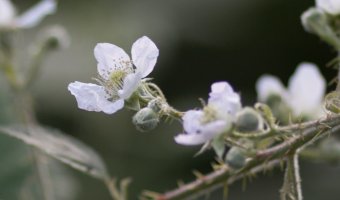
Okay, I got this rather impressive piece of glass last week. Wonderful AF, sharpness etc but I seem to be getting a lot of aberration in the images, some examples below. Anyone have an opinion on whether I'm just being too fussy or if perhaps there is a slight problem with the lens? All images are from large raw files from a Canon 70d simply cropped to highlight the aberrations.


I do understand these are challenging subjects so am I just expecting too much?

Thanks for any advice . . .
 

Attachments

  • IMG_7932.jpg
    IMG_7932.jpg
    1.7 MB · Views: 1,802
  • IMG_7948.jpg
    IMG_7948.jpg
    1.5 MB · Views: 1,795
  • IMG_8162.jpg
    IMG_8162.jpg
    1.7 MB · Views: 1,769
If these are crops, I wouldn't worry about it. First of all, all lenses have some aberrations. Second of all, it can be fixed to a great extent in post. Third, and most importantly, it will not be visible in online images, where the majority of our images end up. Fourth, even if you did print them, aberrations don't show up well in print when untreated, and are virtually indistinguishable after post processing them out.

Spend a little less time on forums reading about this or that when people are incredibly nitpicky, and instead just shoot man. Stop looking for things your audience will not see. Even the little bit of aberration you see is leagues better than the shitty cameras, and cell phone cameras, that most people use, and you never see people complaining about "that weird color on the outside of that object".

Ever heard of KISS? Keep It Simple Stupid. Take a step back. It doesn't matter. Forget about it, and your enjoyment of shooting will increase exponentially.
 
Upvote 0
If they are wide open then you will see it in those extreme cases. The bokeh in the first isn't unusual. My 35L does that, the 135 I have to work to get that. The second one seems to be more than I have seen in mine...looks like my 85 1.8, but you are shooting white flowers. The last one seems to be fairly well controlled. The green CA would be the hardest to get rid of in post.
Your expectations might be a touch too high. Otherwise most of it can be get rid of in Post. I'd say just enjoy it.
 
Upvote 0
Kestrel said:
I believe what you are experiencing here is spherochromaticism... out of focus highlights will have a characteristic magenta outline in front of the plane of focus and green behind. Stopping the lens down a bit should reduce these artifacts.

Yes, and it's built into the design to improve bokeh (by making it softer).
 
Upvote 0
Purple fringing is due to LOCA's, and is common in large aperture lenses. The 85mm f/1.8 has it in spades.

You can reduce or eliminate it in Lightroom, there is a tool that selects for the magenta color and removes it. The issue is that sometimes you have that same purple in your image, and that might be removed as well. Fortunately, that's rare.

http://www.photozone.de/canon_eos_ff/430-canon_135_2_5d?start=1
 
Upvote 0
fragilesi said:
Anyone have an opinion on whether I'm just being too fussy or if perhaps there is a slight problem with the lens?

This is exactly what to expect. I have a write up with lots of samples including showing this with the 135L, 70-200 f/4 IS L & 70-200 f/2.8 IS L II here: http://www.dpreview.com/forums/post/38050793

What you will see is also that the two zooms have much less CA wide open.

My conclusion is still that the bokeh of the 135L is superior, but you will sometimes have to deal with CA in post.
 
Upvote 0
All, many thanks for the replies! That's a resounding "stop being so fussy and just get on with it then" ;D

I'm happy with that, some of the pictures coming out of the lens are just sumptuous and those that mentioned it are right, these were all shot wide open and the first two were in deepening evening gloom - I got the lens for its low light capabilities so naturally I tried some in poor light. I think this lens is going to both challenge me at times (focal length, these wide aperture characteristics which are new to me) and produce some great pictures.

But, just to defend my fussy approach here, if I pay this much for something I want to know I'm getting the full value possible. It seems I am and I'm grateful to all for putting my mind to rest on that score, I can now enjoy the lens in all its glory.
 
Upvote 0
I observed the same behaviour with the sister lens, the EF 2.0 100 - in some situations I have seen strangely coloured objects before and behind the focus plane. Just (newer) apochromatic designs do not show that behaviour:

The Voigtlaender 125mm 2.5 and the (Carl) Zeiss 135mm 2.0 APO - both apochromatic designs.

I thought about "sidegrading" to one of these lenses but (1) both do not have autofocus and (2) are expensive and (3) the raw situations where these LOCAs show colour fringing aren't worth (A) the extra money and (B) the extra complication with more gear to choose from ...

Enjoy your surely great lens - best - Michael
 
Upvote 0
I've not used this lens, but it's what I'd expect tbh. The wider aperture lenses seem to do this - the 85L is particularly bad, although it's much better stopped down just a little (to f/1.8 say). Ultimately, it's not an ideal lens for certain subjects. For portraiture, it's unlikely to be a problem.

I actually sold on my 200L 2.8 because of this. I wanted it for flower photography in particular. Although as lots of people have said, you can remove the fringing easily in software, when there are lots of leaves and/or pink-purple-red flowers in the frame, it's not so easy, as their edges become desaturated. It's a matter of personal taste, and subject matter, as with most things. My subjective view is the 100L Macro is much more controlled for this, although you lose a stop of aperture compared to the 135.
 
Upvote 0
Thanks mb66energy . . . I would have the same conclusion about moving to those other lenses, I need AF and don't have the money :)

Scyrene, I think you are right, I also have the 100L Macro but wanted even more reach and that extra light! White flowers are not a regular target for me. It was just a testing subject that I happened across!
 
Upvote 0
Policar said:
Kestrel said:
I believe what you are experiencing here is spherochromaticism... out of focus highlights will have a characteristic magenta outline in front of the plane of focus and green behind. Stopping the lens down a bit should reduce these artifacts.

Yes, and it's built into the design to improve bokeh (by making it softer).

Not sure about that at all. It's not so much they put it in there on purpose as didn't go to the difficulty of getting rid of it. Plenty of lenses with awful bokeh have a ton of longitudinal CA.

For standard to wide FF zooms, the 24-70 II and 16-35 f/4 IS do remarkably well in fighting this type of CA off, the best I've seen for such from any of the main makers (not sure about Zeiss or Leica, they may have some zooms of such that do as well).

300 2.8 IS is basically 100% APO and has none.
300 f/4 non-IS has a lot of that CA.
70-200 2.8 IS has a lot more than the non-IS or IS II or f/4 IS.
50 1.4 has a ton.
85 1.8 has tons beyond tons.
From what I recall, 60 macro had barely any and 100L does pretty well.
135L has some.
I seem to recall that the Tamron 17-50 was surprisingly good when it came this CA type.
 
Upvote 0